





























Chardonnay is a white grape with a clear Italian role.
Wines
823
Acidity
Body
White Grape · Lazio
Malvasia is a family name, not a single grape. Fourteen names on Italy's grape register, twelve distinct grapes, share it, white and red. They run from Friuli's dry, salty Istriana to the Aeolian islands' sun-dried sweet wine and a soft red in Puglia.
Malvasia is not one grape but a family of them, white and red, grown from Friuli to Sicily. The name covers at least a dozen distinct Italian varieties. Some make bone-dry whites, some sweet wines from sun-dried grapes, and one makes a soft red in Puglia. This page tells them apart and sends you to each grape's own page.
Your cellar, your trips, and the wines you've been tracking are right where you left them.
New here?
Free, always. Education first, we'll never sell you anything you didn't ask to see.
Already have an account?
Enter the email you signed up with and we'll send a link to choose a new password.
Before you buy
The anchor fact: Italy's national grape register lists fourteen Malvasias, white and red, and most are not related to each other. The second word on the label tells you which grape, which colour and which page to read.
Taste · Where it sits
Forget scores out of five. Here’s Malvasia described against grapes you already know.
Malvasia Istriana and the Frascati Malvasias sit near Pinot Grigio in weight; a Vin Santo or a Lipari passito is as full as a Sauternes.
Malvasia Nera brings soft, plummy tannin to Salento reds, gentler than the Negroamaro it is blended with. The white Malvasias have none.
The Friulian Istriana is the crispest of the family, the sun-dried island wines the roundest.
The dry whites taste of apple and almond; the passito wines of dried apricot, raisin and honey. The label word, passito or secco, tells you which end you are at.
Key flavours





The map
Malvasia is medium-bodied, balanced acidity, mapped against other white grapes you can buy. The closer a grape sits, the more its weight and freshness resemble Malvasia.
Is this for you?
Reach for it when…
Maybe skip it if…
Serving guide
Serve at
8-12°C
8 to 12C for the whites and sweet wines, 14 to 16C for Malvasia Nera; too cold and the sweet wines lose their honey.
Decant
Not needed
None needed for any member; a Vin Santo just wants the bottle opened a few minutes before pouring.
Glass
Standard White Wine Glass
A standard white glass for the dry wines; a small dessert glass for passito and Vin Santo, where a 50 ml pour is the point.
Drink within
3-5 days
Dry whites keep three to five days once opened; the sweet wines a week in the fridge.
Cellar
2-10 years
A Malvasia delle Lipari passito or a Vin Santo keeps ten years and more; nothing dry here gains from keeping.
On the table
Start with the home-table matches that made the grape, then browse the full cuisine library.

Rome's own match
Guanciale and egg are rich and salty. A dry Frascati led by Malvasia Puntinata cuts the fat with fresh acidity, and its almond note sits well with the pecorino.

The sweet wine that keeps up
Dried fruit, spice and suet need a wine as sweet as the pudding. A Malvasia delle Lipari passito tastes of the same dried apricot and raisin, so neither side wins.

Salt meets honey
Blue cheese is salty and sharp. A Vin Santo made from Malvasia Bianca Lunga answers with honey and nuts, the way port does, with less alcohol.

Emilia's fizzy white
Fried dough and cured ham want bubbles and freshness. The lightly sparkling Malvasia di Candia Aromatica of the Emilian hills is made for exactly this plate.
Browse every pairing
Buy it · three to start with
A curated trio across the price range, then every Malvasia on sale in the UK right now.
Entry · everyday
 2 retailers
Frascati
2 retailers
£11.95
+ delivery
Why this one: Principe Pallavicini's Frascati, about £12: Malvasia Puntinata with Trebbiano and Greco from the Castelli Romani, dry, with white flowers and a bitter-almond finish.
The sweet spot
 3 retailers
Salento
3 retailers
£15.00
+ delivery
Why this one: The red Malvasia on its own, about £15: San Marzano's Talò from Salento is soft, plummy and spiced, a wine most people never knew existed.
Special occasion
 1 retailer
Vin Santo del Chianti Classico
1 retailer
£62.00
+ delivery
Why this one: Isole e Olena's Vin Santo del Chianti Classico, about £62 a half bottle. Malvasia and Trebbiano are dried, then aged for years in small sealed casks: honey and dried apricot in the glass.
12 of 63 bottles
 4 retailers
Toscana
4 retailers
£14.50
+ delivery
 4 retailers
Gravina
4 retailers
£16.00
£19.00
+ delivery
 4 retailers
Rosazzo
4 retailers
£68.50
+ delivery
3 retailers
Salento
3 retailers
£15.00
+ delivery
2 retailers
Frascati
2 retailers
£11.95
+ delivery
 2 retailers
Orvieto
2 retailers
£12.84
+ delivery
 2 retailers
Toscana
2 retailers
£13.10
+ delivery
 2 retailers
Salento
2 retailers
£19.00
+ delivery
 2 retailers
2 retailers
£30.00
+ delivery
 1 retailer
1 retailer
£8.99
+ delivery
 1 retailer
Provincia di Pavia
1 retailer
£9.10
£10.10
+ delivery
 1 retailer
Frascati Superiore
1 retailer
£9.83
+ delivery
Denominations
The appellations where Malvasia plays a starring role.
Where it grows

Lazio is Frascati country with a serious red side. Volcanic whites from the Castelli Romani, Cesanese on the Ciociaria hills, and a Roma DOC reaching for Read more

From galestro hills in Chianti Classico to the single Brunello rise of Montalcino and the sea-facing Cabernets of Bolgheri, Tuscany is Italian wine's stage in Read more

From Manduria's Primitivo bottlings to Salento's Negroamaro estates and Castel del Monte's Nero di Troia DOCG hills, Puglia offers Italy's deepest catalogue Read more

Italy's white-wine heartland, where Friulano, Ribolla Gialla and skin-contact orange wines meet alpine air, Adriatic light and the cooking of San Daniele and Read more

Volcanic Nerello on Etna's black terraces, sun-baked Nero d'Avola on the south-east coast, fortified Marsala in Trapani and UNESCO Zibibbo on Pantelleria Read more

Italy's pasta plains pour fizzy Lambrusco from Modena and Reggio, ageworthy Sangiovese di Romagna, Albana DOCG whites, and Bologna's gentle Pignoletto. Read more
The terroir
One name, three homes on this page. The members with their own pages live in Friuli, Lazio, the Aeolian islands and Basilicata; the wines kept here come mostly from Tuscany, Lazio and Puglia.
Castelli Romani, Lazio
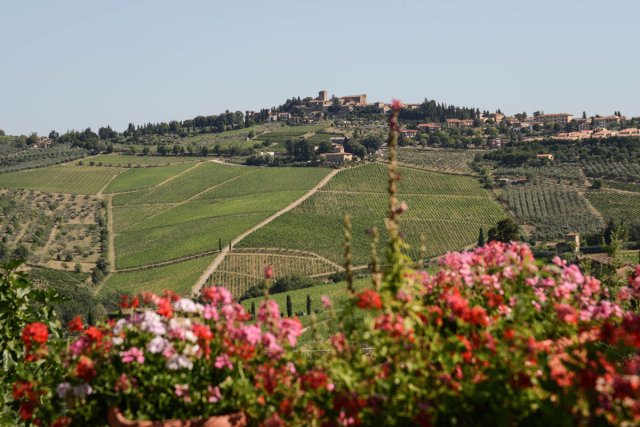
The volcanic hills south of Rome, around Frascati
Malvasia di Candia and Malvasia Puntinata blended with Trebbiano: dry, lightly floral whites with an almond finish, made to drink young.
Chianti hills, Tuscany
The Chianti and Chianti Classico zones between Florence and Siena
Malvasia Bianca Lunga, once the white share of Chianti, now dried on racks for Vin Santo: amber, honeyed and nutty, aged for years in small sealed casks.
Salento, Puglia
The flat heel of Italy, around Brindisi and Lecce
Malvasia Nera, a red grape that softens Negroamaro blends and is bottled alone by a few estates: plum, dried herbs and gentle tannin.
Producers
19 estates on the site work with Malvasia. Eight at a time, and the line-up changes every week.
Editorial
Malvasia takes its name from Monemvasia, the Greek port that shipped sweet wine to Venice in the Middle Ages. Italians gave the name to any grape that made wine in that style. So today the national grape register lists fourteen Malvasias, and most of them are not related to each other. The name describes a kind of wine, not a family tree.
Malvasia di Lipari, the grape of the Aeolian passito, is the same variety as Croatia's Malvasija Dubrovacka: the international grape catalogue files both under one number.
VIVC, Vitis International Variety Catalogue, variety 7266Malvasia Istriana is the dry, salty white of Friuli's Collio and Carso hills. It has no genetic link to the rest. Malvasia di Candia and Malvasia Puntinata are the two whites behind Frascati and the hills south of Rome. Malvasia di Lipari is the aromatic grape of the Aeolian islands. Its grapes are dried on mats for the islands' passito, and the same variety grows in Sardinia, in Croatia and near Barcelona under other names.
Malvasia Bianca Lunga is Tuscany's Malvasia. It was the white share of old-style Chianti and it is still one of the two grapes of Vin Santo, with Trebbiano. Malvasia Nera, from Brindisi and Lecce, is a red grape blended into the reds of Puglia. Piedmont has two sweet, lightly sparkling reds, Malvasia di Casorzo and Malvasia di Schierano. Basilicata has a white and a red of its own, Malvasia Bianca di Basilicata and Malvasia Nera di Basilicata.
The wines listed on this page are the ones whose label does not say which Malvasia is in the bottle: Toscana IGT whites, Vin Santo, Salento reds and Lazio blends. Where the wine's own zone settles it, the bottle usually sits on that grape's page instead. For the sweet side of the family, read our guide to Italian dessert wines. Several growers also leave the skins in while the white juice ferments, the way orange wine is made.
Good to know
No. Malvasia is a family name: fourteen names on Italy's grape register, twelve distinct grapes, white and red, and most of them are not related. Malvasia Istriana, Malvasia di Candia, Malvasia Puntinata and Malvasia di Lipari each have their own page on this site.
Both. In Friuli and Lazio it is a dry white. On the Aeolian islands, and in Tuscany's Vin Santo, it is a sweet wine made from dried grapes. Check the label: passito, Vin Santo or dolce means sweet.
The dry whites taste of white flowers, apple and almond, with a salty edge in Friuli. The sweet wines taste of dried apricot, honey, raisin and candied orange peel. The red Malvasia Nera is soft and plummy.
No. Malmsey is the English name for sweet Madeira wine from Portugal. Both words come from Monemvasia in Greece, but Malmsey is not an Italian grape and is not on this page.
Yes. Malvasia Nera, grown around Brindisi and Lecce, is a red grape blended into Salento reds and sometimes bottled on its own. Piedmont has two sweet, lightly sparkling reds, Malvasia di Casorzo and Malvasia di Schierano.
Two of them: Malvasia di Candia and Malvasia Puntinata, also called Malvasia del Lazio. Frascati is a blend led by these two, with Trebbiano and other local whites making up the rest.
Drink the dry whites within two or three years of the harvest. A Vin Santo or a Malvasia delle Lipari passito keeps for ten years or more, and an opened bottle of the sweet wine lasts a week in the fridge.
Explore by style
Jump to the editorial guide for each style this grape turns up in.
Keep exploring