







Wine route
Strada Chiantigiana SR 222
Full day, longer with tastings · 5 stops
Open the driveYour cellar, your trips, and the wines you've been tracking are right where you left them.
New here?
Free, always. Education first, we'll never sell you anything you didn't ask to see.
Already have an account?
Enter the email you signed up with and we'll send a link to choose a new password.
Tuscany · DOCG
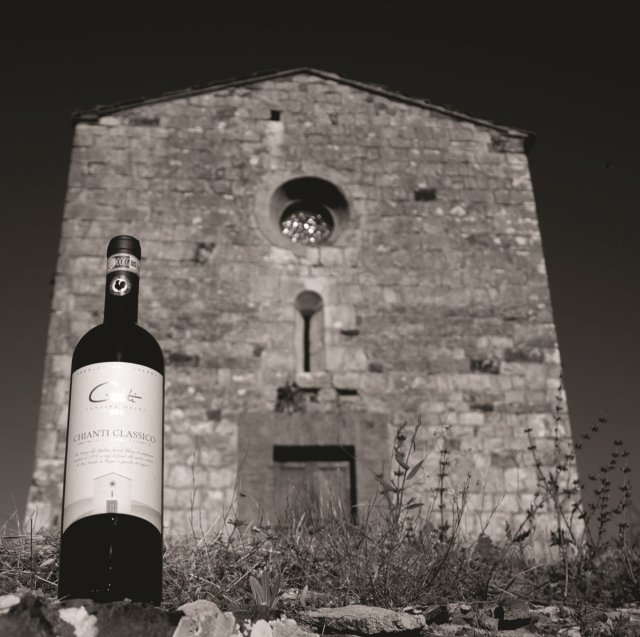
The historic heart of the Chianti zone, ringed by the Florence to Siena hills inside the original 1716 boundary. Chianti Classico DOCG is marked by the Gallo Nero black rooster seal, and it sits one tier above Chianti DOCG. That means stricter Sangiovese minimums, longer ageing and an exclusive Gran Selezione apex. The wines are tighter and more age-worthy.
Decode the label
One word on the front changes the ageing, the strength and the price.
On the label
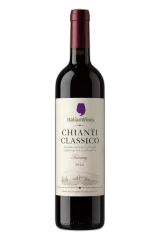
Chianti Classico
the Annata, the everyday rooster
Cherry, violet and cut-grass freshness: Sangiovese from the old heartland, made for the table.
In stock from £8.30 See the 99 bottles ↓On the label
Chianti Classico Riserva
the cellar tier
No barrel is prescribed, only time: dried cherry, leather and a deeper grip than the Annata.
In stock from £12.49 See the 66 bottles ↓On the label
Gran Selezione
estate fruit only, the top of the pyramid
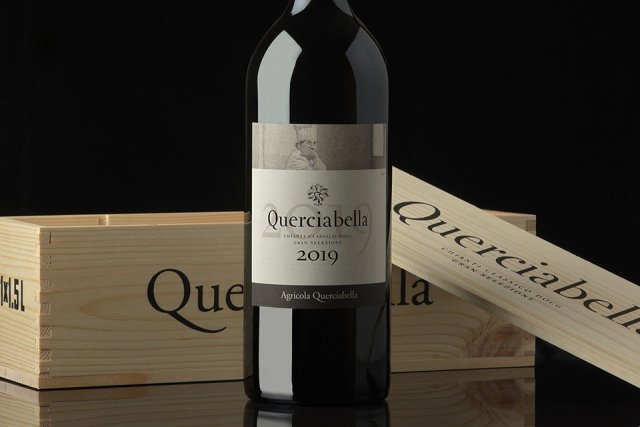
Introduced in 2014 and tightened in 2023: no bought grapes, no enrichment, and since 2023 a village name may join the label.
In stock from £19 See the 60 bottles ↓The boundary
Everything on this page, the estates, the bottles, the sub-zones, sits inside this line.
Wine route
Full day, longer with tastings · 5 stops
Open the drive
Estate 1
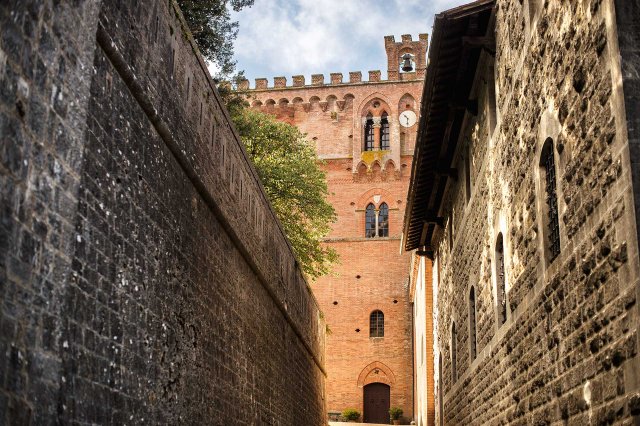
Gaiole in Chianti · Brolio
Tastings available
Estate 2
Panzano in Chianti
Tastings available
Estate 3
Radda in Chianti
Tastings available
Estate 4
Castellina in Chianti
Book online
Estate 5
Vagliagli
Tastings available
Estate 6
Greve in Chianti
Tastings available
Estate 7
Greve in Chianti
Tastings available
Estate 8
Radda in Chianti
Tastings available
Estate 9
Greve in Chianti
Tastings available
Estate 10
Barberino Tavarnelle
Tastings available
Estate 11
Panzano in Chianti
Tastings available
Estate 12
Radda in Chianti
Tastings available
Estate 13
Barberino Tavarnelle
Tastings available
Estate 14
Gaiole in Chianti
Tastings available
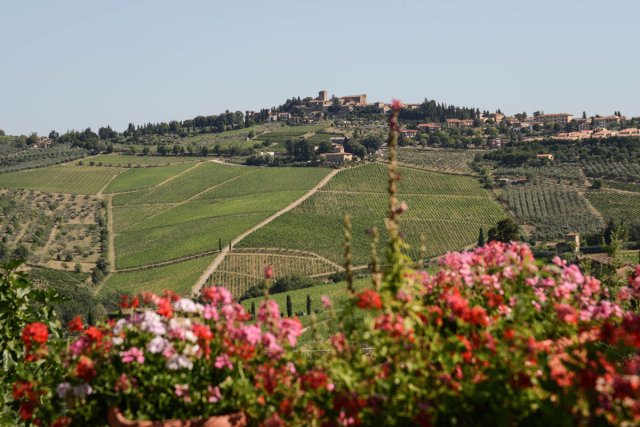
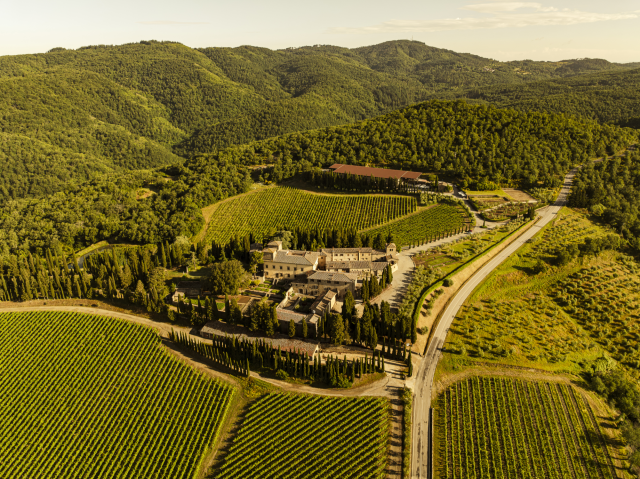
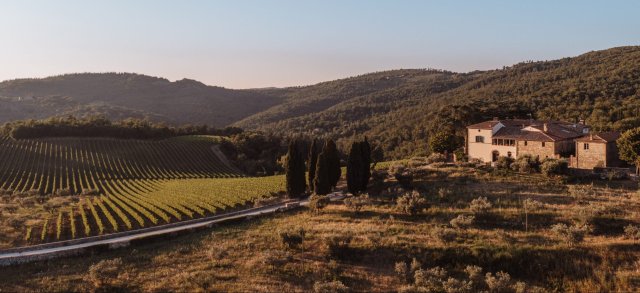
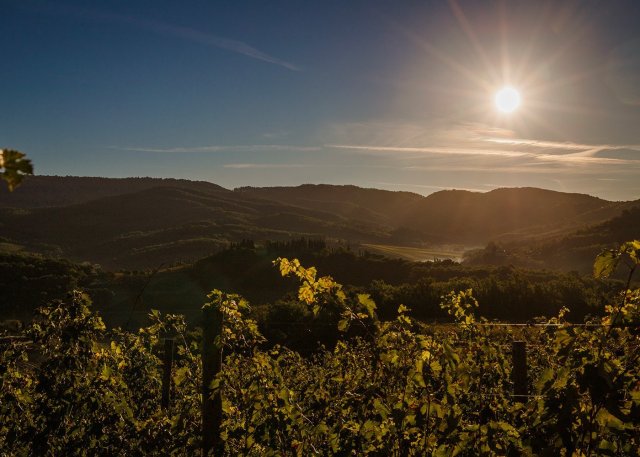
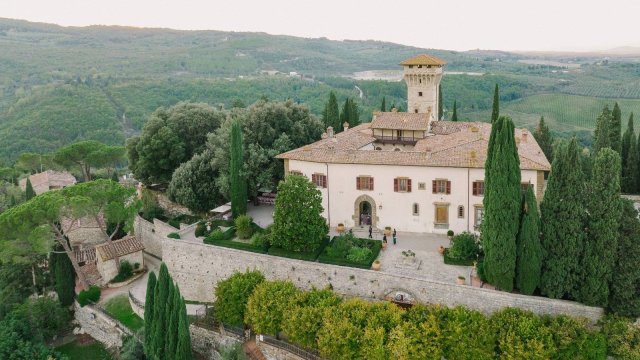
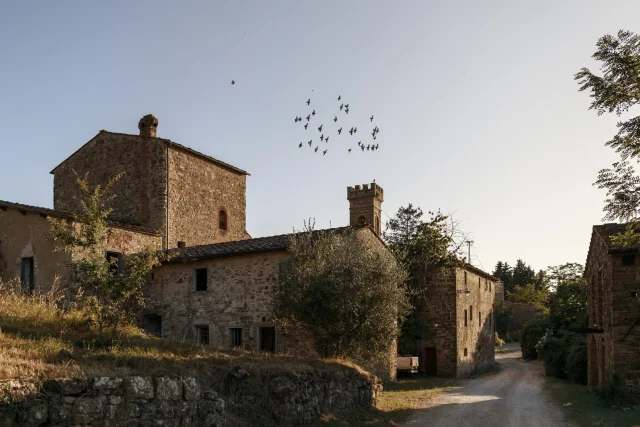
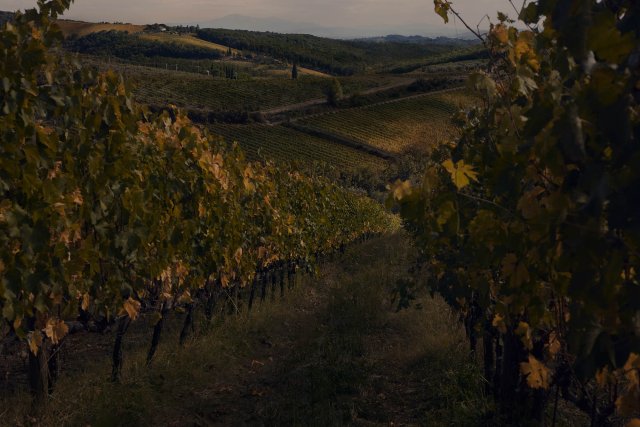
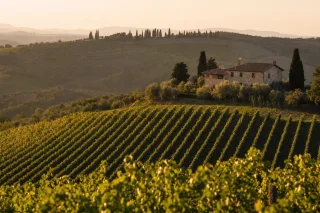
The hills between Florence and Siena that every postcard means by Chianti: the whole territory of Greve, Castellina, Radda and Gaiole, with parts of San Casciano Val di Pesa, Barberino Tavarnelle, Poggibonsi and Castelnuovo Berardenga. On the map of plain Chianti DOCG this zone is the hole in the middle: the original heartland, bounded by Cosimo III's decree of 1716 and kept separate ever since. Vineyards share the slopes with oak and cypress woodland, most of them between 250 and 500 metres.
Inside the zone
Click or tap a pin for its estate. The numbered pins match the estate cards below.
Towns worth knowing
San Casciano opens the zone from Florence, Castelnuovo Berardenga closes it at Siena; Panzano, Lamole and Montefioralle are Greve frazioni that earned their own UGA.
In the glass
Black cherry
Forest berries

Liquorice

Violet
The disciplinare
The same table on every denomination page, one row group per style here, because Chianti Classico writes its rules per colour.
 SangioveseThe lead, alwaysat least 80%Other Tuscan red grapesCanaiolo and Colorino to Cabernet; whites were banned in 2006up to 20%SangioveseThe lead, from the estate's own vineyardsat least 90%Other Tuscan red grapesA narrower window than the Annata'sup to 10%
Solid means the rules demand it. Striped means optional, up to that amount. The words on the right say the same rule.
Oak is tradition, not law the rulebook demands months and bottle rest, never a barrel.
Gran Selezione means estate fruit only grapes vinified by the bottling estate, with no enrichment allowed.
The Sangiovese floor rose to 90% for Gran Selezione in the July 2023 revision of the disciplinare.
Eleven village names may follow Gran Selezione Lamole, Montefioralle and Vagliagli joined the labels last, after a phase-in.
The boundary is older than Italy Cosimo III's 1716 decree drew the line this DOCG still defends.
Ageing and alcohol minimums per tier are in the label guide above.
Editor's cellar
By style, today
Live prices, compared across 28 UK retailers.
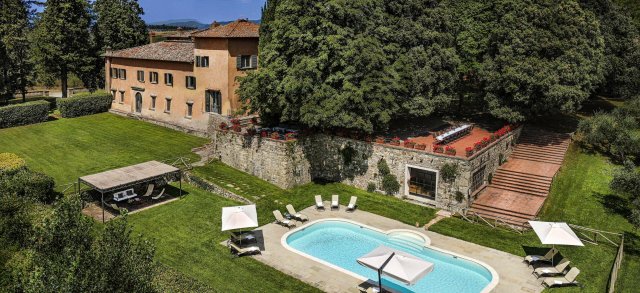
Cellar doors · inside the zone
14 working estates with their gates open, numbered to match their pins on the map above.
No estates match these filters. Clear a filter to see more.
Experiences in the Chianti Classico zone
Cellar experiences here average around €89. These are the strongest fits for this page.
Castello di Fonterutoli
An experience designed to celebrate two "icons" of the Super Tuscan phenomenon that contributed to an epochal turning point in Italian vitic…
Castello di Fonterutoli
Access the beating heart of the Castello di Fonterutoli estate: after the cellar tour, the journey continues into the evocative barrel room,…
Castello di Fonterutoli
The Fonterutoli Wine Tour includes a complete wine tour at the Castello di Fonterutoli signature cellar. Accompanied by our Wine Experts thr…
Eleven names, one rooster
Since the 2023 rules, a Gran Selezione may name the village its grapes grew in. Eleven unità geografiche aggiuntive divide the zone, and their names are appearing on labels vintage by vintage.

The western ridge towards the Elsa valley, cooled by sea air through the hills: perfumed, fine-boned Sangiovese.
The warm southern gate above Siena, the zone's ripest corner: darker fruit and broader shoulders.
High castle country around Brolio, where the Ricasoli family wrote the first Chianti recipe: firm, age-worthy wine.
The market town's long valley and its slopes; the biggest UGA, and the road every visitor drives first.
Terraced vineyards high above Greve, among the loftiest in the zone: pale colour, high perfume, silky tannin.
A walled medieval hamlet on the ridge over Greve, one of the smallest UGAs, allowed on labels only after the 2023 phase-in.
Greve's famous frazione and its conca d'oro, the golden amphitheatre of vines: some of the zone's most complete Sangiovese.
The high heart of the old Lega del Chianti: slow-ripening slopes that keep acidity and perfume in the glass.
The northern gate nearest Florence, lower and gentler: the suppler, earlier-drinking end of the family.
The north-western corner around Barberino Tavarnelle and a slice of Poggibonsi, gathered under one medieval village's name.
A Sienese hill village carved out of Castelnuovo Berardenga's corner, on labels only since the 2023 phase-in ended.
The years
Ratings come from the Consorzio Vino Chianti Classico's own star assessment of each harvest, the Gallo Nero chart. Two half-star years, 2012 and 2017, are rounded up here.
Reading the years
Fresh, rainy winter/spring, steady July warmth (Gallo Nero)
The short version: A golden run from 2019 to 2021; keep 2016 Gran Selezione, open 2018 and 2014 first.
Tap a year for its note.
Chianti Classico is a Sangiovese-led blend. The rules have asked for 75 to 100 percent Sangiovese since 1996. Up to 10 percent may be Canaiolo. Up to 20 percent may be other complementary reds, such as Cabernet Sauvignon, Merlot or Syrah. White grapes have been forbidden in the blend since 2006. The base Annata tier needs at least seven months in oak. It is released on October 1 following the vintage, at 12 percent alcohol minimum. Riserva ages at least 24 months at the winery, at a minimum of 12.5 percent alcohol. Gran Selezione arrived in 2014. It demands estate-grown fruit and approval by the consortium's tasting commission.
On the table
The home country leads; global pairings that genuinely work follow.
In-depth guide
A Tuscan DOCG that covers the original 1716 Chianti zone, between Florence and Siena. The Gallo Nero black rooster seal marks the bottles. The wine is built on Sangiovese, at 75 to 100 percent, with up to 20 percent complementary reds. It is held to higher quality minimums than the broader Chianti DOCG. It comes in three tiers: Annata, Riserva and Gran Selezione.
Chianti and Chianti Classico are two distinct DOCGs. Chianti Classico covers the smaller historic zone between Florence and Siena. It carries the Gallo Nero seal. It also demands stricter ageing and quality minimums. Chianti DOCG is the broader Tuscan family that surrounds it. Chianti Classico is typically denser, more structured and more age-worthy.
Annata is the base tier. It needs at least seven months in oak and 12 percent alcohol. Riserva ages at least 24 months at the winery, at 12.5 percent alcohol minimum. Gran Selezione, introduced in 2014, is the apex. It needs estate-grown fruit, a suitability test and approval by the consortium's tasting commission.
The Gallo Nero is the black rooster seal worn on every Chianti Classico bottleneck. It shows that the producer is a member of the Consorzio Vino Chianti Classico. On retail shelves it is the visible mark that separates Chianti Classico DOCG from the broader Chianti DOCG around it.
Tuscan beef such as bistecca alla Fiorentina, wild boar ragu, aged Pecorino Toscano, lamb with rosemary, and tomato-rich pasta. Chianti Classico has firmer tannins and brighter acidity than the lighter Chianti Normale. That lets it hold up to richer roasted meats and aged cheeses. Riserva and Gran Selezione earn a steak dinner. Annata is the everyday Tuscan red.
Serve Chianti Classico at 16 to 18 degrees Celsius. Annata is ready to drink on opening. Riserva benefits from a 30 to 60 minute decant. Gran Selezione rewards a full hour to open the secondary notes.
Explore more Tuscany
Same region only: the denominations Chianti Classico drinkers reach for next.