




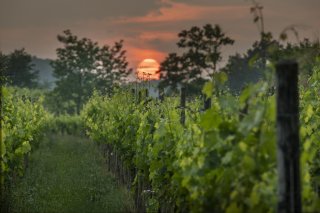


Wine route
Langhe Nebbiolo Route
2 days · 7 stops
Open the driveYour cellar, your trips, and the wines you've been tracking are right where you left them.
New here?
Free, always. Education first, we'll never sell you anything you didn't ask to see.
Already have an account?
Enter the email you signed up with and we'll send a link to choose a new password.
Piedmont · DOCG
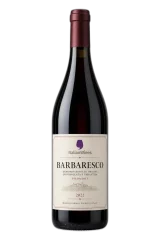
Barbaresco DOCG is Piedmont Nebbiolo from Barbaresco, Neive, Treiso and a slice of Alba. Gaja, Produttori del Barbaresco and Bruno Giacosa show its signature tension. Expect rose and cherry perfume, firm tannin and bright acidity. The frame is more lifted than in many Barolo bottlings.
Decode the label
One word on the front changes the ageing, the strength and the price.
On the label
Barbaresco
the Normale, no extra word
Nebbiolo a year earlier to the table than Barolo: rose, red cherry and a finer-grained grip, on sale from 1 January of the third year.
In stock from £18.90 See the 133 bottles ↓On the label
Barbaresco Riserva
the patient tier
Four winters and more before release: the tannin polishes, tar and dried rose take over from fruit.
In stock from £22.99 See the 16 bottles ↓The boundary
Everything on this page, the estates, the bottles, the sub-zones, sits inside this line.
Wine route
2 days · 7 stops
Open the drive
Estate 1
Barbaresco · Village centre
Tastings available
Estate 2
Alba · Gateway town
Tastings available
Nebbiolo's second capital sits on the right bank of the Tanaro just north-east of Alba, in the province of Cuneo: the whole territory of Barbaresco, Neive and Treiso, plus the San Rocco Seno d'Elvio fraction that passed from Barbaresco to Alba in 1957 and stayed inside the wine's boundary. It is a compact map, warmer and lower than Barolo's, which is why the wine has always come round a little sooner. The annex divides these hills into 66 named menzioni.
Inside the zone
Click or tap a pin for its estate. The numbered pins match the estate cards below.
Towns worth knowing
San Rocco Seno d'Elvio, a fraction of Alba since 1957, completes the map; Alba itself is the gateway town.
In the glass
Black pepper

Burnt toast
Cherry

Leather
Liquorice
Red forest berries

Rose petal

Strawberry
The disciplinare
The same table on every denomination page, straight from the production rules.
 NebbioloAlone, by law: the disciplinare admits no other grape100%
Solid means the rules demand it. Striped means optional, up to that amount. The words on the right say the same rule.
26 months of ageing, 9 in wood counted from 1 November of the harvest year; Riserva waits 50.
Yields are capped at 8 tonnes per hectare and cut to 7.2 when a vigna name joins the cru on the label.
66 menzioni geografiche aggiuntive map the crus, from Asili and Rabaja to Serraboella.
Cellar work must stay in the zone vinification, ageing and bottling are allowed only in the three communes and Alba.
12.5% minimum alcohol at release for Normale and Riserva alike; the vigna tier asks riper grapes at harvest.
Ageing and alcohol minimums per tier are in the label guide above.
Editor's cellar
By style, today
Live prices, compared across 26 UK retailers.
Cellar doors · inside the zone
Two estates inside the zone open their doors today. A small list, honestly kept: only working cellars with confirmed visits appear here.
No estates match these filters. Clear a filter to see more.
Three villages, one tower
The annex names 66 menzioni geografiche aggiuntive across three communes and one Alba fraction. The village name tells you the style before the cru does.

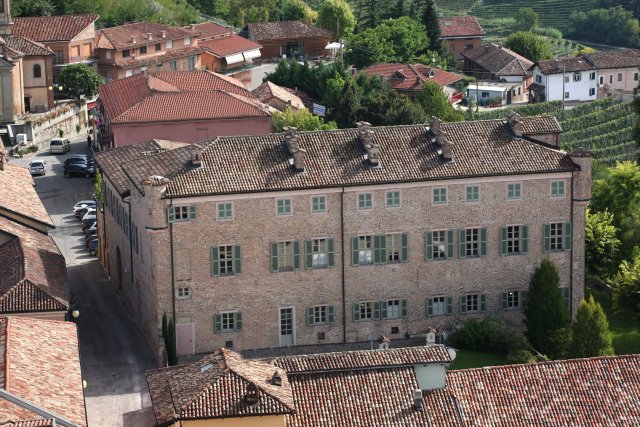
The namesake village under its medieval tower holds the grandest slope: Asili, Rabaja, Martinenga and Montestefano stacked above the Tanaro.
The eastern commune: Gallina, Albesani, Basarin and Serraboella make Neive's fuller, more structured Barbaresco.
The highest of the three villages, a former fraction of Barbaresco; its cooler slopes give the family's most perfumed wine.
The fraction that passed from Barbaresco to Alba in 1957, by decree n. 482, and stayed inside the wine's boundary: a quiet handful of hectares.
The years
Chart ratings use Enoteca Regionale del Barbaresco denomination-specific annate notes for 2011 to 2022. Recent unreleased or insufficiently charted years are left out.
Reading the years
Unusual warm year, described by Enoteca as majestic and impeccable.
The short version: Nothing under four stars since 2011: keep 2016 and 2021, open 2013 and 2015 now.
Tap a year for its note.
Barbaresco DOCG must be 100% Nebbiolo. The grapes must grow inside Barbaresco, Neive, Treiso and the San Rocco Seno d'Elvio area of Alba. The rules set a minimum of 24 months of ageing, including 9 months in oak. Riserva follows after 48 months. The consortium also recognises Menzioni Geografiche Aggiuntive. Producers can therefore name marked-out areas such as Asili, Rabaja, Martinenga or Montestefano. The wine has to follow the rules for that name. Ageing in large casks is still central for many traditional producers. Cellar choices vary from house to house.
On the table
The home country leads; global pairings that genuinely work follow.
In-depth guide
Barbaresco DOCG is made from 100% Nebbiolo. The denomination allows no Barbera, no Dolcetto and no international grapes in the blend.
Barbaresco DOCG must age for at least two years, and nine months of that must be in oak. Barbaresco Riserva can be released after four years.
It comes from Barbaresco, Neive, Treiso and the San Rocco Seno d'Elvio area of Alba. All of them sit in the Langhe hills of Piedmont.
Both are 100% Nebbiolo DOCG wines from the Langhe. Barbaresco is usually more floral and opens earlier. Barolo often has a broader, more tannic frame.
MGAs are Menzioni Geografiche Aggiuntive, the official additional geographical mentions. Names such as Asili, Rabaja, Martinenga and Montestefano mark out delimited Barbaresco areas.
Barbaresco DOCG suits Piedmontese tajarin with truffle, agnolotti del plin, veal, game birds, mushroom dishes and aged cheeses. Its tannin and acidity need savoury depth.
Explore more Piedmont
Same region only: the denominations Barbaresco drinkers reach for next.