





Wine route
Strada del Prosecco
1 day · 8 stops
Open the driveYour cellar, your trips, and the wines you've been tracking are right where you left them.
New here?
Free, always. Education first, we'll never sell you anything you didn't ask to see.
Already have an account?
Enter the email you signed up with and we'll send a link to choose a new password.
Veneto · DOC
Prosecco is a sparkling white DOC from Italy's north-east. It is made from Glera, across nine provinces in Veneto and Friuli. The bubbles come from a second ferment in pressurised tanks, not in the bottle. It pours pale straw, with green-apple, pear and white-flower aromas. It is lighter and gentler than Franciacorta's traditional-method wines, and ready to drink on release.
Decode the label
One denomination, 4 things it can say on the front. Colour first, then the qualifier.
On the label
Prosecco Spumante
the tank-method standard
Pear, white peach and blossom kept fresh in tank: the sweetness word (Brut, Extra Dry, Dry) is a style choice, not a tier.
In stock from £3.26 See the 148 bottles ↓On the label
Frizzante & Tranquillo
the gentler and the still
The soft-fizz and still versions the osterie pour at home, a small slice of the DOC abroad.
In stock from £5.51 See the 5 bottles ↓On the label
Millesimato
one year on the label
A vintage claim with a legal floor: nearly all of the wine must come from the named year.
In stock from £9.32 See the 18 bottles ↓On the label
Prosecco Rosé
Glera meets Pinot Nero
The pink officialised in 2020: red-vinified Pinot Nero over Glera's pear and blossom, always with a vintage.
In stock from £4.40 See the 30 bottles ↓The boundary
Everything on this page, the estates, the bottles, the sub-zones, sits inside this line.
Wine route
1 day · 8 stops
Open the drive
Estate 1
Bibano di Godega · Treviso plain
Visits by arrangement
Estate 2
Tarzo · The Prosecco hills
Tastings available
Estate 3
Valdobbiadene
Tastings available
Estate 4
Roncade
Tastings available
Estate 5
Valdobbiadene
Tastings available
Estate 6
Villorba
Tastings available
Estate 7
Oslavia
Tastings available
Estate 8
Gorizia
Visits by arrangement
Estate 9
Capriva del Friuli
Tastings available
Estate 10
Capriva del Friuli
Tastings available
Estate 11
Dolegna del Collio
Tastings available
Estate 12
Cividale del Friuli
Tastings available
Estate 13
Buttrio
Book online
Estate 14
Gorizia
Tastings available
Estate 15
San Lorenzo
Tastings available
Estate 16
Brazzano Cormons
Tastings available
Estate 17
Farra di Soligo
Tastings available
Estate 18
Prepotto
Tastings available
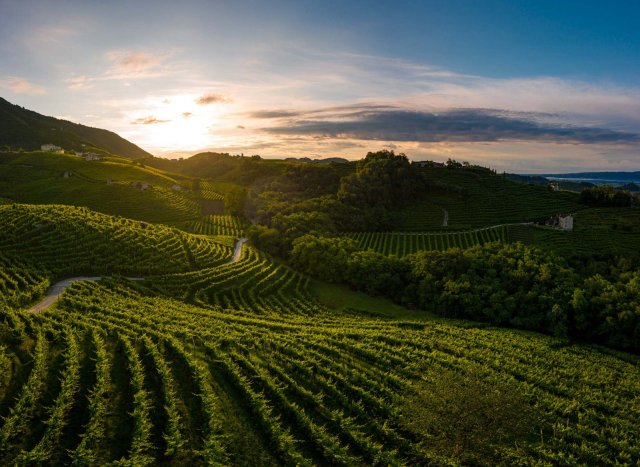
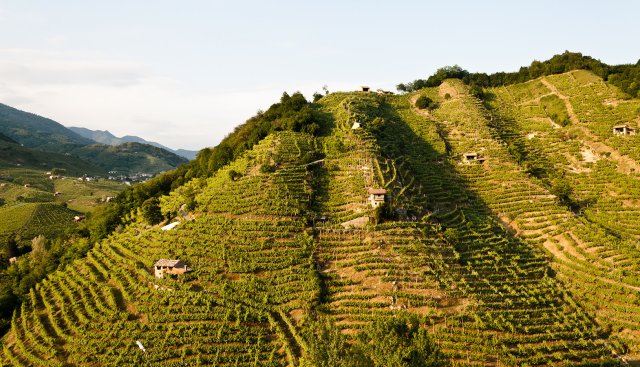
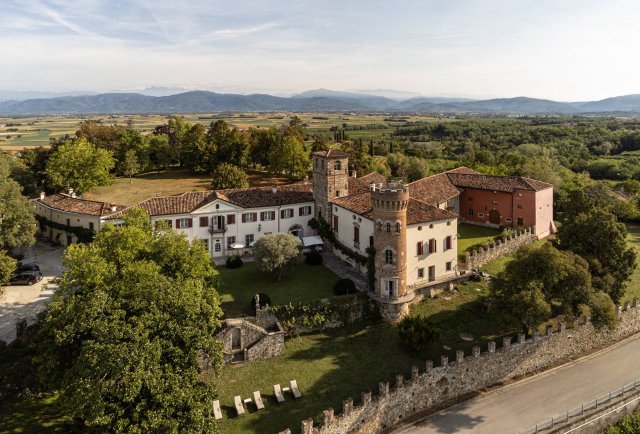
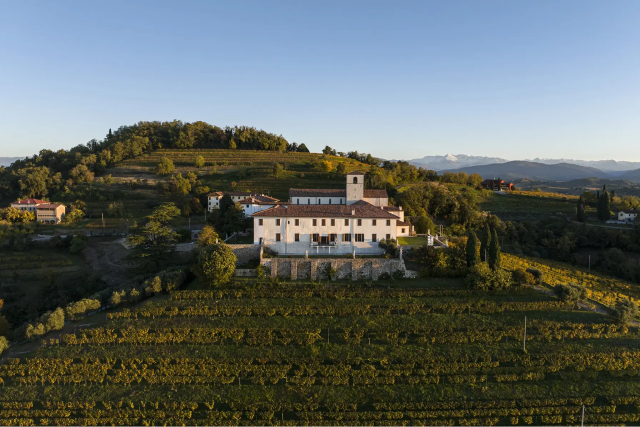
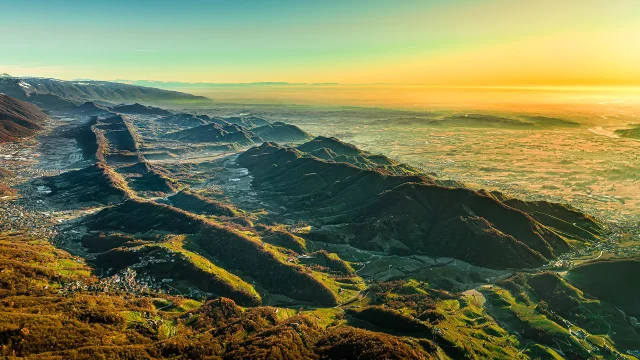
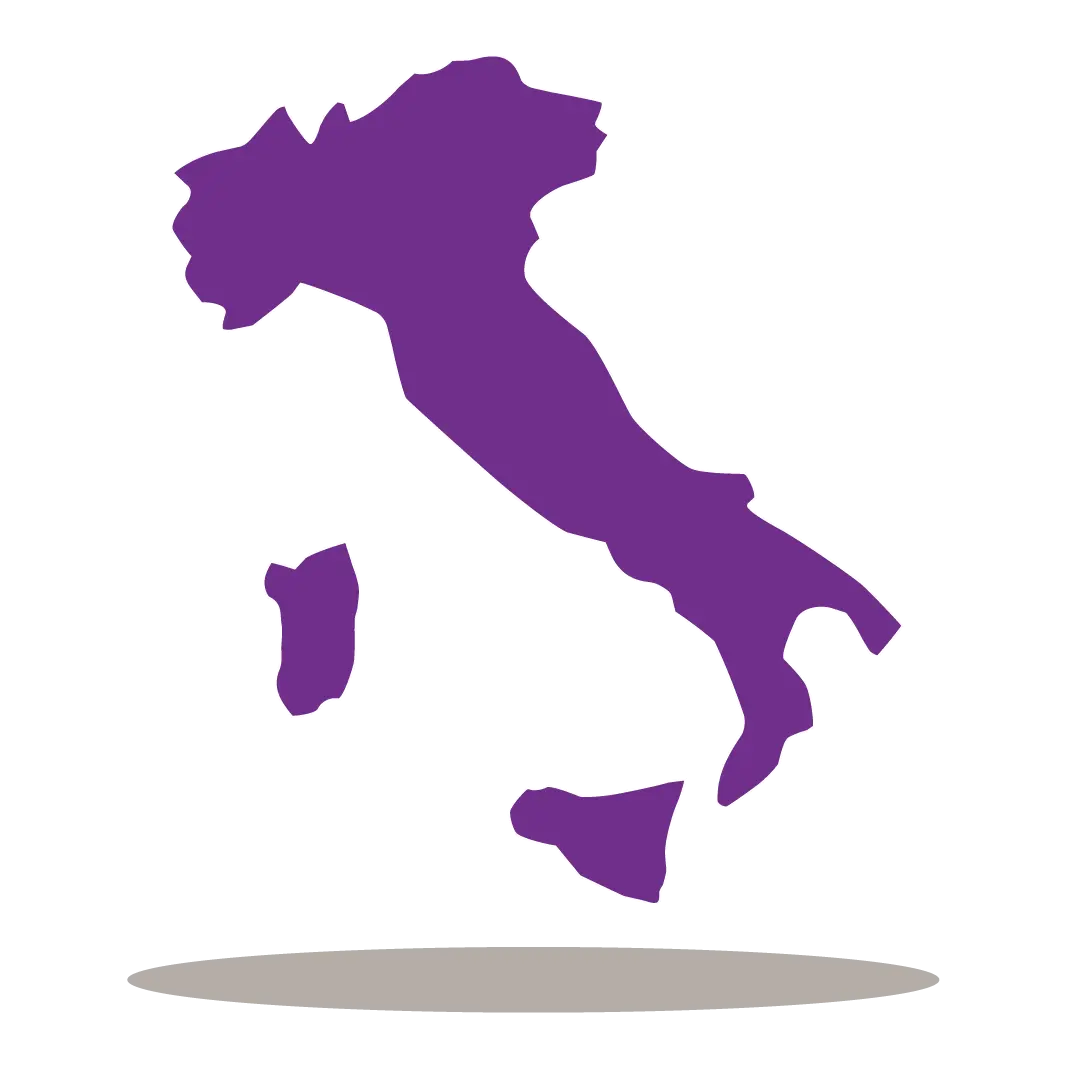
The largest delimited wine zone in Italy: nine whole provinces across two regions, Belluno, Padova, Treviso, Venezia and Vicenza in the Veneto, and Gorizia, Pordenone, Trieste and Udine in Friuli Venezia Giulia. The plains of Treviso do the heavy lifting, while the village of Prosecco itself sits at the far eastern edge above Trieste: the name travelled west with the grape long before the law caught up.
Inside the zone
Click or tap a pin for its estate. The numbered pins match the estate cards below.
Towns worth knowing
Treviso and Trieste are also label mentions: a province name on the bottle means grapes and fizz both happened there.
In the glass
One profile at a time, never blended into a single set of bars.
Pear

Green Apple
Melon

Honey
Pear

Apple
Citrusy fruit
The disciplinare
The same table on every denomination page, one row group per style here, because Prosecco writes its rules per colour.
 GleraThe grape that used to carry the wine's nameat least 85%
 Verdiso, Bianchetta, Perera, Glera lungaThe old local companions, jointly cappedup to 15%Chardonnay and Pinots (white-vinified)Inside the same 15% windowup to 15%GleraThe base85 to 90%Pinot Nero, vinified redThe colour, and the only red allowed10 to 15%
Solid means the rules demand it. Striped means optional, up to that amount. The words on the right say the same rule.
The grape is Glera; Prosecco is a place the 2009 reform tied the name to the map and renamed the grape.
Nine provinces make it Italy's biggest DOC from Vicenza and Treviso across to Trieste on the Friuli coast.
Rosé must carry a vintage and take its colour only from red-vinified Pinot Nero, at 10 to 15 percent.
18 tonnes per hectare for Glera the most generous yield of any wine on this site, built for volume with freshness.
The steep hills answer to other rulebooks Conegliano Valdobbiadene and Asolo are separate DOCGs above this DOC.
Ageing and alcohol minimums per tier are in the label guide above.
Editor's cellar
By style, today
Live prices, compared across 24 UK retailers.
Cellar doors · inside the zone
18 working estates with their gates open, numbered to match their pins on the map above.
No estates match these filters. Clear a filter to see more.
Experiences in the Prosecco zone
Cellar experiences here average around €53. These are the strongest fits for this page.
Castello di Buttrio
The experience includes a tasting of 3 selected wines within the splendid setting of Buttrio Castle, a place steeped in charm and history. N…
Castello di Buttrio
The tour begins with a brief introduction to the history of the Felluga family, a family committed to viticulture for generations, and an ov…
Castello di Buttrio
An experience dedicated to the highest qualitative expression of Castello di Buttrio: the Reserves signed by Alessandra Felluga. The visit b…
Two provinces on the label
Two provincial mentions may follow Prosecco on a label, and each demands that both the grapes and the fizz-making stayed inside that province.

The heartland province and the busiest corner of the DOC: a Treviso label means grapes and fizz-making both stayed inside the province.
The eastern mention on Friuli's coast, and home of the name itself: the village of Prosecco sits on the karst above Trieste.
Vintage provenance
No vintage chart is kept for Prosecco DOC: nearly all of it is blended across years and drunk within months of release. When a year matters the label says millesimato, and the youngest bottle is usually the best buy.
Buy the freshest bottle on the shelf; only a millesimato names its year.
What to check instead
The provincial mention: where a wine comes from inside the zone changes what is in the glass. See them above.
The producer: quality here is tracked estate by estate rather than year by year.
Prosecco is made by the Charmat method, also known as the Martinotti method. A base wine from Glera grapes ferments a second time, in pressurised stainless-steel tanks. That second ferment usually runs for several weeks. It traps the carbon dioxide and keeps the primary fruit aromas intact. The wine is then cleared and bottled under counter-pressure, ready for release straight away. The DOC rules set Glera as the dominant grape, with minor authorised varieties for blending. Spumante and Frizzante styles differ in pressure. Spumante sits above three bars, Frizzante at one to two point five. Unlike Franciacorta or classic-method wines, Prosecco never takes its bubbles in the bottle. That is what keeps it fresh and fruit-forward.
On the table
The home country leads; global pairings that genuinely work follow.
In-depth guide
Prosecco uses the Charmat method. The wine re-ferments in pressurised tanks, rather than in the bottle. That keeps the fresh fruit aromas, and it lowers costs. Champagne ferments inside the bottle, on its yeast, for months or years. That builds the yeasty, toasty depth Prosecco deliberately avoids.
Glera, a white variety grown across Veneto and Friuli-Venezia Giulia. DOC rules set Glera as the dominant grape. Small additions of authorised local varieties are permitted, for blending character.
The wine's high acidity and gentle sweetness work well with salty antipasti, prosciutto and melon, seafood starters, sushi, and lightly spiced Asian dishes. The classic Venetian pairing is cicchetti: small plates of cured fish, cheese and vegetable bites.
DOC covers nine provinces across Veneto and Friuli, mostly on the plains. DOCG covers two smaller hillside zones, Conegliano Valdobbiadene and Asolo. DOCG yields are lower and the slopes are steeper. The wines usually carry more texture, and a more concentrated aroma.
Prosecco runs from Brut Nature, with almost no sugar, through Extra Brut, Brut, Extra Dry and Dry. Despite its name, Extra Dry carries slightly more sugar than Brut. It remains the UK volume leader. Demi-sec versions sit at the sweeter end.
Six to nine degrees Celsius. Too cold and the aromas collapse. Too warm and the bead turns coarse. A flute or tulip glass beats the wide coupe, because it concentrates the nose.
Explore more Veneto
Same region only: the denominations Prosecco drinkers reach for next.