






Lambrusco (say Lahm-BROO-sko) is a family of grapes.
Region
Emilia Romagna
Tannin
Body
Your cellar, your trips, and the wines you've been tracking are right where you left them.
New here?
Free, always. Education first, we'll never sell you anything you didn't ask to see.
Already have an account?
Enter the email you signed up with and we'll send a link to choose a new password.
Grape Varieties
Start with a wine you know, then compare its grape with another from the same region. The guide below connects grape names to the wines on the label. Use the directory to explore their taste, food matches and regional homes in more detail.


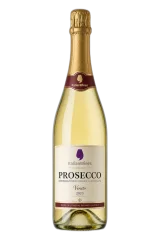
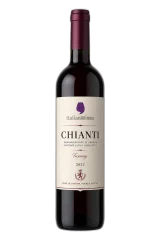
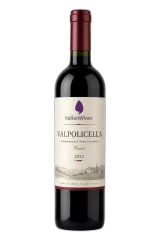
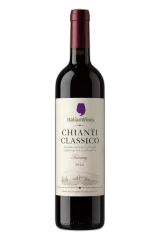
Glera is the main grape in Prosecco. Sangiovese appears in several named Tuscan wines. Place and winemaking matter alongside the variety, so check the individual wine before choosing a bottle. Our Italian wine types guide lets you browse by colour, bubbles and sweetness.
Further reading: The Wine Society's Italian grape guide.
Lambrusco (say Lahm-BROO-sko) is a family of grapes.
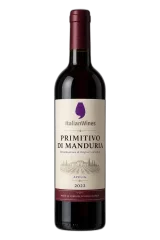
Primitivo (“pree-mee-TEE-vo”) is one of the most popular red wines of Southern Italy.
Pinot Grigio [pee-no-gree-jo] is a white grape variety from Northern Italy.
The Carricante grape [Car-ri-can-te] is a Sicilian white grape variety, deeply rooted in the volcanic terroir around Mount Etna.
Falanghina (“fah-lawn -GHEE-nah”) is a white grape variety of Balkan origin.
Grillo (say GREE-loh) is a native grape, widespread in western Sicily.
Barbera (“bar-BAY-rah”) is one of the most approachable red wines in Italy.
Nero d'Avola (Neh-roh DAH-voh-lah) is the most widespread grape variety in Sicily.
Ribolla Gialla is the ancient white grape of Friuli Venezia Giulia.
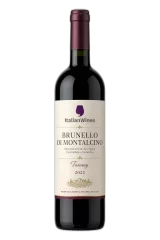
Sangiovese (san-jo-vay-zeh) is the undisputed king of red wines in central Italy.
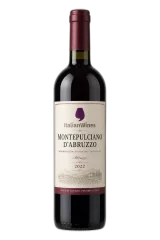
Montepulciano (Mon-teh-pool-chee-ah-noh) is the second most widely planted red grape variety in Italy, after Sangiovese.
Vermentino (vair-men-TEE-no) is an aromatic white grape variety.
Aglianico [ahl-YAH-nee-ko] is an ancient grape variety from southern Italy.
Nebbiolo (Nay-bee-OH-lo) is a native Italian grape variety grown in the northern regions.
Pignoletto (“pee-yoh-LAY-toh”) is a dry, aromatic Italian white wine.
Pecorino (peh-koh-REE-noh) is a grape that captures the essence of Italy's heartland.
Glera is the white grape behind Prosecco, Italy's most celebrated sparkling wine.
Nerello Mascalese [Neh-rel-loh Mas-ka-leh-seh] is a must-try for UK wine lovers.
Arneis is Piedmont's revived white grape.
Bombino Bianco is a white grape from Puglia's Adriatic side, above all around Castel del Monte.
Bombino Nero is Puglia's late-ripening red grape, and it makes serious rosato.
Cabernet Franc is the quieter half of the Bordeaux pair.
Cabernet Sauvignon is a red grape born in Bordeaux, and it reshaped modern Italian wine.
Grenache is a thin-skinned red grape grown across the Mediterranean.
Catarratto is the white grape that built Sicily.
Chardonnay is a white grape with a clear Italian role.
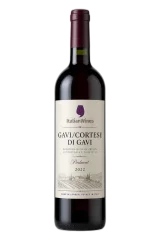
Cortese is the white grape of Gavi DOCG.
Corvina is the main red grape of Verona's wine country.
Corvinone is the big-berried red grape of Valpolicella that everyone took for a large Corvina until 1993.
Dolcetto is Piedmont's everyday red grape.
Erbamat is an ancient white grape from the Brescia hills of Lombardy.
Fiano is the golden white grape behind Campania's benchmark Fiano di Avellino DOCG.
Frappato is the pale, perfumed red of south-eastern Sicily.
Friulano is the benchmark dry white of Friuli Venezia Giulia, in Italy's far northeast.
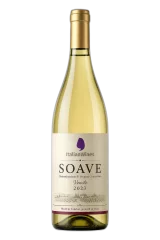
Garganega is the ancient white grape behind Soave.
Gewürztraminer is Alto Adige's lychee-scented aromatic white.
Grecanico is western Sicily's tangy golden-skinned white.
Greco is the structured, smoky white of Campania.
Greco Nero is a red grape from Calabria, Italy's far south.
Lagrein is the dark red grape of Bolzano, in the Alto Adige valleys of northern Italy.
Malvasia Bianca di Basilicata is the native white grape of Lucania.
Malvasia di Candia is a white grape with two faces.
Malvasia di Lipari is the golden-skinned white grape of the Aeolian islands.
Malvasia Istriana is the native white grape of Friuli Venezia Giulia.
Malvasia Nera di Basilicata is a native black grape.
Malvasia Puntinata is the aromatic white grape behind Frascati DOC, Cannellino di Frascati DOCG and Roma DOC.
Mantonico Bianco is one of Calabria's oldest white grapes, at home on the Ionian coast around the town of Bianco.
Marsigliana Nera is a rare red grape from Calabria, grown along the Tyrrhenian coast since ancient times.
Merlot is a red grape with a serious Italian footprint.
Molinara is the pale, sharp third grape of Valpolicella and Bardolino, the one that gave the old blends their freshness.
Moscato is the white aromatic grape behind Moscato d'Asti DOCG and Asti Spumante DOCG in southern Piedmont.
Müller-Thurgau is a white grape that found its truest Italian home among the high-altitude vineyards of Trentino-Alto Adige.
Negroamaro is the dark, warming red of Puglia's Salento, the sun-baked heel of Italy.
Nerello Cappuccio is the softer, darker partner to Nerello Mascalese on Mount Etna.
Pinot Bianco is northern Italy's quiet benchmark white.
Pinot Nero is the Italian name for Pinot Noir, the great red grape of Burgundy.
Prëmetta, also called Prié Rouge, is a native red grape of Italy's Valle d'Aosta.
Prié Blanc is the lone native white grape of Valle d'Aosta.
Riesling is a white grape from Germany's Rhine that has made a second home in Italy's mountains.
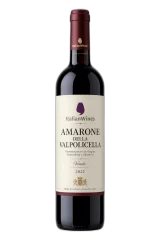
Rondinella is the quiet partner in almost every Valpolicella, Ripasso, Amarone and Bardolino.
Sagrantino is Umbria's great red grape, grown in five hill towns around Montefalco and almost nowhere else.
Sauvignon Blanc is the sharp, green-scented white behind Friuli's Collio and Isonzo bottlings.
Schiava is the light red grape of Alto Adige, sold under its German name, Vernatsch, on most labels.
Susumaniello is Puglia's own black grape, born in the countryside around Brindisi.
Syrah is the dark, structured red of the northern Rhone.
Teroldego is the dark, velvety red grape of the Campo Rotaliano, a gravel plain in Trentino where the Noce meets the Adige.
Trebbiano Abruzzese is the white grape behind Abruzzo's most distinctive whites.
Trebbiano Toscano is the workhorse white grape of central Italy.
Turbiana is the white grape of Lugana DOC.
Verdicchio is the pale straw-gold white grape behind Marche's two benchmark whites.
Vernaccia is the white grape of San Gimignano, the Tuscan hill town with the towers.
Viognier is the golden-skinned white grape of France's northern Rhone, and Italy grows it on purpose.
Zibibbo is the aromatic white grape of Sicily's far south.
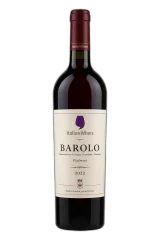
Barolo is a wine from Piedmont made from Nebbiolo grapes. Compare the Nebbiolo guide with the Barolo guide to see how the grape and place fit together.
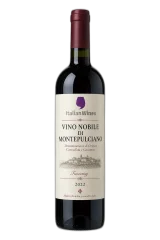
No. Montepulciano is a separate red grape, closely linked to Abruzzo. The Tuscan wine Vino Nobile di Montepulciano is made chiefly from Sangiovese.
Glera is the main grape used for Prosecco. Prosecco is the wine name, rather than the current name of the grape.