Red Grape · Tuscany

Cabernet Franc

The grape that fathered Cabernet Sauvignon, then spent a century in Italy being mistaken for something else entirely.

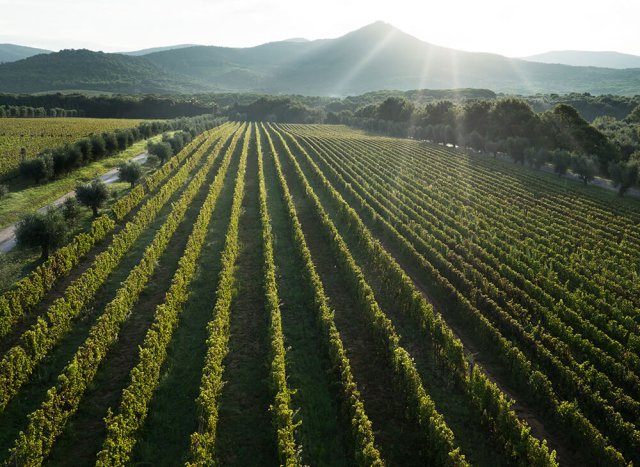
Cabernet Franc is the quieter half of the Bordeaux pair, lighter and more perfumed than Cabernet Sauvignon, which it happens to have fathered. In Italy it does its best work in Bolgheri, where it lifts Super Tuscan blends, and in the cool vineyards of Alto Adige.

65
Bottles live now
18
UK retailers
4
Denominations

Clearing it up

One name, two different wines

vs
This is the grape
Not this

The anchor fact: For most of a century, vines across northeast Italy labelled Cabernet were neither Cabernet Franc nor Cabernet Sauvignon. They were Carmenere, known locally as Cabernet nostrano, and only DNA work in the early 1990s settled it.

Taste · Where it sits

What it’s actually like in the glass

Forget scores out of five. Here’s Cabernet Franc described against grapes you already know.

BodyMiddleweight
LightFull

Lighter than Cabernet Sauvignon and closer to Merlot, which is why it lifts a Bolgheri blend rather than weighting it down.

TanninModerate
SoftGrippy

Present but not gripping. Half the tannic weight of its own offspring, so the wines drink far earlier than a Cabernet Sauvignon of the same age.

AcidityLifted
SoftCrisp

High enough to keep the perfume airborne, and the reason cool Alto Adige bottlings taste so much fresher than their alcohol suggests.

Fruit-sweetnessRed and green
SavourySweet-fruited

Raspberry and redcurrant rather than blackcurrant jam, with a herbal streak that stops the fruit ever reading sweet.

Key flavours

Violet
The perfume Cabernet Franc contributes to a Bolgheri blend, and the reason it is often used in small proportions for aroma rather than structure.
Raspberry
Brighter and redder than the blackcurrant of Cabernet Sauvignon, and the clearest way to tell parent from child in a blind glass.
Green pepper
The pyrazine signature. In cooler Alto Adige sites it can dominate; on the warmer Tuscan coast it recedes to a herbal whisper rather than disappearing.
Blackcurrant
Shows only where the Tuscan coast ripens the grape fully, and even then it sits behind the red fruit rather than leading.
Black cherry
A Bolgheri trait rather than a varietal one, arriving with warmth and giving the wine its darker mid-palate.
Tobacco
Comes with a few years in bottle and with oak, and marks the point where the herbal edge turns from green to dried.
Leather
A slow development note, more common in the Tuscan bottlings that have the structure to age a decade.
Structured · Tannic Soft · Approachable Light-bodied Bold · Full Sangiovese Nebbiolo Merlot Cabernet Sauvignon Primitivo Barbera
Cabernet Franc

The map

Cabernet Franc is medium-bodied, moderate grip, mapped against other red grapes you can buy. The closer a grape sits, the more its weight and grip resemble Cabernet Franc.

Cabernet Francmedium-bodied, moderate grip
Sangiovesefuller, firmer
Nebbiolofuller, firmer
Merlotfuller, firmer
Cabernet Sauvignonmuch fuller, far more tannic
Primitivofuller
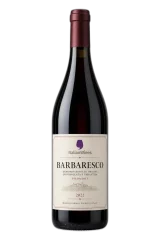
Barberafuller, far softer

Is this for you?

An honest gut-check

Reach for it when…

A bold red that just works

  • You find Cabernet Sauvignon too heavy but want the same family of flavours
  • You like a herbal, savoury edge in red wine
  • You are drinking with herb-heavy food such as lamb with rosemary

Maybe skip it if…

You’re after something else tonight

  • You dislike green or bell-pepper notes in red wine
  • You want a big, dense, tannic red
  • You are looking for sweet ripe fruit above all

Serving guide

Pour it at its best

Serve at

16-18°C

A touch cooler than Cabernet Sauvignon keeps the violet and raspberry in focus.

Decant

30 minutes

Thirty minutes is the sweet spot. Longer blurs the perfume that is the whole point of the grape.

Glass

Bordeaux Glass

A Bordeaux bowl suits the Tuscan bottlings; lighter Alto Adige versions do well in something narrower.

Drink within

3-5 days

Approachable young because the tannins are moderate, unlike its offspring.

Cellar

3-8 years

Good Bolgheri examples hold eight years or so, trading raspberry for tobacco and leather.

Denominations

Where it earns a name on the label

The appellations where Cabernet Franc plays a starring role.

Alto Adige/SüdtirolDOC BolgheriDOC Bolgheri SassicaiaDOC Montello Rosso/MontelloDOCG

Where it grows

The places it calls home

Editorial

About Cabernet Franc

Cabernet Franc is a parent, not a sibling. A natural crossing with Sauvignon Blanc produced Cabernet Sauvignon, which then outgrew it almost everywhere. In Tuscany the two now grow side by side on the Bolgheri coast, where Cabernet Franc is rarely the loudest component of a blend but often the one that supplies perfume and lift.

Growers called it Cabernet nostrano, our own Cabernet, for the better part of a century. It took DNA analysis to reveal they had been tending Carmenere all along.

Carmenere entered Italy's national vine registry in 1996

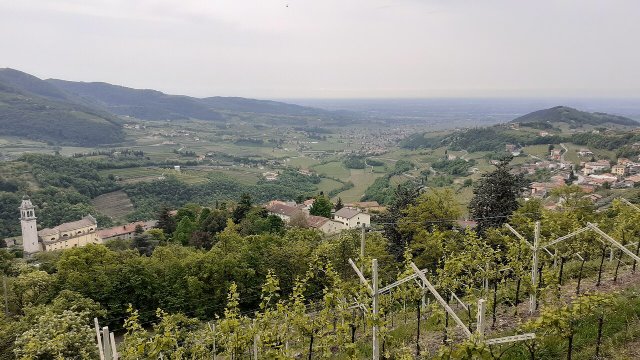
Italy's relationship with the grape is complicated by a long case of mistaken identity. Across the northeast, from Lombardy through Veneto and Trentino to Friuli, growers spent the best part of a century calling a different Bordeaux variety Cabernet nostrano, our local Cabernet. What they were actually growing, in many vineyards, was Carmenere. The two share Bordeaux parentage and a herbal streak, and the vines look similar enough that the assumption held from the late 1800s well into the second half of the 1900s.

The correction came late. DNA work in the early 1990s established Carmenere as a distinct variety rather than a weak or degenerated Cabernet Franc, and it was only entered in Italy's national registry of vine varieties in 1996. By then the confusion had already travelled through decades of nursery material, which is why plantings that were never genetically checked can still surprise their owners.

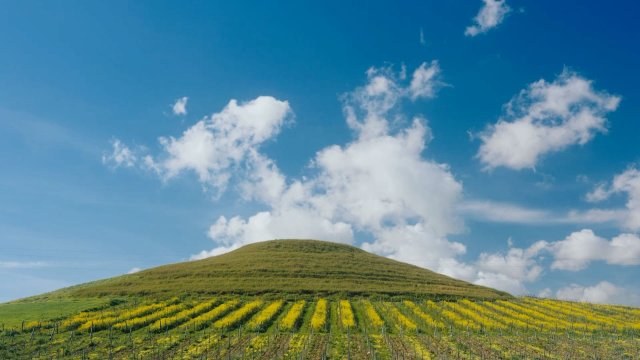
Stylistically the grape sits between Merlot and Cabernet Sauvignon: lighter in body and tannin than the latter, firmer and more aromatic than the former. Cool sites in Trentino-South Tyrol push the herbal, red-fruited register; the warmer Tuscan coast rounds it out into something darker and riper.

Good to know

Frequently asked

They are parent and child. Cabernet Franc crossed naturally with Sauvignon Blanc to produce Cabernet Sauvignon, which is darker, more tannic and fuller in body. Cabernet Franc is lighter, more perfumed and more herbal, with softer tannin and brighter acidity. In Bolgheri both grow on the same coast, and blends often use Cabernet Franc for aroma rather than structure.

Yes, though it is usually a blending partner rather than a headline grape. The Tuscan coast around Bolgheri is the most important home, where it appears in Super Tuscan blends alongside Cabernet Sauvignon and Merlot. It is also grown in Alto Adige, the Veneto and Friuli, where cooler sites give a lighter, more herbal reading of the variety.

Across the northeast, growers called their vines Cabernet nostrano, meaning our local Cabernet, from the late 1800s onward. The vines look similar and both varieties come from Bordeaux with a shared herbal note, so many assumed Carmenere was simply a weaker local form of Cabernet Franc. DNA analysis in the early 1990s proved otherwise, and Carmenere entered the Italian national registry in 1996.

Raspberry and redcurrant fruit, violets, and a distinct green herbal note that can read as bell pepper or fresh leaf. Tannins are moderate and acidity is high, so the wines feel lighter and more lifted than Cabernet Sauvignon. Warmer Italian sites such as the Bolgheri coast bring the fruit darker and riper without losing that herbal signature.

A short decant helps rather than a long one. Thirty minutes opens the perfume, which is the grape's best feature, while extended aeration can blur the herbal lift that distinguishes it. Serve slightly cooler than a Cabernet Sauvignon, around 16 to 18 degrees, and the aromatics stay in focus.

Explore by style

Wine styles made from Cabernet Franc

Jump to the editorial guide for each style this grape turns up in.

Keep exploring

More red grapes

Sangiovese

Sangiovese (san-jo-vay-zeh) is the undisputed king of red wines in central Italy, virtually present in every area of the country Thanks to its many clones and surprising versatility, Sangiovese can create a wide range of wines: from young and fresh Chiantis to complex and full-bodied Brunellos.

Wines 382
Tannin
Body

Explore Sangiovese

Nebbiolo

Nebbiolo (Nay-bee-OH-lo) is a native Italian variety cultivated in the northern regions, whose name derives from the word “Nebbia” which is Italian for fog.

Wines 314
Tannin
Body

Explore Nebbiolo

Merlot

Merlot is a red grape with a serious Italian footprint: Bolgheri DOC, Bolgheri Rosso, Cortona DOC, Suvereto DOCG, Rubicone IGT and Montello Rosso DOCG form its Italian map.

Wines 164
Tannin
Body

Explore Merlot