




Wine route
Strada del Vino dell'Etna
2 days · 8 stops
Open the driveYour cellar, your trips, and the wines you've been tracking are right where you left them.
New here?
Free, always. Education first, we'll never sell you anything you didn't ask to see.
Already have an account?
Enter the email you signed up with and we'll send a link to choose a new password.
Sicily · DOC
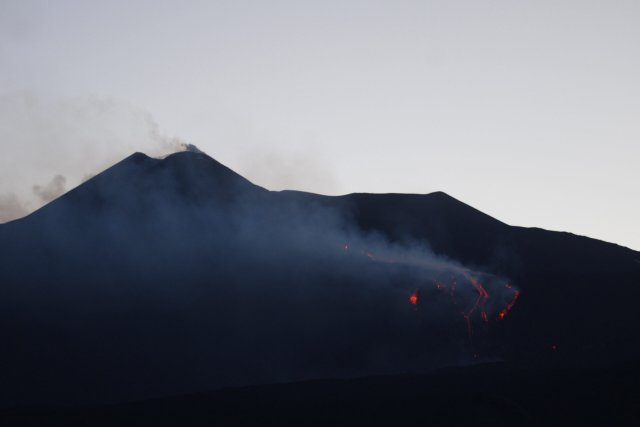
Etna was Sicily's first DOC, created in 1968. It is the only Italian wine name written on the side of an active volcano. The zone covers 20 towns and 133 named contrade. They spread across the north, east, south-east and south-west slopes. Nerello Mascalese makes the reds, and Carricante makes the whites.
Decode the label
One denomination, 6 things it can say on the front. Colour first, then the qualifier.
On the label
Etna Rosso
the volcano's red
Pale, perfumed, firm: closer to fine Burgundy than to the Sicilian reds of the plains.
In stock from £14.90 See the 89 bottles ↓On the label
Etna Rosso Riserva
the patient tier
Rare and deliberate: the tannin knits, the smoke settles, dried cherry takes over.
In stock from £71 See the 2 bottles ↓On the label
Etna Bianco
the saline white
Lemon pith, crushed stone and sea air: acidity that ages like Riesling.
In stock from £15.90 See the 63 bottles ↓On the label
Etna Bianco Superiore Milo only
one village, one white
Italian wine law names a single village for a single white: high, wet, east-facing Milo.
In stock from £24.19 See the 6 bottles ↓On the label
Etna Rosato
red grapes, pale wine
Serious, stony rosato with red-berry lift: the volcano at its most refreshing.
In stock from £16.40 See the 18 bottles ↓On the label
Etna Spumante
volcanic bubbles
Bottle-fermented on the mountain's acidity: Sicily's answer to grower fizz.
In stock from £24 See the 3 bottles ↓The boundary
Everything on this page, the estates, the bottles, the sub-zones, sits inside this line.
Wine route
2 days · 8 stops
Open the drive
Estate 1
Randazzo · North slope
Tastings available
Estate 2
Viagrande
Tastings available
Estate 3
Passopisciaro
Tastings available
Estate 4
Castiglione di Sicilia · North slope
Tastings available
Estate 5
Rovittello
Tastings available
Estate 6
Milo
Tastings available
Estate 7
Randazzo
Book online
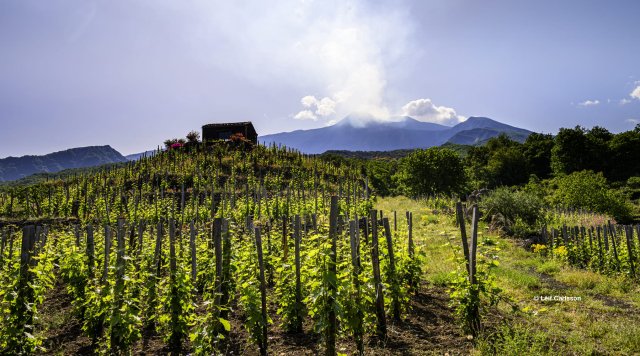
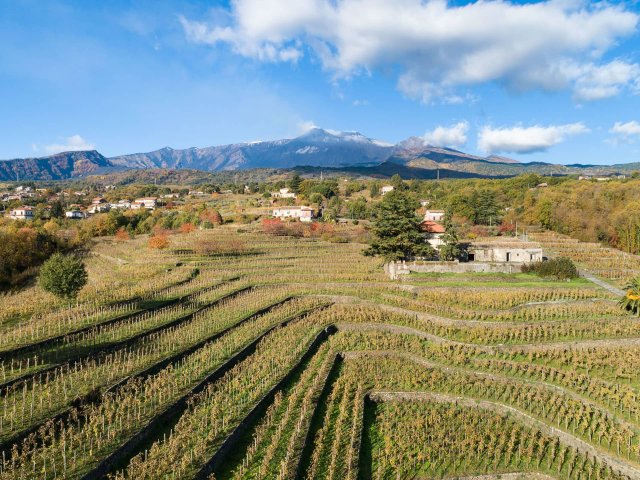
The zone arcs around the eastern side of the volcano, from Randazzo in the north to Santa Maria di Licodia in the south-west: a horseshoe that never closes, because the western flank belongs to the lava. Vineyards climb from the foothills to between 1,000 and 1,200 metres, terraced in black stone, which is why a Sicilian wine can taste almost alpine.
Inside the zone
Click or tap a pin for its estate. The numbered pins match the estate cards below.
Towns worth knowing
In the glass
One profile at a time, never blended into a single set of bars.
Cherry
Red forest berries
Liquorice

Tobacco

Apple
Citrus fruit
Orange blossom
Apple blossom
Red forest berries
Citrus fruit
Orange blossom
The disciplinare
The same table on every denomination page, one row group per style here, because Etna writes its rules per colour.
 Nerello MascaleseThe lead, transparent to its contradaat least 80%Nerello Cappuccio (Mantellato)Colour and fleshup to 20%
 CarricanteThe lead, the mountain's white60 to 80%CatarrattoFills the balanceup to 40%CarricanteAlone, from one villageat least 80%
Solid means the rules demand it. Striped means optional, up to that amount. The words on the right say the same rule.
Yields are capped at 9 tonnes per hectare low for Sicily, and lower still on the old terraces.
Every wine must pass a release tasting before it may carry the denomination.
Vineyards climb to 1,000-1,200 metres the ceiling of ripeness this far south.
Ageing and alcohol minimums per tier are in the label guide above.
Editor's cellar
By style, today
Live prices, compared across 22 UK retailers.
Cellar doors · inside the zone
7 working estates with their gates open, numbered to match their pins on the map above.
No estates match these filters. Clear a filter to see more.
Experiences in the Etna zone
Cellar experiences here average around €138. These are the strongest fits for this page.
Terrazze dell’Etna
Vineyard tour, tasting of 3 wines An authentic introduction to Nerello Mascalese, the variety that best tells the identity of the volcano. E…
Terrazze dell’Etna
Vineyard tour and tasting of 3 still wines and 1 sparkling wine The restoration of historical terraces meets continuous stylistic research i…
Terrazze dell’Etna
Vineyard tour and tasting of 4 wines Volcanic soil, altitude, and exposure become keys to understanding the nuances that make the northeaste…
The mountain, by flank
The disciplinare names 133 contrade, single parcels in the Burgundy manner, across 20 communes. Nobody needs the list; what matters is which flank of the volcano a wine comes from.

Randazzo and Castiglione di Sicilia, the coolest face of the mountain. Harvests land latest here and most single-contrada bottlings are born here; names like Calderara Sottana, Guardiola and San Lorenzo behave like Burgundy crus in black stone.
The wettest face, catching the Ionian weather. High-perched Milo is the only commune allowed to write Etna Bianco Superiore, and Carricante from here ages for decades. Santa Venerina and Zafferana Etnea complete the flank.
Trecastagni and Viagrande, twenty minutes up from Catania: the gateway slope. Historic palmenti, gentle terraces, and the easiest cellar doors to reach on a Sicily trip.
Biancavilla and Santa Maria di Licodia, where the zone ends. High, sun-struck terraces over the Simeto valley give the ripest, most generous Nerello; then the boundary stops, because beyond lies the lava side.
Vintage provenance
No denomination-wide vintage chart is published for Etna. The consorzio does not maintain an annata table, and the available sources rate individual wines rather than the appellation as a whole. On a mountain where altitude and slope vary this sharply, a single score for the year would hide more than it revealed.
Ask the slope and the altitude, not the year.
What to check instead
The slope: where a wine comes from inside the zone changes what is in the glass. See them above.
The producer: quality here is tracked estate by estate rather than year by year.
Etna Rosso and Rosato must be at least 80 per cent Nerello Mascalese. Nerello Cappuccio, also called Nerello Mantellato, can make up to 20 per cent. Etna Bianco takes 60 to 80 per cent Carricante, and Catarratto fills the balance. Etna Bianco Superiore may be made only in the town of Milo. It demands a minimum of 80 per cent Carricante. Yields are capped at 9 tonnes per hectare. That is 9 tonnes of grapes from about two and a half acres. Every wine must also pass a release tasting before it can carry the denomination. Etna Rosso must reach at least 12.5 per cent alcohol, and it carries no minimum ageing. Rosso Riserva steps up to 13 per cent. It then matures for four years from the first of November of the harvest year. One of those years is spent in wood. Etna Bianco needs 11.5 per cent. Vineyards climb from the foothills to between 1,000 and 1,200 metres. That is why a Sicilian wine can taste almost alpine.
On the table
The home country leads; global pairings that genuinely work follow.
In-depth guide
Etna Rosso and Rosato are built on Nerello Mascalese, which must make up at least 80 per cent of the blend. Nerello Cappuccio is allowed up to 20 per cent. Etna Bianco uses 60 to 80 per cent Carricante, with Catarratto making up the rest. Etna Bianco Superiore is produced only in the town of Milo, and it requires a minimum of 80 per cent Carricante.
It is a named parcel of land on the volcano. Since 2011 these parcels have been written into the Etna DOC rules as official zones. There are 133 of them across 20 towns, and the Etna consortium has mapped 9 more. Nerello Mascalese is very transparent to where it grows, so the contrada named on a label genuinely changes what is in the glass.
The denomination reserves the Superiore label for the town of Milo, on the eastern face. It also asks for at least 80 per cent Carricante, rather than the 60 per cent minimum that applies elsewhere. Milo sits high on the wettest side of the volcano, where Carricante holds acidity exceptionally well. It is a rare case of Italian wine law naming a single village for a single white wine.
They run from the foothills up to between 1,000 and 1,200 metres above sea level. That is extraordinarily high for a latitude this far south. Add the volcano's own cooling effect and wide day-to-night temperature swings, and you get pale, high-acid, structured reds. The Sicilian climate would otherwise suggest a dark, jammy style.
Four: north, east, south-east and south-west. There is no western flank in the denomination, because that side of the mountain is where lava flows most often. Each slope behaves differently. The cooler northern flank around Randazzo and Castiglione di Sicilia harvests latest, and it produces most of the single-plot bottlings.
Both, and it also produces rosato and traditional-method sparkling wine. Etna Rosso from Nerello Mascalese is the best known internationally. Etna Bianco from Carricante has an equally strong following, especially the Superiore from Milo. The denomination has been making all of these styles since it was created in 1968.
Explore more Sicily
Same region only: the denominations Etna drinkers reach for next.