









 722 wines
 31 denominations









Chardonnay is a white grape with a clear Italian role.
Wines
626
Acidity
Body
White Grape · Sicily
For a century Catarratto filled Sicily's tanks and Marsala's cellars in near-anonymity; today the island's most-planted grape is the one to watch, turning thick-skinned, sun-loving fruit into saline, almond-edged whites with a straight face and a long finish.
Catarratto is the white grape that built Sicily. For generations it was the island's most-planted vine. It was also the workhorse behind oceans of Marsala. It grows across Trapani, Palermo and Agrigento. It has shed its bulk-wine past to make briny, almond-scented dry whites, and it lends body to the high whites of Etna Bianco DOC.
Your cellar, your trips, and the wines you've been tracking are right where you left them.
New here?
Free, always. Education first, we'll never sell you anything you didn't ask to see.
Already have an account?
Enter the email you signed up with and we'll send a link to choose a new password.
Also known as
The heavily bloomed, thicker-skinned biotype that once carpeted western Sicily and fed the Marsala trade.
A near-waxless mutation with a polished, shiny skin, now favoured for fresh single-variety whites.
Growers increasingly print Lucido on its own, as if it were the wine's name rather than a biotype of Catarratto.
The anchor fact: Comune and Lucido are two registered biotypes of one grape, not two varieties; lucido, meaning shiny, describes a skin with almost no bloom.
Taste · Where it sits
Forget scores out of five. Here’s Catarratto described against grapes you already know.
Fuller than a lean Vermentino, lighter than an oaked Fiano; Trapani's heat builds flesh that Catarratto's saline grip keeps from turning heavy.
A white, so tannin is minimal; only Sicily's amber, skin-contact Catarrattos borrow grip from those famously thick, golden skins.
Acidity is moderate rather than piercing, so the freshness comes from a briny, almond-skin bite instead of the lemon-cut of a high-acid Grecanico or Carricante.
Almost always bone-dry, with ripe peach and yellow apple reading as fruit, not sugar; the sweeter face appears only in passito and old Marsala.
Key flavours



The map
Catarratto is medium-bodied, balanced acidity, mapped against other white grapes you can buy. The closer a grape sits, the more its weight and freshness resemble Catarratto.
Is this for you?
Reach for it when…
Maybe skip it if…
Serving guide
Serve at
10-12°C
Serve at 10-12C: too cold and the almond and saline notes go mute, too warm and the modest acidity sags.
Decant
Not needed
No decant needed; a young Catarratto shows everything on pouring, so just give it a cold glass.
Glass
Chardonnay Glass
A broader white glass suits it, since the extra air lifts the peach and white-flower notes clear of the salinity.
Drink within
3-5 days
Most bottles are built for their first two or three years, when the fruit is brightest.
Cellar
Up to 5 years
Only the low-yield hill and old-vine Lucido bottlings reward five years, turning honeyed and mineral.
On the table
Start with the home-table matches that made the grape, then browse the full cuisine library.

Fried and golden
The saline, almond-edged Catarratto slices through the fried shell and rich ragu or mozzarella centre far better than a soft, low-acid white.

Swordfish, Sicilian style
Capers, olives and tomato need a wine with weight and salt rather than sweetness; a Trapani Catarratto meets the sauce and stays savoury.

Baked mussels
Oregano-and-breadcrumb mussels mirror the grape's briny, herbal side, while its medium body copes with the garlic and oil.
Browse every pairing
Buy it · three to start with
A curated trio across the price range, then every Catarratto on sale in the UK right now.
Entry · everyday
 1 retailer
Sicilia
1 retailer
£13.50
+ delivery
Why this one: Cusumano's Lucido is the benchmark introduction: unoaked, stainless-clean, all lemon, almond and salt for well under fifteen pounds.
Special occasion
 1 retailer
Terre Siciliane
1 retailer
£42.76
+ delivery
Why this one: Mazzei's single-contrada Catarratto at Noto is the grape's serious face: textured, saline and built to gain honeyed depth over a few years.
12 of 22 bottles
 5 retailers
Sicilia
5 retailers
£14.79
+ delivery
 4 retailers
Etna
4 retailers
£22.00
+ delivery
 3 retailers
Etna
3 retailers
£23.50
£27.00
+ delivery
 3 retailers
Etna
3 retailers
£24.94
+ delivery
 2 retailers
Sicilia
2 retailers
£14.70
£18.37
+ delivery
 2 retailers
Marsala
2 retailers
£18.00
£21.00
+ delivery
 1 retailer
Terre Siciliane
1 retailer
£7.95
+ delivery
 1 retailer
Terre Siciliane
1 retailer
£9.50
+ delivery
 1 retailer
Terre Siciliane
1 retailer
£11.99
+ delivery
 1 retailer
Terre Siciliane
1 retailer
£12.00
+ delivery
1 retailer
Sicilia
1 retailer
£13.50
+ delivery
 1 retailer
Terre Siciliane
1 retailer
£14.31
+ delivery
Denominations
The appellations where Catarratto plays a starring role.
Where it grows


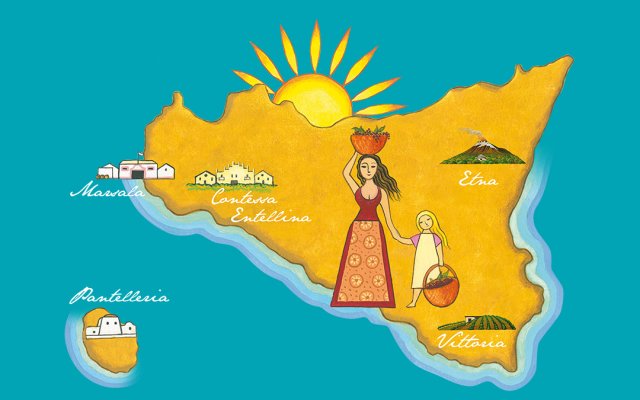
Volcanic Nerello on Etna's black terraces, sun-baked Nero d'Avola on the south-east coast, fortified Marsala in Trapani and UNESCO Zibibbo on Pantelleria: Sicily holds Italy's widest single-region wine map.
The terroir
Catarratto grows across Sicily, but where it sits decides what it becomes.
Western plains
Trapani and Marsala
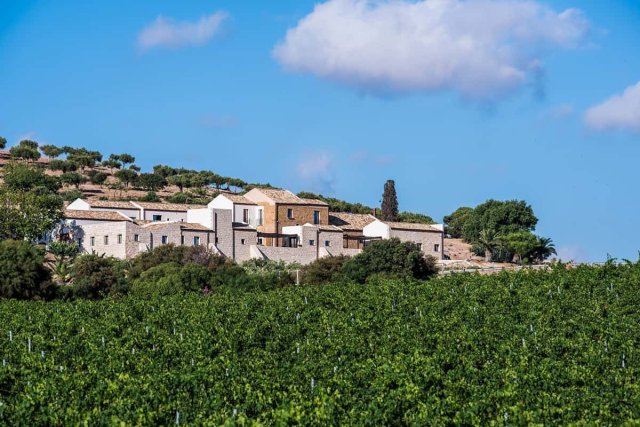
Warm and generous, traditionally the base of Marsala; the historic heartland where salinity and almond run deepest.
Interior hills
Higher Sicilia DOC sites
Cooler nights and calcareous soils give paler, tenser dry whites with more mineral cut.
Etna's slopes
Etna Bianco DOC
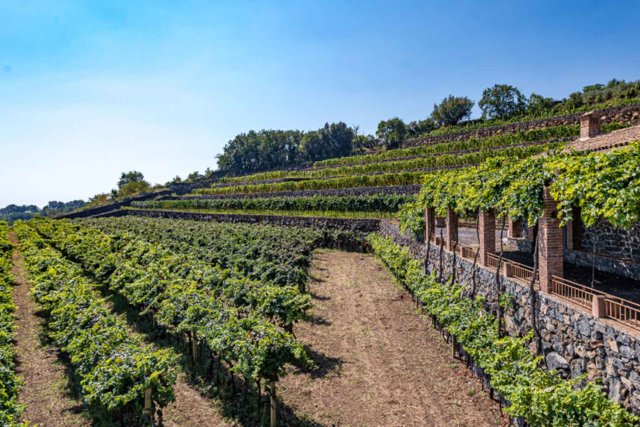
A minority partner to Carricante on volcanic soil, lending flesh to one of Italy's most electric whites.
Producers
Every estate on the site that works with Catarratto.
Editorial
Catarratto has grown in Sicily since at least the Middle Ages. DNA profiling has since placed it as a natural cross. Its parents are Garganega, the Soave grape, and the Calabrian variety Mantonico Bianco. That parentage helps explain its texture, and its knack for holding fruit under a hot sun. For much of the twentieth century it covered more than sixty per cent of the Sicilian vineyard. Most of that crop went into blends with Nero d'Avola, into distillation, or into the fortified cellars of Marsala.
For much of the twentieth century, more than sixty per cent of every vine in Sicily was Catarratto.
Quattrocalici, L'Atlante dei VitigniThe variety splits into two registered biotypes. Catarratto Bianco Comune carries a heavy bloom, or pruina, on a thicker skin. Catarratto Bianco Lucido has a thinner, almost waxless skin that looks polished. That is where the name lucido, meaning shiny, comes from. Growers increasingly favour Lucido for quality wine, and many labels now print Lucido as if it were the wine's own name.
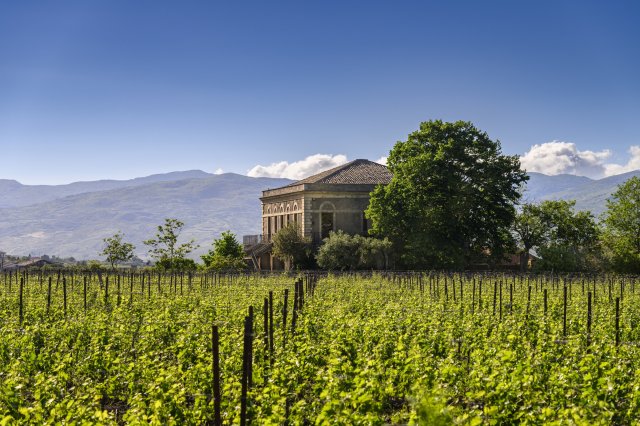
Lower yields and cooler, higher sites have rewritten Catarratto's reputation. From the limestone hills of Trapani it now gives pale, briny whites. They are scented with white flowers, lemon, peach and its signature bitter almond. Old-vine bottlings turn honeyed and stony with age. On Carricante's volcanic slopes it is a permitted minority partner in Etna Bianco DOC. It adds flesh to that wine's high-tension frame, much as Grillo once did for Marsala further west. Today it remains the most-planted grape of any colour on the island.
Good to know
Catarratto makes a dry, medium-bodied white. It has a briny, almost salty character and a signature bitter-almond note. Expect white flowers, lemon, ripe peach and yellow apple. It runs on stony length rather than loud, aromatic fruit.
Almost all Catarratto is bone-dry. Its ripe peach and apple flavours can read as fruity, but the sugar is fully fermented. Sweet versions exist only as passito wines, and as a base for some styles of Marsala.
They are two registered forms of the same grape, not different varieties. Catarratto Bianco Comune has a thicker, heavily bloomed skin. Catarratto Bianco Lucido has a thinner, near-waxless skin that looks polished. Lucido is now the clone growers prefer for quality dry whites.
Catarratto shines with Sicilian seafood and fried food. Its salty edge and its weight handle arancini, pesce spada alla Siciliana and baked mussels. Richer, oak-touched bottlings suit roast chicken or fish in an almond sauce.
Yes. Catarratto has long been one of the main white grapes behind Marsala, alongside Grillo and Inzolia. For centuries much of Sicily's crop went to the fortified-wine and blending trade. The grape's modern revival as a dry white came later.
Catarratto is essentially a Sicilian grape. It is concentrated in the western provinces of Trapani, Palermo and Agrigento. It is the most-planted grape of any colour on the island, and Italy's second-most-planted white variety.
Explore by style
Jump to the editorial guide for each style this grape turns up in.
Keep exploring