






Wine route
Langhe Nebbiolo Route
2 days · 7 stops
Open the driveYour cellar, your trips, and the wines you've been tracking are right where you left them.
New here?
Free, always. Education first, we'll never sell you anything you didn't ask to see.
Already have an account?
Enter the email you signed up with and we'll send a link to choose a new password.
Piedmont · DOCG
The king of Italian wines, born in the Langhe hills of Piedmont. Barolo DOCG is 100 percent Nebbiolo, aged a minimum of 38 months before release. Riserva waits 62 months. Tannic, structured and age-worthy: a wine that rewards patience with cherry, rose, tar and truffle.
Decode the label
One word on the front changes the ageing, the strength and the price.
On the label
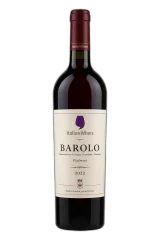
Barolo
the Normale, no extra word
Garnet, tar and roses on a wall of tannin. Commune blends are the classic entry, on sale from 1 January of the fourth year.
In stock from £21.57 See the 394 bottles ↓On the label
Barolo Riserva
five winters in the cellar
The tannin knits, tar turns to leather and dried rose. Made only in years a producer trusts to go the distance.
In stock from £23.90 See the 68 bottles ↓The boundary
Everything on this page, the estates, the bottles, the sub-zones, sits inside this line.
Wine route
2 days · 7 stops
Open the drive
Estate 1
Castiglione Falletto · Central spur
Tastings available
Estate 2
Monforte d'Alba · Ginestra
Tastings available
Estate 3
La Morra · West flank
Tastings available
Estate 4
Serralunga d'Alba · East valley
Tastings available
Estate 5
La Morra
Book online
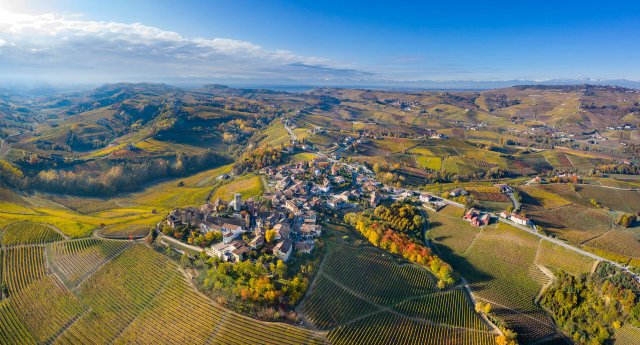
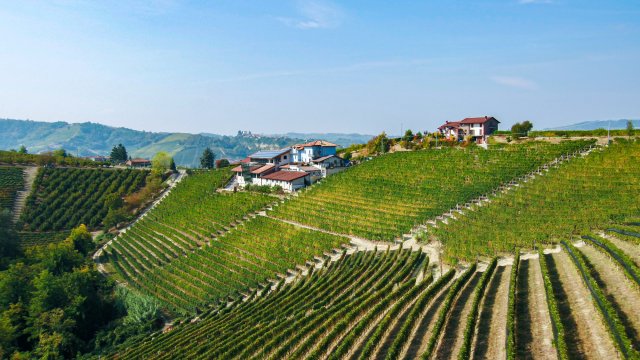
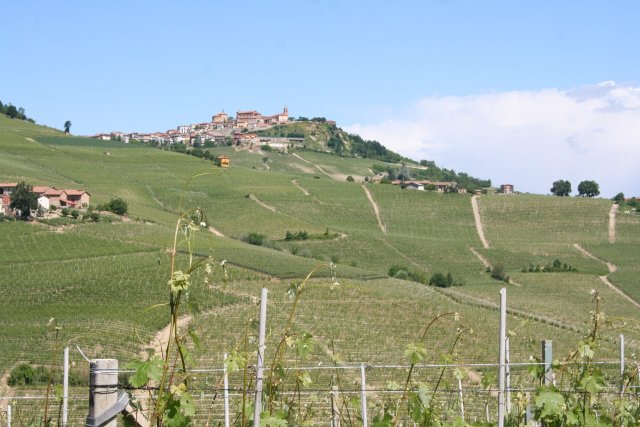
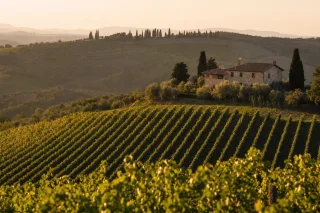
A tight cluster of hills south-west of Alba, in the province of Cuneo: the whole territory of Barolo, Castiglione Falletto and Serralunga d'Alba, plus parts of La Morra, Monforte d'Alba, Novello, Verduno, Grinzane Cavour, Diano d'Alba, Cherasco and Roddi. Two valleys split the map: the Serralunga side runs sterner and longer-lived, the La Morra side rounder and more perfumed, with Castiglione Falletto on the spur between them. The first legal boundary here was drawn in 1933, and today's annex subdivides the same hills into 181 named menzioni.
Inside the zone
Click or tap a pin for its estate. The numbered pins match the estate cards below.
Towns worth knowing
Verduno, Novello, Roddi, Cherasco, Grinzane Cavour and Diano d'Alba complete the eleven; Alba itself sits just outside the line.
In the glass
Black pepper
Cherry

Rose petal

Leather
Liquorice
Red forest berries

Burnt toast
Strawberry
The disciplinare
The same table on every denomination page, straight from the production rules.
 NebbioloAlone, by law: the disciplinare admits no other grape100%
Solid means the rules demand it. Striped means optional, up to that amount. The words on the right say the same rule.
100% Nebbiolo, no exceptions one grape is named and nothing else is permitted.
38 months of ageing before release counted from 1 November of the harvest year, 18 of them in wood.
Riserva waits five full years 62 months, on sale only from 1 January of the sixth year.
Yields are capped at 8 tonnes per hectare and cut further for vigna bottlings from younger vines.
A vigna name must be earned single-vineyard labels need the cru mention, separate vats and the regional vineyard register.
Ageing and alcohol minimums per tier are in the label guide above.
Editor's cellar
By style, today
Live prices, compared across 29 UK retailers.
Cellar doors · inside the zone
5 working estates with their gates open, numbered to match their pins on the map above.
No estates match these filters. Clear a filter to see more.
Experiences in the Barolo zone
Cellar experiences here average around €30. These are the strongest fits for this page.
Azienda Agricola Poderi Marcarini
Taste the wines of the historic Marcarini cellar in La Morra and discover the unique expressions of vineyards so close, yet so different
Eleven communes, one map
The annex names 181 menzioni geografiche aggiuntive, the crus serious labels cite. Eleven commune names sit among them, so a village blend may simply say del comune di on the label.

The namesake village at the heart of the zone; the long Cannubi hill and Sarmassa rise straight above it.
The zone's western flank: Brunate, Cerequio and Rocche dell'Annunziata give La Morra its rounder, more perfumed reputation.
A spur between the two valleys, with Rocche di Castiglione, Monprivato and Villero stacked on its ridge: mid-weight, complete Barolo.
The eastern valley: Lazzarito, Vigna Rionda and Francia make Serralunga the byword for stern, long-lived Barolo.
The southern corner, where the giant Bussia runs into Ginestra and Mosconi: powerful wine, perfume traded for grip.
The northern gate of the zone. Monvigliero is its great cru, and Verduno's wines are the family's most fragrant.
South-western hills around the Ravera cru, a high, open corner of the map beside Barolo village.
Better known for Dolcetto, Diano dips into the Barolo zone along its western edge with a strip of south-facing vineyard.
A small north-eastern slice towards Alba; only part of the commune sits inside the line.
Castle country between Alba and the zone's heart; a partial commune whose name also stands as its own menzione.
The far western tip beyond La Morra, barely inside the line: a sliver of vineyard and a single commune menzione.
The years
Ratings to 2018 follow Italian Wine Info's Barolo table. The 2019 to 2021 scores are read off the Wine Scholar Guild's harvest reports, which describe the growing season rather than scoring it, so treat those three as indicative until a rated Barolo chart catches up.
Reading the years
Legendary vintage for Barolo (IWI)
The short version: Cellar 2010, 2019 and 2021; open 2014, 2017 and 2018 while the big years wait.
Tap a year for its note.
Barolo is made only from Nebbiolo, and no blending is allowed. The rules ask for a minimum of 38 months of ageing before release. At least 18 of those months must be in oak or chestnut casks. Riserva demands 62 months of ageing, again with 18 months minimum in cask. Minimum alcohol is 13 percent. Production is zoned to 11 towns in the Langhe hills of Piedmont. They are Barolo, La Morra, Serralunga d'Alba, Castiglione Falletto, Monforte d'Alba, Novello, Cherasco, Verduno, Grinzane Cavour, Diano d'Alba and Roddi. Since 2010 the zone has been formally divided into 181 Menzioni Geografiche Aggiuntive. They are Piedmont's official single-vineyard classification.
On the table
The home country leads; global pairings that genuinely work follow.
In-depth guide
A DOCG red wine from Piedmont's Langhe hills, made only from Nebbiolo. It is among Italy's most age-worthy wines. The rules set a minimum of 38 months of ageing before release, 18 of them in oak.
100 percent Nebbiolo. The rules permit no blending. The grape thrives on the chalky marl soils of the Langhe hills, and it is known locally for its Lampia, Michet and Rose clones.
A Menzione Geografica Aggiuntiva, the official single-vineyard name ratified by the consortium in 2010. Barolo has 181 MGAs across 11 municipalities, among them famous names like Cannubi, Bussia, Brunate and Vigna Rionda.
Piedmontese classics built for its structure. Think brasato al Barolo, tajarin with white truffle, bagna cauda, aged Castelmagno and Bra cheeses, and slow-braised game. Barolo's tannin and acidity cut fat, and its savoury notes echo truffle and mushroom.
Normale peaks at 8 to 15 years from harvest. Riserva bottlings from structured towns like Serralunga d'Alba or Monforte d'Alba can age 20 to 30 years. Most Barolo benefits from bottle age.
Serve Barolo at 16 to 18 degrees Celsius. Decant Riserva and mature vintages for two to four hours, to open up the aromas. Younger bottles benefit from at least an hour in a decanter.
Explore more Piedmont
Same region only: the denominations Barolo drinkers reach for next.