
Northern Italy

Aosta Valley Alpine air, glacial vines

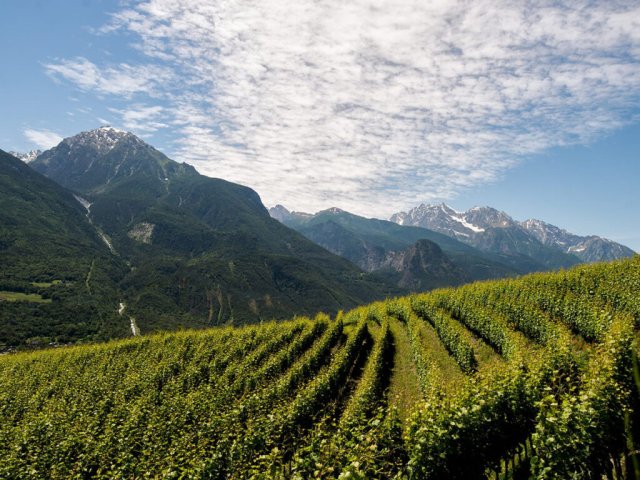
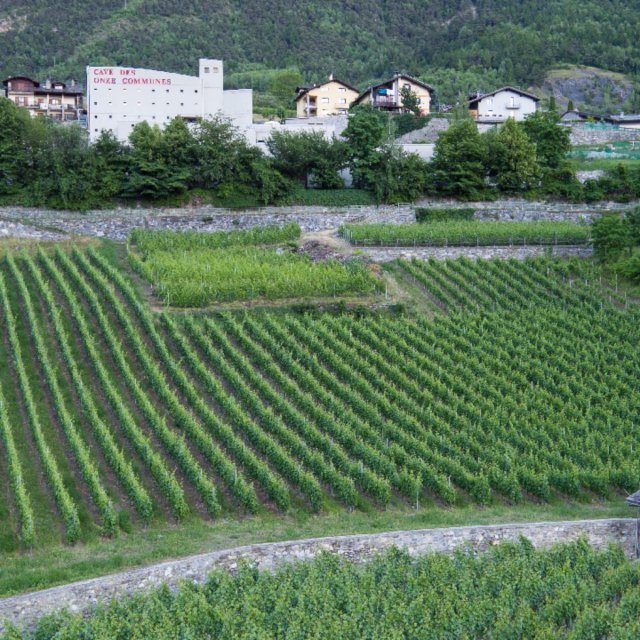
Italy's smallest wine region clings to terraces between 500 and 1,200 metres, where Prie Blanc, Petit Rouge and Picotener (Nebbiolo) catch the alpine sun.

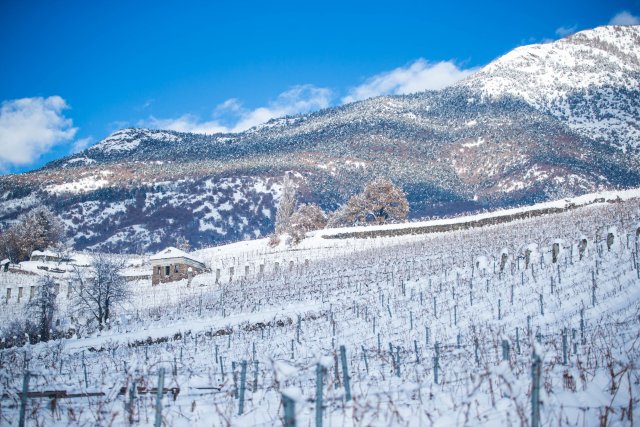
Valle d'Aosta is the smallest wine region in Italy, and for many readers the most surprising one. Around 420 hectares of vineyard cling to terraced slopes between Pont-Saint-Martin in the lower valley and Morgex at the foot of Mont Blanc, where Prie Blanc grows higher than any other production vineyard in Europe.

Wines here come from a single umbrella appellation, the Valle d'Aosta DOC, which then splits into seven sub-zones for villages and grapes that each carry their own profile. Picotener (the local strain of Nebbiolo) drives the structured reds of Donnas and Arnad-Montjovet; Petit Rouge anchors Torrette and Enfer d'Arvier in the central valley; Petite Arvine, Fumin and Cornalin add the alpine signatures that no other Italian region can match.

1
Denomination
9
Heritage grapes
01 · Wine Areas5

Where Aosta Valley wine takes shape

The named places that explain the region's grapes, styles, and labels, plotted across the map.

01

Lower Valley: Donnas and Arnad-Montjovet

The southern entrance to the region, where Picotener (the local Nebbiolo) ripens on dry-stone terraces above the Dora Baltea river.

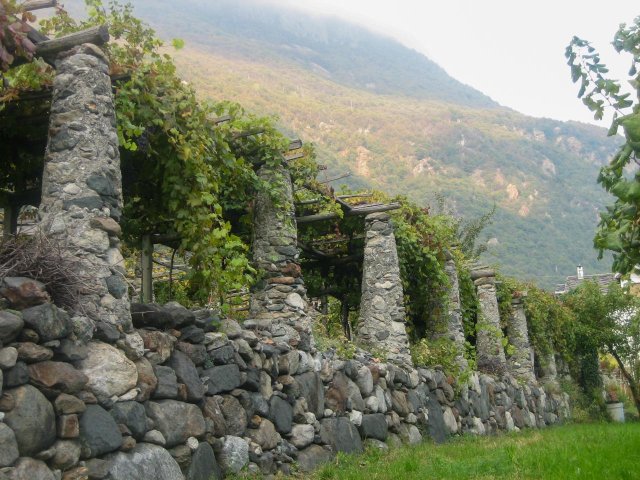
Donnas sits at the same altitude as the lowest vines in Carema across the Piedmont border, and the wines share that lineage: alpine Nebbiolo with bright acidity, savoury wild herb, and a tannic spine cut by altitude. Arnad-Montjovet, slightly upstream, blends Picotener with Freisa, Neyret and Vien de Nus to deliver lighter, more aromatic versions of the same idea. Both sub-zones lean on schist and morainic soils and old pergola training that pre-dates the cooperative era.

Valle d'Aosta/Vallée d'AosteDOC
02

Central Valley: Torrette and Enfer d'Arvier

The valley's broadest sub-zone, where Petit Rouge dominates the blend and the Enfer amphitheatre concentrates summer heat.

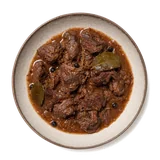
Torrette runs across the slopes around Aosta itself and is dominated by Petit Rouge with supporting roles for Fumin, Cornalin, Mayolet and Vien de Nus. Enfer d'Arvier, named for the natural rock amphitheatre that traps midday sun (its 'inferno'), produces a more concentrated, riper version of the same blend on a tiny patch of vineyard. The wines run from cherry-driven and aromatic to firmly tannic in their Superieur versions, and they pair directly with the local Carbonade.

Valle d'Aosta/Vallée d'AosteDOC
03

Central Valley: Chambave and Nus

Two villages that turned aromatic varieties into a regional signature, from passito Muscat to oxidative Pinot Gris.

Chambave is best known for its Moscato (both dry and passito), grown on dry, sun-baked slopes that concentrate the grape into honey, citrus peel and chamomile. Nus contributes Vien de Nus reds and a unique Malvoisie made from a Pinot Gris strain, often vinified in a slightly oxidative, late-harvest style. Both villages sit on the south-facing flank of the central valley and exemplify the alpine knack for turning short ripening windows into intensity.

Valle d'Aosta/Vallée d'AosteDOC
04

Upper Valley: Blanc de Morgex et de La Salle

The highest production vineyards in Europe, where ungrafted Prie Blanc survived phylloxera at altitude.

Above La Salle and Morgex, between 900 and 1,200 metres at the foot of Mont Blanc, Prie Blanc grows on sandy soils that the phylloxera louse never reached. Vines remain ungrafted on their original rootstock, trained low on pergola to protect against frost. The wines are taut, saline and citrus-driven, often finished as a traditional-method sparkling that mirrors the high-acid austerity of an alpine Champagne. They pair instinctively with Fontina-based dishes.

Valle d'Aosta/Vallée d'AosteDOC
05

International varieties, alpine style

Pinot Noir, Chardonnay, Syrah and Gewurztraminer reframed by altitude and short alpine summers.

Alongside the natives, the Valle d'Aosta DOC permits a roster of international grapes that behave very differently here than they do further south. Pinot Noir from Aosta and the central valley reads more like a Jura or Savoie expression than a warm-region one; Chardonnay (Cuvee Bois at Les Cretes is the local benchmark) pulls minerality from glacial moraine; Syrah ripens slowly into a peppery, lifted style; Gewurztraminer adds a small but expressive aromatic plot. Producers use these grapes to extend their range without diluting the regional identity.

Valle d'Aosta/Vallée d'AosteDOC

02 · Regional Guide6

Understanding Aosta Valley

Layered notes on terroir, history, label rules, taste, drinking window and where to start.

03 · Wines To Know6

What to drink from Aosta Valley

A short shortlist that maps the region: benchmark reds, signature whites and the labels worth a step-up.

04 · Heritage Grapes6

The grapes behind the bottle

6 curated guides with editorial content. Pronunciations, traits and the regional footprint of each variety.

Browse all grape guides

05 · La Tavola5

The table of Aosta Valley

Mountain, pasture and coast on one plate. Pour the regional wine alongside.

Aostan food is mountain food. Fonduta valdostana folds Fontina DOP into eggs and milk and pairs naturally with the lifted aromatics of a Petite Arvine or a Blanc de Morgex. Carbonade, the slow beef and red wine stew, locks onto the dark fruit and savoury edge of a Torrette or a Donnas. Polenta concia, layered with Fontina and butter, asks for a Vien de Nus or a young Pinot Noir from Aosta itself, while Tegole biscuits and chestnut desserts find their match in a Chambave Muscat passito.

06 · On The Ground15

Explore Aosta Valley by place

Wine routes, towns and wineries to follow when you go.

Wine routes

Wine towns

Wineries to follow

07 · Common Questions8

Ask the sommelier

Quick answers about Aosta Valley. Numbers, denominations, food and what to start with.

Aosta Valley is best known for native alpine reds (Petit Rouge in Torrette, Picotener in Donnas) and high-altitude Prie Blanc whites from Blanc de Morgex et de La Salle, all bottled under the umbrella Valle d'Aosta DOC.

Around 420 hectares of vineyard and roughly 20,000 hectolitres a year, which makes it the smallest wine region in Italy by both area and production volume.

Native grapes include Petit Rouge, Cornalin, Fumin, Vien de Nus, Mayolet and Premetta among the reds, and Prie Blanc among the whites. Picotener is the local strain of Nebbiolo grown around Donnas, and Petite Arvine is shared with the Swiss Valais.

It is a single bilingual umbrella DOC (Valle d'Aosta / Vallee d'Aoste, recognised in 1971) that splits into seven sub-zones (Donnas, Arnad-Montjovet, Chambave, Nus, Torrette, Enfer d'Arvier, Blanc de Morgex et de La Salle) and a list of permitted varietal labels.

The sandy soils of the upper valley around Morgex and La Salle were never reached by phylloxera, so Prie Blanc still grows on its own roots in Europe's highest production vineyard, between roughly 900 and 1,200 metres.

Fonduta valdostana with Fontina DOP suits Petite Arvine or Blanc de Morgex; Carbonade (slow beef and red wine stew) leans into Donnas Picotener or Torrette; polenta concia pairs with Vien de Nus or Aostan Pinot Noir; Tegole biscuits and chestnut tarts find their match in a Chambave Muscat passito.

We currently curate 6 active Aosta Valley grape guides, including Chardonnay, Nebbiolo, Pinot Grigio, Pinot Nero, Prëmetta, and more. This is an editorial selection, not the complete regional grape list.

Aosta Valley is renowned for dishes including Carbonade, Fonduta, Polenta alla Valdostana, Tegole.

08 · Keep Exploring

Your next pour

More of Northern Italy, with similar terroir and table.

Wine styles made in Aosta Valley

Italian Red wine

Red

Italy's boldest expression, structured, complex, built for food

wines 12 grapes
Explore red
Italian White wine

White

Crisp and versatile, from alpine freshness to Mediterranean warmth

wines 12 grapes
Explore white