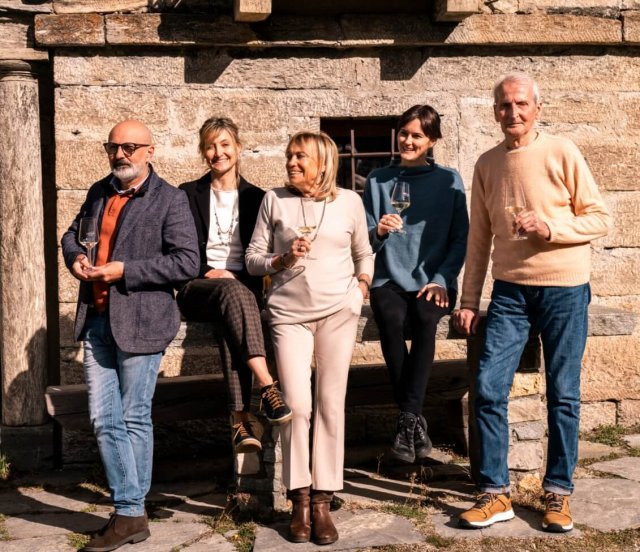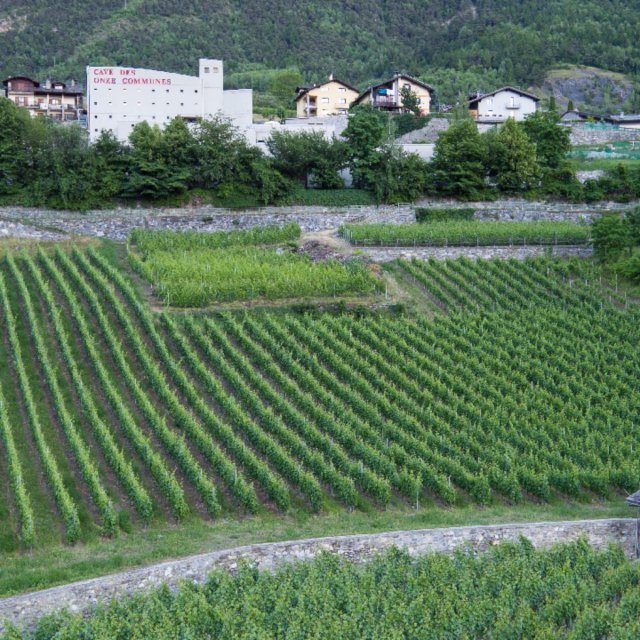
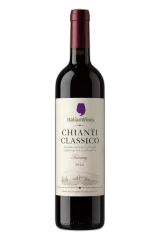
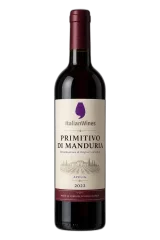
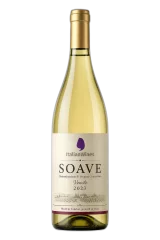
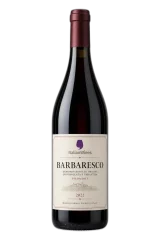
The cooperative was founded in 1983 on the base of an earlier Association des Viticulteurs, an initiative stitched together by Don Bougeat, parish priest of Morgex until 1971, and given form by the Valle d'Aosta regional administration. Before the Cave, single vignerons sold tiny lots in their own villages; the new structure consolidated production and gave the Blanc de Morgex its first stable presence on a national wine list. Forty years on, the membership has grown to roughly 80 growers and annual output sits around 140,000 bottles.
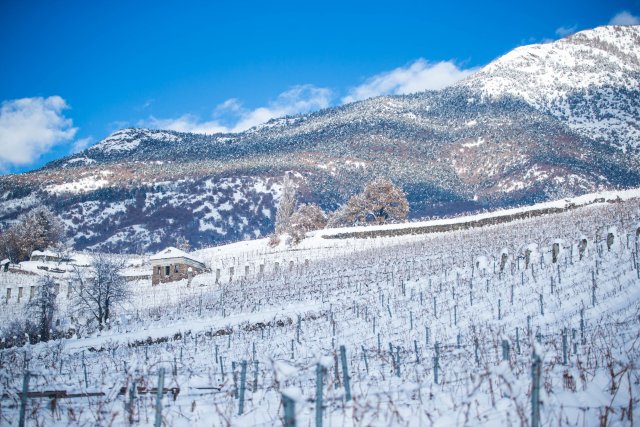
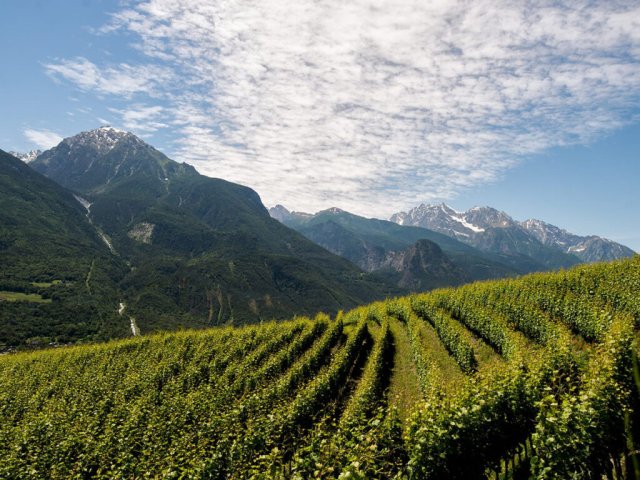
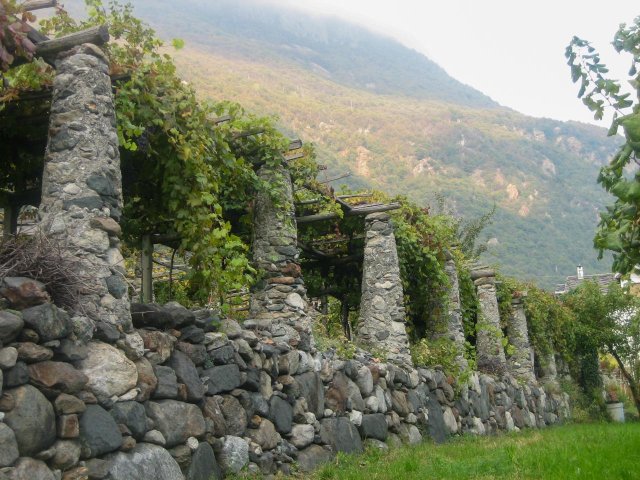
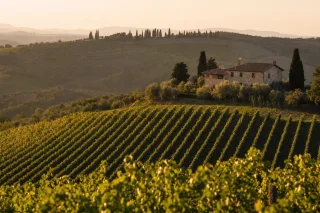
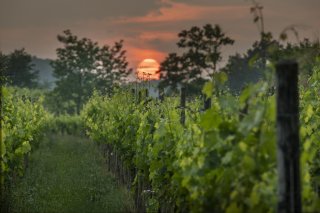
The vineyards run along the left bank of the Dora Baltea between Morgex and La Salle, climbing the lower flanks of Mont Blanc from 900 to 1,200 metres. At that altitude phylloxera cannot survive, so the vines are still grown on their own roots, a survival of pre-1860s viticulture that is almost extinct elsewhere in Europe. Pergola-low training keeps the canopy close to the radiating heat of the stones and out of the worst alpine wind, while late budbreak protects the buds from April and May frosts. The whole estate is a single grape: Prié Blanc, the biotype called Blanc de Morgex, which finishes its vegetative cycle in the short window between melting snow and the first autumn cold.
In the still Blanc de Morgex et de La Salle DOC the Prié Blanc lands as a cool, mineral wine with a sharp citrus core and a saline finish that tastes of mountain water. The Cave's classic-method spumanti, led by Cuvée du Prince, Cuvée des Guides and Blanc du Blanc, take that nervous acidity into the cellar for second fermentation and turn it into one of the most distinctive high-altitude sparkling styles in the country. A Charmat tier, several vini estremi bottlings and the Chaudelune ice wine round out the range.
The cellar sits in the La Ruine hamlet of Morgex, opposite the Skyway gondola that runs up to Punta Helbronner. The point of sale opens to visitors during the week, and the shop ships across Italy on request. For a Valle d'Aosta itinerary, this is the upper-valley anchor: from here the wine road descends through Aymavilles, Chambave and Donnas, but no other Italian DOC begins this close to a 4,000-metre summit.