





















Chardonnay is a white grape with a clear Italian role.
Wines
626
Acidity
Body
White Grape · Friuli Venezia Giulia
Pinot Grigio is a grey-skinned mutation of Pinot Noir living a double life: pale, neutral and industrial by the tanker from the Venetian plain, yet mineral, textured and serious in the hills of Alto Adige and Friuli, and coppery as skin-contact ramato.
Pinot Grigio [pee-no-gree-jo] is a white grape variety from Northern Italy. The grape makes a wine with bright acidity and a light body. That is a refreshing combination. Many people around the world love Pinot Grigio.
Your cellar, your trips, and the wines you've been tracking are right where you left them.
New here?
Free, always. Education first, we'll never sell you anything you didn't ask to see.
Already have an account?
Enter the email you signed up with and we'll send a link to choose a new password.
Setting it straight
The anchor fact: Not really: the ocean of pale, neutral Pinot Grigio comes from high-yield vines on the flat Venetian plain, while the very same grape turns mineral and textured in the hills of Alto Adige and Friuli, and coppery when left on its grey skins as ramato.
Taste · Where it sits
Forget scores out of five. Here’s Pinot Grigio described against grapes you already know.
Light and quick on its feet in the everyday style, though thirty days on the skins for ramato, or six months on the lees in Collio, push it towards genuine mid-weight.
A white, so effectively tannin-free when pressed off its skins fast; leave the grey skins in for ramato, though, and you get a real phenolic tug no pale Venezie bottle has.
High, clean and the whole point: it is the acid spine that keeps even the lightest version lively, and it puts Pinot Grigio in the zippy northern camp with Garganega, not the soft south.
Made bone dry, with subdued orchard fruit (pear, apple, a touch of white peach) standing in for any sweetness. Subtle by design, which is why cheap examples can taste of almost nothing.
Key flavours
The map
Pinot Grigio is light to medium, crisp, fresh acidity, mapped against other white grapes you can buy. The closer a grape sits, the more its weight and freshness resemble Pinot Grigio.
Is this for you?
Reach for it when…
Maybe skip it if…
Serving guide
Serve at
8-10°C
Serve it properly cold, 8 to 10 C, so the acidity reads as freshness; too warm and the neutral styles fall flat.
Decant
Not needed
No decanting: there is nothing to unwind, and air only blows off the delicate aromatics.
Glass
Standard White Wine Glass
A standard white glass is plenty; the aromas are subtle, so a huge bowl just scatters them.
Drink within
5-7 days
Drink it young: within a year or two of the vintage the fruit is brightest, and it only fades from there.
Cellar
1-2 years
Not built to age. Buy the latest vintage; only the top Collio and ramato bottlings reward a year or two in the rack.
On the table
Start with the home-table matches that made the grape, then browse the full cuisine library.

The lagoon's own white
Soft white polenta and tiny grey schie shrimp are delicate, sweet and faintly briny; the pale Delle Venezie style's lemon-and-pear freshness lifts the dish without ever burying the shrimp. A pairing born within sight of the vineyards.

Sweet-savoury Carnian ravioli
These Carnian ravioli fold raisin, cinnamon and smoked ricotta into one sweet-savoury bite; a textured Friulian Pinot Grigio from the same hills has the salinity to meet the smoke and enough orchard fruit to echo the sweetness.

Alpine comfort from South Tyrol
Buttery spatzle and speck-and-cheese dumplings are rich alpine food; a high-altitude Alto Adige Pinot Grigio grown on the slopes above answers them with lime-edged acidity that keeps every forkful fresh.

Bitter Treviso radicchio
Treviso radicchio brings a pleasant bitterness that flatters Pinot Grigio's own faintly almond-skin finish; a coppery ramato with a little phenolic grip stands up to the leaf far better than a wispy plain version.
Browse every pairing
Buy it · three to start with
A curated trio across the price range, then every Pinot Grigio on sale in the UK right now.
Special occasion
 3 retailers
Collio Goriziano/Collio
3 retailers
£17.00
£19.10
+ delivery
Why this one: The serious northeastern face. Marco Felluga's Mongris comes off the marl-and-sandstone Ponca soils of Collio in Friuli, rested six months on its lees into a saline, mineral, faintly coppery white with real length. Proof that Pinot Grigio can be a benchmark, not a bystander.
12 of 157 bottles
 6 retailers
Friuli Colli Orientali
6 retailers
£27.00
+ delivery
 5 retailers
Alto Adige/Südtirol
5 retailers
£12.24
+ delivery
 4 retailers
Trentino
4 retailers
£12.10
+ delivery
 4 retailers
Toscana
4 retailers
£14.50
+ delivery
 4 retailers
Alto Adige/Südtirol
4 retailers
£20.50
+ delivery
 4 retailers
Prosecco
4 retailers
£20.50
+ delivery
 3 retailers
Delle Venezie
3 retailers
£10.46
£12.74
+ delivery
 3 retailers
Delle Venezie
3 retailers
£15.50
+ delivery
3 retailers
Collio Goriziano/Collio
3 retailers
£17.00
£19.10
+ delivery
 3 retailers
Alto Adige/Südtirol
3 retailers
£27.90
£31.00
+ delivery
 3 retailers
Alto Adige/Südtirol
3 retailers
£148.00
+ delivery
 2 retailers
Delle Venezie
2 retailers
£8.00
£10.00
+ delivery
Denominations
The appellations where Pinot Grigio plays a starring role.
Where it grows

Italy's white-wine heartland, where Friulano, Ribolla Gialla and skin-contact orange wines meet alpine air, Adriatic light and the cooking of San Daniele and Read more
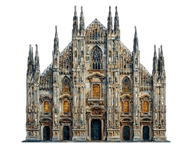
From Franciacorta classic-method bubbles to Valtellina mountain Nebbiolo and Lugana lake-cool whites, Lombardy spans 5 DOCGs across roughly 25,000 hectares of Read more
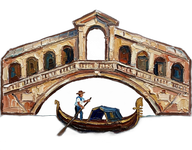
Italy's largest wine region by volume, where Prosecco hills, Valpolicella ridges, and Soave's volcanic plain shape three different Italian classics. Read more
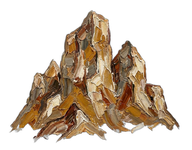
Italy's alpine wine country: Teroldego from the Piana Rotaliana, Trento DOC sparklers raised on dolomitic limestone, and Alto Adige whites perfumed by glacial Read more
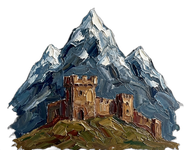
Italy's smallest wine region clings to terraces between 500 and 1,200 metres, where Prie Blanc, Petit Rouge and Picotener (Nebbiolo) catch the alpine sun. Read more
The terroir
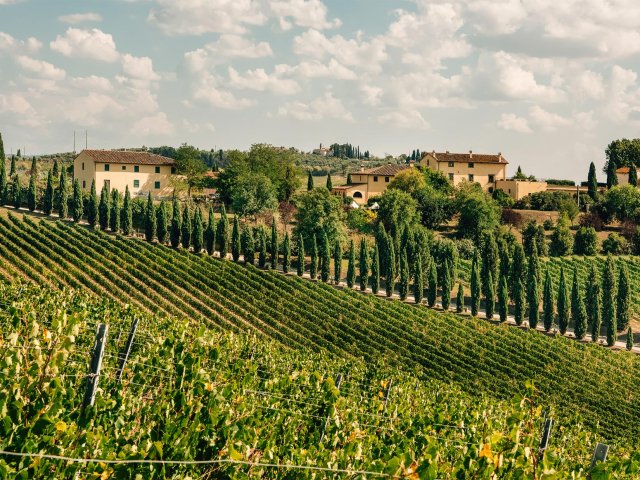
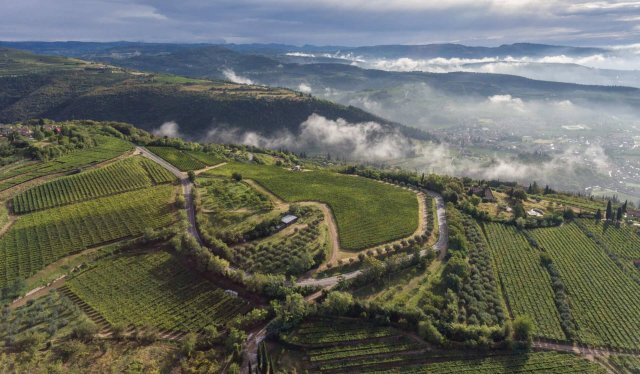
Pinot Grigio's split personality is really a map. On the flat, fertile plains it makes oceans of neutral wine; climb into the northeastern hills and the same grape finds tension, minerals and texture. Altitude, poor soils and cool alpine nights are what separate the serious bottles from the anonymous ones.
Alto Adige
The steep, high valleys of the South Tyrol, with vines climbing towards 800 metres on limestone and porphyry.
The mountain benchmark: cool nights and altitude give a taut, pear-and-almond Pinot Grigio with lime-edged acidity and real finesse, a world away from the plains.
Collio and Friuli
The border hills of Collio and the Colli Orientali in Italy's far northeast, on the marl-and-sandstone soil locals call Ponca.
Texture and salinity: low yields and lees ageing make weighty, mineral, golden wines, and this is the heartland of the coppery ramato style.
Veneto and the Venetian plain
The flat, fertile Po and Adige plains behind Venice, engine room of the vast Delle Venezie zone.
The industrial workhorse: high yields and early picking make the pale, light, inexpensive Pinot Grigio that fills supermarket shelves worldwide.
Producers
31 estates on the site work with Pinot Grigio. Eight at a time, and the line-up changes every week.
Editorial
Most Pinot Grigio grapes go into the classic white Pinot Grigio wine. Four main regions make it: Friuli-Venezia Giulia, Veneto, Trentino-Alto Adige and Lombardy.
Pinot Grigio is genetically Pinot Noir: a single mutation turned the black grape's skins a dusky grey-pink, and the identical French grape is simply called Pinot Gris. One vine, two colours, and depending on the border, two names.
Grape genetics per Robinson, Harding and Vouillamoz, Wine GrapesPinot Grigio’s history stretches far back. It has been planted since the Middle Ages. Pinot Grigio is historically a French grape. It began in the Burgundy region, as a mutation of the Pinot Noir grape. Its skins are not like other white grape skins. They have an alluring blue-grey tinge. That led to its name in French, Pinot Gris, meaning ‘grey pinot.’ In Italian, grigio means grey! Centuries ago the grape travelled quickly to Switzerland. From there it did not take long to reach the regions of Northern Italy. Yet it was not until the 1990s that Pinot Grigio’s popularity grew outside the Italian market. Now it is one of the top 5 most popular Italian grape varieties. Today Pinot Grigio is produced all over North-Eastern Italy. It thrives in places with high altitude and plenty of sun. Its most prestigious production areas create some exciting, acidity-driven wines. Friuli-Venezia Giulia is a prime example, with its impressive hillside vineyards.
The simplicity of Pinot Grigio makes for some easy-drinking wine.
Good to know
Pinot Grigio is dry and still white wine. It is light-bodied with bright acidity. It also has a delicate pale color.
Pinot Grigio is refreshing with lively acidity. It is light on the palate, with citrus and orchard fruit flavors. Pinot Grigio can also express notes of white peach and white flowers.
Pinot Grigio is typically a dry wine
Pinot Grigio is produced mainly in Italy, in four specific regions: Fruili-Venezia Giulia, Veneto, Trentino-Alto Adige, and Lombardy. Pinot Grigio is also grown in other parts of the world such as many parts of France, where it is known as Pinot Gris.
Pinot Grigio pairs with mostly mild foods such as fresh cheeses, like mozzarella and goat cheese. Pinot Grigio also shines with acidic foods. Seafood with fresh lemon or lime is a great pairing. If you do not love seafood, Pinot Grigio pairs brilliantly with chicken.
Explore by style
Jump to the editorial guide for each style this grape turns up in.
Keep exploring