Red Grape · Abruzzo

Montepulciano

Italy's great everyday red - dark, soft-tannined and built for the dinner table, not the auction room.

Montepulciano (Mon-teh-pool-chee-ah-noh) is the second most widely planted red grape variety in Italy, after Sangiovese. It is cultivated all over the peninsula, especially on the Adriatic coast in the central and southern regions, and it is the grape used for one of the most popular Italian wines, Montepulciano d’Abruzzo.

36
Bottles live now
13
UK retailers
9
Denominations

Clearing it up

One name, two different wines

vs
This is the grape

Montepulciano d'Abruzzo

The grape, made along the Adriatic

  • From AbruzzoCentral-eastern Italy, on the Adriatic coast.
  • Soft, dark and givingPlush tannin, blackberry depth, easy to love young.
  • Brilliant valueHonest weeknight reds, often under 15 pounds.
Not this

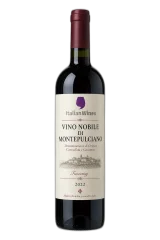
Vino Nobile di Montepulciano

A place, a town in Tuscany

  • From TuscanyA hilltop town 250 km away.
  • Made from SangioveseFirm, savoury, a wholly different grape.
  • A serious cellar wineAged, ambitious and priced to match.

The anchor fact: Montepulciano the grape is genetically unrelated to Sangiovese, the grape behind Vino Nobile. DNA profiling finally separated the two after a century of confusion.

Taste · Where it sits

What it’s actually like in the glass

Forget scores out of five. Here’s Montepulciano described against grapes you already know.

BodyFull & warming
LightFull

Weightier than Chianti, a shade less imposing than a young Barolo.

TanninFirm but soft-edged
SoftGrippy

Grippier than Pinot Noir, far gentler than Nebbiolo.

AcidityFresh, food-friendly
SoftZippy

Bright enough to cut through ragu and roast lamb.

Fruit & sweetnessRipe, fully dry
DrySweet

Dark, jammy fruit reads almost sweet, but the wine is dry.

Key flavours

Blackberry
The dark, brambly core of every Montepulciano - its thick, pigment-rich skins push blackberry to the front.
Blueberry
A rounder, cooler-toned berry that creeps in from the higher Teramo hillsides, softening the blackberry edge.
Violet
A floral lift that separates Montepulciano from Sangiovese cherry; most obvious in younger, cooler-grown wines.
Leather
A savoury note that only emerges with bottle age, drawn from the grapes heavy tannin pigments.
Structured · Tannic Soft · Approachable Light-bodied Bold · Full Sangiovese Nebbiolo Merlot Corvina Primitivo Barbera
Montepulciano

The map

Montepulciano is full-bodied, firm tannin, mapped against other red grapes you can buy. The closer a grape sits, the more its weight and grip resemble Montepulciano.

Montepulcianofull-bodied, firm tannin
Sangiovesea close match
Nebbioloa close match
Merlota close match
Corvinalighter, softer
Primitivosofter
Barberafar softer

Is this for you?

An honest gut-check

Reach for it when…

A bold red that just works

  • You're cooking tomato-rich pasta, lamb or a Tuesday-night roast.
  • You like depth and dark fruit but not mouth-drying tannin.
  • You want real character for around 10 to 15 pounds.

Maybe skip it if…

You’re after something else tonight

  • You love bright, high-acid, lighter reds to sip on their own.
  • You want the grip and perfume of a classic Nebbiolo.

Serving guide

Pour it at its best

Serve at

16-18°C

Cool a touch below room temperature; too warm and the alcohol dominates.

Decant

1 hours

Tight on opening; an hour of air lets the dark fruit unfurl.

Glass

Large Balloon Glass

A wide bowl gathers the blackberry-and-violet aromatics before each sip.

Drink within

3-5 days

Re-corked and chilled, an open bottle holds for several days.

Cellar

Up to 5 years

Most are made for now; Riserva and Colline Teramane reward patience.

Buy it · three to start with

Not sure which bottle? Start here

A curated trio across the price range, then every Montepulciano on sale in the UK right now.

Entry · everyday

Montepulciano d’Abruzzo

Montepulciano d’Abruzzo

Montepulciano d'Abruzzo

2 retailers

£10.04

View Wine

Why this one: The grape at its most recognisable: juicy, soft and dependable.

The sweet spot

Velenosi Brecciarolo

Velenosi Brecciarolo

Appellation TBD

1 retailer

£12.90

View Wine

Why this one: A step up in depth from a benchmark Marche producer.

Special occasion

Montepulciano d’Abruzzo Villa Le Querce

Montepulciano d’Abruzzo Villa Le Querce

Abruzzo

1 retailer

£12.95

View Wine

Why this one: A single-estate bottling: the grape's more serious side.

12 of 36 bottles

Denominations

Where it earns a name on the label

The appellations where Montepulciano plays a starring role.

Montepulciano d'AbruzzoDOC BasilicataIGT Cerasuolo d'AbruzzoDOC Colline Teramane Montepulciano d'AbruzzoDOCG CòneroDOCG Grottino di RoccanovaDOC OffidaDOCG Rosso CòneroDOC Rosso Piceno/PicenoDOC

Where it grows

The places it calls home

The terroir

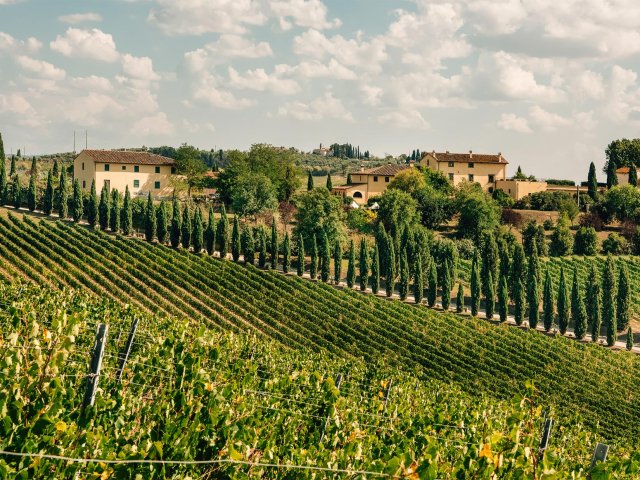
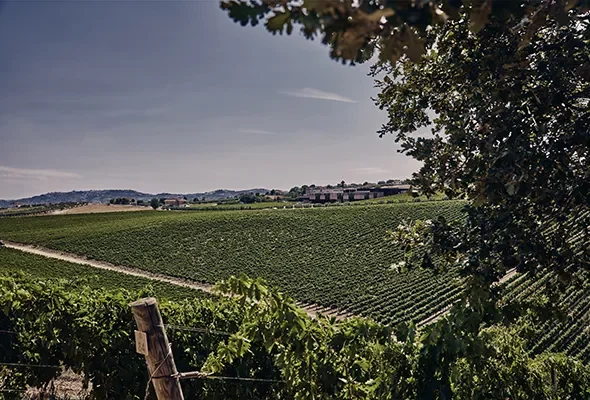
Montepulciano is a chameleon of altitude. On the warm Adriatic plain it ripens fast into soft everyday reds; in the cooler foothills it holds acidity and tannin for wines built to age.

Editorial

About Montepulciano

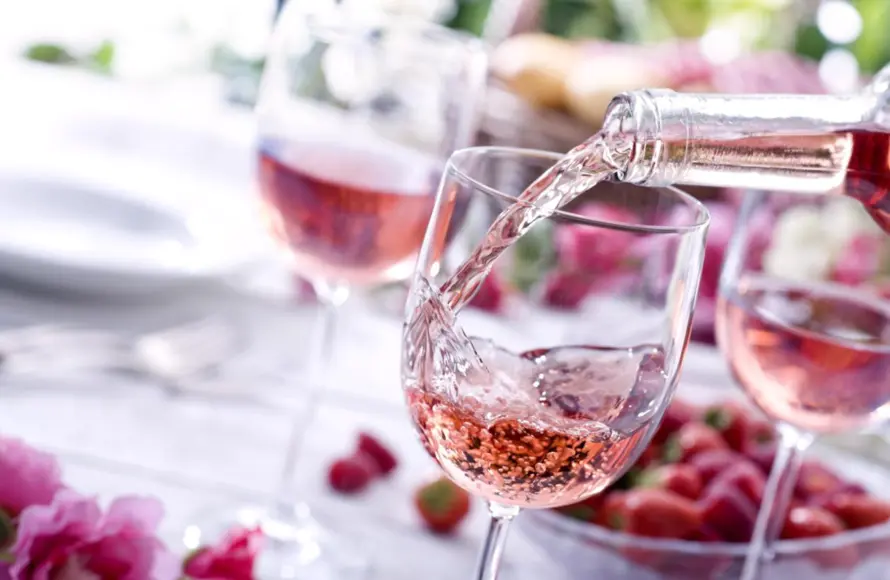
Formerly known as Montepulciano Cerasuolo, today this wine is labelled as Cerasuolo d’Abruzzo. Resulting from a direct pressing of Montepulciano grapes, this wine was the first pink DOC in Italy. It is fruity and refreshing with an appealing cherry-like colour - the name Cerasuolo actually derives from ‘cherry red’ in Italian.

For a century it was mistaken for Tuscan Sangiovese; only DNA proved the two grapes were entirely unrelated.

The confusion that defined the grape

This wine is characterised by intense floral and fruity aromas, alongside a remarkable acidity, which is superbly offset by its body and soft texture. The best examples come from the north of Abruzzo, at the foot of the Teramo Hills.

Montepulciano Riserva wines are aged in oak barrels or barriques for a minimum of 12 months. They display a bouquet of red fruits, sweet spices and leather.

The grapes are picked after they have raisined and result in wines that express aromas of ripe red fruits, spiced with cloves and licorice. They are velvety and persistent with balanced tannins.

According to the most accredited theory, Montepulciano originates from Torre de' Passeri or the Peligna basin, in Abruzzo. From here, it spread throughout the region in the early 1900s and into southern Marche.

For a long time this grape was confused with Tuscan Sangiovese and it was only in the ampelographic studies of the 19th century that the difference between the two grapes was established.

Today, Montepulciano is widespread throughout central-southern Italy, especially in the Adriatic regions, from the hills of Rimini to the province of Lecce, but Abruzzo is still its main home.
Explore by style

Wine styles made from Montepulciano

Jump to the editorial guide for each style this grape turns up in.

Keep exploring

More red grapes

Sangiovese

Sangiovese (san-jo-vay-zeh) is the undisputed king of red wines in central Italy, virtually present in every area of the country Thanks to its many clones and surprising versatility, Sangiovese can create a wide range of wines: from young and fresh Chiantis to complex and full-bodied Brunellos.

Wines 312
Tannin
Body

Explore Sangiovese

Nebbiolo

Nebbiolo (Nay-bee-OH-lo) is a native Italian variety cultivated in the northern regions, whose name derives from the word “Nebbia” which is Italian for fog.

Wines 254
Tannin
Body

Explore Nebbiolo

Merlot

Merlot is a red grape with a serious Italian footprint: Bolgheri DOC, Bolgheri Rosso, Cortona DOC, Suvereto DOCG, Rubicone IGT and Montello Rosso DOCG form its Italian map.

Wines 126
Tannin
Body

Explore Merlot

Corvina

Corvina is the principal red grape of Verona's wine country, forming the backbone of Valpolicella DOC, Amarone della Valpolicella DOCG, and Recioto della Valpolicella DOCG.

Wines 75
Tannin
Body

Explore Corvina