Central Italy

Umbria Cypress shadows, Sagrantino backbone

Italy's landlocked green heart, where Montefalco Sagrantino brings the deepest tannins on the peninsula and Orvieto's tufa cliffs ripen the country's most patient white grapes.

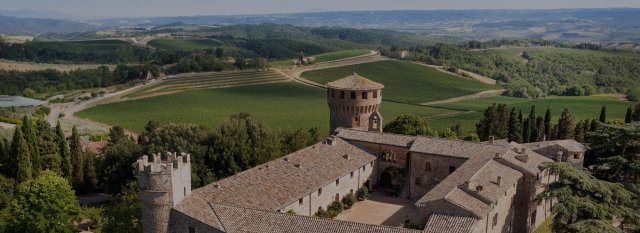
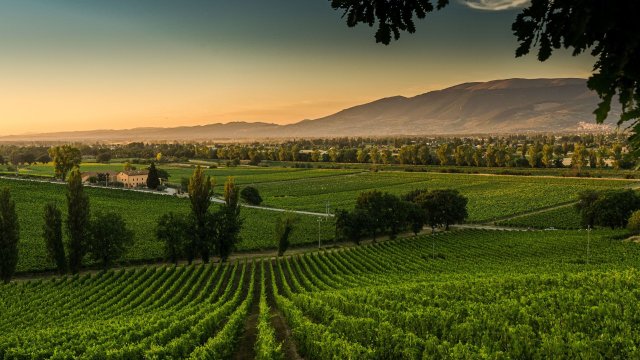
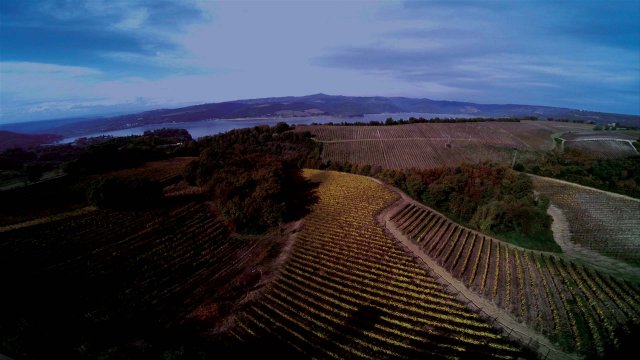
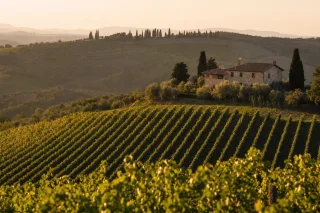
Umbria sits in central Italy without a coast, hemmed by Tuscany, Lazio and the Marche. The wines split along that geography. Montefalco rolls south of Perugia on warm clay-limestone hills, home to Sagrantino, the most tannic red grape in Italy and one of the densest in the world.

Orvieto perches on tufa cliffs above the Paglia river, where Grechetto and Procanico make stone-cool whites that last decades in the volcanic cellars cut beneath the town. Around Lago Trasimeno, Gamay del Trasimeno (a strain of Grenache) gives elegant pale reds.

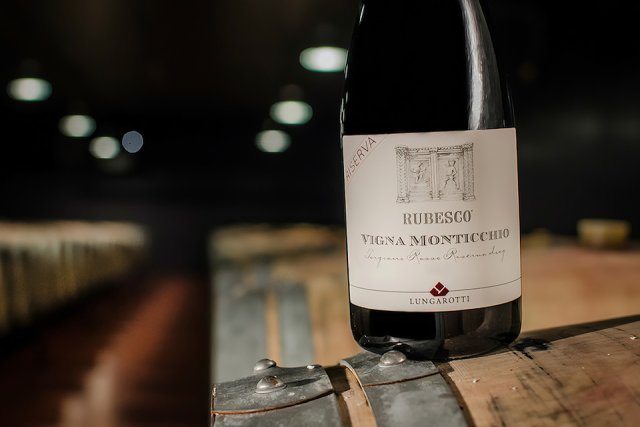
The Etruscan history runs deep, the Lungarotti family modernised Umbrian wine in the 1960s with Torgiano, and Marco Caprai built Sagrantino into a global red. Two DOCG appellations and thirteen DOCs cover roughly twelve thousand hectares of vineyard.

57
Wines in stock
22
Denominations
8
Heritage grapes
£9 +
Starting price
01 · Wine Areas6

Where Umbria wine takes shape

The named places that explain the region's grapes, styles, and labels, plotted across the map.

01

Montefalco

The walled hill town south of Perugia is Sagrantino's home; one of Italy's most concentrated red wines is grown on its clay-limestone slopes.

Montefalco sits on a low rise between Foligno and Bevagna, surrounded by olive groves and oak woods. The Sagrantino grape, native to these hills, was historically dried for sweet passito; the modern Sagrantino di Montefalco DOCG dry red wine, perfected by Marco Caprai in the 1990s, has propelled the area onto the world stage. Montefalco DOC covers a softer Sangiovese-led Rosso, with Sagrantino used as a tannic seasoning. Soils are clay-limestone over fluvial gravel; altitudes run 220 to 480 metres.

Montefalco SagrantinoDOCG MontefalcoDOC
02

Orvieto

The tufa-cliff town in southwestern Umbria gives one of Italy's longest-running white wine traditions, anchored by Grechetto and Procanico.

Orvieto's vineyards sit on volcanic tufa around the Paglia and Tiber valleys, with the wine cellars cut directly into the soft yellow rock beneath the town. Orvieto Classico Secco, made from Grechetto and Procanico (a local Trebbiano clone), shows lemon pith, almond skin and a stone-cool minerality. Sweet noble-rot Orvieto, including Castello della Sala's Muffato, draws on Paglia mists. Lago di Corbara DOC and Rosso Orvietano DOC cover red wines on the same volcanic substrate.

OrvietoDOC Lago di CorbaraDOC
03

Torgiano

The small commune southeast of Perugia is the home of the Lungarotti family, who built Umbria's first DOCG: Torgiano Rosso Riserva.

Torgiano takes its name from the Tower of Janus that watches over the confluence of the Tiber and Chiascio rivers. Giorgio Lungarotti turned this corner of Umbria into a serious red wine address in the 1960s, and Torgiano Rosso Riserva DOCG, a Sangiovese-led blend aged at least 36 months, became the region's first DOCG in 1990. The Torgiano DOC covers a wider range, including white wines from Trebbiano Toscano and Grechetto.

Torgiano Rosso RiservaDOCG TorgianoDOC
04

Lago Trasimeno

Italy's fourth-largest lake moderates a string of vineyards on its western shore, home to Trasimeno Gamay (Grenache) and lake-cooled Grechetto.

The Trasimeno basin sits between Perugia and the Tuscan border. The lake tempers heat in summer and cold in winter, producing wines with more freshness than typical inland Umbria. Gamay del Trasimeno is a misleading local name for Grenache, planted here for centuries; it gives pale, perfumed reds and rosatos. Whites from Grechetto are taut and saline. Colli del Trasimeno DOC covers the area.

Colli del Trasimeno/TrasimenoDOC
05

Spoleto

South of Foligno, the Spoleto basin and its Apennine foothills are the centre of the Trebbiano Spoletino revival, a near-extinct white now bottled by a new generation.

Spoleto sits at the southern edge of the Vale Umbra, ringed by Apennine foothills and black truffle oak woods. Trebbiano Spoletino, an indigenous white grape unrelated to Trebbiano Toscano, was almost lost to phylloxera and post-war abandonment; vine-by-vine recovery from old maritate plantings (vines trained up living trees) has yielded a citrus-driven, structurally rich white that ages in stone like Riesling. Spoleto DOC covers the area.

SpoletoDOC
06

Colli Martani and Todi

The hills west of Foligno run through Todi and Bevagna; this is the home of Grechetto di Todi, treated as the most distinguished Grechetto biotype in Umbria.

The Martani range divides the central Umbrian valleys from the Tiber basin. Grechetto di Todi (Grechetto G109), a sibling clone to Orvieto's Grechetto, ripens on these limestone hills with more body and a flintier core; it is bottled as a varietal Colli Martani Grechetto DOC and as Todi DOC. Sangiovese leads the local reds. Vineyards sit between 200 and 500 metres.

Colli MartaniDOC TodiDOC
02 · Regional Guide6

Understanding Umbria

Layered notes on terroir, history, label rules, taste, drinking window and where to start.

03 · Wines To Know6

What to drink from Umbria

A short shortlist that maps the region: benchmark reds, signature whites and the labels worth a step-up.

04 · Heritage Grapes4

The grapes behind the bottle

4 curated guides with editorial content. Pronunciations, traits and the regional footprint of each variety.

Browse all grape guides

05 · Editor's Picks57

Wines from Umbria

A starter selection from the catalogue. Pour them as a regional flight.

View all 57 wines

06 · La Tavola4

The table of Umbria

Mountain, pasture and coast on one plate. Pour the regional wine alongside.

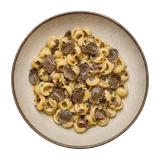
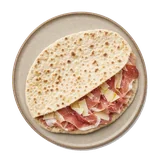
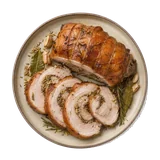
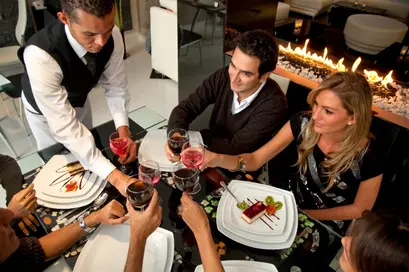
Umbrian food is rustic, mineral and meat-heavy. Porchetta from Norcia and the Valnerina, lentils from Castelluccio, black truffles from the Spoleto hills, wild boar ragu, and torta al testo flatbread all sit on the table at the same time.

The pairing logic is local. Montefalco Sagrantino's relentless tannin scrubs the fat from porchetta and grilled lamb. Montefalco Rosso, a softer Sangiovese-Sagrantino blend, slides easily under truffle pasta. Orvieto Classico Secco cuts through fried Lake Trasimeno fish and salt-cured prosciutto di Norcia. Trebbiano Spoletino, the region's most exciting white revival, holds its own with chickpea soups and pecorino di fossa.

07 · On The Ground14

Explore Umbria by place

Wine routes, towns and wineries to follow when you go.

Wine routes

Wine towns

Wineries to follow

08 · Common Questions9

Ask the sommelier

Quick answers about Umbria. Numbers, denominations, food and what to start with.

Montefalco Sagrantino DOCG is Umbria's flagship: a 100% Sagrantino dry red, aged 30 months minimum, with one of the highest tannin levels of any Italian red. Marco Caprai's 25 Anni and Paolo Bea's Pagliaro are the modern reference points. Orvieto Classico (white) and Torgiano Rosso Riserva DOCG sit alongside it as historic appellations.

Yes, by laboratory measure. Sagrantino's tannin levels run roughly twice those of Brunello di Montalcino and stand among the highest of any dry red worldwide. The grape grows almost exclusively on the clay-limestone hills around Montefalco; the DOCG mandates 30 months of ageing, including 12 in oak, to soften that grip before release.

Orvieto sits on a volcanic tufa plateau cut by the Paglia and Tiber rivers. The vineyards grow on the same volcanic soils that ring the town, and the cellars are cut directly into the soft yellow rock beneath the streets, giving year-round cellar temperatures around 13 to 15 degrees. The combination produces stone-cool Grechetto and Procanico whites with lemon pith, almond skin and salty minerality.

Umbria is landlocked and centred on native grapes that Tuscany does not use: Sagrantino for monumentally tannic reds, Grechetto and Trebbiano Spoletino for structurally rich whites, and Trasimeno Gamay (Grenache) for pale lake-side reds. Sangiovese is shared, but in Umbria it usually appears blended with Sagrantino in Montefalco Rosso DOC or aged long in Torgiano Rosso Riserva DOCG, giving a denser, more savoury profile than Chianti Classico.

Sagrantino's tannin needs heavy fat to balance. Porchetta from Norcia, grilled lamb chops, peposo (Tuscan-Umbrian black pepper beef stew), wild boar ragu over strangozzi, and aged pecorino are the classic pairings. The wine cuts through fat and lifts black truffles served on simple egg pasta. Avoid delicate fish, light vegetable dishes and any pairing that does not bring fat to the table.

Three wine routes cover Umbria. The Strada del Sagrantino loops 60 kilometres through Montefalco, Bevagna and Gualdo Cattaneo for Sagrantino DOCG and Montefalco Rosso DOC. The Strada dei Vini del Cantico runs central Umbria through Torgiano and Lago Trasimeno. The Strada dei Vini Etrusco-Romana covers Orvieto and Lago di Corbara. Bevagna's Sagrantino Wine Bar and Montefalco's Piazza del Comune enotecas pour multi-producer flights for visitors short on time.

We currently list 57 wines from Umbria, starting from £9.00. Browse them all on our wines page.

We currently curate 4 active Umbria grape guides, including Malvasia Puntinata, Montepulciano, Sangiovese, Trebbiano Toscano. This is an editorial selection, not the complete regional grape list.

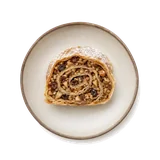
Umbria is renowned for dishes including Lumachine alle Schegginese, Rocciata, Torta al testo, Porchetta.

09 · Keep Exploring

Your next pour

More of Central Italy, with similar terroir and table.