









Wine route
Valpolicella Classico Loop
Half day · 5 stops
Open the driveYour cellar, your trips, and the wines you've been tracking are right where you left them.
New here?
Free, always. Education first, we'll never sell you anything you didn't ask to see.
Already have an account?
Enter the email you signed up with and we'll send a link to choose a new password.
Veneto · DOC
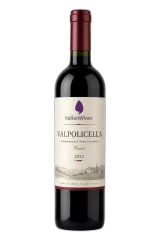
Valpolicella DOC is Veneto's everyday red, a ruby wine built on Corvina fruit. The blend takes in Corvina, Corvinone and Rondinella, grown across 19 towns north of Verona. This is the fresh, cherry-driven base of a ladder that climbs through Ripasso, Amarone and Recioto della Valpolicella. It drinks young, and it pairs with everyday Veneto tables.
Decode the label
One word on the front changes the ageing, the strength and the price.
On the label
Valpolicella
the fresh original
The undried side of the family: sour cherry and white pepper, bottled young with no ageing mandate at all.
In stock from £9.95 See the 21 bottles ↓On the label
Valpolicella Classico
the five original communes
The historic valleys north-west of Verona; on a fresh Valpolicella the word Classico is geography, not age.
In stock from £10.95 See the 21 bottles ↓On the label
Valpolicella Superiore
a year of patience, a degree more
Riper fruit and a year in the cellar: darker cherry, a firmer middle, the tier serious estates build on.
In stock from £10.11 See the 47 bottles ↓The boundary
Everything on this page, the estates, the bottles, the sub-zones, sits inside this line.
Wine route
Half day · 5 stops
Open the driveWine route
1 day · 7 stops
Open the drive
Estate 1
Negrar di Valpolicella
Book online
Estate 2
Fumane · Classico
Tastings available
Estate 3
Verona
Tastings available
Estate 4
Gargagnago · Classico
Tastings available
Estate 5
Illasi · The eastern valley
Tastings available
Estate 6
S. Pietro in Cariano
Tastings available
Estate 7
Negrar · Classico
Tastings available
Estate 8
San Pietro in Cariano · Classico
Tastings available
Estate 9
Negrar di Valpolicella
Tastings available
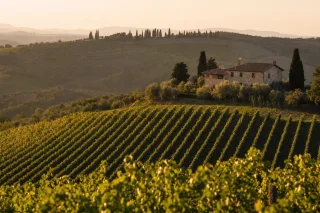
Nineteen communes on the hills north of Verona, from the Classico valleys of Fumane, Marano and Negrar in the west, across the Valpantena valley, to the eastern ridges of Illasi, Tregnago and Montecchia di Crosara. Cherry orchards and drying lofts share the slopes with the vines: the same map feeds the fresh wine on this page, the Ripasso, the Amarone and the sweet Recioto.
Inside the zone
Click or tap a pin for its estate. The numbered pins match the estate cards below.
Towns worth knowing
The five Classico communes; Grezzana holds the Valpantena, and the zone's eastern arm reaches Illasi and Mezzane.
In the glass

Cherry

Almond

Leather

Plum

Cinnamon

Vanilla

Chocolate
The disciplinare
The same table on every denomination page, straight from the production rules.
 Corvina and/or CorvinoneThe lead pair of the Verona hills45 to 95%RondinellaThe reliable partner5 to 30%Other Verona redsNon-aromatic local varieties, jointly cappedup to 25%
Solid means the rules demand it. Striped means optional, up to that amount. The words on the right say the same rule.
The base wine has no ageing mandate it may be bottled and poured as soon as it is ready: freshness is the style.
Superiore means one year and 12% counted from 1 January after the harvest.
The same grapes become four wines Valpolicella, Ripasso, Amarone and Recioto all start from this vineyard recipe.
Ripasso answers to its own DOC split from this rulebook in 2010, made by re-passing the wine over Amarone skins.
Yields are generous by design 12 tonnes per hectare, nearly half of which the Amarone drying lofts will claim.
Ageing and alcohol minimums per tier are in the label guide above.
Editor's cellar
By style, today
Live prices, compared across 22 UK retailers.
Cellar doors · inside the zone
9 working estates with their gates open, numbered to match their pins on the map above.
No estates match these filters. Clear a filter to see more.
Experiences in the Valpolicella zone
Cellar experiences here average around €45. These are the strongest fits for this page.
Cantina Valpolicella Negrar
The guided tour offers a fascinating journey into the heart of the Valpolicella wine-making tradition. The experience begins in the Appassim…
Cantina Valpolicella Negrar
The guided tour offers a fascinating journey into the heart of the Valpolicella wine-making tradition. The experience begins in the Appassim…
Cantina Valpolicella Negrar
The guided tour offers a fascinating journey into the heart of the Valpolicella wine-making tradition. The experience begins in the Appassim…
Two names the label may add
Classico marks the five original communes, Valpantena the single valley north-east of Verona. Both mean geography, never age.

The five valleys the name first meant: Fumane, Marano, Negrar, Sant'Ambrogio and San Pietro in Cariano, north-west of Verona.
The single Pantena valley running north-east from Verona, historically a lighter, earlier-drinking Valpolicella.
The years
Chart ratings 2011 to 2016 come from the Consorzio Tutela Vini Valpolicella's Amarone DOCG stelle annate PDF; 2017 to 2022 come from Italy's Finest Wines (JM Palmieri). Base Valpolicella DOC follows the same Verona hills weather and Corvina fruit each year, but skips the post-harvest appassimento, so quality can diverge in difficult drying autumns.
Reading the years
The short version: Made for youth: 2019 and 2021 rate top, 2014 is the one to skip.
Tap a year for its note.
Valpolicella DOC was recognised by presidential decree on 21 August 1968. The rules were last revised in 2003. Fruit comes from 19 towns north of Verona. The Classico area covers Fumane, Marano di Valpolicella, Negrar, San Pietro in Cariano and Sant'Ambrogio di Valpolicella. Valpantena takes in the side valley of that name. The rules set the blend at 45 to 95 per cent Corvina and Corvinone. Corvinone may replace up to half of the Corvina. Rondinella takes 5 to 30 per cent. Other authorised Veronese varieties may fill up to 25 per cent. Yields cap at 120 quintals per hectare. The base wine must reach at least 11 per cent alcohol. Superiore asks for twelve months in cask and at least 12 per cent alcohol. That extra strength comes either from selected vineyards or from a brief drying of the grapes. The base wine is made quickly, with little air, and reaches the bottle within a year.
On the table
A brisk, cherry-led table red: it handles risotto, hard cheeses and lighter game without needing the weight of Amarone.


Risotto al Radicchio, known for its slightly bitter and nutty flavor from the radicchio, can be paired effectively with a red wine that has little or no tannins.
In-depth guide
Valpolicella DOC is a light-to-medium red from the hills north of Verona. The blend is 45 to 95 per cent Corvina and Corvinone, with 5 to 30 per cent Rondinella. Up to 25 per cent may come from other approved Veronese varieties. It sits at the base of the four-tier Valpolicella ladder. Above it come Valpolicella Ripasso DOC, Amarone della Valpolicella DOCG and Recioto della Valpolicella DOCG.
The blend is built on Corvina. The larger-berried Corvinone can replace up to half of the Corvina, and Rondinella is the secondary grape. Minor permitted varieties such as Molinara, Rossignola, Oseleta and Negrara may complete the blend. Corvina gives cherry fruit and acidity, Corvinone adds structure, and Rondinella lends colour.
Classico is a zone label, scoped to the historic villages of Fumane, Marano di Valpolicella, Negrar, San Pietro in Cariano and Sant'Ambrogio di Valpolicella. Superiore is an ageing category. It requires twelve months in cask and at least 12 per cent alcohol. A wine can carry both, as Valpolicella Classico Superiore. Valpantena is the third named zone, covering the side valley north of Verona.
Amarone della Valpolicella DOCG is made from grapes dried for roughly 100 days (appassimento) before fermentation. The result is a powerful, high-alcohol dry red. Valpolicella Ripasso DOC starts as a base Valpolicella. It is then refermented on the leftover skins of Amarone or Recioto, which adds structure and depth. Base Valpolicella DOC is the youngest, freshest form of the blend.
The Consorzio recommends 14 to 16 degrees Celsius. Serve a base Valpolicella at the cooler end of that range to bring out the Corvina cherry fruit. Let a Superiore sit at the warmer end to show its body. The base DOC does not need decanting.
The base wine works with Veronese salumi, pastissada de caval and risotto all'Amarone. It also suits tagliatelle al ragù, roasted pork, grilled poultry and alpine cheeses such as Monte Veronese. Stronger Superiore and Ripasso bottles match braised beef, game and aged Parmigiano.
Explore more Veneto
Same region only: the denominations Valpolicella drinkers reach for next.