Red Grape · Apulia

Primitivo

Puglia's sun in a glass: ripe, soft and warming, Primitivo piles on black cherry and plum at a generous 14 per cent and more. Genetically it is Zinfandel, the same grape that conquered California.

Primitivo (“pree-mee-TEE-vo”) is one of the most popular red wines of Southern Italy. A structured and powerful, yet velvety wine that, despite its average high alcohol content, always manages to be extremely pleasant and drinkable.

66
Bottles live now
11
UK retailers
5
Denominations

Also known as

Same grape, many labels

California, USA

Zinfandel

The New World name that made the grape famous, from big jammy reds to off-dry pink 'blush'.

Dalmatia, Croatia

Tribidrag

The ancient original: DNA traced the grape home to the Croatian coast, where it had nearly died out.

Kastela, Croatia

Crljenak Kastelanski

The tongue-twisting vineyard name under which the lost grape was rediscovered in 2001.

The anchor fact: DNA testing at the University of California in the early 2000s proved that Puglia's Primitivo, California's Zinfandel and Croatia's Tribidrag are one and the same grape.

Taste · Where it sits

What it’s actually like in the glass

Forget scores out of five. Here’s Primitivo described against grapes you already know.

BodyFull and sun-warmed
LightFull

Ripe, round and mouth-filling, fuller than most Chianti, its weight coming from Puglian sun and high alcohol rather than from tannic structure.

TanninSoft and plush
SoftGrippy

Gentle, supple tannin that never dries the mouth, the very opposite of Nebbiolo, which is why Primitivo drinks so easily so young.

AcidityLow and mellow
SoftZippy

Low, soft acidity gives that plush, easy-going feel, though it also means Primitivo is best enjoyed young rather than cellared.

Fruit & sweetnessRipe, nearly jammy
DrySweet

Sweet-fruited and sometimes genuinely off-dry: sun-dried black cherry and plum verge on jammy, a world from lean, savoury northern reds like Sangiovese.

Key flavours

Burnt toast
A smoky, toasty edge from ageing in American oak, the finish many Manduria producers favour for extra richness.
Black pepper
A warm black-pepper spice that lifts the ripe fruit, a savoury counterpoint to all that sweetness.
Spicy
A peppery, warming spice tied to the grape's high alcohol, adding lift to the sweet fruit.
Burning rubber
Black cherry
Sun-ripened black cherry, dense and sweet, pushed almost to compote by Puglia's fierce summer heat.
Blackberry
Jammy bramble fruit from the late-ripening bunches, part of Primitivo's generous, mouth-filling core.
Plum
Soft, dark, dried plum, the fruit that gives Primitivo its rounded, almost liqueur-like ripeness.
Violet
A dark floral note under the jam, a reminder that even a sun-baked Primitivo keeps some perfume.
Structured · Tannic Soft · Approachable Light-bodied Bold · Full Sangiovese Nebbiolo Merlot Corvina Barbera Nero d'Avola
Primitivo

The map

Primitivo is full-bodied, moderate grip, mapped against other red grapes you can buy. The closer a grape sits, the more its weight and grip resemble Primitivo.

Primitivofull-bodied, moderate grip
Nebbiolofirmer
Merlotfirmer
Corvinalighter
Barberafar softer
Nero d'Avolaa close match

Is this for you?

An honest gut-check

Reach for it when…

A bold red that just works

  • You want a rich, ripe, soft red that overdelivers for the money and needs no cellaring.
  • You love bold, sweet-fruited flavours: black cherry, plum and spice at generous strength.
  • You are grilling: ribs, lamb, sausages or anything smoky and charred.

Maybe skip it if…

You’re after something else tonight

  • You want a light, high-acid, food-cutting red; Primitivo is plush and low-acid.
  • High alcohol, around 14 to 15 per cent, is too much for you.
  • You dislike sweet-edged, jammy fruit and prefer lean, savoury and structured reds.

Serving guide

Pour it at its best

Serve at

16-18°C

Serve a touch below room temperature; too warm and Primitivo's high alcohol turns hot while the sweet fruit starts to cloy.

Decant

1 hours

It rarely needs long, but half an hour of air softens the alcohol and lets the plum and spice bloom.

Glass

Large Balloon Glass

A large, wide bowl gives the ripe fruit and 14-per-cent warmth room to breathe rather than overwhelm.

Drink within

3-5 days

Fruit-forward and forgiving, an open bottle holds three to five days without losing much.

Cellar

Up to 5 years

Made to enjoy young: most Primitivo is at its best within about five years, while the fruit is still vivid.

Buy it · three to start with

Not sure which bottle? Start here

A curated trio across the price range, then every Primitivo on sale in the UK right now.

Entry · everyday

Pillastro Primitivo Puglia

Pillastro Primitivo Puglia

Puglia

1 retailer

£13.49

View Wine

Why this one: A hugely popular everyday Puglia Primitivo: soft, ripe and warming, all black cherry and spice for around thirteen pounds.

The sweet spot

San Marzano Il Pumo Primitivo

San Marzano Il Pumo Primitivo

Salento

1 retailer

£13.55

View Wine

Why this one: San Marzano's benchmark Puglia bottling: rounder and deeper, the reliable sweet spot that shows why Primitivo overdelivers.

Special occasion

San Marzano, Anniversario 62, Primitivo di Manduria Riserva SAVE -11%

San Marzano, Anniversario 62, Primitivo di Manduria Riserva

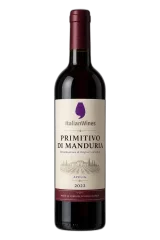
Primitivo di Manduria

4 retailers

£24.60

£27.54

View Wine

Why this one: A serious Primitivo di Manduria Riserva from old vines: concentrated, spicy and velvety, Puglian generosity at full volume.

12 of 66 bottles

Denominations

Where it earns a name on the label

The appellations where Primitivo plays a starring role.

MateraDOC Primitivo di ManduriaDOC BasilicataIGT Gioia del ColleDOC Primitivo di Manduria Dolce NaturaleDOCG

Where it grows

The places it calls home

The terroir

Primitivo is Puglia's grape, but the heel of Italy is not all one place. The baking Salento coast makes it huge and sweet, the higher inland plateau keeps it fresher, and the sun-dried style turns it frankly sweet.

Manduria

Salento, Puglia

The powerhouse: warm coastal vines give the ripest, most concentrated and highest-alcohol Primitivo.

Gioia del Colle

Murgia plateau, Puglia

Higher, cooler limestone hills give a fresher, more structured and elegant Primitivo.

Dolce Naturale

Manduria, Puglia

The sun-dried, naturally sweet style: grapes left to raisin on the vine for a rich dessert red.

Editorial

About Primitivo

Young Primitivo wines, sometimes produced in blend with other local grapes, are characterized by a remarkably fruity olfactory profile. These wines offer excellent value for money and are ready to drink.

The name means the first one: Primitivo ripens so early that it is often picked in August, weeks ahead of almost every other Italian red grape.

The first to ripen

In its best expressions, such as Primitivo di Manduria DOC, Primitivo is aged in wood, both in barriques or in larger barrels. These wines are usually warm and soft, with a balanced tannic texture, tertiary notes of spices and good longevity.

These dessert wines, produced from naturally dried grapes, show a broad and complex palette of ripe red fruit flavours with hints of plum; they are sweet, velvety and intense.

The origins of Primitivo are uncertain, but it is believed that the vine was brought from Dalmatia to Puglia more than 2000 years ago by the ancient people of the Illyrians. DNA testing and extensive historical research have confirmed a common origin to the California Zinfandel grape.

Due to the natural high alcohol content, its intense color and full body, for a long time it has been considered only a blending wine, perfect to reinvigorate the weak French and northern European wines.

However, in recent decades, thanks to the careful work of the local winemakers, who favoured low yields and careful vinification, intense and powerful Primitivo wines of great elegance and finesse have been produced.

Great expression of the sunny territory of Puglia and Southern Italy, Primitivo gives structured and round wines with extraordinary fruit intensity that are ideal companions to meat dishes and spicy flavours.
Good to know

Frequently asked

Primitivo is generally a wine of good structure and full body with high alcohol content, also due to the sunny areas of cultivation. The young wines are fruity and intense. With ageing, it shows a velvety and balanced roundness in the mouth and flavors become more complex.

Primitivo is a wine with an intense red color. The nose reveals notes of red fruits, currants, cherries, blackberries, spices and tobacco. On the palate it is dry, full, sapid, soft, with balanced tannins. With ageing, it acquires spicy notes and a velvety mouthfeel.

Generally Primitivo is a dry red wine, but the grape can also produce excellent dessert wines and delicious rosé, often in blend with other grapes.

Primitivo is a red grape variety widespread in Southern Italy from Abruzzo to Basilicata and from Sardinia to Campania. However, Primitivo is also found in Puglia, especially in the Manduria area.

Primitivo goes well with grilled, roasted, stewed meats, game, cured meats and meat-based pasta courses. Also excellent in combination with rich soups and aged cheeses.

Explore by style

Wine styles made from Primitivo

Jump to the editorial guide for each style this grape turns up in.

Keep exploring

More red grapes

Sangiovese

Sangiovese (san-jo-vay-zeh) is the undisputed king of red wines in central Italy, virtually present in every area of the country Thanks to its many clones and surprising versatility, Sangiovese can create a wide range of wines: from young and fresh Chiantis to complex and full-bodied Brunellos.

Wines 312
Tannin
Body

Explore Sangiovese

Nebbiolo

Nebbiolo (Nay-bee-OH-lo) is a native Italian variety cultivated in the northern regions, whose name derives from the word “Nebbia” which is Italian for fog.

Wines 254
Tannin
Body

Explore Nebbiolo

Merlot

Merlot is a red grape with a serious Italian footprint: Bolgheri DOC, Bolgheri Rosso, Cortona DOC, Suvereto DOCG, Rubicone IGT and Montello Rosso DOCG form its Italian map.

Wines 126
Tannin
Body

Explore Merlot

Corvina

Corvina is the principal red grape of Verona's wine country, forming the backbone of Valpolicella DOC, Amarone della Valpolicella DOCG, and Recioto della Valpolicella DOCG.

Wines 75
Tannin
Body

Explore Corvina

Barbera

One of the most approachable red wines in Italy, Barbera (“bar-BAY-rah”) is a fresh and fruity wine that is always present on the tables of the inhabitants of Piedmont.

Wines 48
Tannin
Body

Explore Barbera