










 740 wines
 31 denominations










Chardonnay is a white grape with a clear Italian role.
Wines
626
Acidity
Body
White Grape · Sicily
Grillo is Sicily's comeback white: born from Catarratto and Zibibbo to survive the western-island sun, it once filled the barrels of fortified Marsala and now stands alone as a saline, citrus-and-green-tea dry white with acidity to spare.
Grillo (say GREE-loh) is a native grape, widespread in western Sicily. It is a key part of Marsala. Made on its own, it can give very interesting white wines. They have good acidity, high alcohol and a balanced softness. White wines do not usually age well. Grillo can, for up to five years. Its rise to prominence is a story of culture and history, not just of a drink. In a busy London street or out in the quiet countryside, a glass of Grillo tastes of Sicilian sun, and there is something to find in each one.
Your cellar, your trips, and the wines you've been tracking are right where you left them.
New here?
Free, always. Education first, we'll never sell you anything you didn't ask to see.
Already have an account?
Enter the email you signed up with and we'll send a link to choose a new password.
Setting it straight
The anchor fact: No. Grillo spent over a century as an anonymous grape grown to be fortified into Marsala, but a modern generation of Sicilian growers has remade it as one of the island's most serious dry white wines in its own right.
Taste · Where it sits
Forget scores out of five. Here’s Grillo described against grapes you already know.
Fuller and warmer than most Italian whites: the sun-ripening and high natural alcohol that once suited it to Marsala give a broad, almost waxy mid-palate, closer to Fiano than to a featherlight coastal white.
A white, so there is no true tannin, but Grillo leaves a light phenolic grip and a faintly bitter green-tea pull, firmer in the skin-contact bottlings from growers like COS.
High and firm, and remarkable for holding on through the heat that ripens it: where many sun-baked whites turn flat, Grillo keeps a saline, citrus-pith cut, the very reason it was revived as a dry wine.
Always bone-dry now, whatever its sweet Marsala past: the fruit is lemon, grapefruit and ripe melon, lifted by orange blossom from its Muscat parent and cut with a green, herbal bitterness.
Key flavours



The map
Grillo is medium-bodied, crisp, fresh acidity, mapped against other white grapes you can buy. The closer a grape sits, the more its weight and freshness resemble Grillo.
Is this for you?
Reach for it when…
Maybe skip it if…
Serving guide
Serve at
10-12°C
Serve cold at 10 to 12C: cool enough to keep the saline citrus sharp, but not so icy that Grillo's fuller body and herb notes go numb.
Decant
Not needed
No decanter. Grillo lives on fresh citrus-and-herb lift that air only tires; just pour it cold from the fridge.
Glass
Chardonnay Glass
A wider Chardonnay-style glass flatters its fuller body, giving the orange-blossom and green-tea aromatics room to open.
Drink within
3-5 days
Once opened it keeps well for 3 to 5 days in the fridge; the firm acidity holds it fresher than a lighter white would.
Cellar
Up to 5 years
Most Grillo is made to drink young, but the structured, higher-alcohol bottlings from the Marsala growers can hold and deepen for up to five years.
On the table
Start with the home-table matches that made the grape, then browse the full cuisine library.

The western-Sicily home plate
Swordfish is the fish of Grillo's home waters off Trapani and Marsala; the wine's fuller body stands up to the meaty steak while its saline citrus and herbs answer the capers, tomato and oregano.

Cut clean through the fry
Golden fried rice balls need acid, and Grillo's firm, heat-proof line slices the richness while its green-tea bitterness keeps pace with the saffron and ragu tucked inside.

Salt meets salt
The briny, iodine depth of squid-ink risotto meets Grillo's own salinity head on, and the citrus-pith cut lifts a dish that can otherwise turn heavy and dark.

Citrus on citrus
Lime-cured raw fish mirrors Grillo's lemon and grapefruit acidity, while the grape's ripe melon and pepper carry the chilli and coriander instead of being blown away by them.
Browse every pairing
Buy it · three to start with
A curated trio across the price range, then every Grillo on sale in the UK right now.
Entry · everyday
 2 retailers
2 retailers
£9.85
Why this one: Cantine Volpi's organic Era is the honest everyday face of the grape: 100 percent Grillo off older Sicilian vines, briefly rested on its skins, all clean lemon, melon and saline snap. The cheapest, clearest way to meet dry Grillo before style or ambition enter.
The sweet spot
 4 retailers
Menfi
4 retailers
£16.10
Why this one: No house did more to make Sicilian Grillo respectable than Planeta, and Terebinto is its pure-varietal benchmark: 100 percent Grillo from Menfi, three months on the fine lees, with lychee-edged fruit, Mediterranean herbs and a firm mineral close. The modern dry style at its most polished.
12 of 52 bottles
4 retailers
Menfi
4 retailers
£16.10
 3 retailers
Sicilia
3 retailers
£13.30
 3 retailers
Sicilia
3 retailers
£16.17
 3 retailers
Sicilia
3 retailers
£16.66
2 retailers
2 retailers
£9.85
 2 retailers
Sicilia
2 retailers
£11.46
 2 retailers
Sicilia
2 retailers
£12.50
 2 retailers
Sicilia
2 retailers
£12.76
 2 retailers
Sicilia
2 retailers
£14.30
 2 retailers
Sicilia
2 retailers
£15.00
 2 retailers
Sicilia
2 retailers
£16.87
 2 retailers
Sicilia
2 retailers
£22.00
Denominations
The appellations where Grillo plays a starring role.
Where it grows


Volcanic Nerello on Etna's black terraces, sun-baked Nero d'Avola on the south-east coast, fortified Marsala in Trapani and UNESCO Zibibbo on Pantelleria: Sicily holds Italy's widest single-region wine map.
The terroir
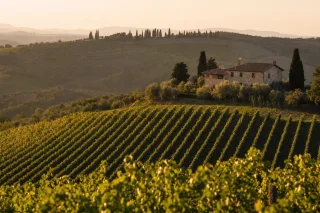
Grillo belongs to far western Sicily, ripened by fierce sun yet cooled by the sea that surrounds it on almost every side; the same grape reads differently from the old Marsala flats to the clay-limestone country further south.
Marsala
The sun-baked coastal zone at Sicily's western tip, in Trapani province
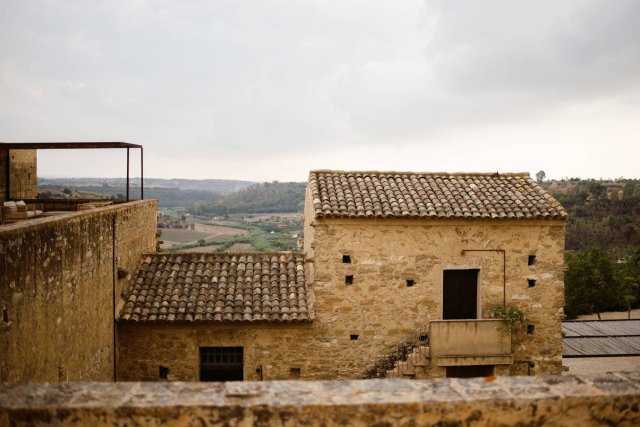
Grillo's historic heartland, where it was grown to be fortified; today the same low, saline vineyards give the fullest, most structured dry versions and the wines that launched its revival.
Trapani and the coast
The broad western plain running north and inland from Marsala
Sicily's Grillo engine-room and the island's most-planted white zone, where sea breezes keep the fruit fresh and saline for the crisp, modern dry style.
Menfi and the south
The clay-limestone country of the Agrigento coast, south-east of Marsala
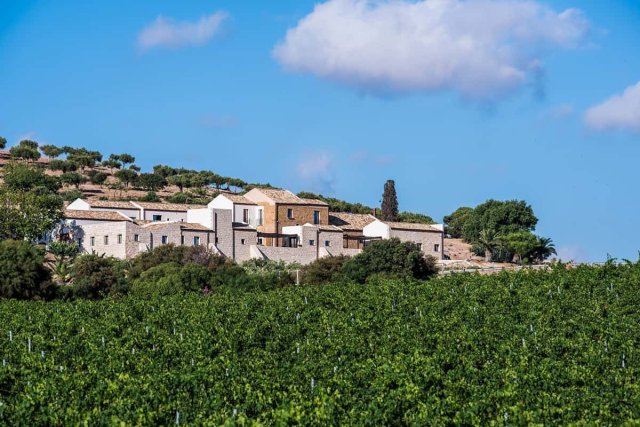
Calcareous, clay-limestone sites where benchmark estates such as Planeta grow a riper, rounder Grillo, full of Mediterranean herb and stone fruit with a firm mineral spine.
Producers
14 estates on the site work with Grillo. Eight at a time, and the line-up changes every week.
Editorial
Grillo can be made on its own or in a blend, as a still wine or a sparkling one. The aromas vary a lot from wine to wine. In the mouth these wines are soft and warm, and they suit every kind of fish.
For most of the twentieth century nobody bottled Grillo on its own. It took Marco de Bartoli, who in 1990 vinified it dry and unfortified in the heart of Marsala country, to prove the grape could stand alone, and to set off the dry-Grillo revival that followed.
Marco de Bartoli, Marsala, 1990Grillo plays a key role in the Marsala Oro and Ambra blends. These are rich, complex fortified wines with a tradition that runs back centuries. They can be dry, semi-dry or sweet, and they keep well.
The best example is probably the Sambuca di Sicilia Passito, from the province of Agrigento. It is made from a blend of Ansonica and Grillo. The passito versions show intense dried-fruit aromas and taste warm and sweet.
It is said that Grillo began in Puglia. It was brought to Sicily after the invasion of phylloxera. Phylloxera is an insect that destroys vines by ruining their roots. Grillo was first found around Marsala, then spread quickly across the island, because it suits the hot Sicilian climate. Recent studies show it is likely to have come from a cross between Catarratto and Zibibbo.
For decades Grillo had a poor name as a blending wine. Today the picture is radically different and the grape is enjoying new popularity. Modern winemaking has helped. It lets the wine keep the scent and the clean fruit of the grape, without the excess alcohol that comes with over-ripening.
Grillo balances freshness and complexity. It has found a niche among UK wine drinkers who want something a bit different.
Grillo is usually great value for money. A decent bottle costs £8 to £20 on average, though some premium picks sit a little above that.
The zesty side of Grillo suits pasta, above all seafood pasta or sauces built on lemon and herbs. A classic spaghetti alle vongole or a linguine al limone is a fine match.
Saffron risotto or a fresh spring vegetable risotto will harmonise with the many flavours in Grillo.
Lean white meat is a safe bet, such as chicken or turkey cooked with Mediterranean herbs. Rosemary roast chicken is the dish to picture.
Grillo and seafood are an age-old pairing. Go for grilled fish, sea bass or sea bream above all, to set off its crisp, mineral notes.
Soft to medium cheeses work well, above all tangy ones such as feta or a fresh goat cheese. They lift the set of flavours that is Grillo's own.
Given its Mediterranean roots, Grillo goes naturally with Italian fare. It is also an excellent choice with Spanish tapas, or with some Greek mezze dishes, because all three lean on fresh ingredients and bold flavours.
Put Grillo into your wine rotation and you get pairings that suit a wide range of tastes and dishes.
Grillo literally means ‘cricket’. It is a Sicilian white wine with great potential, a strong tie to its land, and a growing following among drinkers all over the world.
Good to know
It is difficult to identify just one kind of Grillo wine. Grillo can produce a wide range of wines; aromatic dry whites with a good acidity, sweet passitos or intense and rich fortified wines, such as the famous Marsala.
Vinified in purity (meaning single-varietal wines), Grillo can produce fragrant wines of great organoleptic structure. The perfume, distinctly floral, can show hints of melon, but also pear, tea weeds, nettle leaves and dried flowers. On the palate, Grillo wines are warm, very balanced and harmonious with their dry and slightly astringent taste.
Grillo produces excellent dry wines. Nonetheless this grape can be used in blends both for dry, fortified and delicious sweet wines.
Grillo is grown in Southern Italy, on the island of Sicily and in the regions of Puglia and Basilicata. In Sicily, it is widespread throughout the entire territory, but it is mostly produced in the western side, in the provinces of Trapani, Agrigento and Palermo.
Grillo wines are characterised by a wonderful fragrance and an aromaticity that make them exemplary pairings for a long list of foods. From shellfish and seafood appetisers, to first and second courses based on fish and vegetables. Grillo can be matched with fried crustaceans, white meats, eggs and salami.
Grillo is pronounced as [ˈɡrɪl.lo]. In a simplified form, it sounds like "GREE-lo." The emphasis is on the first syllable, with a rolled 'r' and a clear 'o' sound at the end.
Explore by style
Jump to the editorial guide for each style this grape turns up in.
Keep exploring