






Estate 1
La Scolca
Visit →Gavi
Book online
Your cellar, your trips, and the wines you've been tracking are right where you left them.
New here?
Free, always. Education first, we'll never sell you anything you didn't ask to see.
Already have an account?
Enter the email you signed up with and we'll send a link to choose a new password.
Piedmont · DOCG
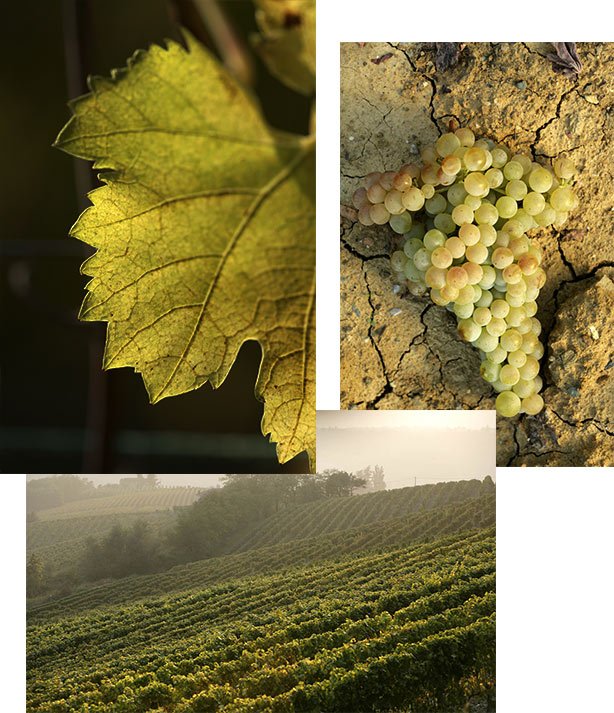
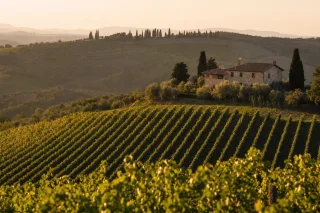
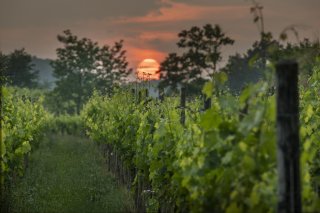
Gavi is Piedmont's definitive Cortese, refined over a thousand years on the chalky clay hills of Alessandria. The DOCG spans 11 towns between the Ligurian Apennines and the Po Valley. It makes still, frizzante and spumante whites. Expect crisp acidity, citrus blossom and a stony tension. Over 13 million bottles are produced each year, and 90 percent are exported.
The boundary
Everything on this page, the estates, the bottles, the sub-zones, sits inside this line.
Estate 1
Gavi
Book online
In the glass

Green Apple
Lemon
White peach
Pear
Acacia
Almond

Honey

Flint
The disciplinare
The same table on every denomination page, straight from the production rules.
 Cortese100% Cortese per DOCG disciplinare100%
Solid means the rules demand it. Striped means optional, up to that amount. The words on the right say the same rule.
Yields are capped at 9.5 tonnes per hectare by the production rules.
Every wine must pass a release tasting before it may carry the denomination.
Editor's cellar
Live prices, compared across 19 UK retailers.
Cellar doors · inside the zone
One estate inside the zone opens its doors today. A small list, honestly kept: only working cellars with confirmed visits appear here.
No estates match these filters. Clear a filter to see more.
Experiences in the Gavi/Cortese di Gavi zone
Cellar experiences here average around €41. These are the strongest fits for this page.
La Scolca
Discover La Scolca through its most complete experience: the Masterclass. In the cellar that was its cradle, Cortese di Gavi reveals its mos…
La Scolca
A great wine is made with great grapes. A simple principle, but the foundation of oenology. La Scolca will take you to discover this grape a…
La Scolca
An exclusive experience combining two great classics of elegance: Vivari caviar and the Cortese expressions signed by La Scolca. The preciou…
The years
Reading the years
Aromatic, mid-weight, fresh (general Piedmont)
Tap a year for its note.
Gavi DOCG requires 100 percent Cortese. The grapes must grow across 11 towns in Alessandria province, at 150 to 450 metres. The soils are chalky clay. Minimum vine density is 3,300 plants per hectare. The maximum yield is 9.5 tonnes per hectare for standard versions. It drops to 8.5 for single-vineyard (vigna) bottlings and 6.5 for Riserva. Three styles are permitted: Tranquillo (still), Frizzante and Spumante. Minimum alcohol is 9.5 percent for Tranquillo and Frizzante, 9 percent for Spumante and 11 percent for Riserva. Riserva wines need one year of ageing, with six months in bottle, and are released from 1 November. Riserva Spumante made by the traditional method demands two years, including 18 months on the spent yeast. Natural cork is required for every Riserva. Most producers work in stainless steel. Five to six months of contact with the spent yeast builds texture, without masking Cortese's native acidity.
On the table
The home country leads; global pairings that genuinely work follow.


Vitello Tonnato is the Piedmontese cold summer veal, sliced thin and covered with an emulsion of tuna, capers, anchovy and egg yolk.
In-depth guide
Gavi DOCG is made from 100 percent Cortese. It is a native white grape, documented in the Alessandria hills since at least 1659. No blending is permitted under the DOCG rules.
Gavi di Gavi comes only from vineyards inside the town of Gavi itself. Standard Gavi DOCG may take Cortese from any of the 11 permitted towns in Alessandria province. The distinction is geographic, not stylistic, though Gavi di Gavi wines often carry a premium.
Cortese is the grape and Gavi is the denomination. Cortese can be grown elsewhere in Piedmont and Lombardy under other names, such as Cortese dell'Alto Monferrato DOC. Only Cortese from the 11 DOCG towns in Alessandria may be labelled Gavi.
Gavi's high acidity and stony profile suit seafood, such as fritto misto or grilled branzino. They also suit light pasta dishes, such as trofie al pesto, which shares Ligurian roots. Soft cheeses and vegetable antipasti work too. Riserva bottlings with more body can stand up to white meat and risotto.
Standard Gavi Tranquillo is best within two to three years of the vintage. Riserva and single-vineyard (vigna) bottlings from top producers can develop positively for five to eight years. They gain almond and honey complexity. Villa Sparina and Nicola Bergaglio are two such producers.
Yes. Gavi DOCG is exclusively a white wine made from 100 percent Cortese. The denomination permits still (Tranquillo), lightly sparkling (Frizzante) and fully sparkling (Spumante) styles, but all are white.
Explore more Piedmont
Same region only: the denominations Gavi/Cortese di Gavi drinkers reach for next.