







Wine route
Asti and Monferrato Route
2 days, around 90 km of driving · 6 stops
Open the driveYour cellar, your trips, and the wines you've been tracking are right where you left them.
New here?
Free, always. Education first, we'll never sell you anything you didn't ask to see.
Already have an account?
Enter the email you signed up with and we'll send a link to choose a new password.
Piedmont · DOCG
Asti is Piedmont's sweet fizz: one DOCG, one grape and two wines. Asti Spumante is the fully sparkling one, made in tanks and usually sweet. Moscato d'Asti is the gently fizzy one at about five per cent alcohol. Both are at least 97% Moscato bianco, grown on the hills of 51 towns and villages between Alba and Acqui Terme.
Decode the label
One denomination, 5 things it can say on the front. Colour first, then the qualifier.
On the label
Asti Spumante DOCG
the fully sparkling one
The big-house fizz, usually sweet, sometimes dry. The State seal and the consortium's mark sit on every bottle.
In stock from £8.49 See the 9 bottles ↓On the label
Moscato d'Asti DOCG
the gently fizzy one
Sweet by law, low in alcohol, made to drink young: the wine the small estates of the Belbo valley are known for.
In stock from £8.25 See the 41 bottles ↓On the label
Asti Metodo Classico
bottle-fermented, nine months on the lees
The slow version, with a finer bead and a firmer acid floor of 6 grams a litre. Rare.
In stock from £34 See the 1 bottle ↓On the label
Moscato d'Asti Vendemmia Tardiva
late-picked, a year's rest
Dried-grape richness with the Moscato perfume intact: the dessert wine of the family.
In stock from £10.70 See the 1 bottle ↓On the label
Asti Spumante Rosé
Moscato with a dash of Brachetto
Pale pink and rare: 70 to 90% Moscato with 10 to 30% Brachetto, the red aromatic grape of the same hills.
No bottles in stock right now
The boundary
Everything on this page, the estates, the bottles, the sub-zones, sits inside this line.
Wine route
2 days, around 90 km of driving · 6 stops
Open the driveWine route
2 days · 7 stops
Open the drive
Estate 1
Alba · San Cassiano
Tastings available
Estate 2
Castel Boglione · Nizza hills
Tastings available
Estate 3
Cossano Belbo · Belbo valley
Tastings available
Estate 4
Nizza Monferrato · Piazza Dante
Book online
Estate 5
Serralunga d'Alba · Cerretta
Tastings available
Estate 6
Neviglie · Langhe side
Tastings available
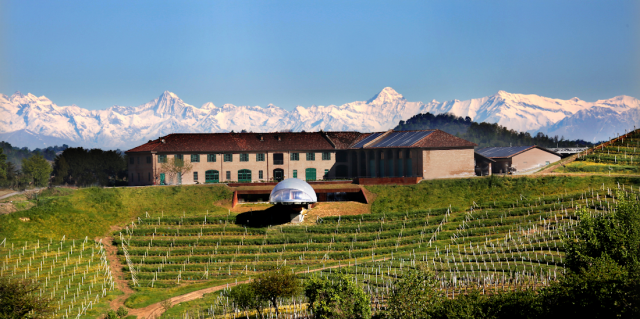
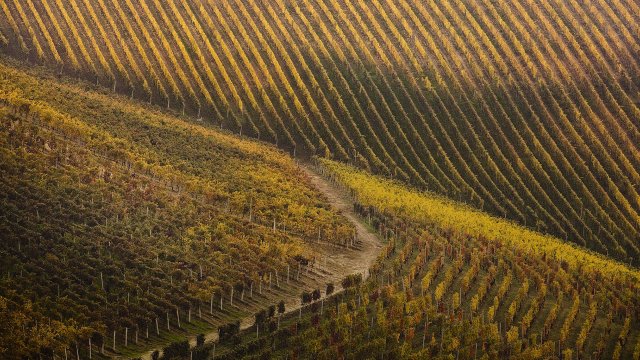
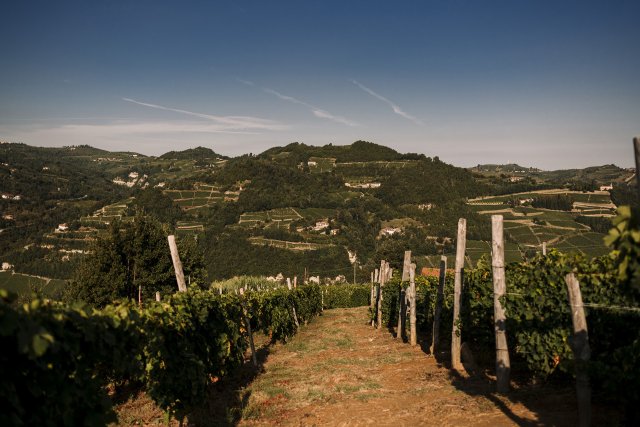
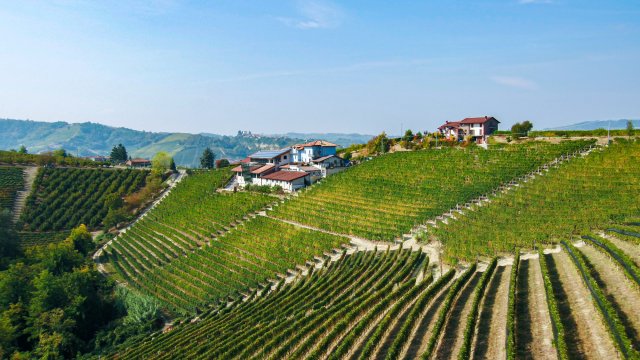
The zone is a band of hills south of the town of Asti, from Santa Vittoria d'Alba and the Belbo valley in the west, through Canelli and Nizza Monferrato, to Acqui Terme in the east: 51 municipalities in the provinces of Cuneo, Asti and Alessandria. The rulebook counts over 10,000 hectares of registered vineyard, a quarter of them on slopes steeper than 30%, between 150 and 600 metres. The west stands on old sandstone that drains fast; the east on the Sant'Agata marls, veined with gypsum, that hold water. Two sub-zones carry their own name: Santa Vittoria d'Alba, one municipality at the western tip, and Strevi, nine municipalities around Acqui in the east. Canelli, the old heart, stays inside the zone and also has a Moscato DOCG of its own.
Inside the zone
Click or tap a pin for its estate. The numbered pins match the estate cards below.
Towns worth knowing
Canelli is the historic capital of the fizz; Santo Stefano Belbo and Mango hold the west, Nizza the middle, and Strevi and Acqui Terme the eastern end.
In the glass
One profile at a time, never blended into a single set of bars.
Grape

Orange blossom

Peach

Honey
Peach

Apricot
Orange blossom
Grape

White peach
Orange blossom
Honey
Honey
Apricot
Grape
The disciplinare
The same table on every denomination page, one row group per style here, because Asti writes its rules per colour.
 Moscato biancoThe grape: aromatic, grapey, sweetat least 97%Other aromatic white grapes of PiedmontA top-up the rules allowup to 3%Moscato biancoThe base70 to 90%
 BrachettoThe red aromatic grape that colours it10 to 30%
Solid means the rules demand it. Striped means optional, up to that amount. The words on the right say the same rule.
At least 97% Moscato bianco with up to 3% of other aromatic whites; the rosé blends in 10 to 30% Brachetto.
Fermentation stopped by cold so alcohol stays low and sugar stays in: 6% actual for Asti, 4.5 to 6.5% for Moscato d'Asti.
Fizz made in tank or in bottle at least a month in tank for Asti Spumante, nine months on the lees for the bottle-fermented version.
Superiore and riserva are banned words and every bottle carries the State seal and the consortium's collective mark.
A vintage on every Moscato d'Asti though not on the spumante types, and no mushroom cork on a Moscato d'Asti.
Ageing and alcohol minimums per tier are in the label guide above.
Editor's cellar
Live prices, compared across 21 UK retailers.
Cellar doors · inside the zone
6 working estates with their gates open, numbered to match their pins on the map above.
No estates match these filters. Clear a filter to see more.
Experiences in the Asti zone
Cellar experiences here average around €51. These are the strongest fits for this page.
Bersano
From breakfast to dinner. Four wines that don't ask for permission: they're uncorked, poured, and surprised. Easy to drink, never banal. Eve…
Bersano
The wines that have always been there. The ones on which trust has been built, sip after sip. Our signature, for almost 120 years. Between t…
Bersano
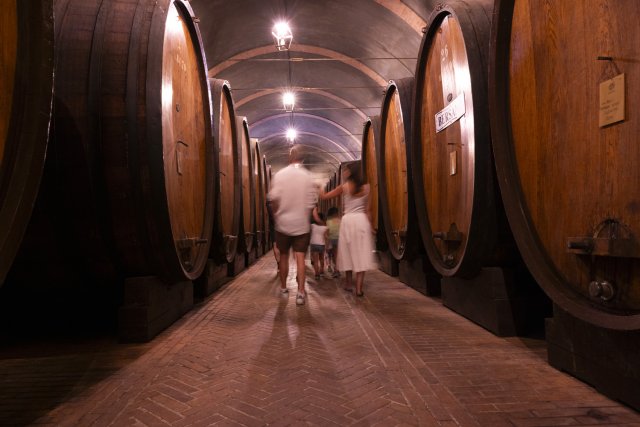
Visit to the Museum and the historic cellars, followed by a tasting of 5 labels that have made the history of the Bersano winery: Arturo Cla…
Two names at the two ends
Santa Vittoria d'Alba is one municipality at the western tip; Strevi is nine around Acqui Terme in the east. Both cut the crop to 9.5 tonnes, ask riper grapes, and a Moscato d'Asti from either must reach 12% in total.

One municipality at the western tip, near Alba. Crop cut to 9.5 tonnes, riper grapes, and a Moscato d'Asti from here reaches 12% in total; the late harvest ages two years.
Nine municipalities around Acqui Terme in the east, on gypsum-veined marl, from Strevi and Cassine to Visone. Crop cut to 9.5 tonnes; a Moscato d'Asti from here reaches 12% in total.
Vintage provenance
No vintage chart is published for Asti. Asti Spumante is usually a blend without a vintage on the label, and Moscato d'Asti is made to drink within a year or two of the harvest it names, so the newest bottle is the one to buy.
Buy the newest bottle; Moscato d'Asti is at its best in the year after the harvest.
What to check instead
The sub-zone: where a wine comes from inside the zone changes what is in the glass. See them above.
The producer: quality here is tracked estate by estate rather than year by year.
Every Asti starts with Moscato bianco, at least 97% of the vineyard, on hillsides in 51 municipalities across the provinces of Asti, Cuneo and Alessandria. Flat or damp land is out. Yields are capped at 10 tonnes a hectare, 6 for the late-harvest wine. The juice is chilled and fermented slowly so alcohol and sugar stay in balance. For Asti Spumante the fizz is made in a sealed tank over at least a month, the Martinotti method. The wine must reach 11.5% in total, of which at least 6% is actual alcohol, and may run from pas dosé to sweet. A bottle-fermented version spends at least nine months on its lees. Moscato d'Asti stops earlier: 4.5 to 6.5% actual alcohol, a gentle fizz under 2.5 bar, and no mushroom cork. A rosé with 10 to 30% Brachetto and a late-harvest Moscato d'Asti complete the family. Superiore and riserva are banned words.
On the table
Baci di dama, panettone, pastiera and fruit tarts: at five to seven per cent alcohol, a sweet Moscato fizz is the pudding wine that does not fight the pudding.
In-depth guide
Same grape, same hills, different fizz. Asti Spumante is fully sparkling, made in a sealed tank, with at least 6% actual alcohol and a mushroom cork. Moscato d'Asti is only gently fizzy, under 2.5 bar, at 4.5 to 6.5% alcohol, and must carry its vintage. Moscato d'Asti is always sweet; Asti Spumante is usually sweet but may be made dry.
Usually, but not by law. The rules let Asti Spumante run from pas dosé, the driest level, to dolce, and the classic bottle is sweet. Moscato d'Asti is sweet by law: its rulebook lists the taste as dolce, aromatic and sometimes lively.
Moscato bianco, at least 97% of the vineyard, with up to 3% of other aromatic white grapes grown in Piedmont. The rosé version blends 70 to 90% Moscato with 10 to 30% Brachetto, the red aromatic grape of the same hills.
A DOCG, since 1993. It had been a DOC since 1967. Every bottle carries the State seal and the consortium's collective mark, and every batch passes a tasting panel.
On the hills south of the town of Asti in Piedmont. The zone takes in 51 towns and villages in the provinces of Asti, Cuneo and Alessandria, from Santa Vittoria d'Alba near Alba to Acqui Terme. The vines sit between 150 and 600 metres, and a quarter of the 10,000 hectares are on slopes steeper than 30%.
Yes, if the label says Asti DOCG or Moscato d'Asti DOCG and carries the State seal. The rules are the same for every bottle: 97% Moscato from the 51 towns and villages, fermentation stopped by cold, a tasting panel. An £8 to £10 bottle from Martini, Toso or Fontanafredda is the genuine article.
Pudding, or nothing at all. At five to seven per cent alcohol both wines suit baci di dama, panettone, pastiera and fruit tarts, and Moscato d'Asti is the glass Piedmont pours with its hazelnut biscuits. Serve them cold, at 6 to 8 degrees.
Most bottles on the shelf sit between £8 and £15. The big houses start under £10, and small-estate Moscato d'Asti from Saracco, Vajra, Braida or Ceretto runs £9 to £15. At the top, Contratto's bottle-fermented Asti is about £34 and Ca' d'Gal's old-vine Vite Vecchia £54. The price table on this page tracks live UK shop prices.
Explore more Piedmont
Same region only: the denominations Asti drinkers reach for next.