





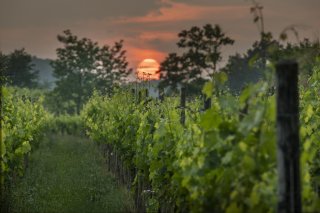


Asti and Monferrato Route
Two days across the Asti hills: Ruchè at Castagnole, Barbera at Costigliole and Nizza, spumante cellars under Canelli, and hot springs to finish at Acqui Terme.
Drive this route →Your cellar, your trips, and the wines you've been tracking are right where you left them.
New here?
Free, always. Education first, we'll never sell you anything you didn't ask to see.
Already have an account?
Enter the email you signed up with and we'll send a link to choose a new password.
Piedmont · DOCG
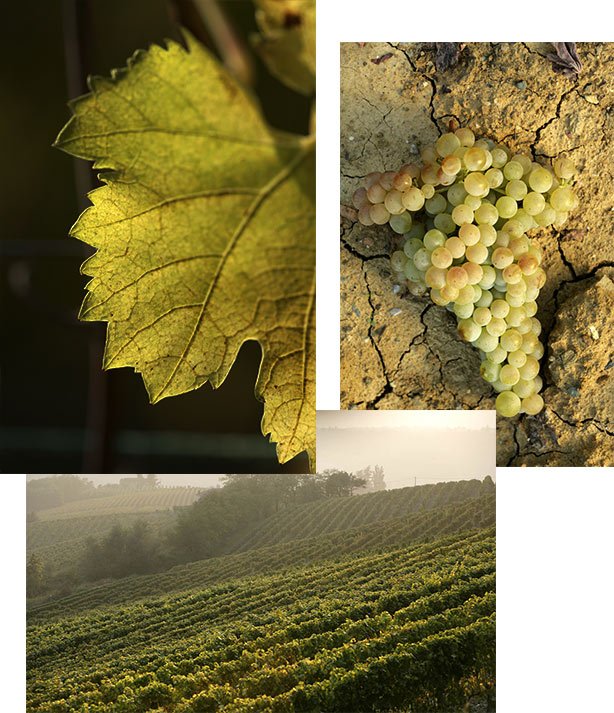
Barbera d'Asti is the Monferrato's own red: the most-made wine of the hills around Asti and, the rulebook says, the one that best speaks for its farmers. A DOCG since 2008, it must be at least 90% Barbera and rest four months before sale. The Superiore waits fourteen, six of them in wood, and two small sub-zones go further still.
Decode the label
One denomination, 4 things it can say on the front. Colour first, then the qualifier.
On the label
Barbera d'Asti DOCG
the everyday red
Cherry and plum, a lively acid edge, soft tannin. From supermarket own-label to named estates, most of the shelf sits here.
In stock from £8.95 See the 45 bottles ↓On the label
Superiore
14 months, six in wood
Fuller and spicier, with wood in the mix by law. Big barrels or barriques both count; the estate decides which.
In stock from £9.95 See the 22 bottles ↓On the label
Tinella
the Superiore sub-zone south-west of Asti
Costigliole, Calosso, Castagnole Lanze, Coazzolo and part of Isola d'Asti. Cork only, vintage on every label. Rare on UK shelves.
No bottles in stock right now
On the label
Colli Astiani
the Superiore sub-zone just south of Asti
Montegrosso, Mongardino, Vigliano, Montaldo Scarampi, Rocca d'Arazzo and Azzano, plus part of Isola d'Asti and two districts of Asti itself. Also sold as Astiano.
No bottles in stock right now
The boundary
Everything on this page, the estates, the bottles, the sub-zones, sits inside this line.
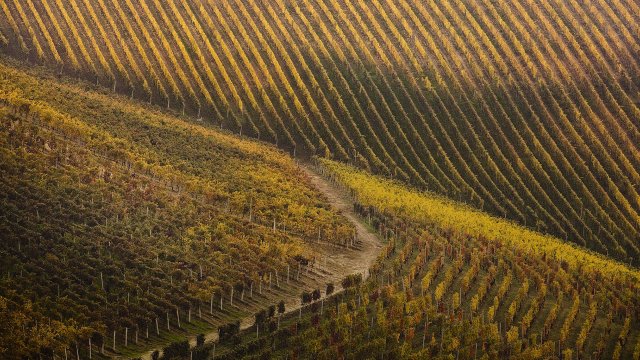
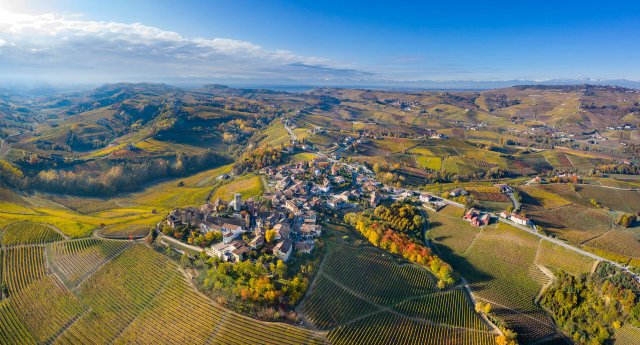
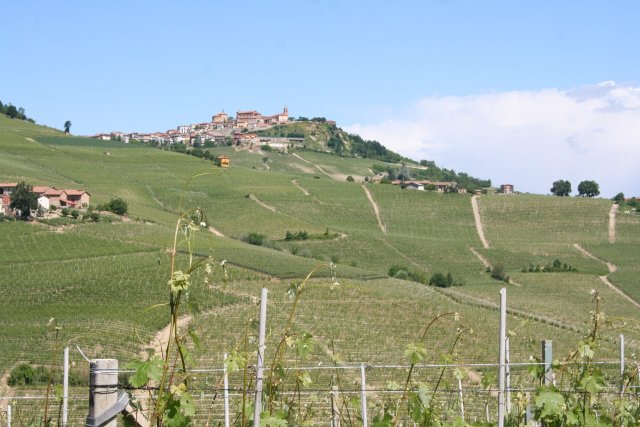
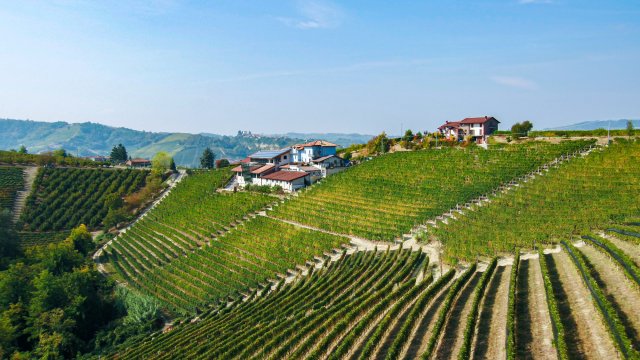
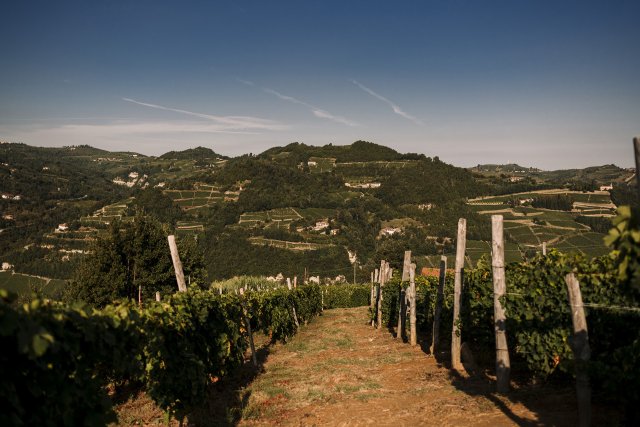
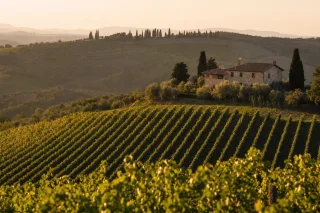
The zone covers 116 communes of the province of Asti and 51 in the province of Alessandria: the Monferrato hills on both sides of the Tanaro, from the Roero border past Asti to Casale Monferrato and down to Acqui. The hills are low, mostly 150 to 400 metres, and no vineyard may sit above 650. The older white earths of sandy and limestone marl lie to the north and south; the younger Asti sands line the Tanaro in the middle. Two named sub-zones sit close to Asti: Tinella in the hills to the south-west, and Colli Astiani on the hills just south of the city. Nizza, once a third, left to become its own DOCG with the 2014 vintage.
Inside the zone
Towns worth knowing
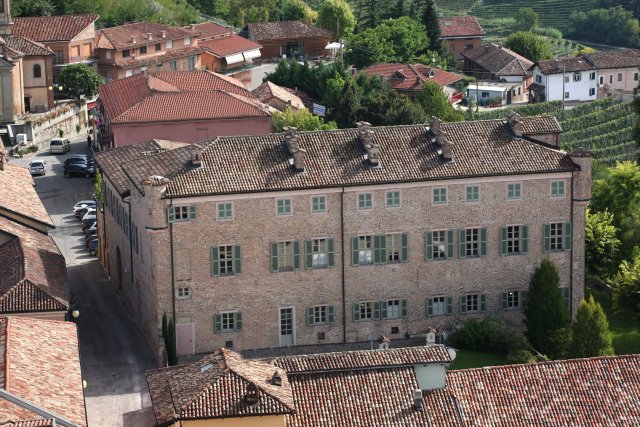
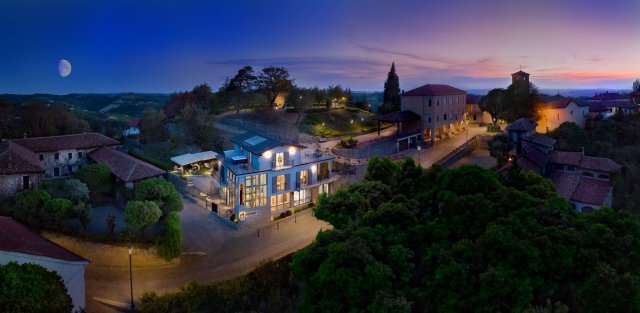
Asti sits on the Tanaro in the middle of the zone. Nizza Monferrato, Agliano and Vinchio hold the southern heartland, Casale the eastern Monferrato, and Costigliole and Castagnole the Tinella side.
In the glass
Black cherry

Plum

Blueberry

Black pepper

Liquorice

Rose petal

Green pepper
The disciplinare
The same table on every denomination page, straight from the production rules.
 BarberaThe grape; most bottles are all Barberaat least 90%Other non-aromatic red grapes of PiedmontAllowed as a top-up, rarely usedup to 10%
Solid means the rules demand it. Striped means optional, up to that amount. The words on the right say the same rule.
At least 90% Barbera with the rest, if any, from non-aromatic red grapes grown in Piedmont.
Hillside only, no higher than 650 metres and new vineyards may not face north; they need at least 4,000 vines per hectare.
Yields are capped at 9 tonnes per hectare 8 for a vigna wine and 7 in the Tinella and Colli Astiani sub-zones.
Superiore waits 14 months, six of them in wood counted from 1 November, in casks of any size; the base wine rests four.
A sub-zone Superiore waits two years from 1 October, with six months in wood and six in bottle, and reaches 13%.
Ageing and alcohol minimums per tier are in the label guide above.
Editor's cellar
Live prices, compared across 22 UK retailers.
Cellar doors · in Piedmont
12 working estates with their gates open.
No estates match these filters. Clear a filter to see more.
Experiences in the Barbera d'Asti zone
Cellar experiences here average around €45. These are the strongest fits for this page.
Bersano
From breakfast to dinner. Four wines that don't ask for permission: they're uncorked, poured, and surprised. Easy to drink, never banal. Eve…
Bersano
The wines that have always been there. The ones on which trust has been built, sip after sip. Our signature, for almost 120 years. Between t…
Bersano
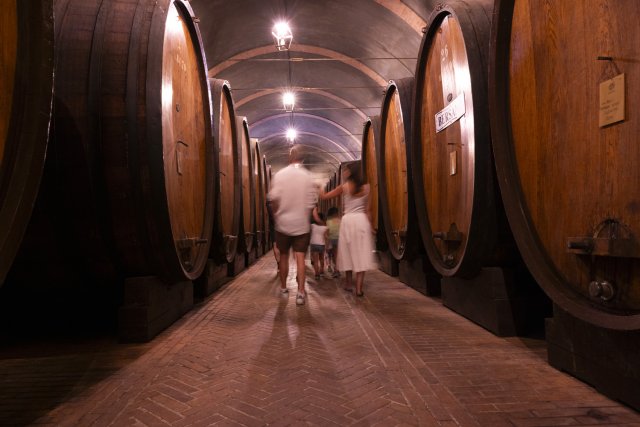
Visit to the Museum and the historic cellars, followed by a tasting of 5 labels that have made the history of the Bersano winery: Arturo Cla…
Two names, one stricter rulebook
Both sub-zones apply only to a Superiore, sit south and south-west of Asti, and demand a smaller crop, two years of ageing and 13% alcohol.

South-west of Asti: Costigliole, Calosso, Castagnole Lanze, Coazzolo and part of Isola d'Asti. Superiore only: 7 tonnes a hectare, 24 months from 1 October, 13%.
Just south of Asti: Montegrosso, Mongardino, Vigliano, Montaldo Scarampi, Rocca d'Arazzo, Azzano, part of Isola d'Asti and two city districts. Same rules as Tinella.
Vintage provenance
No denomination-wide vintage chart is currently published for Barbera d'Asti. The producers' consortium describes the wine and its sub-zones rather than rating the years, and the critics score bottles, not the appellation. Quality is tracked producer by producer, and the base wine is made to drink within a few years in any case.
Buy the newest base wine; give a Superiore or a sub-zone bottle two or three years.
What to check instead
The sub-zone: where a wine comes from inside the zone changes what is in the glass. See them above.
The producer: quality here is tracked estate by estate rather than year by year.
The zone is wide: the province of Asti and the Monferrato hills of Alessandria, on hillsides mostly between 150 and 400 metres and never above 650. Valley floors and damp ground are out, and new vineyards may not face north. At least 90% must be Barbera; any non-aromatic red grape grown in Piedmont may make up the rest. Yields are capped at 9 tonnes a hectare, or 8 for a wine that names its vineyard. The base wine rests four months from the 1st of November and must reach 12% alcohol. A Superiore rests 14 months from the same date, at least six of them in wood of any size, and reaches 12.5%. The two sub-zones, Tinella and Colli Astiani, apply to a Superiore only: a 7 tonne crop, 24 months from the 1st of October, six in wood, six in bottle, and 13%. Every bottle carries its vintage.
On the table
Agnolotti del plin, tajarin, brasato and a Margherita: the acidity cuts fat and matches tomato, the soft tannin keeps it easy.
In-depth guide
Deep ruby, with cherry, plum and dark berries, a lively acid edge and soft tannin. The producers' consortium describes it as intense and vigorous, turning to jam and fruit-in-spirit notes with age. A Superiore is fuller, with wood spice from its six months in cask.
A DOCG, since 8 July 2008. It had been a DOC since 9 January 1970. Every batch must pass a tasting panel before release, as the DOCG rules require.
At least 90% Barbera. Up to 10% may come from any non-aromatic red grape allowed in Piedmont, but most bottles are all Barbera.
Time in the cellar and strength. The base wine rests four months from the 1st of November and must reach 12%. A Superiore rests 14 months, at least six of them in wood, and reaches 12.5%. Both come from the same vineyards under the same 9 tonne cap.
The two sub-zones, both for a Superiore only. Tinella lies south-west of Asti: Costigliole, Calosso, Castagnole Lanze, Coazzolo and part of Isola d'Asti. Colli Astiani covers the hills just south of the city: Montegrosso, Mongardino, Vigliano, Montaldo Scarampi, Rocca d'Arazzo, Azzano, the rest of Isola d'Asti and two districts of Asti. Both demand a 7 tonne crop, 24 months of ageing from the 1st of October with six months in wood and six in bottle, and 13% alcohol. Nizza used to be a third sub-zone and is now a DOCG of its own.
Same grape, two neighbouring zones. Barbera d'Asti is a DOCG, needs 90% Barbera, and rests four months before sale; its Superiore waits 14 months with six in wood. Barbera d'Alba is a DOC from the Barolo and Barbaresco hills, needs 85% Barbera, has no minimum ageing, and its Superiore waits 12 months with four in wood.
It follows the same rules as every other bottle: 90% Barbera, hillside vineyards, four months of rest and a tasting panel. Bottles at £9 to £13 are usually base wine from the big co-operatives, Araldica above all, and they are honest. Pay £15 to £25 for a named estate or a Superiore and you get more depth.
About half the shelf sits between £10 and £20, starting under £9. A good Superiore runs £17 to £30. The famous single-vineyard wines from Braida, La Spinetta and Scarpa run £36 to £70. One bottle stands apart: a 1968 vintage from Mario Pesce at £270. The price table on this page tracks live UK shop prices.
Explore more Piedmont
Same region only: the denominations Barbera d'Asti drinkers reach for next.