Northern Italy
Trentino-Alto Adige Mountain air, alpine vineyards
Italy's alpine wine country: Teroldego from the Piana Rotaliana, Trento DOC sparklers raised on dolomitic limestone, and Alto Adige whites perfumed by glacial air.
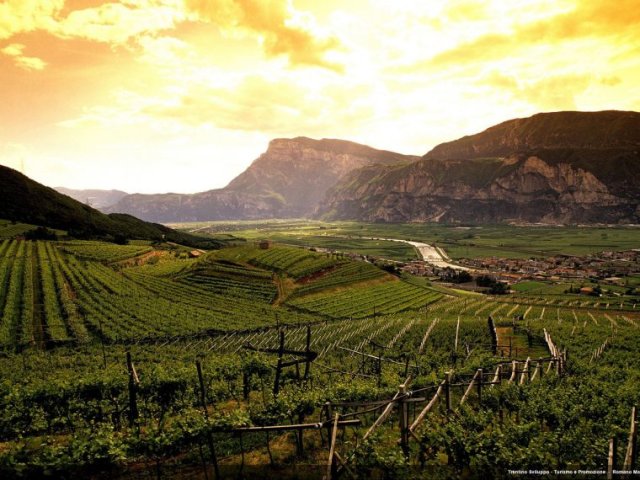
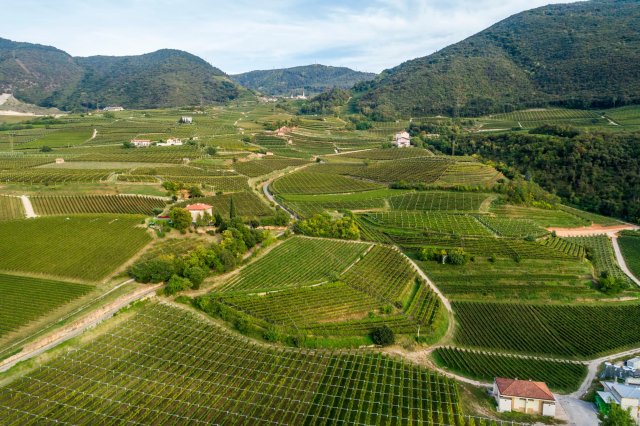
Trentino-Alto Adige is Italy's northernmost wine region, a single political unit holding two distinct wine cultures: Trentino in the south, with Italian as its first language, and Alto Adige (Südtirol) in the north, where most labels read in German first. Vineyards climb from 200 metres on the Adige floor to nearly 1000 metres above Bolzano, planted on porphyry, dolomitic limestone, and glacial moraine.
The wines split along the same lines. Trentino is built on Teroldego from the Piana Rotaliana, Marzemino from Vallagarina, and Trento DOC sparklers founded by Giulio Ferrari in 1902. Alto Adige answers with Schiava (Vernatsch) and Lagrein around Bolzano, Gewürztraminer near its eponymous village of Tramin, and a tight bench of high-altitude whites: Pinot Bianco, Pinot Grigio, Sauvignon, Kerner, Sylvaner. Two tongues, one alpine grammar.
Where Trentino-Alto Adige wine takes shape
The named places that explain the region's grapes, styles, and labels, plotted across the map.
Piana Rotaliana
Teroldego heartland on a flat alluvial fan north of Trento, gravel and porphyry over a former glacial bed.
The Piana Rotaliana sits where the Noce river joins the Adige, between Mezzocorona, Mezzolombardo and San Michele all'Adige. Stones and porphyritic gravel drain hard; warm days and cool alpine nights hold acidity. The whole DOC of Teroldego Rotaliano lives inside this small triangle, and the grape rarely shows the same depth elsewhere. The same flat is shared with Lagrein and Pinot Nero plantings.
Vallagarina
South Trentino's broad Adige valley between Trento and the Veneto border, the historic home of Marzemino.
From Avio to Rovereto, Vallagarina runs along the Adige and its eastern terraces of basalt and limestone. Marzemino di Isera is the signature, a perfumed light red Mozart name-checked in Don Giovanni. Pinot Nero, Cabernet, Merlot and Chardonnay share the same warmer floor, while higher slopes feed Trentodoc base wines.
Valle dei Laghi
A narrow valley of small lakes west of Trento where ventilation ripens Nosiola for Vino Santo Trentino.
Between Lago di Toblino and Lago di Cavedine, the Ora del Garda wind dries grapes on graticci through winter, producing Vino Santo Trentino DOC, one of Italy's longest-aged sweet wines. Dry Nosiola is the everyday white. Chasselas, Chardonnay and Pinot Bianco round out the valley floor.
Val di Cembra
Steep porphyry terraces northeast of Trento, the highest cradle of Trentodoc sparkling base wine.
Val di Cembra runs from Lavis to the Avisio gorge. Vineyards cling to drystone terraces, sometimes above 800 metres, on red porphyry. Cool nights preserve acidity for Chardonnay and Pinot Nero destined for Trentodoc, with Müller-Thurgau as the everyday white. Müller-Thurgau di Cembra is a regional reference for the grape.
Eisacktal / Valle Isarco
Italy's northernmost wine valley, climbing the Isarco gorge from Bolzano toward Bressanone.
Eisacktal (Valle Isarco) is the highest and coolest of the Alto Adige zones, with vineyards on phyllitic mica schist between 500 and 900 metres. Aromatic whites dominate: Sylvaner, Kerner, Müller-Thurgau, Riesling and Veltliner, plus the only Italian commercial bottlings of Kerner of any scale. Pinot Bianco and Gewürztraminer push the upper edge.
Bassa Atesina / Unterland
Southern Alto Adige around Tramin and Egna, the Italian home of Gewürztraminer and a heartland for Lagrein and Pinot Nero.
From Bolzano south to Salorno, the Unterland covers the warmest, most Mediterranean reach of Alto Adige. Tramin (Termeno) gave Gewürztraminer its name and produces some of Italy's most aromatic versions. Mazzon is a single-vineyard reference for Italian Pinot Nero. Lagrein matures around Egna and Cortaccia in deeper, cooler soils.
Oltradige / Überetsch
Lakeside hills between Caldaro and Appiano, the largest contiguous wine zone of Alto Adige and the home of Schiava on the lake.
Around Lago di Caldaro, the Überetsch (Oltradige) plateau sits at 400 to 600 metres on calcareous moraine. Caldaro DOC and Santa Maddalena take their name from villages here. Schiava (Vernatsch) gives a light, almond-tinged red made for cured meats; Pinot Bianco and Pinot Grigio share the same hills. Lagrein presses south toward the city of Bolzano.
Vinschgau / Val Venosta
A west-running glacial valley above Merano, the driest wine zone in Italy and a Riesling outpost.
Vinschgau (Val Venosta) climbs west of Merano toward the Stelvio. The valley sits in a rain shadow, with as little as 500 mm of annual rainfall, and vineyards on glacial moraine and gneiss between 600 and 900 metres. Riesling is the regional speciality, with Pinot Bianco, Sauvignon and Müller-Thurgau supporting. A small zone, but a high-altitude reference for Italian whites.
Understanding Trentino-Alto Adige
Layered notes on terroir, history, label rules, taste, drinking window and where to start.
Terroir
Terroir: glacial geology, alpine altitude
Vineyards stack from 200 to 900 metres on porphyry, dolomitic limestone and glacial moraine, lifted by the Adige and Isarco valleys.
Trentino-Alto Adige is wedged between the Brenta Dolomites, the Ortles-Cevedale and the Lessini. Vineyards take refuge in three river systems: the Adige south of Bolzano, the Isarco above it and the Noce on the Piana Rotaliana. Soils flip in tens of kilometres: red porphyry at Cembra, dolomitic limestone in Vallagarina, calcareous moraine around Caldaro, mica schist in Eisacktal, glacial gneiss in Vinschgau. Altitude does the rest. Each 100 metres climbed delays harvest by roughly a week, preserving acidity in Riesling, Sylvaner and the Trentodoc base wines while still allowing Lagrein and Teroldego to ripen on the warmer floors.
History
History: Roman roots, Habsburg rule, Trentodoc
Cultivation predates the Romans; the Habsburg century shaped Alto Adige's grape lineup; Giulio Ferrari founded Trentodoc in 1902.
Pliny the Elder mentioned the wines of Rhaetia, the Roman name for what is now Trentino-Alto Adige, in the first century. The valley funnelled wine north into the Empire and later into the Holy Roman Empire and the Habsburg court, which is why the Alto Adige grape mix still leans Germanic: Riesling, Sylvaner, Kerner, Gewürztraminer, Pinot Bianco. Schiava and Lagrein are the autochthonous backbone, with Teroldego and Marzemino doing the same job on the Trentino side. In 1902 Giulio Ferrari, trained in Champagne, planted Chardonnay near Trento and bottled the first Italian metodo classico of any commercial scale, the act that would eventually become the Trentodoc DOC of 1993.
Label rules
Label rules: Trentodoc, Riserva, bilingual labels
Trento DOC requires 15 months on lees, 24 for vintage, 36 for Riserva. Alto Adige labels carry German and Italian names side by side.
Trento DOC bottles are made by metodo classico from Chardonnay, Pinot Nero, Pinot Bianco and Pinot Meunier. Minimum lees ageing is 15 months; vintage cuvées need 24 months; Riserva needs 36 months. The Trentodoc mark on a label confirms compliance. Teroldego Rotaliano DOC restricts production to a defined plain across Mezzocorona, Mezzolombardo and San Michele all'Adige; the Superiore version requires 24 months from harvest. Alto Adige labels are bilingual by law: Schiava and Vernatsch, Pinot Bianco and Weissburgunder, Lagrein and Lagrein, Caldaro and Kalterersee. Sub-zones such as Santa Maddalena and Terlano (Terlaner) are recognised on labels and carry their own ageing and yield rules.
Taste profile
Taste profile: alpine freshness, low warmth
Whites lean precise and aromatic; reds stay light to medium; sparkling carries dolomitic chalk; almost no warm-climate weight.
The signature of Trentino-Alto Adige is freshness without thinness. Schiava and Caldaro DOC bottles run 11.5 to 12.5 percent alcohol, low tannin, with a cherry-pit bitter finish that handles cured speck. Lagrein is the muscle of the region: blackberry, dark chocolate, firm tannin, often a mineral lift from porphyry. Teroldego Rotaliano is darker still, violet and blueberry, with a slightly chewy texture and 13 to 14 percent alcohol. On the white side, Pinot Bianco, Sauvignon and Riesling stay tight and citrus-driven; Gewürztraminer from Tramin is rose, lychee, baked apple. Trentodoc carries dolomitic chalk and citrus zest under the lees toast.
Drinking window
Vintage and drinking windows
Schiava and Pinot Bianco drink within two to three years; Lagrein and Teroldego reward five to ten; Trentodoc Riserva keeps a decade or more.
Most Schiava and aromatic whites are made for the year after harvest and lose their lift after two to three years. Pinot Bianco from Terlano is the exception, ageing for a decade in the right cellar. Lagrein Riserva and Teroldego Rotaliano Superiore drink best between five and ten years, the tannins softening into chocolate and dried plum. Trentodoc Riserva, on lees for at least 36 months, keeps gaining on the cork: Ferrari Riserva del Fondatore drinks well at 15 years and beyond. Vintages 2015, 2016, 2019 and 2021 are the recent benchmarks for both reds and sparkling base wines.
Explore
Practical exploration: routes, towns, seasons
Two named wine roads anchor the region; spring through harvest is best; reach Bolzano by train from Munich, Verona or Innsbruck.
The Strada del Vino dell'Alto Adige (Südtiroler Weinstraße) runs about 70 kilometres from Salorno to Nalles through Caldaro, Tramin and Appiano, and is signposted continuously. The Strada del Vino e dei Sapori del Trentino covers the Trentino side from Avio to Mezzocorona, with branches into Vallagarina and the Piana Rotaliana. Both are open year-round but the harvest months of September and October are the best windows for cellar visits. The Brennero rail line links Bolzano and Trento to Verona, Munich and Innsbruck, and most named villages are reachable by regional train.
What to drink from Trentino-Alto Adige
A short shortlist that maps the region: benchmark reds, signature whites and the labels worth a step-up.
Teroldego Rotaliano DOC
Concentrated and dark, with violet and blackberry over a chewy alpine-gravel structure. Drink within five to ten years; Superiore needs 24 months from harvest.
Trento DOC
Founded by Giulio Ferrari in 1902, made from Chardonnay, Pinot Nero, Pinot Bianco and Pinot Meunier. Minimum 15 months on lees, 36 for Riserva. Dolomitic chalk under lees toast.
Lagrein
Native to the Gries quarter of Bolzano, Lagrein gives blackberry, dark chocolate and firm porphyritic tannin. Riserva versions reward five to ten years.
Gewürztraminer (Tramin)
Rose, lychee and baked apple from the village of Tramin (Termeno) where the grape is named. Look for Vendemmia Tardiva for sweeter, age-worthy versions.
Schiava / Caldaro DOC
Schiava (Vernatsch) on the Caldaro plateau gives a low-tannin red of cherry and almond bitters at 11.5 to 12.5 percent alcohol. The textbook pour for speck and canederli.
Marzemino di Isera
Light, perfumed, with violet and red plum from the basalt slopes of Isera. Famous for the Don Giovanni name-check; drink young and slightly cool.
The one to know first
Our curated guide. Not the full list, the bottle that opens the door.
Curated guide · DOC
Alto Adige/Südtirol
Italy's Alpine white-wine heartland, where 96% of the vineyard sits inside one DOC. Alto Adige (Südtirol) DOC binds the South Tyrol's twenty grape varieties under a single bilingual appellation. The disciplinare maps.
The grapes behind the bottle
9 curated guides with editorial content. Pronunciations, traits and the regional footprint of each variety.
Pinot grigio [pee-no-gree-jo] is a white grape varietal from Northern Italy.
Cabernet Franc is the quieter half of the Bordeaux pair, lighter and more perfumed than Cabernet Sauvignon, which it happens to have fathered.
Cabernet Sauvignon is the Bordeaux-born red grape that reshaped modern Italian wine.
Chardonnay is a white grape with a clear Italian role: Franciacorta DOCG and Alta Langa DOCG include it in metodo classico sparkling wines, while Sicilia DOC gives it a warmer still-wine voice.
Gewürztraminer, called Traminer Aromatico in Italian, is Alto Adige's lychee-scented aromatic white.
Müller-Thurgau is a white grape that found its truest Italian home among the high-altitude vineyards of Trentino-Alto Adige.
Pinot Bianco is northern Italy's quiet benchmark white, a Burgundian mutation of Pinot Nero that Alto Adige and Friuli's Collio have turned into precise, age-worthy bottles.
Pinot Nero is the Italian name for Pinot Noir, the great red grape of Burgundy, and in Italy's cool north it wears three hats.
Sauvignon Blanc is the sharp, green-scented white behind Friuli's Collio and Isonzo bottlings and Alto Adige's mountain Sauvignon, and the leading grape in coastal Tuscan whites like Ornellaia's Poggio alle Gazze.
Wines from Trentino-Alto Adige
A starter selection from the catalogue. Pour them as a regional flight.
3 retailers
"Cum Vineis Sclavis" Schiava Trentino DOC
Trentino
3 retailers
£14.90
3 retailers
Unterebner Pinot Grigio
Alto Adige/Südtirol
3 retailers
£31.00
3 retailers
Nussbaumer Gewurztraminer
Alto Adige/Südtirol
3 retailers
£31.60
£37.18
3 retailers
Cantina Tramin Stoan
Alto Adige/Südtirol
3 retailers
£32.10
£37.76
3 retailers
Cantina Terlano Vorberg Pinot Bianco Riserva
Alto Adige/Südtirol
3 retailers
£37.00
3 retailers
Ludwig Pinot Nero
Alto Adige/Südtirol
3 retailers
£42.00
3 retailers
Lagrein Riserva Vigna "Castel Ringberg"
Alto Adige/Südtirol
3 retailers
£44.30
£52.12
2 retailers
Südtirol - Alto Adige DOC Schiava Hexenbichler Tramin
Alto Adige/Südtirol
2 retailers
£16.70
£23.52
The table of Trentino-Alto Adige
Mountain, pasture and coast on one plate. Pour the regional wine alongside.
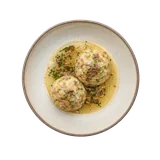
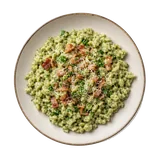
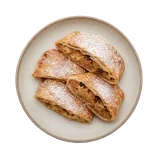
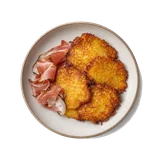
Mountain food calls for mountain wines. Canederli (bread dumplings simmered in broth, often with speck) want a savoury Schiava from Lago di Caldaro: low tannin, almond bitters, weight without warmth. Spätzle in butter and Tyrolean cheese suit Pinot Bianco from Alto Adige, its quiet citrus a counterweight to fat. With Tortei di patate and richer meat plates, lift the wine register: a Lagrein Riserva or a young Teroldego Rotaliano carries through smoke and crisp. Apple strudel finishes with Gewürztraminer Vendemmia Tardiva from Tramin, lychee and rose holding up to baked apple and cinnamon.
Canederli
Canederli are the Trentino-Alto Adige bread dumplings, stale bread, speck and herbs bound with milk and egg, served in broth or browned butter. The dish is Sudtirol by formation, Austrian by ancestry. Lagrein from Alto Adige DOC or a St. Magdalener Schiava brings the local red; Pinot Bianco covers the broth version.
Spatzle or Tyrolean dumplings
Spatzle are the Alto Adige soft dumplings, green-tinted with spinach and served with browned butter and speck. The cookery is Alpine-Austrian in execution, Italian by postcode. Lagrein from Alto Adige DOC brings the weight; Gewürztraminer late-harvest is the aromatic alternative; Pinot Grigio Alto Adige DOC keeps the summer plate.
Strudel
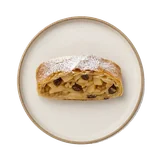
Strudel di Mele is the Alto Adige classic, pastry sheet rolled around apples, raisins and cinnamon from the valleys around Bolzano and Merano. The dish is Austro-Italian by geography. Late-harvest Gewürztraminer from Alto Adige DOC, or a Moscato Rosa passito, carry the apple-cinnamon frame; Müller Thurgau from Val d'Adige works on drier versions.
Tortei di patate
Tortei di Patate are the Trentino potato cakes, grated potato pan-fried until the edges caramelise, served alongside speck, radicchio or game. The dish belongs to the Fiemme and Fassa valleys. Teroldego Rotaliano DOC and Trentino Marzemino DOC are the local red pair; Nosiola handles the lighter sides.
Strucolo
Strucolo is the Friulian answer to strudel, pasta sheet rolled around apples, raisins, walnuts and cinnamon. The recipe crossed into Friuli with the Austrian border and is now canonical Friulian sweet. Colli Orientali del Friuli Picolit DOCG is the elite pair; Verduzzo di Ramandolo DOCG handles the everyday version; Ribolla Gialla late-harvest is the fresher option.
Explore Trentino-Alto Adige by place
Wine routes, towns and wineries to follow when you go.
Wine routes
Some booking links earn italianwines.co.uk a commission. This never affects price or what we recommend.
Strada del Vino dell'Alto Adige (Südtiroler Weinstraße)
About 70 kilometres from Nalles to Salorno through Tramin, Caldaro and Appiano, the most signposted wine road in Italy.
- Nalles
- Terlano
- Bolzano / Gries
- Appiano
- Caldaro / Kaltern
Do this route with a guide
Someone drives the whole itinerary abovePrivate Tour The ultimate South Tyrol wine & food experience
Strada del Vino e dei Sapori del Trentino
From Avio in southern Vallagarina to Mezzocorona on the Piana Rotaliana, with branches into Valle dei Laghi and Val di Cembra.
- Avio
- Isera
- Rovereto
- Trento
- Lavis
Do this route with a guide
Someone drives the whole itinerary aboveTrento: E-Bike Tour Through the Vineyards with Wine Tasting
Strada del Vino di Caldaro (Kalterer Weinrunde)
A short circuit around Lago di Caldaro for Schiava on the lake and a tight cluster of historic cellars.
- Caldaro centro
- Pianizza di Sopra
- Pianizza di Sotto
- St. Josef am See
Wine towns
Bolzano (Bozen)
Capital of Alto Adige, set where the Adige meets the Isarco.
Lagrein heartland in the Gries quarter; Santa Maddalena DOC begins on the hills above town. Headquarters of the Alto Adige Wine consortium.
Trento
Capital of Trentino, on the Adige below the Brenta Dolomites.
Headquarters of the Trentodoc Institute and the Trentino wine consortium. Gateway to the Piana Rotaliana to the north and Vallagarina to the south.
Tramin / Termeno
Wine village in the Bassa Atesina, eponym of Gewürztraminer.
The grape Gewürztraminer takes its name from this village. Home to Cantina Tramin and the source of the most aromatic Italian Gewürztraminer.
Caldaro / Kaltern
Lakeside village on the Südtiroler Weinstraße, between Bolzano and Tramin.
Centre of Caldaro DOC and Lago di Caldaro DOC for Schiava (Vernatsch). Hub of the largest Alto Adige wine cooperative network.
Mezzolombardo
Town on the Piana Rotaliana, at the confluence of Noce and Adige.
Heart of Teroldego Rotaliano DOC. The DOC's flat triangle covers Mezzolombardo, Mezzocorona and San Michele all'Adige.
Bressanone / Brixen
Cathedral town in the Eisacktal, halfway between Bolzano and the Brenner.
Centre of the Eisacktal (Valle Isarco) wine zone for Sylvaner, Kerner, Müller-Thurgau and Riesling. Site of the abbey winery of Novacella, founded in 1142.
Wineries to follow
Ask the sommelier
Quick answers about Trentino-Alto Adige. Numbers, denominations, food and what to start with.
Trento DOC sparkling wine is the regional flagship: a metodo classico from Chardonnay, Pinot Nero, Pinot Bianco and Pinot Meunier, founded by Giulio Ferrari in 1902. Alongside it, Teroldego Rotaliano on the Trentino side and Lagrein and Gewürztraminer on the Alto Adige side are the names a traveller will see most.
Trento DOC is Italy's alpine metodo classico sparkling wine. Made from Chardonnay, Pinot Nero, Pinot Bianco and Pinot Meunier on the porphyry slopes around Trento, it requires a minimum of 15 months on lees, 24 for vintage cuvées and 36 for Riserva. The Trentodoc mark guarantees compliance.
Teroldego, Marzemino and Nosiola on the Trentino side; Lagrein and Schiava (Vernatsch) on the Alto Adige side. Gewürztraminer takes its name from the village of Tramin (Termeno) but is now grown more widely. The Habsburg century also seeded Riesling, Sylvaner, Kerner, Müller-Thurgau and Pinot Bianco in Alto Adige.
They are one administrative region with two autonomous provinces: Trento (Trentino, Italian first language) and Bolzano (Alto Adige / Südtirol, German first language). The wine cultures track the same split: Trentino leans Italian, with Teroldego and Marzemino, while Alto Adige labels are bilingual and lean toward Germanic varieties such as Riesling, Sylvaner and Pinot Bianco.
The grape takes its name from the village of Tramin (Termeno in Italian) in the Bassa Atesina, where 'Traminer' has been recorded since the 11th century. The 'Gewürz' (spiced) prefix was added in the 19th century. Modern Italian Gewürztraminer remains anchored around Tramin and the surrounding Bassa Atesina villages.
Schiava from Caldaro is the textbook pour for speck and canederli; Pinot Bianco lifts spätzle in butter and cheese; Lagrein matches grilled pork and Tyrolean stews; Gewürztraminer Vendemmia Tardiva closes apple strudel. Trento DOC handles trout from the Adige and lake fish from Caldaro.
We currently list 297 wines from Trentino-Alto Adige, starting from £10.28. Browse them all on our wines page.
We currently curate 1 active Trentino-Alto Adige denomination guide, including Alto Adige/Südtirol. This is an editorial selection, not the complete regional denomination list.
We currently curate 9 active Trentino-Alto Adige grape guides, including Pinot Grigio, Cabernet Franc, Cabernet Sauvignon, Chardonnay, Gewürztraminer, and more. This is an editorial selection, not the complete regional grape list.
Trentino-Alto Adige is renowned for dishes including Canederli, Spatzle or Tyrolean dumplings, Strudel, Tortei di patate.
Your next pour
More of Northern Italy, with similar terroir and table.
Wine styles made in Trentino-Alto Adige
Sparkling
From Prosecco to Franciacorta, bubbles for every occasion
Red
Italy's boldest expression, structured, complex, built for food
White
Crisp and versatile, from alpine freshness to Mediterranean warmth
Rosé
Summer in a glass, bright, delicate, endlessly drinkable
Sweet
Liquid gold, Italy's dessert wines are among the world's finest