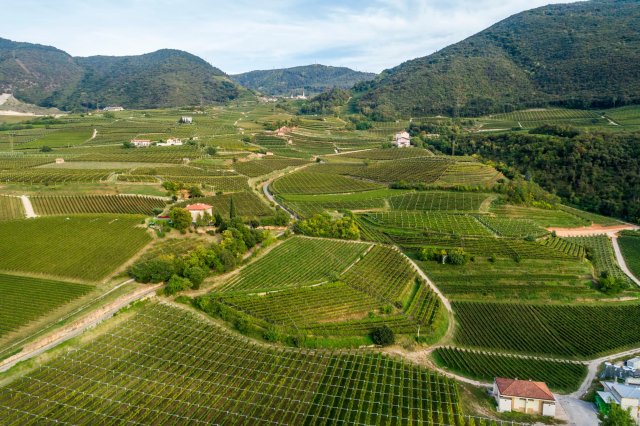
Le Serre Nuove dell'Ornellaia, Bolgheri, Tuscany, Italy
The second wine of Tenuta dell'Ornellaia, this Bolgheri Rosso is Merlot-led with Cabernet Sauvignon, Cabernet Franc and Petit Verdot. Dark cherry, cassis and spice, silky tannins from 15 months in French barrique. Drinks young, ages a decade.
Free, always. Education first, we'll never sell you anything you didn't ask to see.
Already have an account?
Reset your password
Enter the email you signed up with and we'll send a link to choose a new password.
Check your inbox
Hofstätter Josef
Tenuta J. Hofstätter stands in the heart of Tramin, the Alto Adige village that gives Gewürztraminer its name. Since 1907 it has been a quiet pace-setter for South Tyrolean wine. Five generations of the Foradori Hofstätter family have worked single vineyards on both sides of the Adige Valley. Sister estates sit in Trentino and in Germany's Saar Valley. The cellar on Piazza Municipio is the same one Josef and Maria Hofstätter founded, a blacksmith and an innkeeper. It is now matched by an Enoteca, which pours Pinot Nero Vigna S. Urbano alongside the dry Gewürztraminer that put Tramin on the world map.
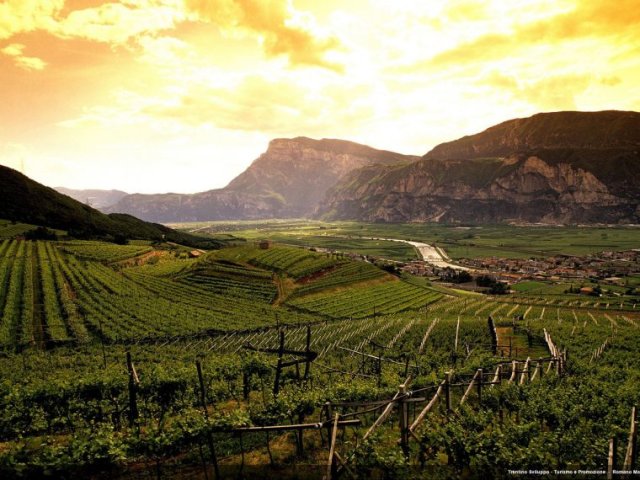
The estate sits on Piazza Municipio in Tramin, the village also written Termeno. The village's Latinised name is the root of the word Gewürztraminer. Josef and Maria Hofstätter founded the winery here in 1907. They were a blacksmith and an innkeeper. They chose to bottle and sell wine under their own name, at a time when South Tyrolean wine was still mostly traded in barrel. That choice set the family's working principle: keep the cellar in the village, and keep the wines tied to where they grew.
The estate's wider influence on Italian wine came through Paolo Foradori. He married into the family in 1959 and led the winery from the 1980s. In 1987 he printed Vigna S. Urbano on the label of a single-vineyard Pinot Nero. The grapes came from the Mazon plateau, on the eastern side of the Adige Valley. No Alto Adige producer had ever used Vigna as a formal classification before. The move kicked off the region's now-familiar single-vineyard logic. Mazon has bedrock from the 250-million-year-old Werfen Formation, and cool evening winds that roll down the slope. It has since become one of Italy's recognised homes for Pinot Nero. The Barthenau Vigna S. Urbano is still the cellar's flagship red.
The white identity rests above the village, in the hamlet of Söll. Dolomitic limestone, volcanic porphyry and glacial sandstone meet there, on a sun-cooled slope below Mount Roen. Gewürztraminer from these terraces is dry, spice-driven and mineral. Paolo Foradori was instrumental in popularising that style, at a time when the grape was still mostly thought of as a sweet wine. Konrad Oberhofer, the second-generation winemaker, had laid earlier groundwork. In the 1950s he made a single-origin Vernatsch from the Kolbenhof site. That was the first time any Alto Adige cellar had bottled a Schiava by named vineyard.
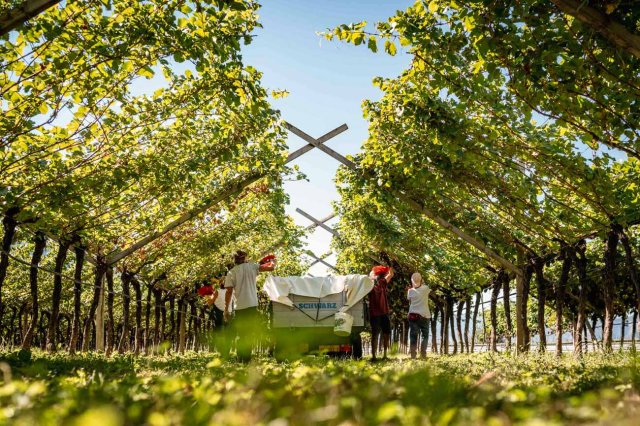
Today Martin and Beatrix Foradori Hofstätter run the estate. The next generation, Niklas and Emma, are already involved. The family has taken the single-vineyard idea beyond Alto Adige. Maso Michei sits in Trentino's Piccole Dolomiti above Ala, where Pinot Nero, Pinot Bianco, Sauvignon and Chardonnay ripen at up to 850 metres. The Dr. Fischer estate in Germany's Saar Valley adds Riesling from the steep slate of Ockfener Bockstein and Filzener Steinberger. The Tramin cellar still makes its wines parcel by parcel. The wines age in classic large oak, modern concrete vats, terracotta amphorae, or in stainless steel on the lees. An optical sorting system sits over the press.
The Enoteca J. Hofstätter on Piazza Municipio is the visiting face of the estate. The wine shop pours and sells the full range from Monday to Friday, and on Saturday mornings. Guided cellar tours run by appointment, as does a walk through the estate's Gewürztraminer show vineyard. Few addresses in South Tyrol pour a flight of single-vineyard Pinot Nero next to a single-vineyard Gewürztraminer from the same producer. This is one of them.
Editorial · ItalianWines.co.uk
Plate I · TRENTINO-ALTO ADIGE
Hofstätter Josef on the Trentino-Alto Adige wine atlas
Wine area
Bassa Atesina / Unterland
Southern Alto Adige around Tramin and Egna, the Italian home of Gewürztraminer and a heartland for Lagrein and Pinot Nero.
Denominations Produced
Lago di Caldaro/Caldaro/Kalterersee/KaltererDOCMitterbergIGTVigneti delle Dolomiti / Weinberg DolomitenIGT
Booked guided tour of the historic Tramin cellar with a flight of estate wines, including the single-vineyard Pinot Nero and Gewürztraminer. A walk through the Gewürztraminer show vineyard is available alongside the cellar visit.
Drop-in tasting at the estate's wine shop on Piazza Municipio, with the full Hofstätter range available to taste and to take home. Open Monday to Friday morning and afternoon and Saturday mornings; closed on Sunday and public holidays.
The estate is in the centre of Tramin (Termeno), at Piazza Municipio 7, about 25 minutes south of Bolzano. The Enoteca J. Hofstätter wine shop opens Monday to Friday from 10:00 to 13:00, and again in the afternoon. It also opens on Saturday mornings. It is closed on Sundays. Tastings and guided cellar tours can be booked through the winery's online booking page.
Two wines built the estate's reputation. Barthenau Vigna S. Urbano was the first single-vineyard Pinot Nero ever bottled in Alto Adige. The dry Gewürztraminer style from the slopes above Tramin is the other; Paolo Foradori helped establish it from the 1980s onwards. Both were among the wines that turned Alto Adige into a serious address for reds and aromatic whites.
The estate farms single vineyards in three places. In Alto Adige, the Mazon plateau on the eastern side of the Adige Valley supplies the Pinot Nero. The Söll terraces above Tramin grow the Gewürztraminer. In Trentino, the Maso Michei estate in the Piccole Dolomiti reaches up to 850 metres; it grows Pinot Nero, Pinot Bianco, Sauvignon and Chardonnay. The Dr. Fischer estate in the Saar Valley adds Riesling from Ockfener Bockstein and Filzener Steinberger.
Yes. The cellar has stayed with the same family since Josef and Maria Hofstätter founded it in 1907. Sieglinde Oberhofer married Paolo Foradori in 1959, which brought the Foradori name into the estate. Martin and Beatrix Foradori Hofstätter run it today. Niklas and Emma represent the fifth generation.
Vigna is the Italian wine term for a defined single vineyard. The estate is the reason it became a formal Alto Adige classification. Paolo Foradori first printed it on the 1987 Barthenau Vigna S. Urbano Pinot Nero. The category has since been written into Alto Adige's wine law. It is used across the region for bottlings from a single named parcel.
No. The estate offers wine experiences only: tastings and shopping at the Enoteca on Piazza Municipio, guided cellar tours, and a walk through the Gewürztraminer show vineyard. There is no restaurant and no overnight stay on site. The Enoteca is closed on Sundays.
Plan a visit
Ask us to arrange your visit to Hofstätter Josef
This form reaches the ItalianWines.co.uk team, not the winery. Tell us when you would like to come and how many you are: we contact Hofstätter Josef for you and come back with availability and prices, usually within two working days.







 Trentino-Alto Adige
 21 wines
  Tastings
 Tours
Tours
 Walk-ins welcome