Sangiovese (san-jo-vay-zeh) is the undisputed king of red wines in central Italy, virtually present in every area of the country Thanks to its many clones and surprising versatility, Sangiovese can create a wide range of wines: from young and fresh Chiantis to complex and full-bodied Brunellos.
Red Grape · Trentino-South Tyrol
Pinot Nero
Italy's Pinot Noir, and its most shape-shifting red. In the cool north Pinot Nero turns out silky, perfumed still wines in Alto Adige and the Oltrepo Pavese, then reinvents itself as the backbone of Franciacorta and Alta Langa's finest metodo classico fizz.
Pinot Nero is the Italian name for Pinot Noir, the great red grape of Burgundy, and in Italy's cool north it wears three hats. It makes silky, perfumed still reds in Alto Adige and the Oltrepo Pavese, and it is the backbone of the country's finest metodo classico sparkling wines, from Franciacorta to Alta Langa.
Setting it straight
More than meets the eye
- Still and redIn Alto Adige it makes a genuine, if pale, perfumed red.
- Sparkling and paleIn Franciacorta and the Oltrepo it is pressed white for metodo classico.
- Same grape, three winesCherry-scented red, taut sparkling and rose all come from one vine.
- Skins make the colourRed wine takes its colour from time on the skins; press the juice off quickly and it runs almost clear.
- The blanc de noirs trickPinot Nero pressed white is the basis of countless sparkling wines that look nothing like a red.
The anchor fact: Pinot Nero is a black grape, but much of Italy's is pressed pale to make white and sparkling wine, not red.
Taste · Where it sits
What it’s actually like in the glass
Forget scores out of five. Here’s Pinot Nero described against grapes you already know.
The lightest of the serious reds, closer in weight to a rose than to a Nebbiolo, which is exactly why it partners fish and white meat.
Silky, fine-grained tannin you feel as texture rather than grip, gentler than Sangiovese and a world away from a tannic Aglianico.
High, cool-climate acidity is what lets Italian Pinot Nero work at the table and drink well chilled, and what makes it such a natural sparkling base.
Bright and bone-dry, its red-cherry and raspberry fruit lifted rather than sweet, always more perfume than flesh.
Key flavours
The map
Pinot Nero is light to medium, soft tannin, mapped against other red grapes you can buy. The closer a grape sits, the more its weight and grip resemble Pinot Nero.
Is this for you?
An honest gut-check
Reach for it when…
A bold red that just works
- You want a light, elegant red you can serve slightly chilled
- You are pairing fish, poultry or mushroom dishes rather than steak
- You love perfume and finesse over power and tannin
- You want to see why Pinot Nero anchors Italy's best sparkling wine
Maybe skip it if…
You’re after something else tonight
- You want a big, bold, tannic red
- You are matching rich, chargrilled or barbecued meat
- You prefer deep colour and dark fruit
- You want maximum value; good Pinot Nero is rarely cheap
Serving guide
Pour it at its best
Serve at
14-16°C
Serve lightly chilled, 14 to 16C. Too warm and the delicate perfume and red fruit are swamped by alcohol.
Decant
No
Skip the decanter. Pinot Nero is fragile, and its perfume can blow off with too much air; just open and pour.
Glass
Pinot Noir Glass
A wide Burgundy bowl gathers the perfume and softens the acidity, the classic shape for the grape.
Drink within
3-5 days
Most Italian Pinot Nero drinks best young and fresh, within about five years, for its fruit and lift.
Cellar
Up to 5 years
The finest Alto Adige bottlings can age a decade, trading cherry for truffle, mushroom and forest floor.
On the table
What to eat with Pinot Nero
Start with the home-table matches that made the grape, then browse the full cuisine library.
Lean red meat
Fillet steak
A tender, unfussy fillet lets Pinot Nero shine: enough structure to match lean beef, but the finesse not to bury it the way a big tannic red would.
Alpine dumplings
Canederli
Speck-and-bread canederli come from the same Alto Adige valleys as Italy's best Pinot Nero; the wine's acidity cuts their richness while its earthiness echoes the smoked ham.
Milanese cutlet
Cotoletta alla Milanese
Breaded, fried veal from Lombardy meets a local Oltrepo Pinot Nero: high acidity slices the richness and light tannin keeps it from clashing.
Raw fish bowl
Chirashi
Pinot Nero with salmon and tuna is a classic; its red fruit and low tannin flatter oily fish where a bigger red would taste metallic.
Browse every pairing
Buy it · three to start with
Not sure which bottle? Start here
A curated trio across the price range, then every Pinot Nero on sale in the UK right now.
Entry · everyday
1 retailer
Pinot Nero Alto Adige DOC, Classica
Alto Adige/Südtirol
1 retailer
£21.76
Why this one: San Michele Appiano makes textbook Alto Adige Pinot Nero: pale, cherry-scented and silky, the grape as a pure still red.
The sweet spot
2 retailers
Azienda Agricola Bellavista Alma Non Dosato
Franciacorta
2 retailers
£32.72
Why this one: Bellavista's Franciacorta shows Pinot Nero's other life: pressed for a taut, mineral metodo classico sparkler with real red-fruit depth.
Special occasion
2 retailers
Marchesi de’ Frescobaldi Pomino
Pomino
2 retailers
£33.01
Why this one: Frescobaldi's Pomino Rosso is a silky, ageworthy Tuscan take, proof of how far Pinot Nero travels beyond the Italian north.
12 of 16 bottles
2 retailers
Azienda Agricola Bellavista Alma Non Dosato
Franciacorta
2 retailers
£32.72
2 retailers
Marchesi de’ Frescobaldi Pomino
Pomino
2 retailers
£33.01
2 retailers
Bellavista, Alma Assemblage 2, Lombardy Franciacorta Extra Brut NV
Franciacorta
2 retailers
£33.90
2 retailers
Azienda Agricola Bellavista Vittorio Moretti Riserva
Franciacorta
2 retailers
£81.54
1 retailer
Il Papavero Rosé Prosecco Brut
Prosecco
1 retailer
£10.99
1 retailer
PINOT NERO MARCA TREVIGIANA IGT LEVIGATO
Marca Trevigiana
1 retailer
£12.83
1 retailer
Freixenet Italian Sparkling Rosé N.V.
Appellation TBD
1 retailer
£12.99
1 retailer
Kylie Minogue Prosecco Rose
Prosecco
1 retailer
£13.77
1 retailer
Senti Prosecco Rosé Extra Dry
Prosecco
1 retailer
£14.99
1 retailer
Bersano Arturo Rosé
Appellation TBD
1 retailer
£16.95
1 retailer
Colombo Apertura
Piemonte
1 retailer
£18.00
1 retailer
Pinot Nero Alto Adige DOC, Classica
Alto Adige/Südtirol
1 retailer
£21.76
Denominations
Where it earns a name on the label
The appellations where Pinot Nero plays a starring role.
Where it grows
The places it calls home
Trentino-South Tyrol
Italy's alpine wine country: Teroldego from the Piana Rotaliana, Trento DOC sparklers raised on dolomitic limestone, and Alto Adige whites perfumed by glacial Read more
Lombardy
From Franciacorta classic-method bubbles to Valtellina mountain Nebbiolo and Lugana lake-cool whites, Lombardy spans 5 DOCGs across roughly 25,000 hectares of Read more
Aosta Valley
Italy's smallest wine region clings to terraces between 500 and 1,200 metres, where Prie Blanc, Petit Rouge and Picotener (Nebbiolo) catch the alpine sun. Read more
The terroir
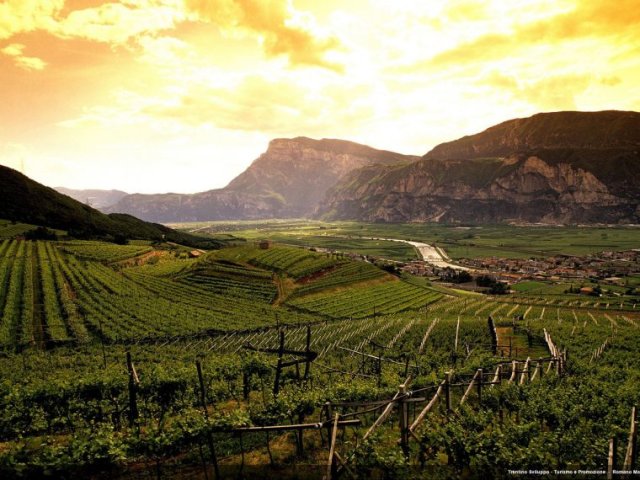
Pinot Nero only works where it is cool, so in Italy it clings to the north and the hills, changing character with every valley.
Alto Adige
The Sudtirol villages of Egna, Montagna and Ora
Italy's most convincing still Pinot Nero: pale, perfumed and ageworthy.
Oltrepo Pavese
The hills of southern Lombardy
Italy's largest Pinot Nero planting, much of it pressed white for metodo classico sparkling.
Franciacorta
Eastern Lombardy
Pinot Nero as a structural partner in Italy's benchmark traditional-method fizz.
Editorial
About Pinot Nero
Pinot Nero is Italy's name for Pinot Noir, one of the oldest and most revered black grapes, selected over centuries in the vineyards of Burgundy. It is genetically unstable, and its mutations gave the wine world Pinot Grigio, Pinot Bianco and Pinot Meunier. Thin-skinned, small-bunched and early-ripening, it demands a cool climate, which in Italy means the far north.
One grape, three wines: a whisper of a red, a pale blanc de noirs, and the spine of Italy's best sparkling.
Pinot Nero, Italy's northern chameleonIts Italian heartlands are [Alto Adige](/regions/trentino), where the villages of Egna, Montagna and Ora make some of the country's most convincing still Pinot Nero, and the [Oltrepo Pavese](/regions/lombardy) in Lombardy, historically the largest planting of the grape in Italy. It also grows in Trentino, Friuli and the cooler Apennine hills.
Two faces define it. As a still red it is pale, perfumed and silky: red cherry, raspberry and violet in youth, turning to undergrowth, mushroom and forest floor with age, all carried on high acidity and fine, gentle tannin. As a sparkling base it is indispensable, giving structure and red-fruit depth to the metodo classico wines of Franciacorta and Alta Langa, and pressed white it becomes an elegant blanc de noirs. Few grapes ask more of a site, and few reward it with more finesse.
Good to know
Frequently asked
Yes. Pinot Nero is simply the Italian name for Pinot Noir, the red grape of Burgundy. In Italy it is grown mainly in the cool north, in Alto Adige, the Oltrepo Pavese and Trentino.
Italian Pinot Nero is light-bodied, pale and perfumed, with red cherry, raspberry and violet in youth and earthy notes of mushroom and forest floor with age. It has high acidity and soft, fine tannin.
Pinot Nero gives structure, red-fruit depth and ageing potential to metodo classico sparkling wine. It is a key grape in Franciacorta and Alta Langa, and is often pressed white to make a blanc de noirs.
Pinot Nero pairs with duck, roast chicken, mushroom dishes and Alpine plates like canederli, and its delicacy also suits salmon and tuna. As a sparkling wine it cuts fried and cured foods.
Pinot Nero grows in Italy's cool north: Alto Adige around Egna, Montagna and Ora, the Oltrepo Pavese in Lombardy, Trentino and Friuli. Much of it goes into metodo classico sparkling wine.
Yes. Serve Italian Pinot Nero lightly chilled, around 14 to 16C. Too warm and its delicate perfume and red fruit are overwhelmed by the alcohol.
Explore by style
Wine styles made from Pinot Nero
Jump to the editorial guide for each style this grape turns up in.
Keep exploring