




Wine route
Strada del Vino dell'Alto Adige (Südtiroler Weinstraße)
2 to 3 days · 8 stops
Open the driveYour cellar, your trips, and the wines you've been tracking are right where you left them.
New here?
Free, always. Education first, we'll never sell you anything you didn't ask to see.
Already have an account?
Enter the email you signed up with and we'll send a link to choose a new password.
Trentino-Alto Adige · DOC
Italy's Alpine white-wine heartland, where 96% of the vineyard sits inside one DOC. Alto Adige (Südtirol) DOC gathers South Tyrol's twenty grape varieties under one bilingual name. The rules put Schiava and Lagrein around Bolzano, and Pinot Bianco and Chardonnay across the Terlano hills. Sylvaner, Kerner and Müller-Thurgau climb the Valle Isarco towards Bressanone.
Decode the label
One denomination, 7 things it can say on the front. Colour first, then the qualifier.
On the label
White varietals
the alpine whites, named by grape
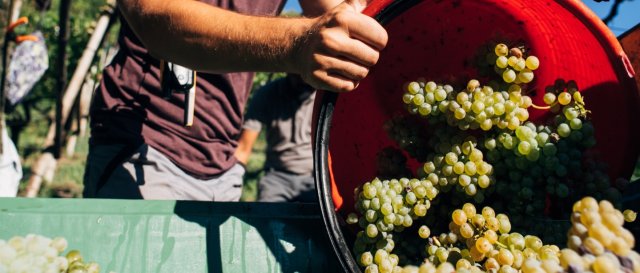
Pinot Grigio to Gewürztraminer, mountain-fresh: the variety on the label must be at least 85% of the wine.
In stock from £10.28 See the 268 bottles ↓On the label
Schiava & Lagrein
the native reds of Bolzano
Violet-scented Schiava for lunch, brooding Lagrein for dinner: Bolzano's own pair, both at home here for centuries.
In stock from £15 See the 52 bottles ↓On the label
Pinot Nero
Italy's alpine Burgundy
The mountain slopes give Pinot Nero the cool nights it wants: cherry and forest floor with alpine cut.
In stock from £15.50 See the 41 bottles ↓On the label
Kretzer rosé
the local word for pink
Lagrein's dark skins lend a deep pink with alpine acidity: the region's own rosé tradition.
In stock from £16.50 See the 5 bottles ↓On the label
Spumante
bottle-fermented mountain fizz
High-altitude base wine keeps the acidity Champagne methods need; Riserva waits three years on the lees.
In stock from £27.40 See the 6 bottles ↓On the label
Passito & Vendemmia Tardiva
the sweet rarities
Apricot and honey concentrates from dried or late-picked bunches: the valley's quiet dessert tradition.
In stock from £28 See the 7 bottles ↓On the label
Riserva
two years, from 1 October
Any of the reds and whites may earn the word with two years of patience and riper fruit at picking.
In stock from £17.50 See the 77 bottles ↓The boundary
Everything on this page, the estates, the bottles, the sub-zones, sits inside this line.
Wine route
2 to 3 days · 8 stops
Open the drive
Estate 1
Termeno · Gewürztraminer's village
Tastings available
Estate 2
Termeno · Village centre
Tastings available
Estate 3
Magrè · The southern reach
Tastings available
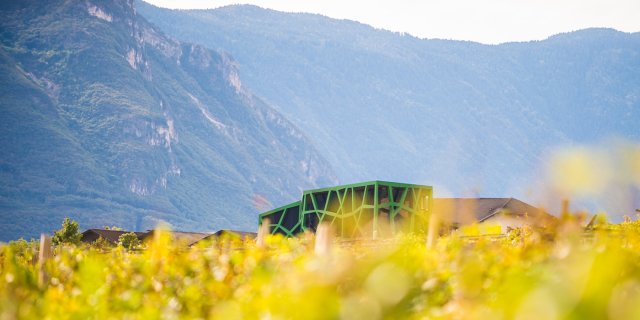
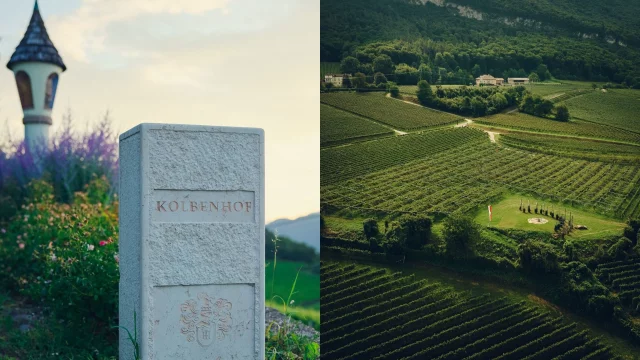
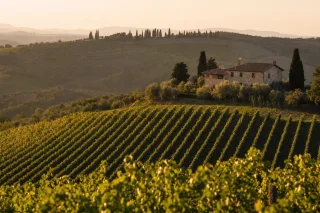
The province of Bolzano, Italy's northernmost wine country: vineyards follow the Adige valley from Salorno up past Bolzano to Merano, and the Isarco valley north-east towards Bressanone, climbing the lower slopes of mountains that ski in winter. Six sottozone mark the historic corners, from Santa Maddalena's hills above the provincial capital to the high, dry Valle Venosta. Every place on the map carries two names with equal force, one Italian, one German.
Inside the zone
Click or tap a pin for its estate. The numbered pins match the estate cards below.
Towns worth knowing
Bozen, Meran, Terlan, Brixen and Kaltern to their German-speaking growers: both names are the law's.
In the glass
One profile at a time, never blended into a single set of bars.

Green Apple
Pear
Lime
Spicy
Cherry

Violet
Plum
Strawberry
Red forest berries
Citrusy fruit
Green Apple
Citrusy fruit

Honey
Apricot
Honey

Orange blossom
The disciplinare
The same table on every denomination page, one row group per style here, because Alto Adige/Südtirol writes its rules per colour.
 The variety on the labelFrom Pinot Grigio to Lagrein, every named grapeat least 85%Other permitted varietiesThe blending windowup to 15%
 Schiava (and its synonyms)The pale, violet-scented leadat least 85%Other local redsLagrein is the classic partnerup to 15%
Solid means the rules demand it. Striped means optional, up to that amount. The words on the right say the same rule.
Every varietal label means at least 85% of that grape, from Gewürztraminer to Lagrein.
Riserva starts its clock on 1 October two years from the harvest itself, with riper fruit required at picking.
German names carry equal legal force Südtirol, Kretzer and Blauburgunder are the same law as their Italian twins.
Spumante Riserva waits 36 months on the lees and cannot sell before 42 months from the harvest.
Six sottozone write their own fine print Santa Maddalena's Schiava floor and Valle Isarco's white-grape list among them.
Ageing and alcohol minimums per tier are in the label guide above.
Editor's cellar
By style, today
Live prices, compared across 19 UK retailers.
Cellar doors · inside the zone
Three estates inside the zone open their doors today. A small list, honestly kept: only working cellars with confirmed visits appear here.
No estates match these filters. Clear a filter to see more.
Six corners of one valley system
Six sottozone mark the DOC's historic corners, each with its own fine print in the rulebook: a grape floor here, a white-grape list there. The valley name on a label narrows the wine's home to one bend of the map.

Sankt Magdalener. Schiava-led red around Bolzano; one of the historic prestige sub-zones of Alto Adige DOC.
Terlaner. Pinot Bianco and Chardonnay-led whites on porphyry around Andriano, Nalles and Terlano.
Eisacktaler. High-altitude Alpine whites: Sylvaner, Kerner, Müller-Thurgau, Grüner Veltliner along the Isarco river.
Vinschgau. The highest-altitude tier of the DOC; Riesling, Pinot Bianco, Pinot Nero on glacial moraine.
Bozner Leiten. Schiava sub-zone on the slopes around Bolzano.
Meraner. Schiava-led red around Merano in the Burgraviato.
Vintage provenance
No denomination-wide vintage chart is currently published for Alto Adige DOC. Quality varies by sub-zone and style: Valle Venosta and Valle Isarco whites track Alpine vintage character (cool, late-ripening), while Lagrein and Schiava on Bolzano's plain follow warmer Mediterranean-influenced cycles. The Consorzio Vini Alto Adige's annual Goldener Adler awards remain the most reliable per-bottle signal.
No single chart fits five styles: drink the whites at one to four years, Lagrein and Pinot Nero at three to eight.
What to check instead
The sottozone: where a wine comes from inside the zone changes what is in the glass. See them above.
The producer: quality here is tracked estate by estate rather than year by year.
The DOC covers 5,860 hectares, between 200 and 1,000 metres up. Half of that ground is porphyry, half is Dolomite limestone and glacial moraine. Six smaller zones sit inside the umbrella: Santa Maddalena, Terlano, Valle Isarco, Valle Venosta, Colli di Bolzano and Meranese di Collina. So do 86 unità geografiche aggiuntive. A label that names one grape needs 85% of it. Bianco and Rosso blends need 80% of the listed varieties. Minimum alcohol is typically 11.0% for the main whites and reds. It is 11.5% for Pinot Grigio and the Bordeaux blends, and 10.5% for Schiava. Riserva needs two years of ageing, counted from the October after the harvest. Spumante must take its bubbles in the bottle, by the Metodo Classico, and spend 20 months on the yeast. Riserva Spumante spends 36 months. Passito grapes are dried until they reach 16% potential alcohol.
On the table
The home country leads; global pairings that genuinely work follow.
In-depth guide
Alto Adige (Südtirol) DOC is Italy's flagship Alpine white-wine zone. Roughly two-thirds of it is white. Pinot Bianco, Pinot Grigio, Chardonnay, Gewürztraminer and Sauvignon lead the way. Lagrein and Schiava are the historic red identities around Bolzano.
Alto Adige is the autonomous province of South Tyrol. It is the northernmost Italian-administered territory, between the Brenner Pass and the Trentino border. Vineyards sit between 200 and 1,000 metres, on the slopes of the Adige, Isarco and Venosta valleys.
Südtirol is the German-language name for Alto Adige, and South Tyrol's wines are bilingual by law. Every label term may appear in Italian or in German. So you see Pinot Bianco or Weissburgunder, Pinot Nero or Blauburgunder, Schiava or Vernatsch, Santa Maddalena or Sankt Magdalener.
The principal whites are Pinot Bianco, Pinot Grigio, Chardonnay, Gewürztraminer, Sauvignon, Riesling, Müller-Thurgau, Sylvaner and Kerner. The principal reds are Schiava, Lagrein and Pinot Nero. Cabernet and Merlot join them in the Bordeaux-style blends.
Alto Adige is white-led. About 65% of production is white, 35% red. The DOC is widely cited as Italy's most credible home for Pinot Bianco, Sauvignon and Pinot Nero. Schiava and Lagrein still keep a strong red identity around Bolzano.
South Tyrolean cooking carries through. Pinot Bianco and Sylvaner pair with canederli (Knödel) and trout. Gewürztraminer goes with speck and Käseschmarrn. Schiava takes cold cuts and barley soups. Lagrein handles grilled meats and goulasch.
Six sit inside the umbrella. Santa Maddalena and Colli di Bolzano make Schiava reds on porphyry around Bolzano. Meranese di Collina makes Schiava in the Burgraviato. Terlano is Pinot Bianco and Chardonnay white country. Valle Isarco has Sylvaner, Kerner, Müller-Thurgau and Grüner Veltliner. Valle Venosta gives high-altitude Riesling and Pinot Nero.