













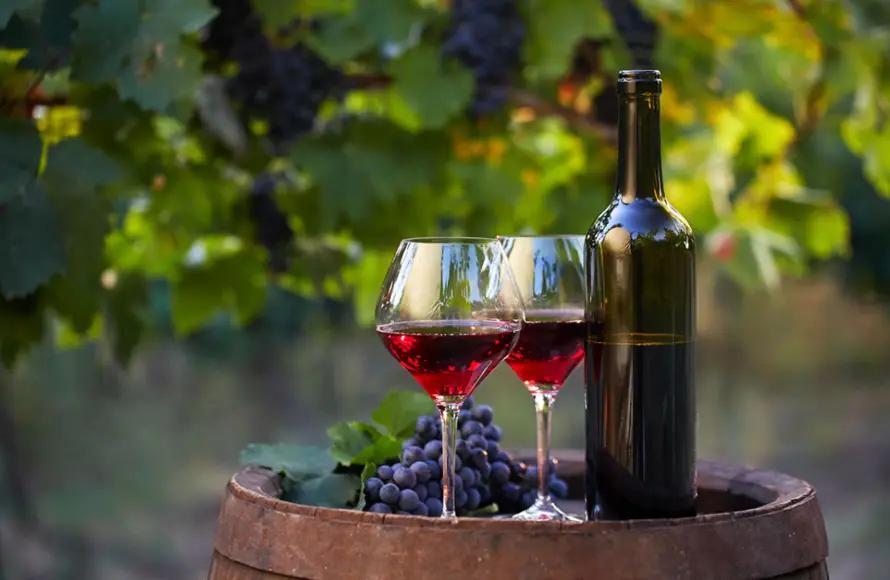


Chardonnay is a white grape with a clear Italian role.
Wines
635
Acidity
Body
White Grape · Trentino-Alto Adige
The understated one of the Pinot family: no aromatic fireworks, just clarity, backbone and a knack for ageing that Alto Adige has quietly exploited for generations.
Pinot Bianco is northern Italy's quiet benchmark white. It is a Burgundian mutation of Pinot Nero. Alto Adige and Friuli's Collio have turned it into precise, age-worthy bottles. The grape is neutral by nature, so it mirrors where it grows. In South Tyrol it tastes taut and stony. In the Collio's oak-fermented blends it is rounder and waxier.
Your cellar, your trips, and the wines you've been tracking are right where you left them.
New here?
Free, always. Education first, we'll never sell you anything you didn't ask to see.
Already have an account?
Enter the email you signed up with and we'll send a link to choose a new password.
Setting it straight
The anchor fact: Cantina Terlano still sells Pinot Bianco from 1999, and its Vorberg Riserva routinely drinks well past a decade, a longevity most Italian whites never reach.
Taste · Where it sits
Forget scores out of five. Here’s Pinot Bianco described against grapes you already know.
Rounder than Pinot Grigio, yet with clearly less weight than an oaked Chardonnay; the Collio's barrel-ferments like Col Disore add flesh while Alto Adige steel keeps it slim.
A white with no tannin to speak of; what grip Terlano's Vorberg shows comes from lees and oak, never from skins.
Pinot Bianco's tell: acidity sits softer than Pinot Grigio or Verdicchio, so it reads rounded even bone-dry, which is why cool Alto Adige altitude matters so much to keep it lively.
Green apple, pear and a fresh-almond snap rather than tropical ripeness; give it a decade in bottle and the fruit shifts to honey and warm white bread.
Key flavours



The map
Pinot Bianco is light to medium, balanced acidity, mapped against other white grapes you can buy. The closer a grape sits, the more its weight and freshness resemble Pinot Bianco.
Is this for you?
Reach for it when…
Maybe skip it if…
Serving guide
Serve at
10-12°C
Serve it too cold and Pinot Bianco goes mute; 10 to 12 degrees lets the almond and pear through without losing the Alto Adige tension.
Decant
No
No decant for the everyday steel bottlings, though a mature Terlano Vorberg opens up with twenty minutes of air.
Glass
Chardonnay Glass
A wider Chardonnay-style bowl suits its texture; this is a wine of roundness and body, not a narrow aromatic white.
Drink within
3-5 days
Young examples are best within three to five days of opening; the fruit fades faster than the soft acidity does.
Cellar
Up to 10 years
Simple versions are for drinking now, but a serious South Tyrol Riserva rewards ten years, a rarity among Italian whites.
On the table
Start with the home-table matches that made the grape, then browse the full cuisine library.

South Tyrol classic
The mountain-table match: the speck-and-bread dumplings of Alto Adige meet the grape from the same valleys, its gentle acidity refreshing the smoked pork without fighting the delicate broth.

Northern cold cut
Cold veal under a tuna-and-caper sauce needs a white with body but soft acidity; Pinot Bianco's roundness matches the richness where a sharper Pinot Grigio would cut against it.

Earthy and creamy
Earthy porcini and creamy rice find an echo in Pinot Bianco's nutty, almond-tinged finish, while its texture stands up to the Parmigiano without any oak clashing.

Emilian comfort
Emilia-Romagna grows plenty of Pinot Bianco, and a soft, orchard-fruited glass is a natural foil to warm gnocco fritto and its platter of salumi.
Browse every pairing
Buy it · three to start with
A curated trio across the price range, then every Pinot Bianco on sale in the UK right now.
The sweet spot
 4 retailers
Alto Adige/Südtirol
4 retailers
£19.50
Why this one: The Terlano estate bottling is the grape's reference point, steel-clean yet textured, and the doorway to the cellar that ages Pinot Bianco longer than almost anyone.
Special occasion
 5 retailers
Alto Adige/Südtirol
5 retailers
£37.00
Why this one: Vorberg is the Riserva that proves the point: oak-fermented, lees-aged and built to run a decade, off the Monzoccolo slopes at up to 650 metres.
12 of 105 bottles
 6 retailers
Curtefranca
6 retailers
£25.90
 5 retailers
Franciacorta
5 retailers
£119.40
 4 retailers
Toscana
4 retailers
£11.91
 4 retailers
Pomino
4 retailers
£15.10
 4 retailers
Alto Adige/Südtirol
4 retailers
£22.50
 4 retailers
Alto Adige/Südtirol
4 retailers
£30.60
 4 retailers
Friuli Colli Orientali
4 retailers
£32.16
 4 retailers
Franciacorta
4 retailers
£36.00
 4 retailers
Franciacorta
4 retailers
£39.70
__600x796.webp?v=1778302189) 4 retailers
4 retailers
Franciacorta
4 retailers
£57.40
 3 retailers
Prosecco
3 retailers
£3.79
 3 retailers
Franciacorta
3 retailers
£11.95
Denominations
The appellations where Pinot Bianco plays a starring role.
Where it grows
Italy's alpine wine country: Teroldego from the Piana Rotaliana, Trento DOC sparklers raised on dolomitic limestone, and Alto Adige whites perfumed by glacial Read more

Italy's white-wine heartland, where Friulano, Ribolla Gialla and skin-contact orange wines meet alpine air, Adriatic light and the cooking of San Daniele and Read more
Italy's largest wine region by volume, where Prosecco hills, Valpolicella ridges, and Soave's volcanic plain shape three different Italian classics. Read more

From Franciacorta classic-method bubbles to Valtellina mountain Nebbiolo and Lugana lake-cool whites, Lombardy spans 5 DOCGs across roughly 25,000 hectares of Read more
The terroir
Pinot Bianco has no loud voice of its own, so it borrows the accent of wherever it grows. Three northern homes pull it in different directions.
Editorial
Pinot Bianco is a white-berried mutation of Pinot Nero. That is the same Burgundian vine that also threw Pinot Grigio. The three are so alike in the vineyard that growers once picked and bottled them interchangeably. Pinot Bianco reached Italy in the nineteenth century. It settled where cool mountain air suited it best. That means the porphyry and limestone slopes of Alto Adige, and the marl hills of Friuli's Collio. Vine experts registered it nationally in 1970. Italy now grows around 3,000 hectares of it, about 7,400 acres. Most of it lies across the north-east.
Cantina Terlano still pours Pinot Bianco from 1999, a longevity most Italian whites of any grape never reach.
On South Tyrol's ageing benchmarkTwo northern styles define the grape. In the Alto Adige DOC, the cooperative Cantina Terlano ferments Pinot Bianco in large oak. It then rests the wine on its fine sediment. On that base it builds its Vorberg Riserva, from the south-facing Monzoccolo slopes between 450 and 650 metres. Those wines run a decade or more. Terlano's cellar still holds Rarity releases back to 1999. Few Italian whites of any grape can match that ageing record. Elsewhere in the South Tyrol valleys the everyday bottlings stay in steel, taut and green-apple crisp.
Friuli reads the variety differently. At Russiz Superiore the Felluga family makes Pinot Bianco the 40 per cent backbone of Col Disore. That is a barrel-fermented Collio blend, rounded out with Friulano, Sauvignon and Ribolla Gialla. The result is broader and waxier than the South Tyrol style. It shows why the grape earns a cellar place beside Chardonnay, rather than being written off as filler. For the wider regional picture, our Friuli Venezia Giulia white wines guide maps exactly where it fits.
Good to know
No. They are separate colour mutations of the same Pinot vine, and they taste different. Pinot Bianco is rounder, with softer acidity and orchard-fruit and almond notes. Pinot Grigio is crisper and more citrus-driven. In Italy both thrive in the north-east. Pinot Bianco reaches its heights in Alto Adige and the Collio.
Almost always bone-dry. Italian Pinot Bianco is made as a dry white with balanced, gentle acidity. Any impression of sweetness comes from its ripe pear and orchard fruit, not from sugar left in the wine. Late-harvest sweet versions exist, but they are rare.
Green apple, pear, fresh almond and a whisper of white flowers. They are carried on a medium body with soft acidity. Alto Adige versions taste taut and stony. The Collio's oak-fermented wines are broader and waxier. With bottle age it turns towards honey and warm bread.
Delicate, textured dishes. Try South Tyrol canederli, creamy risottos, trout, vitello tonnato and mountain cheeses. Its gentle acidity and rounded body suit richer food than a sharper white like Pinot Grigio would, and they do not overwhelm subtle flavours.
Alto Adige and Friuli's Collio set the benchmark. In South Tyrol, Cantina Terlano makes some of Italy's most age-worthy whites from it, including the Vorberg Riserva. In the Collio, Russiz Superiore builds it into the Col Disore blend.
Yes, far better than its neutral reputation suggests. Everyday steel-fermented bottles are best young. But serious Alto Adige Riservas like Terlano's Vorberg develop for a decade or more, and the winery's Rarity library holds Pinot Bianco back to 1999.
Explore by style
Jump to the editorial guide for each style this grape turns up in.
Keep exploring