




100 terms, plain English
Italian Wine Glossary
Every wine word we use on this site, explained in plain English. Terms in our guides link straight to their entry here, so you can check a word and get back to reading.
A
- Abboccato
- Off-dry on an Italian label: a touch of sweetness you notice, but nowhere near a dessert wine. One step sweeter than secco.
- ABV
- Alcohol by volume, the percentage of alcohol in the bottle. Most Italian wines sit between 11% and 15%, and the label always states it.
- Acidity
- The freshness that makes a wine mouth-watering and lively. It is why Italian whites taste crisp and why the reds work so well with tomato sauces. The five wine traits, explained →
- Ageing
- Time a wine spends in barrel, tank or bottle before you drink it. Ageing softens tannin and turns fresh fruit flavours into deeper, savoury ones.
- Alberello
- Bush-trained vines grown low with no wires, an ancient method still used in Puglia, on Pantelleria and on Etna. Old alberello vines give small crops of concentrated grapes.
- Amabile
- Medium-sweet on an Italian label, softer and sweeter than abboccato. Traditional Lambrusco amabile is the classic example.
- Amphora
- A clay vessel for fermenting or ageing wine, used since Roman times and revived by natural producers. It breathes like oak but adds no wood flavour.
- Annata
- Italian for the vintage year. On a label it simply marks the harvest the wine comes from. Italian wine vintage chart →
- Appassimento
- Drying grapes for weeks or months before pressing, so sugars and flavours concentrate. It is the method behind Amarone and most passito sweet wines.
- Appellation
- A legally protected wine name tied to a place and its rules. Italy's appellations are the DOC, DOCG and IGT zones you see on labels. Denomination, appellation, sub-zone →
- Aroma
- What the wine smells like in the glass. Swirl and sniff before you sip: most of what you taste actually arrives through the nose.
- Azienda agricola
- A farm estate that grows its own grapes and makes its own wine. On a label it signals estate wine rather than bought-in fruit.
B
- Balance
- How well a wine's fruit, acidity, tannin, alcohol and sweetness sit together. In a balanced wine no single part shouts over the rest.
- Barrique
- A small 225-litre French-style oak barrel. Small barrels mean more wood contact, so barrique-aged wines pick up more vanilla, spice and toast.
- Bâtonnage
- Stirring the spent yeast back through a resting white wine. It builds a creamy, bready texture, as in richer styles of Soave or Verdicchio.
- Biodynamic
- Organic farming plus a calendar-and-compost philosophy that treats the estate as one living system. Certified by Demeter; many top Italian estates follow it.
- Bitterness
- A gentle bitter note, like almond skin or radicchio, common in Italian reds and some whites. It comes mostly from grape skins and seeds.
- Blend
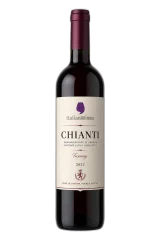
- A wine made from more than one grape variety. Chianti, for example, is built on Sangiovese but may include small shares of other grapes.
- Body
- How heavy the wine feels in your mouth, from light like skimmed milk to full like cream. Alcohol, sugar and extract all add weight. The five wine traits, explained →
- Botti
- Large traditional oak casks, often holding thousands of litres, used across Piedmont and Tuscany. Their size means slow, gentle ageing with little or no oak flavour.
C
- Cantina
- Italian for winery or cellar. A cantina sociale is a co-operative winery owned by its grower members.
- Carbonic maceration
- Fermenting whole uncrushed grapes in a sealed tank. It gives soft, juicy, fruit-forward reds with very little tannin.
- Charmat method
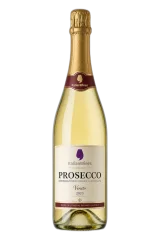
- Making sparkling wine with the second fermentation in a big pressurised tank rather than in the bottle. It keeps fruit flavours fresh and is how Prosecco is made.
- Classico
- The historic heartland of a wine zone. Chianti Classico and Soave Classico come from the original hills, not the later extensions. How to read an Italian label →
- Complexity
- A wine that keeps offering new smells and flavours as you drink it. Simple wines say one thing; complex wines keep talking.
- Consorzio
- The producers' association that manages and promotes an appellation, polices its rules and runs its tasting panels.
- Contrada
- A named district of land, used on Etna much like the word cru: a single patch of old lava flow with its own character in the glass.
- Corked
- A wine spoiled by a faulty cork, smelling of damp cardboard or a musty cellar. It is a fault, not a style: return the bottle.
- Cru
- A single named vineyard or plot the locals rate above its neighbours. Not an official Italian term, but used constantly for Barolo and Barbaresco sites.
D
- Decanting
- Pouring wine into a jug or carafe before serving. It lets a young red breathe and keeps an older wine's sediment out of your glass.
- Denomination
- Our word for an Italian protected wine name: any DOC, DOCG or IGT. Each one is a place, a set of grapes and a rulebook. Denomination, appellation, sub-zone →
- Disciplinare
- The legal rulebook behind each denomination. It fixes the area, the permitted grapes, the yields and the ageing a producer must follow to use the name.
- DOC
- Denominazione di Origine Controllata: Italy's main protected wine tier, with rules on area, grapes and ageing. More than 300 exist. Decoding Italian wine labels →
- DOCG
- Italy's strictest wine tier: Controllata e Garantita. Every batch passes a tasting panel and each bottle carries a numbered strip over the cap. Decoding Italian wine labels →
- Dolce
- Fully sweet on an Italian label: dessert territory. Recioto, Vin Santo and Moscato d'Asti live here.
- Dry
- A wine with no noticeable sweetness, because the yeast turned all the grape sugar into alcohol. Most Italian wine, red and white, is dry.
E
- Earthy
- Flavours that lean towards forest floor, mushroom or wet soil rather than fruit. Common, and prized, in aged Nebbiolo and Sangiovese.
F
- Fascetta
- The numbered paper strip across the capsule of every DOCG bottle and many DOC bottles. It is a state guarantee that the wine passed its checks. Decoding Italian wine labels →
- Fermentation
- The step that turns grape juice into wine: yeast eats the sugar and makes alcohol. Stop it early and some sweetness stays behind.
- Fining
- Clearing a young wine by adding something that drags floating particles down. Traditional agents can use egg or fish, which is why not every wine is vegan.
- Finish
- The taste that stays after you swallow. The longer and more pleasant the finish, the better the wine: great bottles linger.
- Flavour
- Everything you taste and smell together once the wine is in your mouth. Fruit, spice, herbs, stone: flavour is the whole picture.
- Frizzante
- Lightly sparkling, with a soft prickle rather than a full mousse. Gentler in fizz, and usually in price, than spumante.
- Fruity
- A wine whose flavours lean towards fresh fruit: cherry in Sangiovese, peach in Fiano, blackberry in Primitivo. Fruity does not mean sweet.
- Full-bodied
- A wine that feels rich and mouth-filling, like whole milk against skimmed. Amarone and Primitivo are classic full-bodied Italian reds.
G
- Galestro
- The crumbly schist-and-clay soil of the best Chianti hills. Poor soil means small grapes and more concentrated Sangiovese.
- Grams per litre (g/l)
- How sugar and acidity in wine are measured. A bone-dry wine has under 4 g/l of sugar; a sweet passito can pass 100.
- Gran Selezione
- The top tier of Chianti Classico, made only from estate grapes and aged at least 30 months. It sits above Riserva. How to read an Italian label →
- Guyot
- A common way of training vines along a single fruiting cane on wires. You will see it in most modern, ordered vineyards.
H
- Hectare
- The land measure used for vineyards: 100 by 100 metres, about a rugby pitch and a half. Estate sizes and yields are quoted per hectare.
- Hectolitre
- One hundred litres, the standard measure for wine volumes and cask sizes. A 25-hectolitre cask holds more than 3,300 bottles.
I
- IGT (IGP)
- Indicazione Geografica Tipica, the broadest tier: the wine comes from the named region but under looser rules. Home to everyday bottles and to famous rebels like the Super Tuscans. Decoding Italian wine labels →
L
- Lees
- The spent yeast that settles after fermentation. Resting a white wine on its lees (sur lie) adds a creamy feel and bready depth.
- Length
- How long the flavour lasts after swallowing. Length is one of the clearest signs of quality: cheap wine vanishes, fine wine stays.
- Light-bodied
- A wine that feels weightless and easy in the mouth. Many Italian reds, like young Frappato or Schiava, are light and take a slight chill well.
M
- Maceration
- The time grape juice spends soaking on the skins, taking on colour, flavour and tannin. Long maceration makes deep, grippy reds; a few hours makes rosato.
- Malolactic fermentation
- A second, softer fermentation that turns sharp apple-like acid into creamy milk-like acid. Standard in reds; in whites it is a style choice.
- Marl
- A soil of mixed clay and limestone, common in Piedmont's best hills. It holds water in dry years and suits Nebbiolo.
- Medium-bodied
- The middle weight: more presence than a light red, less heft than a full one. Most food-friendly Italian reds, Chianti included, live here.
- Metodo Classico
- Sparkling wine made the Champagne way, with the second fermentation inside the bottle. Franciacorta and Trentodoc are Italy's flagships.
- MGA
- Menzione Geografica Aggiuntiva: the officially mapped, named vineyard zones of Barolo and Barbaresco. The closest thing Italy has to a legal cru list.
- Minerality
- A tasting word for stony, salty, non-fruit flavours: wet rock, flint, sea air. Scientists debate it; tasters of volcanic wines swear by it.
N
- Noble rot
- A friendly mould that shrivels ripe grapes and concentrates their sugar. It is behind some of the world's great sweet wines.
- Nose
- A taster's word for a wine's smell. "A nose of violets and tar" just means that is what rises from the glass.
O
- Oak
- The wood of the barrels many wines age in. Oak can add vanilla, spice and toast, and it softens the wine as it rests.
- Oenology
- The science of making wine. An oenologist is the technical winemaker on an estate.
- Organic (BIO)
- Grapes grown without synthetic chemicals, certified under EU rules. Italian labels say biologico or BIO with the green leaf logo. Decoding Italian wine labels →
- Oxidation
- What happens when wine meets too much air: fresh flavours fade towards bruised apple and nuts. A little softens a wine; a lot ruins it.
P
- Palate
- A taster's word for how the wine feels and tastes in the mouth, as opposed to the nose. Also used for a person's tasting skill.
- Passito
- Sweet wine from dried grapes: the appassimento method taken to dessert strength. Vin Santo and Passito di Pantelleria are the classics.
- Pergola
- Vines trained overhead on a high frame, traditional in Valpolicella and Trentino. The shade slows ripening and suits grapes destined for drying.
R
- Residual sugar
- The grape sugar left in the wine after fermentation stops, measured in grams per litre. Under about 4 g/l a wine tastes fully dry.
- Ripasso
- A Valpolicella red "passed again" over the warm skins left from Amarone, picking up extra body, flavour and a touch of alcohol. Halfway between Valpolicella and Amarone.
- Riserva
- A wine aged longer than the standard version before release, under each denomination's rules. Expect a firmer, deeper wine. How to read an Italian label →
S
- Saline
- A gently salty edge in the finish, typical of coastal and volcanic whites like Vermentino or Etna Bianco. It makes you want the next sip.
- Secco
- Dry on an Italian label. The sweetness scale runs secco, abboccato, amabile, dolce.
- Sediment
- Harmless dark grains that settle at the bottom of older reds. Stand the bottle up, pour gently, and leave the last drop behind.
- Skin contact
- Leaving white grape juice on the skins, which adds colour, texture and grip. Days or weeks of it make orange wine.
- Sommelier
- A trained wine professional, usually in a restaurant, who chooses and serves wine and matches it to food.
- Sottozona
- An official sub-zone inside a denomination, with its own name and often stricter rules, like Valpolicella's Valpantena. Denomination, appellation, sub-zone →
- Spicy
- Flavours of pepper, clove or liquorice rather than chilli heat. Southern Italian reds and oak-aged wines often show it.
- Spumante
- Fully sparkling, with the pressure and mousse of Champagne-style fizz. The step up from frizzante.
- Structure
- The wine's frame of tannin and acidity that holds the fruit. Well-structured wines can age; loose ones are for drinking now.
- Superiore
- A label term meaning the wine meets stricter rules than the base version, usually more alcohol and lower yields. Soave Superiore, Valpolicella Superiore. How to read an Italian label →
- Sweet
- A wine with real sugar left in it, from gently off-dry to dessert-rich. Italian labels grade it: secco, abboccato, amabile, dolce.
T
- Tannins
- The grip in red wine that dries your mouth, the same feeling as strong black tea. Tannin comes from grape skins and oak, softens with age, and loves fatty food. Tannins in wine, explained →
- Tartaric acid
- The main natural acid in grapes. In a cold fridge it can drop harmless glassy crystals, "wine diamonds", in the bottle.
- Tenuta
- An estate. Podere and fattoria are its farmhouse-scale cousins; any of them on a label suggests wine from the property's own land.
- Terroir
- Everything about a place that shows up in the glass: soil, slope, sun, altitude and local habit. Why the same grape tastes different two hills apart.
- Texture
- How the wine physically feels: silky, velvety, chalky, grippy. Texture is about touch, not flavour.
- Tonneau
- A 500-litre oak barrel, between barrique and botte in size. A middle road: some oak influence without heavy vanilla.
- Typicity
- How faithfully a wine tastes of its grape and place. A Chianti with typicity could only be Sangiovese from Tuscany.
U
- Uvaggio
- Italian for a blend of grape varieties in one wine, as opposed to a single-variety bottling.
V
- Varietal
- A wine made from, and named after, one grape variety, like a pure Nero d'Avola. Varietal is the wine; variety is the grape.
- Vendemmia
- Italian for the harvest. Vendemmia tardiva is a late harvest, picked riper for a sweeter wine.
- Vinification
- The cellar side of winemaking, from crushed grape to finished wine: pressing, fermenting, ageing, bottling.
- Vintage
- The year the grapes were picked, shown on the label. Hot and cool years make genuinely different wines, which is why vintage charts exist. Italian wine vintage chart →
- Vitigno autoctono
- A native grape variety, grown in its home area for centuries: Nebbiolo in Piedmont, Nerello Mascalese on Etna. Italy has hundreds.
Y
- Yeast
- The microbes that turn grape sugar into alcohol during fermentation. Some producers use wild yeasts from their own vineyard for local character.
- Young
- A wine early in its life, still fresh and fruity. Fine for most bottles; a young Barolo, though, can still be tight and hard.