





Denomination, Appellation, Sub-Zone: What Italian Wine Words Really Mean
TL;DR
- An appellation and a denominazione are the same thing: a legally protected wine place name, which is what DOC and DOCG mean on Italian labels.
- Three naming patterns, place alone, grape plus place, and invented name plus place, decode nearly every Italian wine label sold in the UK.
- Chianti is a place in Tuscany and Sangiovese is its grape, while Prosecco stopped naming a grape in 2009 when the variety was renamed Glera.

Appellation and denominazione: two words, one idea
A bottle of Sancerre carries the words Appellation d'Origine Contrôlée. A bottle of Soave carries Denominazione di Origine Controllata. Different languages, same legal move: the state draws a boundary around a place, writes rules for the wine made inside it, and protects the name in law.
That is all an appellation is: a protected place name for wine, plus the rulebook that comes with it. The rules cover which grapes are allowed, how much fruit a vineyard may crop, and how long the wine rests before sale. Soave's code, for instance, demands at least 70 per cent Garganega and caps how heavily each hectare may be picked. The French word appellation became the standard English term, which is why UK wine lists use it for every country's system, Italy included.
Italy's own word is denominazione, denomination in English. Denominazione di Origine Controllata, controlled denomination of origin, is what DOC spells out; DOCG adds e Garantita, guaranteed, for the top tier. Italy passed its DOC law in 1963, though Tuscany got there first: a 1716 edict under Cosimo III de' Medici drew official boundaries around Chianti almost three centuries early. If you want each tier unpacked in full, from IGT up to DOCG, our guide to DOC, DOCG and IGT initials does exactly that.
Since 2009 the EU has filed every DOC and DOCG under its Europe-wide DOP umbrella, with IGT as IGP, but Italian producers may keep the traditional initials, and nearly all do. Federdoc, the federation of Italy's protection consortia, counted 77 DOCG, 330 DOC and 119 IGT zones in March 2025. So when a merchant says appellation and a producer says denominazione, nobody is disagreeing: 526 protected place names, one idea.
Region, wine region, wine area: the loose geography words
Italy has twenty administrative regions, and every one of them makes wine. Tuscany, Piedmont and Sicily are regions in the official sense: lines on the political map, with capitals and councils. A region is not an appellation, though the two can share a name. Sicilia DOC covers roughly the same island as the region of Sicily, but only the DOC version puts rules on the wine. The same doubling happens in Abruzzo and elsewhere: region on the map, region-wide denomination on the shelf.
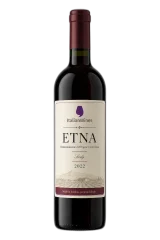
English wine writing then piles on looser phrases: wine region, wine area, wine zone. These usually describe landscapes and traditions rather than legal boundaries. The Langhe hills, the slopes of Etna, the Chianti countryside between Florence and Siena: each is a real place you can walk through, and some of these names also exist as denominations (Langhe DOC, Etna DOC), while others never appear on a label at all.
The habit worth building: when you meet a geography word, check whether DOC or DOCG follows it. With the initials, it is a legal appellation with a rulebook. Without them, it is geography talk, useful for orientation but promising nothing about the wine. How the cultural zones overlap the legal ones is a subject of its own, and our guide to Italy's wine zones and sub-zones maps the full set of layers.
Sub-zone, UGA, MGA: the small print inside a denomination
Inside a denomination, Italian law allows two further levels of precision, and they do different jobs. A sottozona, sub-zone, is a named area inside a denomination with stricter rules than its parent: lower yields, a tighter grape recipe, or both, written into the production code. Valtellina Superiore DOCG in Lombardy names Sassella among its sub-zones: same Nebbiolo grape, known locally as Chiavennasca, from one named stretch of terraced mountainside. Chianti DOCG works the same way with seven sub-zones, Rufina the most quoted.
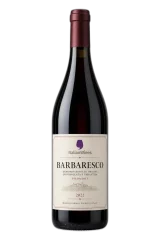
The second level pinpoints origin without changing the rules. Italy's consolidated wine law, the Testo Unico of 2016, calls these Unità Geografiche Aggiuntive, UGA, additional geographic units; the older term, Menzione Geografica Aggiuntiva or MGA, still dominates conversation in Piedmont. A UGA wine must be vinified separately and declared each year, but it follows the parent denomination's ordinary rulebook. Barbaresco mapped its named vineyards first, in 2007; Barolo followed, which is why a label can read Barolo Cannubi: the denomination, then the single named slope.
Cru, the French word, has no legal force in Italy, but you will hear it used for exactly these named sites. On Etna the equivalent word is contrada, the volcano's old farm districts, increasingly named on labels the way Barolo names its MGAs. And vigna, vineyard, may only appear when the named plot is registered and its grapes are kept separate. Sub-zone tightens the rules; UGA, MGA, contrada and vigna sharpen the address. Our wine-zones guide shows how a sub-zone label nests inside its parent.
Grape or place? The test behind most Italian wine mix-ups
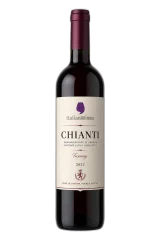
Now the mix-ups this vocabulary exists to prevent. Chianti and Sangiovese are not two names for the same thing. Chianti is a place: the hills between Florence and Siena, and the denomination named after them. Sangiovese is the grape that fills the bottle, there and across central Italy. One word answers where, the other answers what.
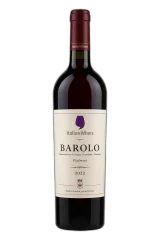
Barolo and Nebbiolo split the same way. Barolo is a village southwest of Alba and the denomination around it; Nebbiolo is its grape, and the production code demands 100 per cent of it. The same grape makes Barbaresco twenty minutes away and Valtellina's mountain reds 300 kilometres north. Grapes travel; places cannot. That asymmetry explains most of the naming logic in this article.
UK shelves make the trap worse by mixing two labelling traditions. Most New World bottles, and plenty of everyday Italian ones, lead with the grape: Pinot Grigio, Merlot, Sangiovese. Classic Italian denominations lead with the place and expect you to supply the grape. So a bottle labelled simply Sangiovese can sit one shelf over from a Chianti built on the same variety, wearing a different kind of name. Neither is wrong; they answer different questions. A grape-led name tells you the flavour family; a place-led name tells you the rules, the origin and usually the ambition.
A quick test settles most cases. Try the word in two sentences: 'a vineyard in X' and 'a wine made from X'. 'A vineyard in Chianti' works; 'a wine made from Chianti' does not, because no such grape exists. If both sentences feel wrong, you are probably holding an invented wine name such as Brunello, which the next section unpacks. And if you would rather start from the glass than the map, our guide to Italian grape varieties by family organises the grapes by how they taste.
Three naming patterns cover nearly every label
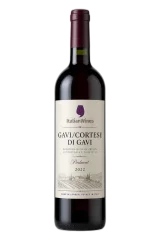
Italian wine names look chaotic until you spot that almost all of them follow one of three patterns. First: a place name standing alone. Barolo, Soave, Gavi, Chianti, Etna. The label trusts you to know the grape behind the place: Nebbiolo, Garganega, Cortese, Sangiovese, Nerello Mascalese. This is the pattern that produces most grape-or-place doubts, because the grape is exactly what the name does not say.
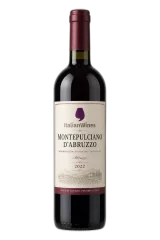
Second: grape plus place. Montepulciano d'Abruzzo, Moscato d'Asti, Barbera d'Asti, Verdicchio dei Castelli di Jesi. Read them as 'the grape Montepulciano, grown in Abruzzo'. One impostor to watch: Nero d'Avola looks like the pattern but is simply a grape name. Avola is a town in south-east Sicily, yet the variety grows across the whole island and usually reaches UK shelves labelled Sicilia DOC.
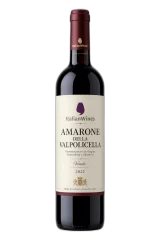
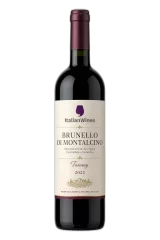
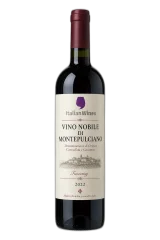
Third: an invented name plus a place. Brunello di Montalcino is 'the little dark one', Montalcino's old nickname for its Sangiovese, made 100 per cent from it by law. Vino Nobile di Montepulciano is a 'noble wine' from the Tuscan town of Montepulciano, again built on Sangiovese, at least 70 per cent. And Amarone della Valpolicella welds a style name, 'the big bitter one', onto the Valpolicella zone it comes from.
That third pattern hides the nastiest trap in Italian wine: Montepulciano is both a grape, at home in Abruzzo, and a Tuscan town whose wine contains none of that grape. We keep a full head-to-head on the two Montepulcianos for exactly this reason.
| Pattern | Example | The first word is | The grape in the glass |
|---|---|---|---|
| Place alone | Barolo DOCG | A village in Piedmont | Nebbiolo (100%) |
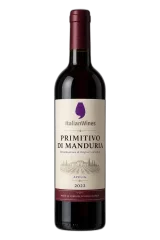
| Grape + place | Montepulciano d'Abruzzo DOC | A grape variety | Montepulciano |
| Invented name + place | Brunello di Montalcino DOCG | A nickname for the local Sangiovese | Sangiovese (100%) |
Prosecco, the name that switched sides
One famous name has lived on both sides of the grape-or-place line. Until 2009, Prosecco was the grape: growers planted Prosecco vines, and the word on a label described the variety rather than a protected origin. A grape name cannot be fenced in law; anyone, anywhere, could plant it and print it. Outside Europe the argument continues today: Australian producers still label their own fizz Prosecco, leaning on the word's old life as a grape.
So Italy moved the name across the line. With the ministerial decree of 17 July 2009 the variety was officially renamed Glera, and Prosecco became a protected place name, anchored to the village of Prosecco near Trieste and covering a defined zone across Veneto and Friuli. Today Prosecco DOC must be at least 85 per cent Glera, and the word on the label works like any other denominazione, with sparkling-wine rules attached. You will even meet bottles labelled simply Glera these days: the same grape without the Prosecco place rights, a grape word on the label with no place attached, the exact opposite of how the name worked for two centuries.
The move mirrors what Champagne managed decades earlier, and the comparison runs deeper than the bubbles; our Prosecco versus Champagne guide takes that one on. For this article, Prosecco is simply the cleanest proof of the rule: place names are protectable, grape names are not, which is why the law keeps shifting weight onto place.
Classico, Superiore, Riserva: one place word, two rule words
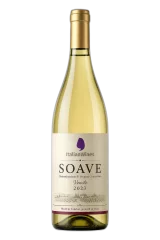
Three words ride along after place names and get misread as quality boasts. Only one of them is about geography. Classico marks the historic heartland of a zone: Soave Classico is the original volcanic hills, Valpolicella Classico the original valleys, each sitting inside a later, larger boundary. It means 'the old zone', not 'classic style'.
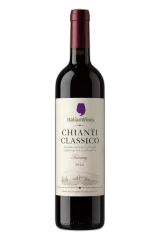
Chianti went one step further. The historic core split from the wider denomination entirely: since a decree of 5 August 1996, Chianti Classico DOCG has been an independent denomination with its own production code, not a sub-zone of Chianti DOCG. Two neighbouring rulebooks share one very famous name, and the black rooster seal belongs to Classico alone. The pairing confuses enough drinkers that our Chianti and Chianti Riserva guide exists to untangle the family.
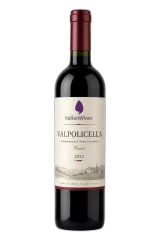
Superiore and Riserva, by contrast, are rule words, not places. Superiore means the production code demands more of the wine, typically riper grapes and a higher minimum alcohol, from the same area. Riserva means more time: each denomination sets its own bar, so Chianti Classico Riserva rests at least 24 months while Barolo Riserva waits 62. Valpolicella Superiore, for instance, comes from the same vineyards as ordinary Valpolicella but must reach a degree more alcohol and rest a year before release. Neither word names a smaller zone; both name a stricter promise. Read a label inside out: place first, then the rule words tightening it.
Put the words together on one wine-list line
Here is the vocabulary earning its keep on a single line you might meet in a UK restaurant or shop: Castello di Volpaia, Chianti Classico Riserva, Toscana, 2019. Four fragments, four different kinds of word.
Map the line
Four numbered clues, one label: see which word does which job.
- Castello di Volpaia
- Chianti Classico Riserva
- Toscana
- 2019
Castello di Volpaia
Chianti Classico Riserva
Toscana
2019
-
Producer
Castello di Volpaia
The estate that made the wine.
-
Wine or denomination
Chianti Classico Riserva
A protected place name plus the rule word Riserva: at least 24 months of ageing.
-
Place
Toscana
The wider region the list sorts by, one of Italy's twenty.
-
Vintage
2019
The harvest year.
Every earlier section is packed into that line: a denominazione doing the legal work, a Classico marking the heartland, a Riserva promising time, a region locating it loosely, and no grape named anywhere, because the place name carries it, and by now you know it means Sangiovese. For the rest of the label, seals, alcohol, bottler lines and all, our guide to reading an Italian wine label finishes the job.
Faced with any unfamiliar Italian name, run the same three checks in order. First, the pattern test: is the headline word a place, a grape, or an invented name riding on one? Second, look for DOC or DOCG: with the initials you are inside a rulebook; without them you are reading geography or branding. Third, scan for the rule words, Classico, Superiore and Riserva, and let them tighten the picture. Three glances, and a strange label turns into an address with a promise attached.
Frequently asked questions
A place. Chianti is a stretch of hills between Florence and Siena, and the wine takes its name from the land, not from a vine. The grape doing the work is Sangiovese, which by law leads every bottle of Chianti and Chianti Classico. Nobody plants Chianti vines. If you enjoy the wine and want the grape's wider family, Sangiovese also stands behind Brunello di Montalcino and Vino Nobile di Montepulciano.
Nebbiolo, and nothing else: the production code requires 100 per cent. Barolo itself is a village and the denomination around it in Piedmont's Langhe hills. The same Nebbiolo grape makes Barbaresco twenty minutes away and Valtellina's mountain reds under the local name Chiavennasca, so if a Barolo has won you over, the grape hands you two further roads to follow.
Not any more. Until 2009 Prosecco named the grape variety; a ministerial decree then renamed the vine Glera and reserved Prosecco for the protected zone in north-east Italy. Since then Prosecco works exactly like other Italian place names: the label promises an origin and a rulebook, including at least 85 per cent Glera in the blend.
No. Appellation is the French-born English word, denominazione the Italian one, and both describe the same instrument: a legally protected wine place name with production rules attached. France's AOC, Italy's DOC and DOCG, and the EU's DOP umbrella are all versions of it. On Italian labels you will only ever see the Italian wording or its initials. Ask for the appellation in a UK shop and la denominazione in an Italian one, and you are asking the same question.
Both, and the two have nothing to do with each other. Montepulciano is both a grape planted mainly in Abruzzo, and a hilltop town in Tuscany whose Vino Nobile di Montepulciano is made from Sangiovese, not Montepulciano. Same word, two unrelated things, and the town's wine never contains the grape. Our side-by-side guide to the two Montepulcianos settles the pair bottle by bottle.
It marks the historic heartland of a wine zone, not a style and not a quality grade. Soave Classico and Valpolicella Classico are the original hillside cores inside larger modern boundaries. Chianti Classico went furthest: since 1996 it has been a fully separate denomination with its own rules and the black rooster seal, rather than a zone inside Chianti.
Strictly, no. Brunello, 'the little dark one', is Montalcino's traditional name for its own Sangiovese, and Brunello di Montalcino must be 100 per cent Sangiovese by law. The famous word is a local nickname that grew into a wine's identity. The pattern repeats across Italy: an invented or dialect name welded to a place, with a familiar grape underneath.
An additional geographic unit: a named vineyard area inside a denomination, written on the label to sharpen the address without changing the rules. Barolo Cannubi means Barolo from the Cannubi slope. Piedmont still says MGA, the older term; Italian law now says UGA. A sub-zone is the stricter cousin: it carries its own tighter production rules, as Rufina does inside Chianti. On Etna, growers use contrada names in the same address-sharpening spirit.