






Italian Wine Zones: Sub-Zones, Cultural Clusters, and the Layers Behind the Label
TL;DR
- Italian wine zones organise quality and origin, but they do not always tell you whether you will like the bottle.
- For UK buyers, use VdT, IGT, DOC and DOCG as context, then still check grape, region and producer style.
- Barolo DOCG signals strict Nebbiolo rules, while Toscana IGT can still include ambitious Sangiovese or coastal blends.

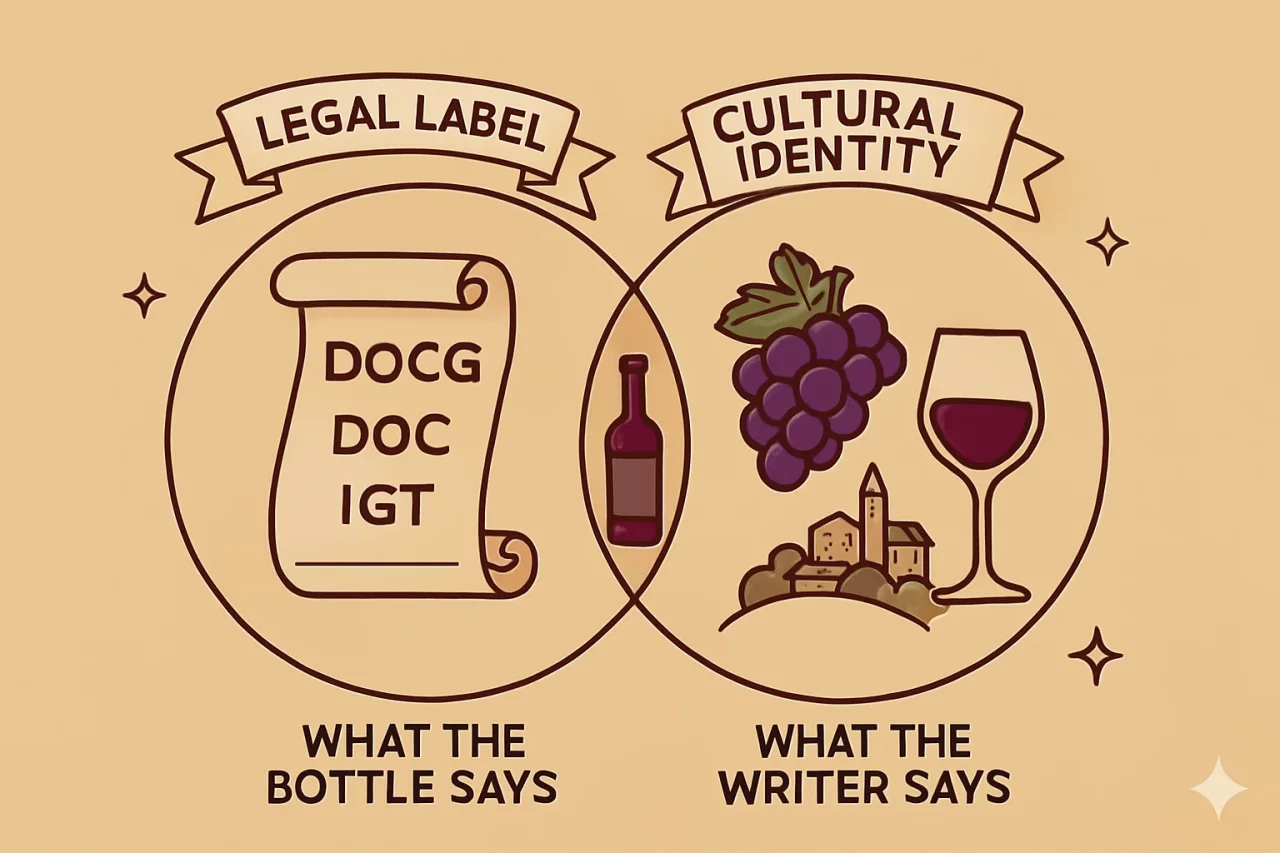
Two axes nobody explains: legal label vs cultural identity
The DOCG, DOC, IGT, and VdT tiers tell you what the EU regulator certifies. They do not tell you whether the appellation has one shared style or covers a hundred unrelated wines, whether one wine label nests inside another, or how Italian sommeliers cluster zones culturally. Those are separate axes. Confusing them is why first-time Italian wine buyers think Barolo and Toscana IGT are equivalent objects when they describe completely different things.
If the alphabet soup of DOCG, DOC, IGT and VdT is new, our classification primer covers each tier in detail. This article picks up where that one stops, with four geography layers the bottle does not narrate.
The four layers covered below: information shape (does the appellation describe one wine or a whole region?), sub-zones (named places nested inside a parent DOC), multi-region appellations (zones that ignore administrative borders), and cultural clusters such as Maremma or Langhe, the names you hear in tasting notes but never see on the label. Each layer answers a different question. None of them replaces the legal classification; they sit on top of it.
Why two DOCGs can need different page templates
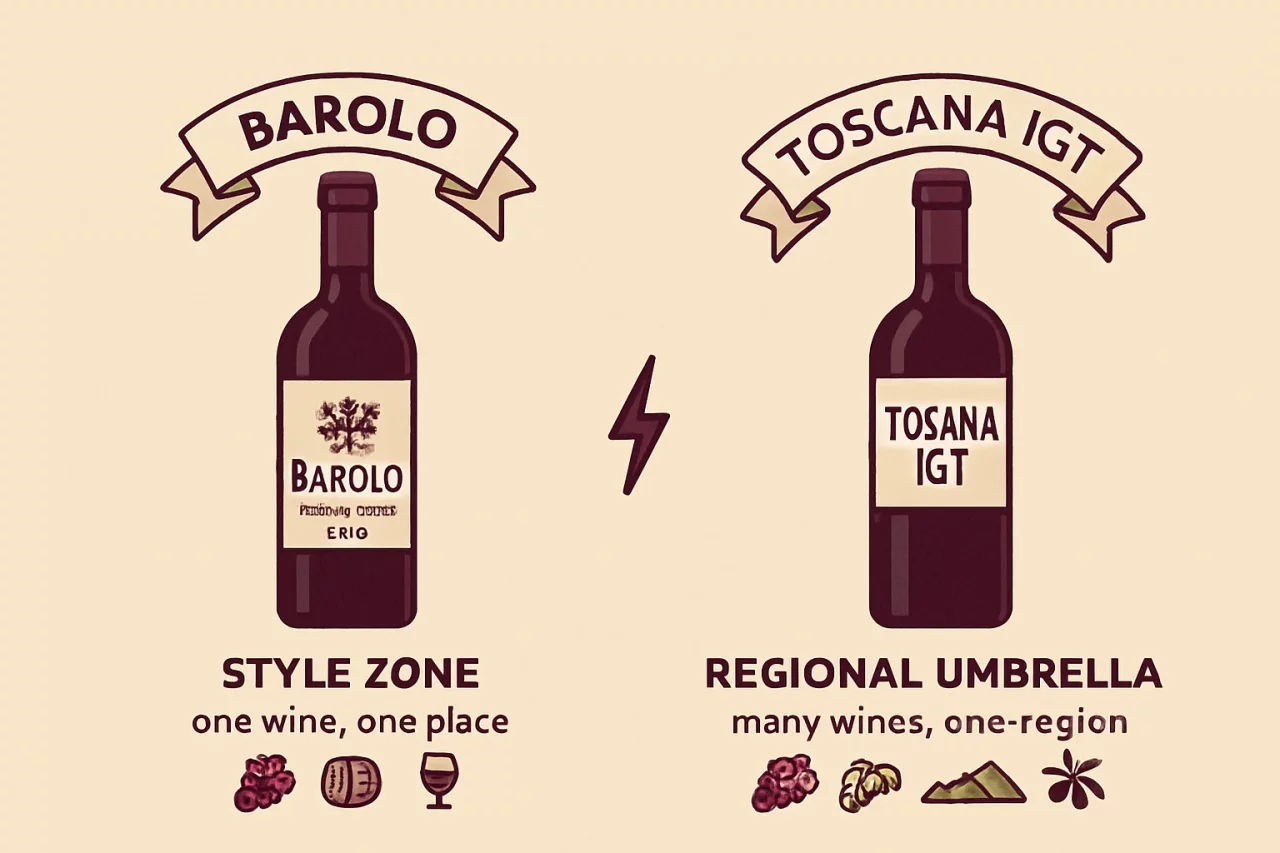
Compare Barolo DOCG with Toscana IGT. Both are protected designations; both appear on Italian wine labels; both pass legal scrutiny. They tell radically different stories.
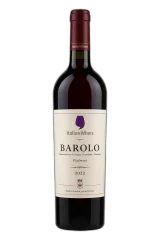
Barolo is a single style. The disciplinare names eleven communes around the town of Alba in Piedmont, requires 100% Nebbiolo, sets minimum ageing at 38 months (62 for Riserva) with at least 18 in oak, and produces a wine recognisably itself glass after glass. A single review of "Barolo" is meaningful because every Barolo shares acidity, tannin, and red-fruit aromatics from the same grape on similar Tortonian and Helvetian soils.
Toscana IGT, by contrast, is a regulatory umbrella. It permits any grape that grows in any of Tuscany's ten provinces, allows winemakers to blend international varieties with native Sangiovese, and was historically the home of Super Tuscans before some graduated to DOC or DOCG. A single review of "Toscana IGT" is meaningless because the umbrella shelters a Cabernet-Merlot blend from the coast and a 100% Trebbiano white from a hilltop, both bearing the same legal label.
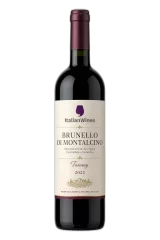
We capture this on every denomination as a shape attribute. Style-zone denominations (Barolo, Brunello di Montalcino, Chianti Classico, Etna) earn the full taste profile, vintage chart, and food pairing treatment. Regional-umbrella denominations (Toscana IGT, Sicilia DOC, Delle Venezie) get a different page that leads with the regulatory framing, the sub-style breakdown that producers actually use, and a link back to the underlying region. The shape axis is independent of the legal tier: there are umbrella DOCs and there are style-zone IGTs. The label does not announce which shape applies; the editorial framing has to.
Sub-zones: when a DOC label hides a parent
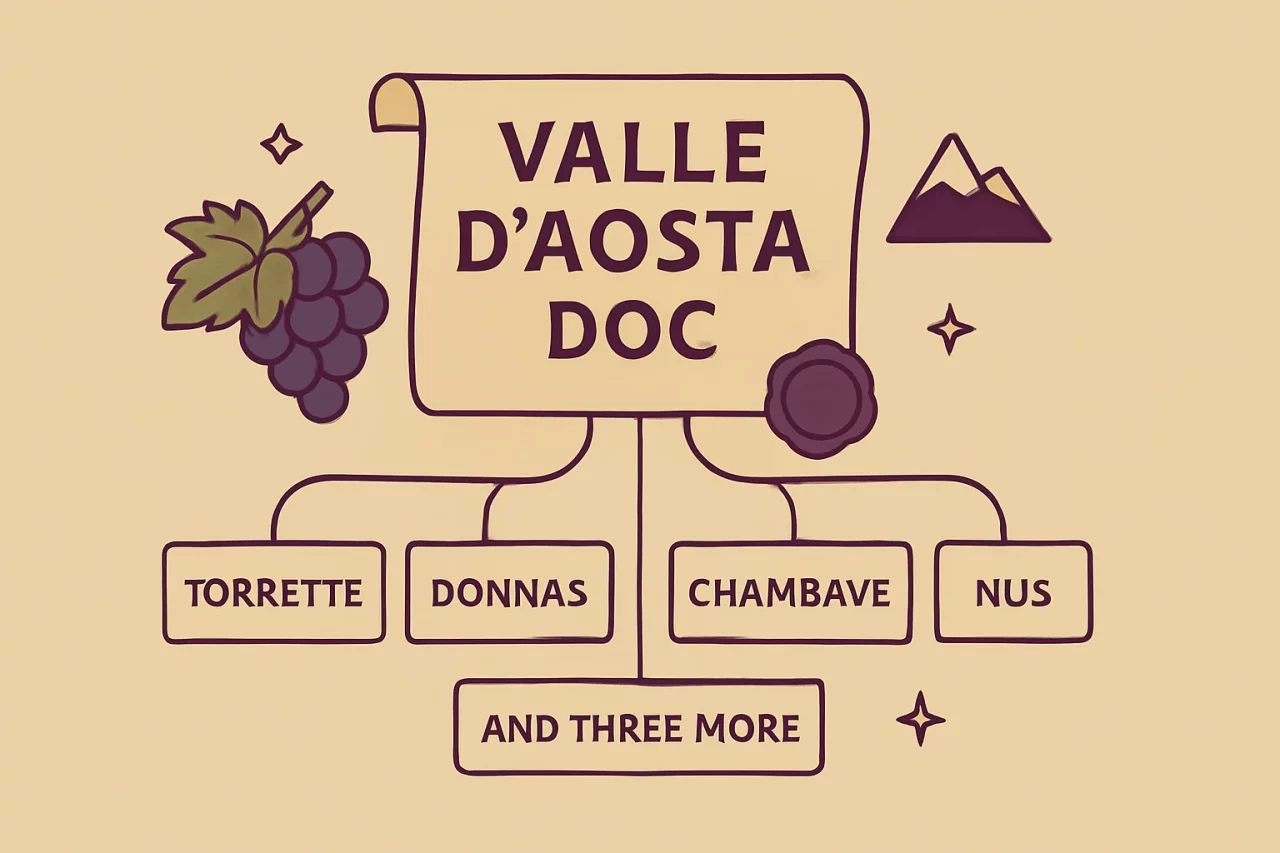
A bottle says "Valle d'Aosta Torrette DOC" on the label. Torrette is a real, legally certified DOC. But the disciplinare governing what goes into that bottle is the same Valle d'Aosta DOC disciplinare that regulates the parent appellation. Torrette is one of seven named sub-zones nested inside the parent DOC, each with its own grape rule and its own sliver of the Aosta valley:
- Valle d'Aosta Blanc de Morgex et de La Salle: Prié Blanc whites at high altitude.
- Valle d'Aosta Enfer d'Arvier: Petit Rouge reds.
- Valle d'Aosta Torrette: Petit Rouge dominated reds.
- Valle d'Aosta Chambave: Muscat dessert wines.
- Valle d'Aosta Nus: Pinot Grigio and Malvoisie de Nus.
- Valle d'Aosta Arnad-Montjovet: Nebbiolo (called Picotendro locally).
- Valle d'Aosta Donnas: Nebbiolo from steep terraces.
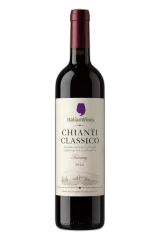
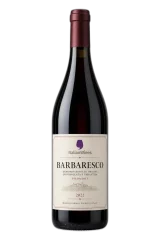
The same nesting pattern shows up elsewhere. Bolgheri Sassicaia DOC is a sub-zone of Bolgheri DOC, the only single-estate DOC in Italy, ring-fenced for one historic property. Chianti DOCG has seven sotto-zone (Rufina, Colli Senesi, Colli Aretini, Colli Fiorentini, Colline Pisane, Montalbano, Montespertoli). And in Piedmont, single-vineyard mentions called Menzioni Geografiche Aggiuntive (MGA) add a still finer layer below the DOCG: Barolo Cannubi or Barbaresco Asili name a specific cru rather than a sub-region.
The practical reading: a sub-zone label is not a separate denomination floating free. It is a child of a parent. Grape rules, ageing minimums, and most production constraints come from the parent's disciplinare. The sub-zone narrows scope: a stricter grape requirement, a smaller geographic area, sometimes a stylistic specification like a sweet wine carve-out. Wine inventory often labels at parent rather than sub-zone level, so a search for Donnas may surface more wines under Valle d'Aosta DOC than under Donnas itself. Our denomination pages currently cover the parents; sub-zone pages are an editorial work-in-progress.
Multi-region zones: appellations that cross borders
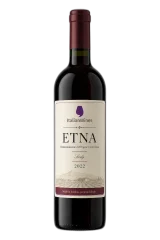
Most Italian appellations sit inside a single administrative region: Barolo in Piedmont, Brunello in Tuscany, Etna in Sicily. About a dozen do not.
Prosecco DOC is the most familiar example. Its production zone covers Veneto plus Friuli-Venezia Giulia, two regions with different cuisines, different histories, and different wine cultures. Lison DOCG straddles Veneto and Friuli. Garda DOC stretches across the Lake Garda basin in both Lombardy and Veneto. Lugana DOC sits on the southern shore of Lake Garda in Lombardy and Veneto, anchored on the white grape Turbiana. Delle Venezie DOC, the Pinot Grigio mega-zone, covers Friuli, Trentino-Alto Adige, and Veneto.
These appellations exist because the relevant terroir, grape culture, or producer tradition does not respect modern administrative borders. The Adige river valley does not stop at the Veneto-Trentino line; the morainic soils around Lake Garda do not restart at the Lombardia-Veneto boundary. The legal designation follows the wine, not the political map. Our denomination data model treats these as full first-class citizens with multiple regions attached. When you visit a multi-region denomination page, every region is linked, not just the primary.
Cultural zones: the names you hear but never see on a label
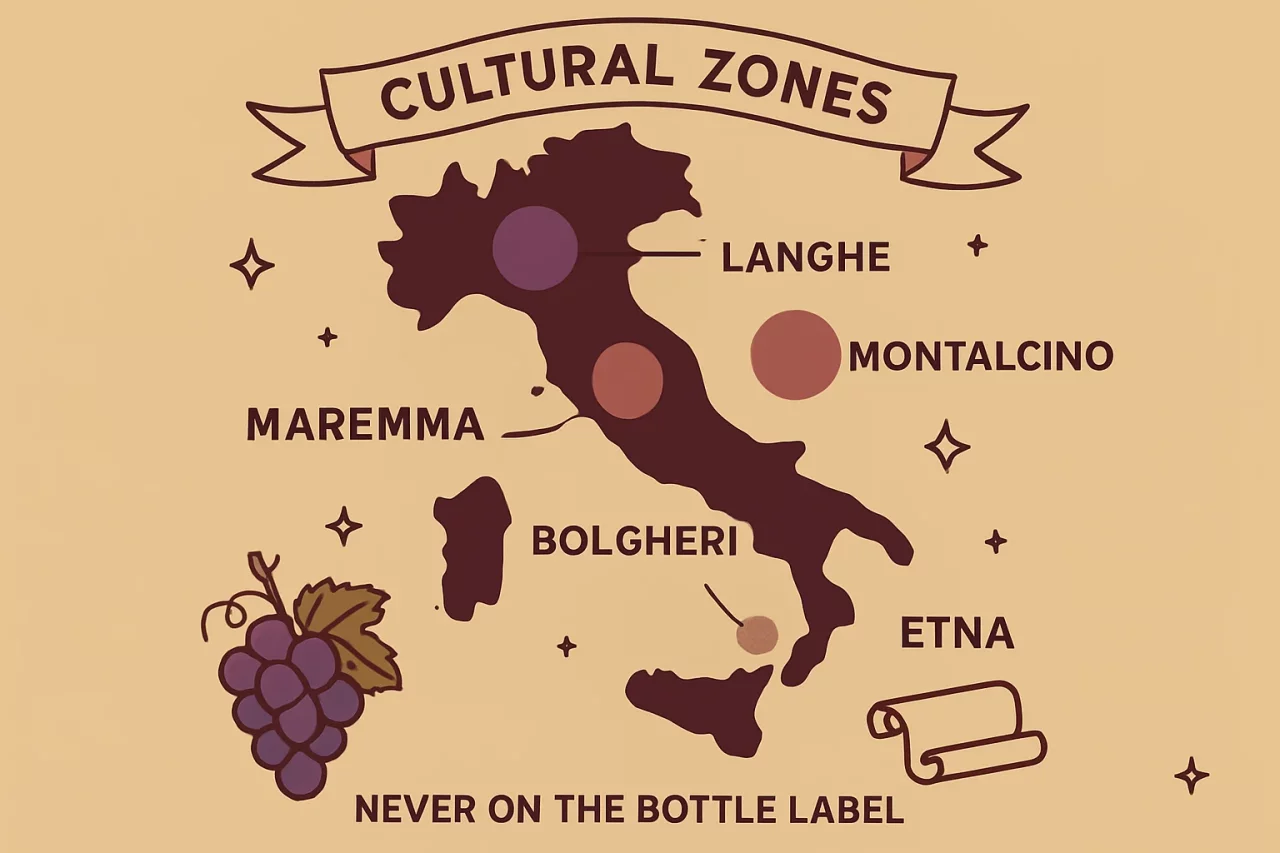
Maremma. Langhe. Montalcino. Chianti hills. Bolgheri. Etna. Italian wine writers reference these names hourly. None of them is a denomination. None appears on a bottle as a designation. And yet the wines they produce are easier to compare side by side under the cultural name than under the formal classification.
Maremma is the coastal southwest of Tuscany plus a strip of northern Lazio. It bundles fifteen denominations (Bolgheri DOC, Morellino di Scansano DOCG, Montecucco, Sovana, Pitigliano and twelve more) under one editorial identity built on warm coastal climate, ripe-tannin reds, and a producer culture comfortable with both Sangiovese and Bordeaux varieties.
Langhe is the right bank of the Tanaro river in Piedmont, home to Barolo, Barbaresco, Roero, and a constellation of Dolcetto and Barbera DOCs that share Nebbiolo terroir. Montalcino is one Tuscan hill town and the surrounding 24,000 hectares; the four denominations centred there (Brunello DOCG, Rosso DOC, Sant'Antimo DOC, Moscadello) all share microclimate and grape culture but differ in rules.
We model these as wine areas on this site: a separate layer from denominations, with its own membership of denominations and producers, and its own editorial intro. They are orthogonal to the denomination ladder. One denomination can belong to multiple wine areas: Bolgheri DOC sits inside both the Bolgheri cluster and the broader Maremma. One wine area can span regions: Maremma straddles Tuscany and Lazio. The site's Tier 1 cultural cluster set covers Maremma, Langhe, Montalcino, Chianti hills, Etna, and Bolgheri. Each is a navigation entry point for "show me everything in this place" rather than "show me everything labelled with this denomination".
The Bolgheri trap: when one name means three things
"Bolgheri" is a textbook overlap and the example most likely to confuse new buyers.
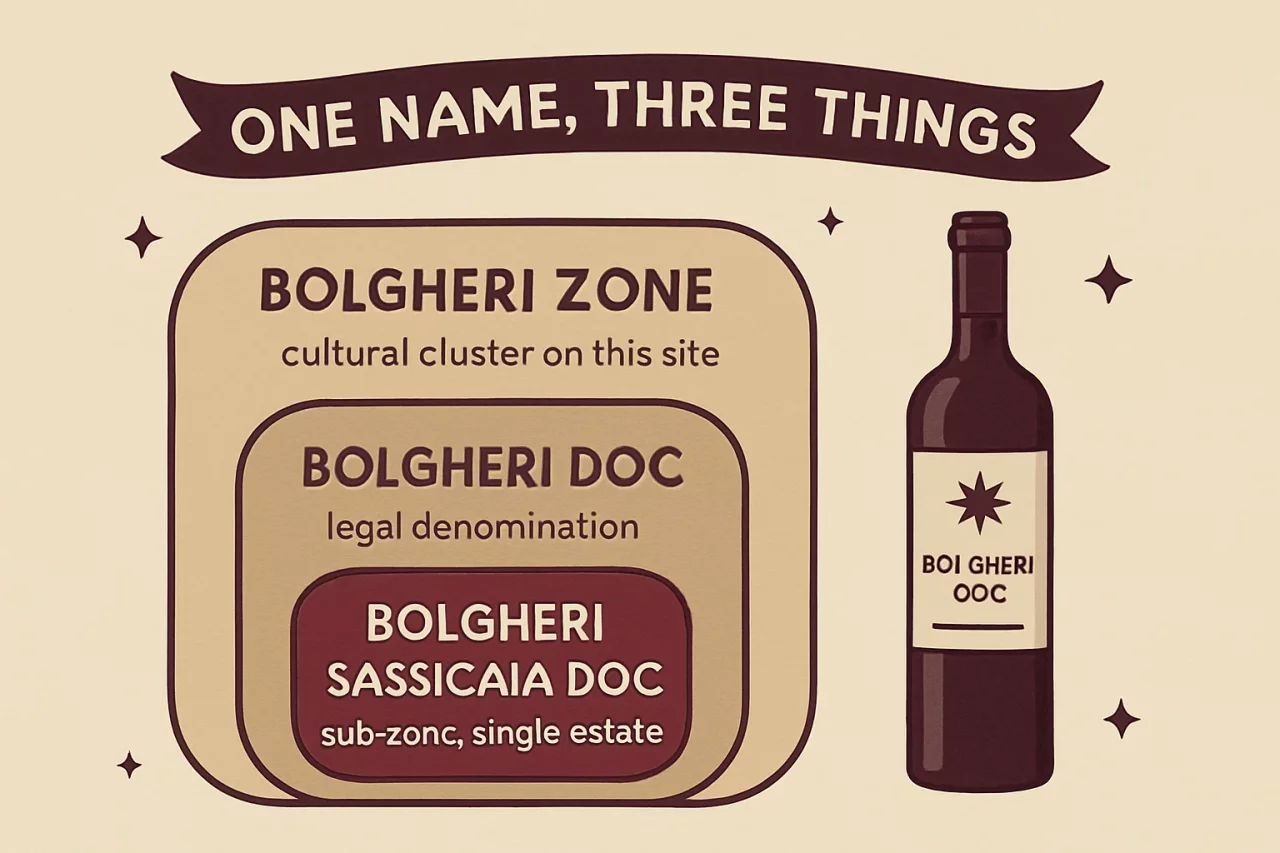
There is Bolgheri DOC, the legal denomination governing wines from a defined zone west of the Tyrrhenian coast in Livorno province, with rules that favour Cabernet Sauvignon and Merlot. There is Bolgheri Sassicaia DOC, a sub-zone within Bolgheri DOC, the only single-estate DOC in Italy, ring-fenced for the Tenuta San Guido property and its Sassicaia bottling. And there is the Bolgheri zone as a cultural cluster on this site, encompassing the Bolgheri DOC plus the immediately adjacent vineyards and producers that share the same coastal terroir but may sell under nearby DOCs (Val di Cornia, Terratico di Bibbona) or under Toscana IGT.
Three layers, one place name. The bottle label tells you which legal designation applies. The site's URL structure tells you which conceptual lens you are using. The denomination URL is the legal entry; the wine-area URL is the editorial entry; the sub-zone Bolgheri Sassicaia is named in prose on the parent's page. If a guide says "Bolgheri reds" without specifying, it usually means the cultural cluster. If a regulator says "Bolgheri DOC", the legal entity. The same word, three referents.
Using these layers to find wine you actually want
The four layers map onto four browsing paths.
Start at Regions when you want to compare Italian wine territories at the highest level: the climate and grape culture of all 20 administrative regions side by side. The right starting point if you do not yet know whether you want a Tuscan red or a Sicilian white.
Start with the regions when you have a cultural reference in mind: "I want Maremma reds", "I want Langhe Nebbiolo", "I want Etna whites". Each region guide lets you skip the legal-classification puzzle when the editorial concept is what you are shopping for.
Start at Denominations when you know the appellation: Brunello, Barolo, Prosecco, Chianti Classico. The denomination index lets you filter by classification (DOCG vs DOC), region, or shape.
- Region: "where in Italy?"
- Wine area: "which cultural identity?"
- Denomination: "which legal label?"
- Sub-zone or MGA: "which precise corner inside that label?"
The four layers are not redundant. They answer different questions. A great Italian wine buying habit is to read all four lines on the bottle, not just the largest one.
Frequently asked questions
No. Maremma is a cultural cluster spanning the southern Tuscan coast and a strip of northern Lazio. The wines that come from Maremma are sold under specific denominations like Bolgheri DOC, Morellino di Scansano DOCG, Maremma Toscana DOC (the closest thing to a 'Maremma' denomination, though it covers only the Tuscan side), and many others. The bottle label always names a denomination; the cultural Maremma encompasses many of them.
A sub-zone is a named place inside a parent denomination's geographic and regulatory scope. The parent DOC sets the broad rules: grape varieties allowed, ageing minimums, alcohol thresholds. The sub-zone narrows scope with a stricter grape requirement, a smaller territory, sometimes a stylistic specialisation. Valle d'Aosta DOC has seven named sub-zones (Torrette, Donnas, Chambave, Nus, Arnad-Montjovet, Enfer d'Arvier, Blanc de Morgex), each producing wines that carry both the parent name and the sub-zone name on the label.
Yes. About a dozen Italian appellations are inter-regional. Prosecco DOC straddles Veneto and Friuli-Venezia Giulia. Lugana DOC sits on Lake Garda's southern shore in both Lombardy and Veneto. Lison DOCG covers Friuli and Veneto vineyards. Delle Venezie DOC, the Pinot Grigio mega-zone, includes Veneto, Friuli, and Trentino-Alto Adige. The legal designation follows the relevant terroir, not the administrative border.
Because it is both. Bolgheri DOC is a legal designation governing wines from the specific zone west of the Tyrrhenian coast. The Bolgheri cultural zone is an editorial cluster that includes the DOC plus adjacent vineyards, producers, and the sub-zone Bolgheri Sassicaia DOC. The legal denomination covers the strict zone; the region guide covers the broader cultural concept. Same name, two scopes.
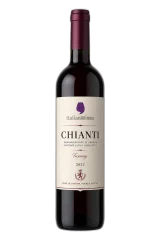
A regional umbrella is a denomination that covers a whole administrative region or a large slice of one, allows many grape varieties, and shelters wines with no shared style. Toscana IGT and Sicilia DOC are examples. A style-zone denomination, by contrast, defines a small territory plus a specific grape and a recognisable style: Barolo is 100% Nebbiolo from eleven communes around Alba, with a clear taste profile. Both are protected designations, but they answer different consumer questions. Our denomination pages render different layouts depending on which shape applies.
The Super Tuscan movement began in the 1970s when producers in Bolgheri and Chianti Classico wanted to use international grapes (Cabernet Sauvignon, Merlot, Cabernet Franc) at percentages the existing DOC and DOCG rules did not allow. They labelled the wines as Vino da Tavola initially, then as IGT after that classification was created in 1992. Some have since been promoted to DOC or DOCG status (Bolgheri DOC formalised the Super Tuscan style for that zone in 1994). Others remain Toscana IGT by choice, valuing regulatory flexibility over the marketing prestige of a higher tier.
No, but they overlap. Maremma Toscana DOC is a legal designation covering only the Tuscan side of the broader Maremma cultural zone, which extends into northern Lazio. A wine labelled Maremma Toscana DOC must be from the Tuscan portion. A wine made on the Lazio side falls under Lazio DOCs (Tarquinia, Cerveteri, Tuscia) but is editorially still part of the Maremma cluster. The cultural cluster is bigger than any single legal designation that shares its name.
Use Regions for high-level comparison across all 20 Italian regions, including when you know a cultural reference like Langhe or Maremma but not the specific appellation. Use Denominations when you know the legal label (Brunello, Chianti Classico, Prosecco). The two are not redundant. They answer different questions and let you converge on a wine from different starting points.