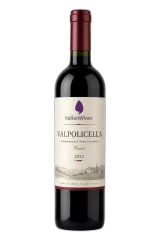
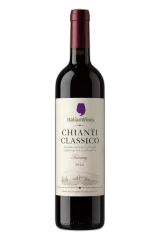
Sangiovese (san-jo-vay-zeh) is the undisputed king of red wines in central Italy, virtually present in every area of the country Thanks to its many clones and surprising versatility, Sangiovese can create a wide range of wines: from young and fresh Chiantis to complex and full-bodied Brunellos.
Red Grape · Sicily
Nero d'Avola
Nero d'Avola is Sicily's flagship black grape: a warm, sun-swollen red of ripe black cherry, plum and high alcohol that runs from soft, jammy everyday bottles to the structured, ageworthy reds of Noto.
Nero d'Avola (Neh-roh DAH-voh-lah) is the most widespread grape variety in Sicily. Avola is a tiny little village in Southern-East Sicily where Nero d’Avola is the signature grape but the grape is grown all over the island with a main presence in the provinces of Agrigento, Caltanissetta and Siracusa. It gives excellent results in monovarietal wines, but it is also used in blends with other international red grapes, such as Cabernet Sauvignon, Merlot and Syrah, or native Sicilian grapes, such as Frappato, Perricone, Nerello Cappuccio and Nerello Mascalese to create full bodied sumptuous reds.
Also known as
Same grape, many labels
Calabrese
The grape's historic name, still found on vineyard registers and some labels; it sounds like 'from Calabria', but there is little trace of the variety across the strait before modern times.
Calaurisi / Calavrisi
The Sicilian dialect form behind 'Calabrese', from 'calea' (grape) and 'aulisi' (of Avola); the botanist Cupani recorded it as Calavrisi back in 1696.
Nero d'Avola
The 'black of Avola', the market-friendly name now used almost everywhere the wine is sold, from the town of Avola itself to UK supermarket shelves.
The anchor fact: Nero d'Avola and Calabrese are the same grape. 'Nero d'Avola' means 'the black of Avola', the town near Syracuse in the southeast, while 'Calabrese' is the older name, and despite the echo of Calabria most scholars trace it to the Sicilian dialect 'Calaurisi', meaning 'grape of Avola'.
Taste · Where it sits
What it’s actually like in the glass
Forget scores out of five. Here’s Nero d'Avola described against grapes you already know.
Full-bodied and warm, squarely in Puglia's Primitivo weight class and clearly heavier than a Chianti Sangiovese, though it rarely turns as thick as a top Primitivo.
Present but ripe and rounded, nowhere near young Nebbiolo's grip or the firm tannin of Campania's Aglianico, more a dusty suggestion than a scrape.
Medium acidity, fresher than such a warm red suggests: less racy than an Etna Nerello Mascalese, but with far more lift than a flat, jammy southern red, which is what lets the best Noto bottles age.
Fully dry, yet the sun-baked black fruit is so ripe it can read as sweet, the same optical trick Primitivo plays: jam without any sugar.
Key flavours
The map
Nero d'Avola is full-bodied, moderate grip, mapped against other red grapes you can buy. The closer a grape sits, the more its weight and grip resemble Nero d'Avola.
Is this for you?
An honest gut-check
Reach for it when…
A bold red that just works
- You love a big, sun-warmed southern red with jammy black fruit and gentle tannin: the Sicilian answer to Puglia's Primitivo, but with a fresher edge.
- You are matching rich Sicilian food: pasta alla Norma, anelletti al forno, or anything with aubergine, tomato and salty ricotta salata.
- You want serious southern Italy without Nebbiolo's price or grip; a structured Noto bottle rewards five years in the cellar.
Maybe skip it if…
You’re after something else tonight
- You chase high-acid, ethereal reds; head to Etna for Nerello Mascalese, or to Piedmont for Nebbiolo instead.
- Alcohol warmth bothers you; these routinely hit 14 percent and more, and you feel it.
- You want firm, gripping tannin for the long haul; even top Nero d'Avola stays plush rather than structured by Barolo standards.
Serving guide
Pour it at its best
Serve at
15-18°C
Serve cool, at 15 to 18C: a slight chill keeps the high alcohol reading as warmth, not heat.
Decant
1 hours
An hour in a decanter loosens the structured Noto bottles and airs off any jammy reduction.
Glass
Large Balloon Glass
A large balloon glass gives the ripe black fruit and violet lift room to open up.
Drink within
1-2 days
Once open, a re-corked bottle keeps its ripe fruit for a day or two in the fridge.
Cellar
5-10 years
Serious single-vineyard Noto wines hold and deepen for five to ten years; everyday bottles do not.
On the table
What to eat with Nero d'Avola
Start with the home-table matches that made the grape, then browse the full cuisine library.
The Sicilian home match
Pasta alla Norma
Fried aubergine, tomato and salty ricotta salata from Catania: grape and dish grew up on the same sunbaked island, so the ripe black fruit echoes the sweet aubergine while the moderate tannin copes with the tomato.
Palermo's baked ragu
Anelletti al forno
The rich, cheesy baked ring-pasta timballo wants weight and warmth; Nero d'Avola's full body and cocoa note wrap around the meat ragu without the tannic bite a young Nebbiolo would bring to the table.
Sweet glaze, ripe fruit
Char siu
Honey and five-spice barbecue pork: the grape's jammy black cherry and liquorice mirror the sticky glaze, and because its tannin is soft rather than gripping it stays friendly with the sweetness, where a firm Aglianico would fight it.
Warm spice, not fire
Rogan josh
Aromatic Kashmiri lamb: the ripe plum, high alcohol and cocoa carry the warm spice, and the moderate tannin means the chilli never turns bitter, the kind of job Italy's ripe south does better than its tannic north.
Browse every pairing
Buy it · three to start with
Not sure which bottle? Start here
A curated trio across the price range, then every Nero d'Avola on sale in the UK right now.
Entry · everyday
2 retailers
Nero d'Avola DOC Sicilia
Sicilia
2 retailers
£9.52
Why this one: The everyday face: a soft, jammy Sicilia DOC to pour without ceremony, all ripe plum and black cherry for around the price of a pizza.
The sweet spot
3 retailers
Azienda Agricola COS Nero di Lupo
Sicilia
3 retailers
£13.15
£16.36
Why this one: A step up in seriousness for the same grape: COS is a Sicilian natural-wine benchmark and Nero di Lupo is pure, unoaked Nero d'Avola from Vittoria, all bright black fruit, anise and fine tannin.
Special occasion
2 retailers
Planeta Santa Cecilia
Noto
2 retailers
£31.79
Why this one: The grape at full stretch: Planeta's flagship from Noto, the variety's original home, 100 percent Nero d'Avola aged in barrique into a deep, cocoa-and-macchia red built to cellar.
12 of 41 bottles
3 retailers
La Segreta Nero d'Avola
Sicilia
3 retailers
£13.70
3 retailers
Azienda Agricola COS Nero di Lupo
Sicilia
3 retailers
£13.15
£16.36
3 retailers
COS Cerasuolo di Vittoria Classico
Cerasuolo di Vittoria
3 retailers
£21.03
£26.09
2 retailers
Nero d'Avola DOC Sicilia
Sicilia
2 retailers
£9.52
2 retailers
Nero d'Avola, IGT Terre Siciliane
Sicilia
2 retailers
£11.74
2 retailers
La Segreta Rosso
Sicilia
2 retailers
£13.93
2 retailers
Rosé Sicilia DOC
Sicilia
2 retailers
£13.96
2 retailers
Nero d'Avola Sicilia DOC 'Disueri', Tenuta San Giacomo
Sicilia
2 retailers
£15.90
2 retailers
Planeta Cerasuolo di Vittoria
Cerasuolo di Vittoria
2 retailers
£18.07
2 retailers
Controdanza DOC Noto
Noto
2 retailers
£19.75
2 retailers
Orestiadi Vini Ludovico Rosso
Sicilia
2 retailers
£19.82
2 retailers
Serra Ferdinandea Rose
Sicilia
2 retailers
£19.87
Denominations
Where it earns a name on the label
The appellations where Nero d'Avola plays a starring role.
Where it grows
Where Nero d'Avola grows in Sicily
Sicily
Volcanic Nerello on Etna's black terraces, sun-baked Nero d'Avola on the south-east coast, fortified Marsala in Trapani and UNESCO Zibibbo on Pantelleria: Sicily holds Italy's widest single-region wine map.
The terroir
Nero d'Avola is planted the length and breadth of Sicily, but the island's warm, limestone southeast is its true home, and its reach even stretches across the strait to the Calabrian mainland.
Noto and the southeast
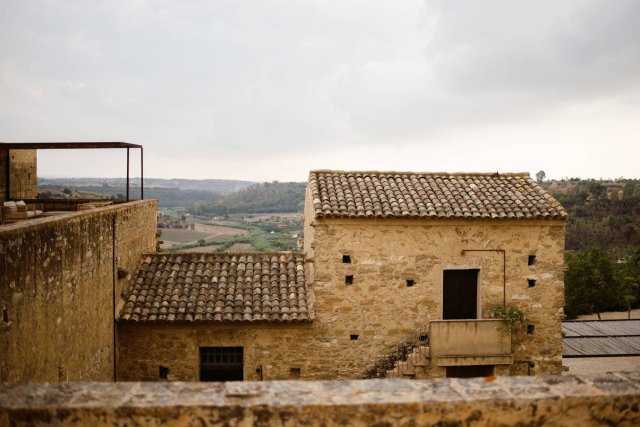
The limestone hills around Avola, Noto and Pachino, in Sicily's far southeast corner
The grape's spiritual home and its most serious face: dense black fruit, cocoa and real structure, the ground that gives Santa Cecilia its depth and makes these the bottles worth cellaring.
Cerasuolo di Vittoria
The gravel and red-sand plains around Vittoria, in Sicily's southwest
Here Nero d'Avola is blended with the perfumed, red-fruited Frappato to make Sicily's only DOCG: a lighter, fragrant, more drinkable style that trades power for lift.
Across the strait in Calabria
Palizzi and Bivongi, in the deep south of the Calabrian mainland
Under its old name Calabrese, the grape crosses to the mainland and turns up in the warm, rustic reds of Palizzi and Bivongi, blended with local Gaglioppo and Nocera.
Editorial
About Nero d'Avola
This grape type is often blended with other varieties to create wonderful wines; however, Nero d’Avola itself gives excellent results in monovarietal wines, both with maturation in steel and wood. Most of these wines are now labelled DOC Sicilia. In the past they used to be labelled as Nero d'Avola IGT Terre Siciliane (not allowed since 2020).
For most of the twentieth century Nero d'Avola was anonymous blending muscle, shipped off in bulk to give body to paler wines far from Sicily. Only when Planeta, Donnafugata and Tasca d'Almerita bottled it under its own name in the 1990s did the island's flagship red finally stand alone.
The 1990s Sicilian varietal revivalit is the only DOCG wine in Sicily, made from a blend of Nero d’Avola and Frappato. It has a fruity fragrance with a dry, full and harmonious flavour.
The traditional fortified Sicilian wine per excellence. The Rubino version is made from a blend of Nero d’Avola, Perricone, Nerello Mascalese and other white grape varieties. It is then fortified with wine spirits and aged in oak barrels.
Authentic Sicilian wine produced in the province of Palermo. It is named after the ancient city of Entella. Its aroma is fine, intense and vinous while its taste is dry and velvety.
Nero d'Avola enters in this wine blend for a minimum of 60%. Alcamo DOC wine is ruby red with a spicy and fruity aroma, while it’s dry, harmonious, full-bodied on the palate.
Probably brought to Italy by the Greeks around the 7th century BC, Nero d'Avola found its ideal climatic conditions in Sicily, in the area between Pachino, Noto and Avola.
For centuries wines made from this grape were used as "cutting wines", sent to the North of Italy or abroad to enrich and give body to other wines with lower alcohol content. At that time Sicily had a reputation for growing cheaper and mass-produced wines, with wineries that valued the quantity produced above all else. More recently, thanks to the commitment and dedication of skilled winemakers, Nero d'Avola has become one of the most renowned products of southern Italy and is appreciated for its quality.
Good to know
Frequently asked
Nero d’Avola wines are a great expression of the sunny island of Sicily. They are red (or pink in their “rosato” version), they are full-bodied and warm, with a harmonious balance of tannins and acidity and a remarkable fruity intensity.
The younger wines show a fruity, fresher aromatic profile and inviting bouquet that becomes more spicy and variegated when ageing in wood. Generally, it has medium acidity and high tannins. Delicate notes of cocoa, licorice, plum, cherry, carob and balsamic herbs can also be perceived.
Nero d’Avola is famous for producing excellent dry wines, but passito (sweet) versions are also produced from this grape, with excellent results. These sweet wines are the perfect companions to chocolate desserts.
It is cultivated all over Sicily, with distinctive features depending on the production area. In western Sicily, these wines show a greater character; in the centre of the island they offer a stronger perception of red fruits, while in eastern Sicily they tend to be more refined.
Nero d'Avola goes well with rich dishes: from grilled meats and aged cheeses to tomato-based pasta recipes. Aged bottles develop a particularly refined and elegant tannic texture and become a magnificent pairing to elaborate game or wild mushroom dishes.
Explore by style
Wine styles made from Nero d'Avola
Jump to the editorial guide for each style this grape turns up in.
Keep exploring