






Calabria · IGT
Palizzi IGT Calabria's Southernmost Dry Red and Rosato
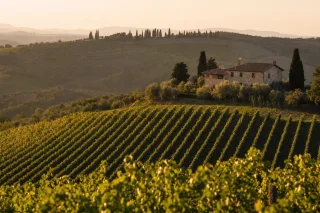
This is Italy's deep south, where the Aspromonte foothills tumble into the Ionian Sea. Palizzi IGT covers six comuni at the very tip of Reggio Calabria. They include Bova, Brancaleone and Palizzi itself. Production is tiny: just 38 hectares and 260 hectolitres a year, according to Fondazione Qualivita. The wines are warm, savoury reds and bright rosati, from the black grapes allowed in Calabria.
Decode the label
What the label tells you
One word on the front changes the ageing, the strength and the price.
On the label
Palizzi Rosso
the toe of Italy in a glass


Sun-baked hillside reds from Italy's southernmost mainland vineyards: dark fruit, herbs and Aspromonte wildness.
No bottles in stock right now
On the label
Palizzi Rosato & Novello
the lighter readings
Even the pink must reach 12%: the sun leaves no other option this far south.
No bottles in stock right now
The boundary
Where it is
Everything on this page, the estates, the bottles, the sub-zones, sits inside this line.
The Ionian slope of the Aspromonte at the very tip of the peninsula: the communes of Palizzi, Bova, Bova Marina, Brancaleone, Condofuri and Staiti, in the province of Reggio Calabria. Vines share terraces with bergamot groves in the Grecanico villages, on slopes that fall from the mountain to the sea in a handful of kilometres.
Inside the zone
Towns worth knowing
Palizzi Superiore's medieval cliff village names the wine; bergamot, Calabria's other treasure, grows on the same coast.
In the glass
What it tastes like, by style
One profile at a time, never blended into a single set of bars.
Black cherry


Plum

Liquorice

Strawberry
Red forest berries
The disciplinare
The rules that define it
The same table on every denomination page, straight from the production rules.
 Calabrian red varietiesAny registered red of the region, alone or blendedat least 85%
 White grapesThe IGT's tolerance windowup to 15%
Solid means the rules demand it. Striped means optional, up to that amount. The words on the right say the same rule.

An IGT with a DOC's backbone 12% minimum alcohol for red and rosato alike.

Six communes at Italy's southern tip Bova to Staiti on the Ionian slope of the Aspromonte.

11 tonnes per hectare a real cap, tighter than many DOC rulebooks manage.
The grape list is open by design any Calabrian red qualifies; tradition here means Nerello and Calabrese families.
Greek Calabria's vineyard these are the hills of the Grecanico villages, where Greek was spoken into living memory.
Ageing and alcohol minimums per tier are in the label guide above.
Cellar doors · in Calabria
Estates you can visit
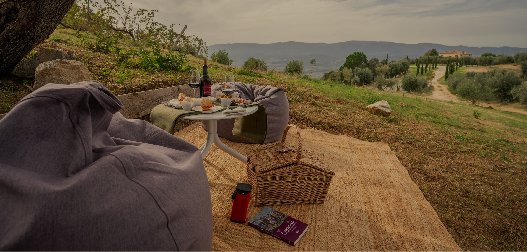
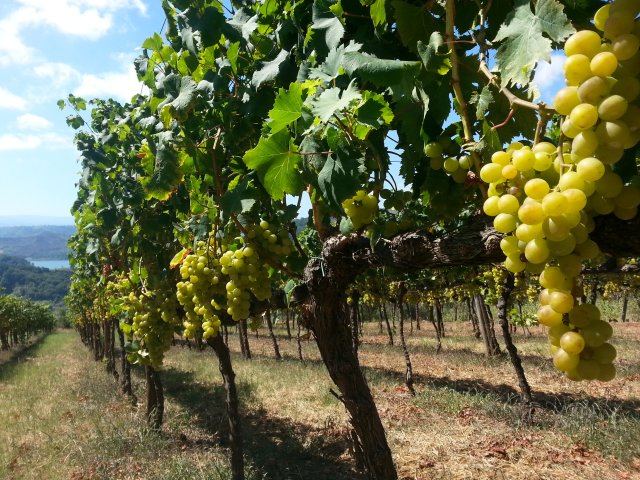
Three estates in Calabria open their doors today. A small list, honestly kept: only working cellars with confirmed visits appear here.
 0
0



No estates match these filters. Clear a filter to see more.
Vintage provenance
Why there is no vintage chart
No denomination-wide vintage chart is currently published for Palizzi IGT. Producer numbers are small enough that quality is tracked bottle by bottle rather than through a maintained annata table; consult individual estate notes for current releases.
Small growers, hot hills, steady wine: drink within five years of the harvest.
What to check instead
The producer: quality here is tracked estate by estate rather than year by year.
How Palizzi is made
Palizzi IGT was created in October 1995 (D.M. 27.10.1995, GURI 266). It was last revised by a ministerial decree of 7 November 2014. Reds and rosati must be made from black grapes allowed in Calabria. One grape or several may be used, in any blend. The rules also let in up to 15 per cent of allowed white grapes in the must. Local custom favours Nerello Cappuccio, Nocera, Calabrese, Magliocco Canino and Gaglioppo. Calabrese is the Calabrian and Sicilian name for Nero d'Avola. Acidity must be at least 5.0 grams per litre. The wine must reach 13 per cent alcohol by volume. Dry extract must be at least 18 grams per litre for the Rosso, and 15 grams per litre for the Rosato. There are no fixed rules on ageing. The IGT covers a fresh, fruit-led Rosato, a fuller Rosso, and an early-release Rosso Novello. Rina Agrifood carries out the checks. The producer body is the Consorzio Terre di Reggio Calabria, based in Bianco. It was recognised by ministerial decree in 2021 and confirmed in 2025. It speaks for Palizzi IGT growers, and for those of nearby Locride, Pellaro, Costa Viola and Arghillà.
In depth
On the table
What to eat with Palizzi
The home country leads; global pairings that genuinely work follow.


In-depth guide
Palizzi, answered
Palizzi IGT is a small geographic indication, known as IGP at EU level. It covers dry red, rosé and Novello wines. They come from six comuni at the southern tip of Reggio Calabria. The rules allow any black grape on the Calabrian list, plus up to 15 per cent allowed whites. So growers blend local favourites such as Nerello Cappuccio, Calabrese (Nero d'Avola) and Nocera.
The zone takes in the whole territory of six comuni in the province of Reggio Calabria: Bova, Bova Marina, Brancaleone, Condofuri, Palizzi and Staiti. The vines sit on terraced, sun-baked slopes. They lie between the Aspromonte foothills and the Ionian coast. This is the very tip of mainland Italy, facing Sicily across the Strait of Messina.
The rules leave the blend open. Any black grape allowed for Calabria can be used, alone or with others. Local tradition favours Nerello Cappuccio, Nocera and Calabrese, the Sicilian name for Nero d'Avola. Magliocco Canino and Gaglioppo often back them up. Up to 15 per cent of allowed white grapes may join the blend.
No. There is no Palizzi DOC. The name has only ever been classified as IGT (1995), or as its EU equivalent, IGP. That sits below the DOC and DOCG tiers of the Italian pyramid. Even so, the zone is small and the estates are family-scale. Most bottles are closer in style to a focused estate wine than to a generic regional bottling.
Production is genuinely small. Fondazione Qualivita reports about 38 hectares of registered vineyard, and around 260 hectolitres of bottled wine a year. That is equal to roughly 35,000 bottles. It makes Palizzi IGT one of the rarest geographic indications in Calabria.
The warm, savoury Rosso suits robust Calabrian and southern Italian cooking. Try pasta with meat ragù, charcoal-grilled lamb or kid, or aged caciocavallo silano. Calabrian cured meats work too, such as capocollo, 'nduja and soppressata. The lighter Rosato goes with pasta and seafood, swordfish involtini and white meat from the grill.
Explore more Calabria
Same region only: the denominations Palizzi drinkers reach for next.


