






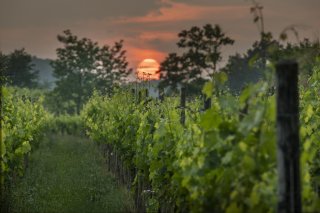



Estate 1
Cantine Benvenuto
Visit →Francavilla Angitola · North edge
Tastings available
Your cellar, your trips, and the wines you've been tracking are right where you left them.
New here?
Free, always. Education first, we'll never sell you anything you didn't ask to see.
Already have an account?
Enter the email you signed up with and we'll send a link to choose a new password.
Calabria · DOC
A small Tyrrhenian set of four from Calabria: red, white, rosato and sparkling. All of it is born on the plain of Sant'Eufemia. Lamezia DOC stretches across Catanzaro and Vibo Valentia. The rules date from 1978; today they build the reds on Nerello, backed by Gaglioppo, Greco Nero and Marsigliana. The whites lean on Greco Bianco and Mantonico. There is also a Riserva, a Passito and a Metodo Classico Spumante.
Decode the label
One denomination, 4 things it can say on the front. Colour first, then the qualifier.
On the label
Lamezia Rosso
the gulf's table red
Calabria's western answer to Ciro: red cherry and herbs from the plain behind the Gulf of Sant'Eufemia.
No bottles in stock right now
On the label
Rosso Riserva
the patient tier
Three patient years earn the word; the blend stays the same.
In stock from £30.06
On the label
Bianco & Greco
the whites of the plain
Greco Bianco with Mantonico: lemony coastal whites, plus varietal tiers for Greco, Greco Nero and Gaglioppo.
No bottles in stock right now
On the label
Rosato & the rarities
pink, sparkling, sweet
The rosato is the summer wine of the gulf; spumante and passito exist mostly on paper.
No bottles in stock right now
The boundary
Everything on this page, the estates, the bottles, the sub-zones, sits inside this line.
Estate 1
Francavilla Angitola · North edge
Tastings available
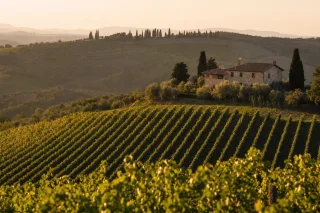
The plain and low hills behind the Gulf of Sant'Eufemia, on Calabria's Tyrrhenian waist: nine communes of Catanzaro province wrapped around Lamezia Terme, from Curinga and Maida down to the coast at Gizzeria. It is the narrowest point of the whole peninsula, sea to sea in forty kilometres, and the afternoon wind off the gulf is the vineyards' air conditioning.
Inside the zone
Click or tap a pin for its estate. The numbered pins match the estate cards below.
Towns worth knowing
Lamezia's airport makes this the gateway vineyard of Calabria: the first DOC most visitors drive through.
In the glass
One profile at a time, never blended into a single set of bars.

Cherry

Plum

Liquorice

Lemon

Almond

Citrusy fruit

Strawberry

Red forest berries

Green Apple
Citrusy fruit

Honey

Apricot

Raisin
The disciplinare
The same table on every denomination page, one row group per style here, because Lamezia writes its rules per colour.
 Nerello Mascalese and/or CappuccioThe backbone pair30 to 50%Gaglioppo and/or MaglioccoThe structured half25 to 35%Greco Nero and/or MarsiglianaThe softer local half25 to 35%
 Greco BiancoThe leadat least 50%Mantonico and othersThe supporting whitesup to 50%
Solid means the rules demand it. Striped means optional, up to that amount. The words on the right say the same rule.
Six reds share the recipe Nerello Mascalese and Cappuccio lead; Gaglioppo and Magliocco grip; Greco Nero and Marsigliana flesh it out.
Varietal labels demand 85% Greco, Greco Nero, Gaglioppo and Mantonico may each stand nearly alone.
Yields step down with ambition 12 tonnes for whites, 11 for Rosso, 10 for Riserva and the rarities.
Nine communes around one gulf the zone wraps Lamezia Terme on the plain of Sant'Eufemia.
The passito climbs to 16% a dried-grape rarity in a DOC best known for honest table wine.
Ageing and alcohol minimums per tier are in the label guide above.
Editor's cellar
Cellar doors · inside the zone
One estate inside the zone opens its doors today. A small list, honestly kept: only working cellars with confirmed visits appear here.
No estates match these filters. Clear a filter to see more.
Vintage provenance
No denomination-wide vintage chart is currently published for Lamezia DOC. With around 10 hectares declared in 2021 and a five-year average near 700 hectolitres, quality is tracked producer by producer (Statti and Lento as the two reference houses) rather than through a maintained annata table.
A wind-cooled plain keeps the wines even: buy young and drink within five years.
What to check instead
The producer: quality here is tracked estate by estate rather than year by year.
Lamezia Bianco is built on Greco Bianco, at 50% or more, and the rest comes from other Calabrian whites. The Greco label needs at least 85% of its namesake grape. The same floor applies to Mantonico when it stands alone. Reds and rosatos lead with Nerello Mascalese and Nerello Cappuccio, at 30 to 50%. Gaglioppo or Magliocco adds 25 to 35%, and Greco Nero with Marsigliana Nera brings another 25 to 35%. Riserva means three years of ageing, counted from 1 December of the harvest: at least six months in wood and six resting in bottle. Spumante and Rosato Spumante both take their second fermentation in the bottle. That fermentation cannot start before 1 February after the harvest. The wine then spends at least 9 months resting on its yeast. Passito leans on Greco Bianco above 50%, backed by Mantonico above 35%.
On the table
The home country leads; global pairings that genuinely work follow.
In-depth guide
Lamezia is a Calabrian DOC centred on the plain of Sant'Eufemia. It covers eight towns in Catanzaro province, plus Francavilla Angitola in Vibo Valentia. The vineyards face the Tyrrhenian coast and look back across the gulf to the Sila massif.
Lamezia Rosso and Rosato lead with Nerello Mascalese and Cappuccio at 30 to 50%. Gaglioppo or Magliocco takes 25 to 35%, and Greco Nero or Marsigliana Nera the same. Lamezia Bianco starts from at least 50% Greco Bianco. The single-grape labels Greco, Greco Nero, Gaglioppo and Mantonico (Montonico Bianco) each need at least 85%.
Both. The rules cover Bianco, Rosato, Rosso, Riserva, Novello, Passito and Metodo Classico Spumante. They also cover two single-grape whites and two single-grape reds. The biggest volumes on the market today are the Rosso and the Rosso Riserva.
A Lamezia Rosso Riserva must age for three years before release. At least six months of that time is in wooden barrels and six months in bottle. The ageing clock starts on 1 December of the harvest year.
Lamezia DOC was created by Presidential Decree on 21 December 1978. It was published in the Gazzetta Ufficiale on 5 April 1979. The rules were revised in 1995 and twice in 2011. A Ministerial Decree of 7 November 2014 consolidated them, and that is the version in force.
Statti, based in Lamezia Terme, and Lento. These two estates anchor the DOC in the UK market. The Statti Lamezia Rosso DOC Riserva Batasarro is the most widely listed bottling.
Explore more Calabria
Same region only: the denominations Lamezia drinkers reach for next.