



























Chardonnay is a white grape with a clear Italian role.
Wines
628
Acidity
Body
White Grape · Sardinia
Vermentino is the sea-breeze white of the Italian coast: Sardinia's saline, citrus-and-almond flagship that changes its name at every border, becoming Pigato in Liguria, Favorita in Piedmont, and Rolle in France.
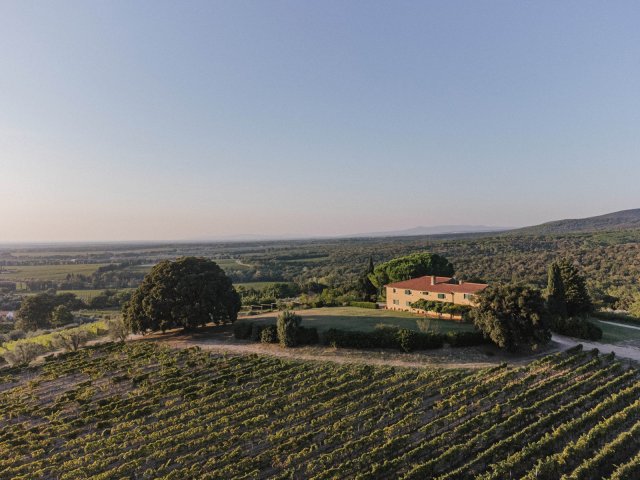
Vermentino (vair-men-TEE-no) is an aromatic white grape variety. Its origins are not clear. It appears to come from either the North-East of Spain or Madeira. It is defined as the wine of the Tyrrhenian Sea. Among Italian whites it has unique qualities: great flavours and a minerality typical of wines born near the sea. In Italy it is grown mostly in Sardinia and in Liguria. Its presence is also increasing on the Tuscan coast and in the Maremma region of Tuscany.
Your cellar, your trips, and the wines you've been tracking are right where you left them.
New here?
Free, always. Education first, we'll never sell you anything you didn't ask to see.
Already have an account?
Enter the email you signed up with and we'll send a link to choose a new password.
Also known as
The Riviera di Ponente name for Vermentino, the traditional white for basil pesto and coastal fish; local lore calls it a touch more herbal and textured, but genetically it is identical.
The Roero and Langhe name, historically grown as a market and table grape alongside Nebbiolo and Arneis, far from any sea.
The French name, backbone of white Provence and Corsican blends; the same grape Bolgheri growers now often list on the label as Rolle.
The anchor fact: One grape, many coastal names. DNA studies confirm that Liguria's Pigato, Piedmont's Favorita, and France's Rolle are the very same variety as Vermentino; the vine simply takes a new name each time it crosses a regional border.
Taste · Where it sits
Forget scores out of five. Here’s Vermentino described against grapes you already know.
Light to medium weight, never heavy; the Gallura granite bottlings and riper Tuscan-coast versions add a saline, almost briny texture, but this stays a wine of cut and freshness rather than power.
A white, so tannin barely registers, yet Vermentino leaves a real phenolic grip and that signature bitter-almond (mandorla) tug on the finish, more than most seaside whites.
High, sea-spray acidity that stays juicy rather than sharp; this mineral lift is exactly what makes it a natural table wine for raw shellfish.
Always vinified dry; what reads as fruit is lime, green almond and just-underripe peach rather than sugar, edged with Mediterranean herbs.
Key flavours




The map
Vermentino is light to medium, crisp, fresh acidity, mapped against other white grapes you can buy. The closer a grape sits, the more its weight and freshness resemble Vermentino.
Is this for you?
Reach for it when…
Maybe skip it if…
Serving guide
Serve at
8-10°C
Serve cold, 8 to 10C, so the saline citrus stays crisp; too warm and the bitter-almond finish turns coarse.
Decant
Not needed
Skip the decanter: Vermentino trades on fresh sea-breeze aromatics that a decant only blows off.
Glass
Sauvignon Blanc Glass
A Sauvignon Blanc glass, narrow and aroma-focused, funnels the orange-blossom and wild-herb top notes.
Drink within
3-5 days
Drink young, within about 3 to 5 years of the vintage, to catch the citrus and macchia before they fade.
Cellar
1-2 years
Not a cellar wine as a rule; only serious Gallura and Bolgheri bottlings gain a waxy, saline depth with a couple of extra years.
On the table
Start with the home-table matches that made the grape, then browse the full cuisine library.

The Gallura home match
Sardinia's toasted-semolina fregula in a seafood brodo is the dish Vermentino di Gallura grew up beside; the wine's saline cut and citrus lift echo the clam broth and keep the pasta from feeling rich.

Pigato's pesto instinct
On the Ligurian Riviera, Vermentino goes by Pigato and is the traditional glass for basil pesto; its orange-blossom and herb notes chime with the basil while the high acid slices the pine-nut and cheese richness.

Salt on salt
The grape's sea-spray minerality and bitter-almond finish act like a squeeze of lemon over raw oysters, meeting brine with brine instead of masking it.

Fried, meet acid
Bracing Vermentino acidity strips the grease from the batter, while the green-almond bite keeps pace with the pepper and chilli heat.
Browse every pairing
Buy it · three to start with
A curated trio across the price range, then every Vermentino on sale in the UK right now.
Entry · everyday
 5 retailers
Vermentino di Sardegna
5 retailers
£14.50
Why this one: Argiolas is Sardinia's benchmark house and Costamolino is its everyday standard-bearer for Vermentino di Sardegna: pear, lime and a clean saline snap that show what the grape does before oak or ambition enter the picture.
The sweet spot
 2 retailers
Isola dei Nuraghi
2 retailers
£33.86
Why this one: Capichera is Gallura's cult name; this pure Vermentino is riper, weightier and more powerful, with dried herbs and a long almond finish, and the estate bottles it as Isola dei Nuraghi IGT rather than chase the Gallura DOCG.
Special occasion
 4 retailers
Bolgheri
4 retailers
£36.38
Why this one: Grattamacco is one of Bolgheri's founding estates, and this Vermentino shows the grape's serious side: saline, textured and age-worthy, proof that it belongs on the Tuscan coast among the famous reds.
12 of 139 bottles
 6 retailers
Toscana
6 retailers
£42.00
£46.00
5 retailers
Vermentino di Sardegna
5 retailers
£14.50
 5 retailers
Toscana
5 retailers
£16.00
 5 retailers
Bolgheri
5 retailers
£17.98
 5 retailers
Bolgheri
5 retailers
£28.00
 4 retailers
Vermentino di Sardegna
4 retailers
£11.70
 4 retailers
Vermentino di Sardegna
4 retailers
£12.60
 4 retailers
Toscana
4 retailers
£14.07
 4 retailers
Vermentino di Sardegna
4 retailers
£15.90
 4 retailers
Vermentino di Sardegna
4 retailers
£19.50
4 retailers
Bolgheri
4 retailers
£36.38
 4 retailers
Costa Toscana
4 retailers
£94.00
Denominations
The appellations where Vermentino plays a starring role.
Where it grows

Granite-soil Vermentino in Gallura, schist-grown Cannonau in Ogliastra and bush-vine Carignano on the Sulcis sands: Sardinia bottles a Mediterranean profile Read more

From galestro hills in Chianti Classico to the single Brunello rise of Montalcino and the sea-facing Cabernets of Bolgheri, Tuscany is Italian wine's stage in Read more
From Cinque Terre cliffs to the Pornassio Alps, eight DOCs deliver Pigato, Vermentino, Rossese and Sciacchetrà across 350 km of Riviera coast. Read more
The terroir
Vermentino is a coastal grape before it is a regional one: it ripens best within sight of the sea, and its character shifts with the shoreline, from Sardinian granite to Ligurian terraces to the Tuscan Maremma.
Gallura
The wind-scoured granite hills of far northern Sardinia, around Tempio Pausania and Arzachena.
Home to Vermentino di Gallura, Sardinia's only DOCG: the most structured, saline and long expression, where decomposed granite gives cut and a stony, bitter-almond finish.
Riviera Ligure
The narrow coastal terraces of Liguria's Riviera di Ponente.
Grown here as Pigato, it turns more herbal and orchard-fruited, the traditional white for pesto and Riviera seafood.
The Tuscan coast and Bolgheri
The Maremma seaboard and Bolgheri, in the shadow of the famous reds.
Warmer and riper, sometimes given a touch of barrel, for a rounder, peachier Vermentino with a coastal-herb lift; increasingly a serious white in red-wine country.
Producers
32 estates on the site work with Vermentino. Eight at a time, and the line-up changes every week.
Editorial
In Tuscany, Vermentino wines show a full body, a rounded texture and remarkable acidity.
In 1996 Sardinia handed its only DOCG, the island's highest wine rank, not to a red but to a white grown on wind-scoured granite: Vermentino di Gallura.
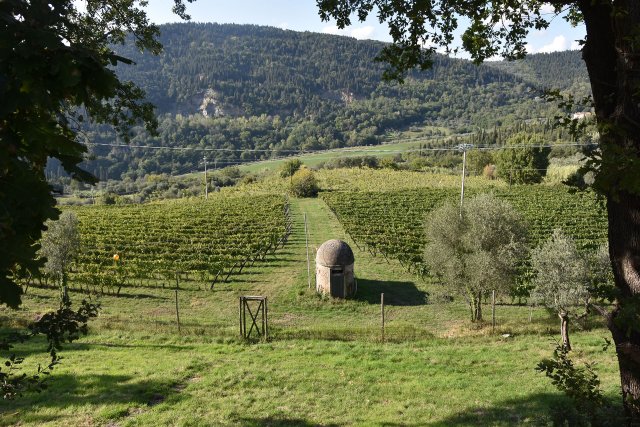
Vermentino di Gallura DOCG, elevated 1996Vermentino is very widespread in Sardinia. Its best home is Gallura, on the north-east tip of the island. A dry, windy climate and rich granitic soils are the reason.
Vermentino from Liguria has a chalky, mineral texture, high acidity and fresh flavours. They all come from the influence of the Mediterranean climate.
Grapes for Vermentino Superiore wines are generally picked later. That gives higher alcohol levels and a richer, fuller bodied style of wine. The wine always keeps great minerality and balanced freshness.
Vermentino also makes delicious sweet wines. One of the most unique is the Cinque Terre Sciacchetrà, a wine of rare finesse and personality. It is elegantly sweet, with hints of cooked plum, honey, chestnut and acacia.
The origins of Vermentino have not been fully clarified. The most likely hypothesis is that it is of Spanish origin. Around the 14th century it was likely introduced in Corsica. In the following centuries it reached Liguria, then later Sardinia and Tuscany. Not even its name can shed light on its origin. It seems to derive from ‘vermena’, a disused Italian word that means a "young, thin and flexible twig". That word itself derives from the Latin word ‘verbena’, used for "evergreen plants and twigs".
Good to know
Vermentino is a still white wine. Despite the peculiarity of the individual areas of production, it is generally dry, with high levels of acidity and intense flavours including floral, yellow fruit and herbal notes.
Gentle on the palate, Vermentino wines are fine and harmonious. They show a roundedness of body that is balanced with fresh acidity in the mouth, accompanied by a remarkable persistence of flavour and a characteristic almond finish.
Vermentino is generally a dry white wine, although excellent sweet versions exist both as passito and late harvest, especially for wines coming from the Gallura region in Sardinia. This grape is also part of the blend that produces the Cinque Terre Sciacchetrà: a delicious and rare sweet wine from Liguria.
Sardinia, above all. The island-wide Vermentino di Sardegna DOC and the Vermentino di Gallura DOCG, on the granite of the north-east, are its home. Liguria comes next, especially the Riviera di Ponente and the Colli di Luni, then the Tuscan coast around Livorno and Grosseto. In Piedmont it is grown as Favorita, and in Corsica and Provence as Rolle.
Vermentino pairs wonderfully with a vast variety of dishes. Famous for its suitability with fish and shellfish, it is an ideal aperitivo wine, thanks to its fruity and versatile character. Vermentino also suits many of the dishes we cook at home: medium-aged cheeses (try Pecorino), white meats (pair with a chicken cacciatora), hot and spicy soups, vegetarian risottos and plenty of other vegetarian dishes.
Explore by style
Jump to the editorial guide for each style this grape turns up in.
Keep exploring