










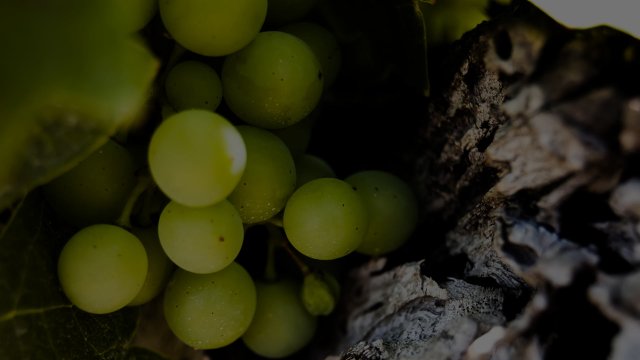





Chardonnay is a white grape with a clear Italian role.
Wines
626
Acidity
Body
White Grape · Abruzzo
Pecorino is central Italy's comeback white: an Abruzzo and Marche grape hauled back from near-extinction in the 1980s, now prized for a rare mix of full body, high acidity and a herbal, mineral bite, and forever confused with the sheep's cheese it is named after.
Pecorino (peh-koh-REE-noh) is a grape that captures the essence of Italy's heartland. It grows in the verdant hills of Abruzzo and Marche. It went from obscurity in the vineyard to treasured status. Today it is a white wine of choice for wine lovers. It gives a straw-yellow wine, as robust in flavour as it is in history. In Pecorino wine, crisp acidity and a potent alcohol content sit in harmony.
Your cellar, your trips, and the wines you've been tracking are right where you left them.
New here?
Free, always. Education first, we'll never sell you anything you didn't ask to see.
Already have an account?
Enter the email you signed up with and we'll send a link to choose a new password.
Clearing it up
The white grape
The sheep's cheese
The anchor fact: No. Pecorino is both a white wine grape from Abruzzo and the Marche and a whole family of Italian sheep's-milk cheeses, and the two share nothing but the name. Folklore says the grape was nicknamed pecorino, little sheep, because flocks on their transhumance routes loved to eat its early-ripening berries.
Taste · Where it sits
Forget scores out of five. Here’s Pecorino described against grapes you already know.
Unusually full for a fresh Italian white: high sugar ripeness pushes it to 13.5 or 14.5 percent alcohol with real dry extract, so it fills the mouth almost like a light red, closer to a Fiano or white Rhone than to a lean seaside white.
A white, so no true tannin, yet the dry extract and a faintly spicy, mineral pull on the finish give it a savoury grip and chew that most whites simply never have.
Its saving grace and its signature: bracing, blossom-edged acidity that keeps all that body and alcohol taut and fresh, and gives it the backbone to age five years or more, rare for an Italian white.
Always vinified bone-dry despite the ripe fruit; what reads as fruit is orchard pear, peach and apricot wrapped in mountain herbs and a stony, almost saline mineral streak, never sugar.
Key flavours



The map
Pecorino is full-bodied, crisp, fresh acidity, mapped against other white grapes you can buy. The closer a grape sits, the more its weight and freshness resemble Pecorino.
Is this for you?
Reach for it when…
Maybe skip it if…
Serving guide
Serve at
8-10°C
Serve cold but not icy, 8 to 10C, cool enough to keep the acidity crisp yet warm enough to let the body, herbs and stone fruit unfold.
Decant
Not needed
Skip the decanter. Pecorino's white-flower and mountain-herb top notes are the whole point, and air only dulls them.
Glass
Standard White Wine Glass
A standard white glass works, but because it carries more body than most whites a slightly wider bowl helps the herbal, stone-fruit aromas open.
Drink within
1-2 days
Once open it keeps a day or two in the fridge, a little longer than a lighter white thanks to its body, though the fresh blossom aromas are best on the first night.
Cellar
2-3 years
Better at ageing than almost any other Italian white: give a top Offida or an Abruzzo Superiore two to three years and the fruit turns to honey, wax and toasted nuts while the acidity holds firm.
On the table
Start with the home-table matches that made the grape, then browse the full cuisine library.

The Abruzzo grill
Abruzzo's rite of skewered mutton needs a white with backbone: Pecorino's body and dry extract stand up to the charred fat while its high acidity and mountain-herb edge cut clean through, a home-turf match from the grape's own hills.

Adriatic fish stew
Giulianova's tomato-rich Adriatic brodetto is too robust for a delicate white, but Pecorino has the weight to meet the stew and the acidity to lift the tomato and chilli, the coastal Abruzzo answer to a mixed-fish pot.

Marche in a bowl
Campofilone's wisp-thin egg maccheroncini come from the Fermo hills in Pecorino's Marche heartland; a richer Offida-style bottling has the body to carry the eggy pasta and its ragu without the wine vanishing underneath.

Marche truffle
Acqualagna in the Marche is one of Italy's truffle capitals; Pecorino's savoury, herbal weight and stony minerality flatter black truffle over egg pasta where a crisp, fruity white would simply be flattened.
Browse every pairing
Buy it · three to start with
A curated trio across the price range, then every Pecorino on sale in the UK right now.
Entry · everyday
 2 retailers
Falerio
2 retailers
£13.00
£15.00
Why this one: Falerio, from the Colli Ascolani in the southern Marche, is the historic home of Pecorino and the low-risk place to meet it: a clean, varietal Ascoli-hills white that shows the grape's blossom, pear and herb freshness before you climb the ladder.
The sweet spot
 2 retailers
Colline Pescaresi
2 retailers
£17.00
£20.00
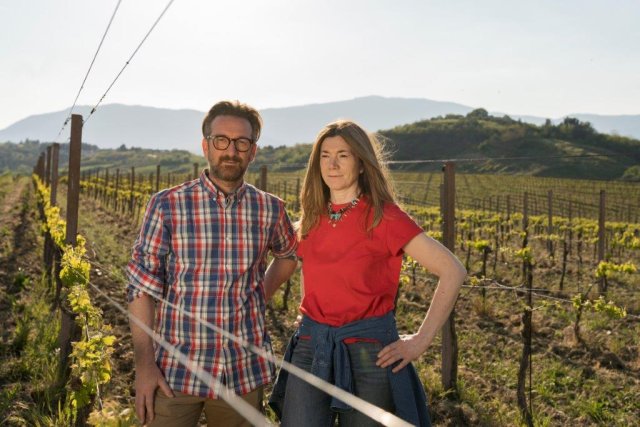
Why this one: Francesco Cirelli is one of Abruzzo's most respected organic growers; his Colline Pescaresi Pecorino trades gloss for character, all orchard fruit, dried herbs and a savoury, textural grip that shows what the grape does in honest, low-intervention hands.
12 of 40 bottles
 3 retailers
Abruzzo
3 retailers
£11.40
£12.80
 2 retailers
Falerio
2 retailers
£9.34
£10.89
 2 retailers
Terre di Chieti
2 retailers
£10.52
 2 retailers
Terre di Chieti
2 retailers
£11.30
2 retailers
Falerio
2 retailers
£13.00
£15.00
 2 retailers
Terre di Chieti
2 retailers
£14.60
 2 retailers
Terre di Chieti
2 retailers
£14.76
 2 retailers
Marche
2 retailers
£15.40
 2 retailers
2 retailers
£15.50
 2 retailers
Abruzzo
2 retailers
£16.50
2 retailers
Colline Pescaresi
2 retailers
£17.00
£20.00
 2 retailers
Abruzzo
2 retailers
£17.60
Denominations
The appellations where Pecorino plays a starring role.
Where it grows

Abruzzo runs from Gran Sasso to the Adriatic, turning Montepulciano into dark reds, Cerasuolo rosato and a new wave of Pecorino and Trebbiano whites. Read more

From Castelli di Jesi Verdicchio to Conero Montepulciano and Offida Pecorino, Marche covers 5 DOCGs across roughly 16,500 hectares of Adriatic and Apennine Read more
The terroir
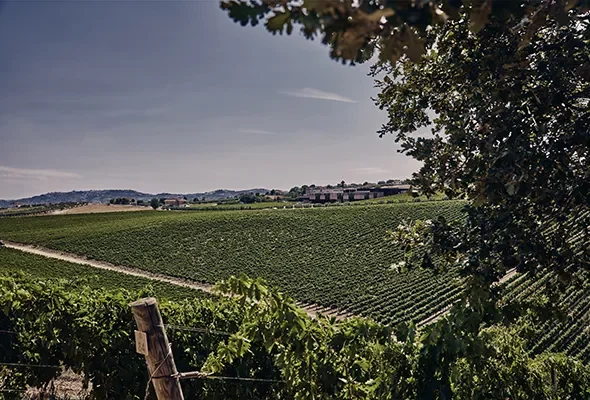
Pecorino is a grape of the central Apennine foothills, straddling the border of the Marche and Abruzzo. It ripens early and thrives on limestone hills within reach of both the mountains and the Adriatic, and the line between its two homes marks a genuine change in style.
Offida and the Colli Ascolani
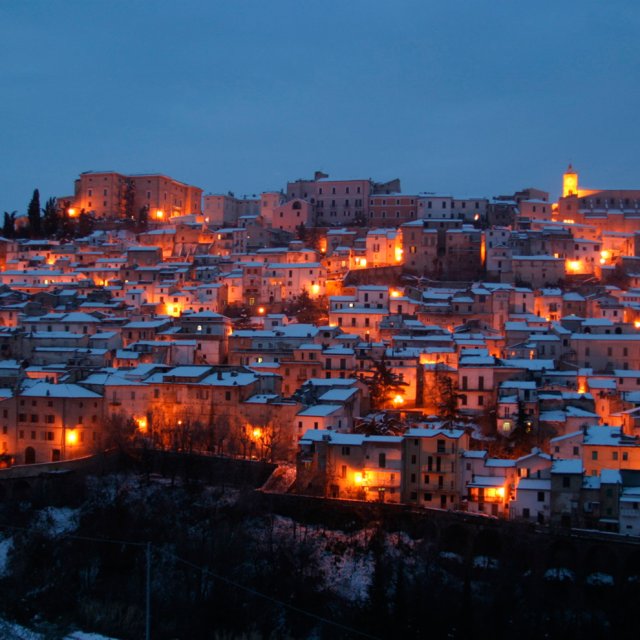
The hills of the southern Marche around Ascoli Piceno, where the grape was rescued from extinction.
Home to Offida Pecorino, the grape's only DOCG for varietal wine, alongside Falerio; lower permitted yields make the richest, most concentrated and age-worthy expression.
Abruzzo
The hills running from the Gran Sasso and Majella down to the Adriatic, across Teramo, Pescara and Chieti.
The volume home of the grape, bottled as Abruzzo Pecorino DOC and the riper Superiore; often crisper and higher-yielding than the Marche, from easy everyday whites to serious single-vineyard bottlings.
Producers
Every estate on the site that works with Pecorino.
Editorial
Pecorino wine carries the pastoral elegance of Central Italy. Its story is rooted in two Italian regions, Abruzzo and Marche. Its vines stretch back to a time before modern maps drew those lines. They hail from the foothills where the Apennine mountains whisper ancient tales. The tale of the grape begins in the mists of time. It is likely linked to the ancient Greek migrations to the Italian peninsula. That suggests a lineage as rich and complex as the wine itself.
By the 1970s Pecorino had all but vanished, undone by phylloxera and its own stingy yields. In 1982 the Marche grower Guido Cocci Grifoni tracked down a handful of surviving old vines high in the hills near Arquata del Tronto, propagated them, and in 1990 released the first modern varietal Pecorino, reviving a grape the wine world had written off.
Guido Cocci Grifoni, Ascoli Piceno (Marche), 1982 to 1990Both Marche and Abruzzo lay claim to the Pecorino grape. It is not a competition of flags, but a shared heritage celebrated across regional lines. The earliest confirmed growing of Pecorino is traced to Arquata del Tronto, nestling in the Sibillini Mountains. Yet its spirit is not confined to any one place. It is the expression of a broader geographic canvas. That canvas crosses the central Apennine terrain, and it marries the qualities of both the Marche and Abruzzo landscapes.
For the British wine lover, the story of Pecorino may echo the history of regional English wines. In those wines the essence of the locale is as integral to the character as the grape itself. The terroirs of England’s South Downs or Kent influence the vines there. In the same way, the rugged, mountainous heart of Italy shapes the Pecorino grape. The result is a wine that truly embodies its environment.
The Pecorino grape has deep roots in the rolling foothills of Central Italy's Apennines. It brings to life wines of distinctive character and strength. It is famed for its versatility and embraced for its balance. Pecorino wines show a pale straw-yellow colour, lively in the glass. They promise a fresh and invigorating experience.
The sensory journey begins with a nose that weaves fruit with vegetal notes. It hints at the ancient terroirs of Marche and Abruzzo, where this grape has flourished. Here is a profile that reflects its unique character in the glass:
Pecorino wines have a significant presence on the palate. They deliver a full-bodied experience that is both satisfying and complex.
As a white grape variety, Pecorino makes wines with minimal tannin. The texture is smooth, without the grip that red wines can have.
The wines are typically fermented to dryness, so they carry little residual sugar. The natural fruitiness shines through without overt sweetness.
Pecorino wines are marked by their crisp acidity. That comes from the cool, high-altitude vineyards and from the nature of the grape itself.
The rich, sun-drenched clusters give wines with a generous alcohol content. That brings warmth and structure, and it balances the vibrant acidity of the wine.
This grape was once on the brink of extinction. It now stands proudly among Italy's great wine names. Its wines speak of the land, the tradition and the spirited revival of a variety once forgotten. It pairs with a myriad of flavours on the plate. That makes it a cherished option for wine enthusiasts and food lovers alike.
Sip the crisp, straw-yellow elixir that is Pecorino wine and you may ponder the origins of its name. That topic is as rich and varied as the wine itself. The true genesis of ‘Pecorino’ remains cloaked in the mists of Italian folklore. Theories range from rustic shepherd’s grapes to the likeness of sheep’s head-shaped clusters.
Each idea carries its charm. One draws on the cultural tapestry of pastoral life. Another points to a linguistic link with the cheese of the same name. The name of Pecorino is a tantalising mystery, and it invites further exploration.
We have delicately threaded together the vibrant tapestry of tales behind the Pecorino name. There we delve into the fables and the facts. We do it with the same care and intricacy as the vine tenders of Abruzzo and Marche, where this grape is carefully grown.
In the intricate tapestry of Italian wines, Pecorino emerges as a thread of unique sophistication. It offers a delightful experience to the discerning UK consumer. Here are select bottles that show the best of this grape’s character.
An organic marvel, this Pecorino embodies crispness and structure. Expect a zesty lemon tang and an aromatic bouquet that spans floral hints and tropical notes. Its balance between body and freshness makes it a versatile partner for light seafood. It is also a bright addition to pecorino cheese laden dishes.
This wine has a straw-yellow hue and an enduring fruity aroma. It presents a harmonious blend of dryness and softness. The careful avoidance of skin contact during winemaking preserves its classical golden colour. It is ideal with fish, mushrooms and light pasta dishes. It promises a full-bodied sip, perfectly aligned with its gentle balance.
This exquisite bottle stands out with a rich flavour profile. Its weight on the palate speaks of its superior quality. It originates from coastal vineyards, and it hints at a sea breeze on the nose. Its taste profile suggests tree fruit and a welcoming citrusy edge. The claim of a ‘sea breeze aroma’ might be poetic. Even so, this wine delivers on a promise of elegance and good company at the table, above all with seafood.
It is a wine that revels in its subtleties. Enjoy it on its own, or as an accompaniment to a fine dish. The Fenaroli Pecorino Superiore has earned its laurels. That is not just for the depth of flavour, but for the narrative it weaves. That narrative speaks of the earth it comes from and the craftspeople who bottle each vintage.
These selected Pecorino wines each tell their own story. That narrative is steeped in the terroir from which they spring and in the artisans who craft them. For the UK wine lover looking to embrace the heart of Italian winemaking, they offer a portal to the soulful symphony of Pecorino grapes.
Good to know
Pecorino wine distinguishes itself from other Italian whites with its particular balance of high acidity and robust alcohol content, thanks to its naturally high sugar content. Compared to Pinot Grigio, which is known for its light and crisp nature, Pecorino offers a fuller body and more complex structure.
There are indeed events that celebrate Pecorino wine, especially within the regions of Abruzzo and Marche where it is predominantly produced. One example is "Cantine Aperte" (Open Cellars), which takes place annually across Italy and often features Pecorino wines among the offerings.
Pecorino wine presents great value for money, especially for those used to the price points of French classics found in British wine shops. A decent bottle of Pecorino can range from £10 to £20, with price variations based on producer reputation and aging potential. It sits comfortably in the mid-range category, similar to a good quality English white wine from Sussex or Kent.
Sustainability is becoming as important in wine production as it is in British farming. Many Italian winemakers, including those producing Pecorino, are embracing organic and biodynamic practices.
Explore by style
Jump to the editorial guide for each style this grape turns up in.
Keep exploring