






Wine route
Strada del Vino Nobile
2 days · 7 stops
Open the driveYour cellar, your trips, and the wines you've been tracking are right where you left them.
New here?
Free, always. Education first, we'll never sell you anything you didn't ask to see.
Already have an account?
Enter the email you signed up with and we'll send a link to choose a new password.
Tuscany · DOCG
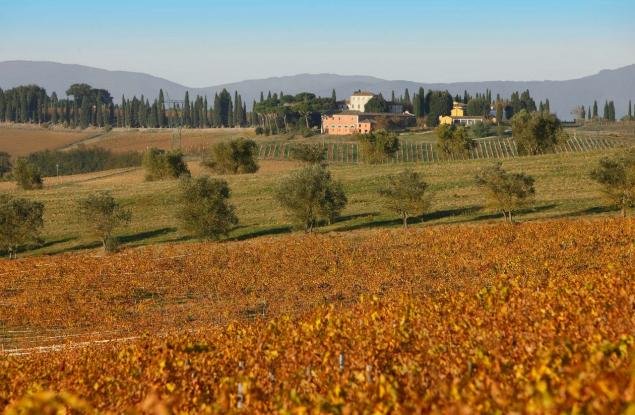
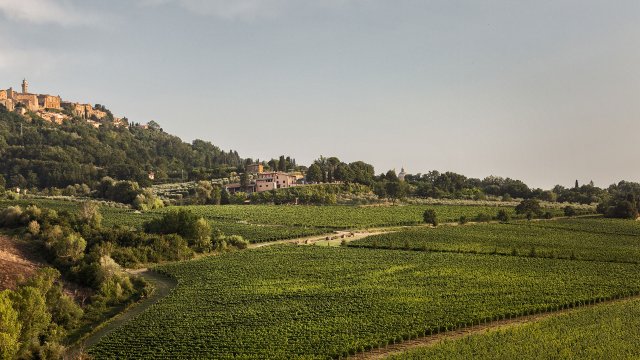
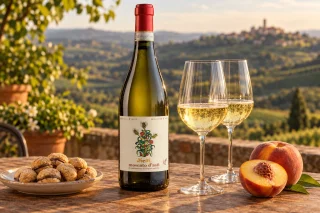
Vino Nobile di Montepulciano is Tuscany's original DOCG. It grows around one hill town, and it is built on Sangiovese, which the locals call Prugnolo Gentile. The wine comes only from the slopes of Montepulciano, in south-eastern Tuscany. It was recognised in Italy's first wave of DOCGs in 1980. Expect sour cherry, dried herbs and firm, cellar-worthy structure.
Decode the label
One word on the front changes the ageing, the strength and the price.
On the label
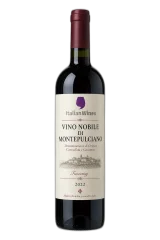
Vino Nobile di Montepulciano
the base wine, two years in the making
Prugnolo Gentile, Montepulciano's own Sangiovese: dark cherry and tea leaf with a firm Tuscan spine.
In stock from £15.10 See the 26 bottles ↓On the label
Nobile Riserva
a third year, six months of it in bottle
The patient tier: granato colour, dried cherry and spice where the Annata still shows fresh fruit.
In stock from £22.10 See the 8 bottles ↓On the label
Pieve
the village tier, new to labels
One parish, one wine: fruit from a single named UGA at 7 tonnes per hectare, blendable only within that same pieve.
In stock from £85 See the 1 bottle ↓The boundary
Everything on this page, the estates, the bottles, the sub-zones, sits inside this line.
Wine route
2 days · 7 stops
Open the drive
Estate 1
Montepulciano · Valiano side
Tastings available
Estate 2
Montepulciano
Tastings available
Estate 3
Montepulciano
Book online
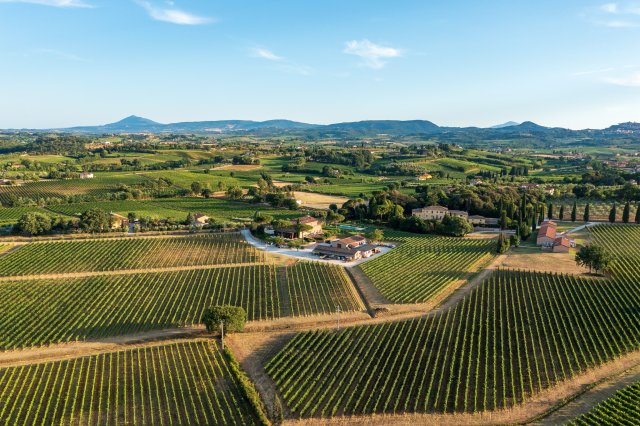
The hills of a single commune in south-east Tuscany, between the Val di Chiana and the Val d'Orcia: Montepulciano and its parishes, with vineyards allowed only on well-exposed slopes between 250 and 600 metres. The 2025 rules mapped the territory into twelve pievi, boundary lines drawn road by road and farm by farm in the disciplinare's annex, each named for a medieval parish church. It is Tuscany's answer to the village system of Burgundy, on a map one town wide.
Inside the zone
Click or tap a pin for its estate. The numbered pins match the estate cards below.
Towns worth knowing
Every pieve carries a parish name from the commune's medieval map; Valiano sits apart, east across the Chiana flats.
In the glass
Black cherry
Forest berries

Liquorice

Violet
The disciplinare
The same table on every denomination page, one row group per style here, because Vino Nobile di Montepulciano writes its rules per colour.
 Sangiovese (Prugnolo Gentile)The lead, under its Montepulciano nameat least 70%Other Tuscan varietiesAromatic grapes excluded, Malvasia bianca the one exceptionup to 30%Sangiovese (Prugnolo Gentile)From registered vineyards at least 15 years oldat least 85%Other permitted varietiesA narrower window than the base wine'sup to 15%
Solid means the rules demand it. Striped means optional, up to that amount. The words on the right say the same rule.
Three roads to maturity the two years may be all wood, 18 months of wood, or 12 of wood plus 6 in bottle: the producer chooses.
Pieve demands old vines and low yields 15-year-old vineyards minimum, 7 tonnes per hectare, 2.5 kg per vine.
A Pieve wine cannot leave its parish blending is allowed only with wine of the same UGA, or the mention is lost.
A step down is built in by the 16th month a lot may be reclassified to Rosso di Montepulciano.
Only well-exposed slopes between 250 and 600 metres qualify for the DOCG at all; valley floors are out.
Ageing and alcohol minimums per tier are in the label guide above.
Editor's cellar
By style, today
Live prices, compared across 13 UK retailers.
Cellar doors · inside the zone
Three estates inside the zone open their doors today. A small list, honestly kept: only working cellars with confirmed visits appear here.
No estates match these filters. Clear a filter to see more.
Experiences in the Vino Nobile di Montepulciano zone
Cellar experiences here average around €74. These are the strongest fits for this page.
Fattoria Svetoni
After the tour of the company in which you will get to know the winemaking reality of Fattoria Svetoni up close, you will have the opportuni…
Fattoria Svetoni
Stop and savor Tuscany! Explore our centuries-old cellar and taste our wines paired with a light lunch and the typical flavors of this regio…
Fattoria Svetoni
The world of wine is fascinating, complex and immense. This guided tasting of 3 wines provides the basis for better understanding what is in…
Twelve parishes, one hill town
The 2025 consolidation drew twelve unità geografiche aggiuntive named for the commune's medieval parish churches. A label may say Pieve only when grapes, cellar and blending all stay inside the one it names.

A rural parish on the commune's northern side, its boundary drawn podere by podere in the 2025 annex.
Named for the abbey hamlet of Abbadia di Montepulciano on the Lauretana road, at the zone's northern edge.
The valley of the Caggiole stream north-west of town, and the first pieve name UK drinkers met on a label.
A small western pieve traced from the old crossroads, one of the quieter corners of the 2025 map.
South-east of town along the Lauretana, long one of Montepulciano's best-regarded vineyard districts.
The northern frazione on the old road to Torrita, home to several historic Nobile cellars.
Named for the sanctuary just outside the town walls; vineyards begin where the streets end.
The parish of the Renaissance temple below the western gate, the most photographed corner of the commune.
The southern frazione towards the thermal springs, where the zone leans into the Val d'Orcia side.
A country parish drawn clockwise from road to road in the annex, one of the smaller pievi.
A compact pieve close under the town, its name preserved from the medieval tithe maps.
The outlier: east across the Val di Chiana flats around its own hamlet, on the recent soils of the old lake bed.
The years
Chart ratings are the Consorzio del Vino Nobile di Montepulciano's official annata stars, proclaimed each February; the newest vintages appear here once the consorzio publishes them.
Reading the years
Eccezionale on consorzio chart
The short version: A long five-star run: 2017 through 2022 all rate top on the chart; 2014 is the year to pass.
Tap a year for its note.
The rules are among Tuscany's stricter ones. Sangiovese, known locally as Prugnolo Gentile, must make up at least 70% of the blend. Complementary Tuscan varieties may fill the rest. Aromatic grapes are excluded, apart from Malvasia Bianca Lunga. Yields are capped at 8 tonnes per hectare. Every wine must be made and aged within the boundaries of Montepulciano. Ageing runs at least two years from the 1 January after harvest. The permitted paths include 24 months in wood, or 18 months in wood plus bottle time. A Riserva needs three years, including six months in bottle, and 13% alcohol. The Pieve tier has been allowed since the 2021 harvest, and it tightens everything further. It asks for at least 85% Sangiovese, with traditional partners such as Canaiolo Nero and Mammolo. Vines must be 15 years or older, yields drop to 7 tonnes per hectare, and the wine spends 12 months each in wood and bottle.
On the table
The home country leads; global pairings that genuinely work follow.
In-depth guide
Sangiovese, known in Montepulciano as Prugnolo Gentile, at a minimum of 70%. Complementary Tuscan varieties may make up the rest, with aromatic grapes excluded apart from Malvasia Bianca Lunga. Despite the name, there is no Montepulciano grape in the blend. That variety belongs to Abruzzo.
No. Vino Nobile is a Sangiovese DOCG from the town of Montepulciano in Tuscany. Montepulciano d'Abruzzo is a different grape, grown in Abruzzo, east across the Apennines. They share a word, not a wine. Our guide to the two Montepulcianos walks through the label test, the taste and the prices.
Pieve is the denomination's top tier, permitted since the 2021 harvest. The word is followed by one of twelve named parishes. The wine must come from vines at least 15 years old. Yields may not pass 7 tonnes per hectare. It must use at least 85% Sangiovese and age three years before release.
A straight Vino Nobile usually drinks best between three and ten years from the vintage. Riserva and Pieve bottlings are built for a decade or more. The consorzio's own vintage stars, shown in the chart on this page, are a reliable guide to which years reward the wait.
Both are Sangiovese DOCGs from southern Tuscany, recognised together in Italy's first DOCG wave of 1980. Brunello must be 100% Sangiovese and ages far longer before release. Vino Nobile allows 30% complementary varieties, reaches the market after two years, and typically costs noticeably less. In weight it sits between Chianti Classico and Brunello.
Proper Tuscan cooking: roast lamb, pappardelle with wild boar ragu, bistecca alla fiorentina and aged pecorino. The acidity and grip of Sangiovese ask for protein and fat. Keep it away from delicate fish and chilli heat.
Explore more Tuscany
Same region only: the denominations Vino Nobile di Montepulciano drinkers reach for next.