

Central Italy

Marche Apennine slopes, Adriatic salt

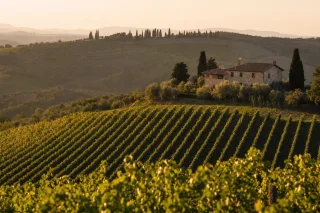
From Castelli di Jesi Verdicchio to Conero Montepulciano and Offida Pecorino, Marche covers 5 DOCGs across roughly 16,500 hectares of Adriatic and Apennine vineyards.

Marche stretches from the Apennine peaks of the Sibillini down to 180 kilometres of Adriatic coast. The region grows around 16,500 hectares of vineyards across 5 DOCGs and 17 DOCs, with whites just over half of production. Verdicchio anchors the regional identity through two zones: Castelli di Jesi west of Ancona, and Matelica in a closed Apennine valley to the south.

The reds are Montepulciano-led. Conero DOCG covers pure Montepulciano from the limestone bluffs south of Ancona, with a sea-salt freshness rare for the grape. Rosso Piceno blends Montepulciano with Sangiovese across the southern hills around Ascoli, and Offida DOCG covers Pecorino, Passerina and Rosso.

Two curiosities matter: Lacrima di Morro d'Alba for an aromatic red of rose and strawberry, and Vernaccia di Serrapetrona for Italy's only sparkling red DOCG. Top growers Bucci, La Monacesca, Moroder, Velenosi and Marotti Campi shaped the modern style.

55
Wines in stock
23
Denominations
8
Heritage grapes
£8 +
Starting price
01 · Wine Areas6

Where Marche wine takes shape

The named places that explain the region's grapes, styles, and labels, plotted across the map.

01

Castelli di Jesi

The historic heart of Verdicchio, where clay-limestone hills west of Ancona produce Italy's most distinctive native white wine.

Castelli di Jesi covers fifteen hill towns straddling the Esino valley, from Cupramontana up to Staffolo. The DOCG Castelli di Jesi Verdicchio Riserva sits at the top of the pyramid, with Classico Superiore from the historic core and the broader Verdicchio dei Castelli di Jesi DOC framing volume bottlings. Soils blend marl, clay and limestone; sea breezes from the Adriatic balance long autumn ripening. Bucci, Sartarelli and Garofoli set the modern style: lemon and almond on release, salted apricot and chamomile after five to ten years.

02

Matelica

An inland Apennine valley running north to south, the only Verdicchio zone with no Adriatic exposure and the most mineral expression of the grape.

Matelica sits in a closed valley between the Sibillini and Camerinesi mountains at 350 to 500 metres. The diurnal range is wider than Castelli di Jesi: hotter days, sharply cooler nights. Verdicchio di Matelica DOC and the Riserva DOCG show tight citrus, white pepper and a saline cut that takes a decade to fully unfold. La Monacesca, Bisci and Belisario anchor the appellation, which produces under one tenth of Castelli di Jesi volumes but commands a fierce following.

03

Conero

The Adriatic promontory south of Ancona where Montepulciano grows on clay-limestone cliffs, ripening into the most refined red of the region.

Conero DOCG, since 2004, covers Montepulciano-only reds aged at least two years from the slopes of Monte Conero and the bordering communes. Marine sediments and constant sea breezes give Conero a freshness rare for Montepulciano: black cherry and bay laurel rather than rustic plum. The broader Rosso Conero DOC adds Sangiovese up to 15 percent. Moroder, Umani Ronchi and Marchetti shaped the modern style; bottles improve through their second decade.

04

Piceno and Offida

The southern Marche around Ascoli Piceno, where Montepulciano and Sangiovese build the region's broad-shouldered reds and Pecorino is reborn as a serious white.

Rosso Piceno DOC stretches across most of the southern province, from Ancona to Ascoli, producing Montepulciano-Sangiovese blends with juicy plum and gentle tannin. The tighter Rosso Piceno Superiore zone, around Ascoli, gives more concentrated bottles. Above it sits Offida DOCG, since 2011, covering three single-cultivar wines: Pecorino, Passerina and the cult Rosso (Montepulciano-led). Velenosi, Saladini Pilastri and Le Caniette champion this corner; Oasi degli Angeli's Kurni IGT is its trophy bottling.

05

Lacrima di Morro d'Alba

A tiny zone north-west of Ancona that grows the only red grape in Italy with a written name guaranteed since the Middle Ages: perfumed, juicy, immediate.

Lacrima di Morro d'Alba DOC covers seven communes around the village of Morro d'Alba. The grape almost vanished in the 1980s before Velenosi, Marotti Campi, Mancinelli and Lucchetti revived it. Wines smell of rose petal, violet and ripe strawberry; tannins are soft, alcohol moderate. The Superiore tier adds nine months of ageing. Most bottles are made for the first three years, but Stefano Mancinelli's reserve lots show this grape can take serious time.

06

Metauro and Pesaro hills

The northern Marche around Pesaro and Urbino, where Bianchello del Metauro produces Italy's quietest, most refreshing summer white.

Bianchello del Metauro DOC is built on Biancame, a high-acid native white grown on limestone hills along the Metauro river. The wines are gently citric, almond-tinged, low alcohol; pair them with the local brodetto fish stew. Colli Pesaresi DOC adds Sangiovese-led reds and a sparkling tradition. Fattoria Mancini, Guerrieri and Bruscia anchor this zone, which sits in the shadow of better-known Marche names but offers some of the region's best summer drinking.

02 · Regional Guide6

Understanding Marche

Layered notes on terroir, history, label rules, taste, drinking window and where to start.

03 · Wines To Know6

What to drink from Marche

A short shortlist that maps the region: benchmark reds, signature whites and the labels worth a step-up.

04 · Heritage Grapes4

The grapes behind the bottle

4 curated guides with editorial content. Pronunciations, traits and the regional footprint of each variety.

Browse all grape guides

05 · Editor's Picks55

Wines from Marche

A starter selection from the catalogue. Pour them as a regional flight.

View all 55 wines

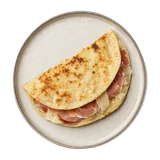
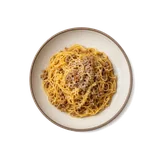
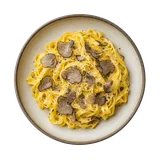
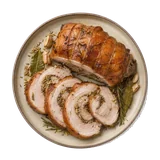
06 · La Tavola5

The table of Marche

Mountain, pasture and coast on one plate. Pour the regional wine alongside.

Marche cooking pairs naturally with regional wines. Castelli di Jesi Verdicchio is the classic match for brodetto, the Adriatic fish stew, and for stoccafisso all'anconetana. Matelica Verdicchio, sharper and more saline, takes grilled prawns or aged pecorino fiore.

Conero DOCG is the wine for lamb chops, porchetta or grilled red meats. Rosso Piceno Superiore handles vincisgrassi, the Marche lasagne with chicken giblets. Lacrima goes with charcuterie boards and ciauscolo, the spreadable Marche salame.

Pecorino di Offida pairs with grilled fish in herb dressings, and Vernaccia di Serrapetrona is the local choice for end-of-meal dried-fruit panforte.

07 · On The Ground16

Explore Marche by place

Wine routes, towns and wineries to follow when you go.

Wine routes

Wine towns

Wineries to follow

08 · Common Questions9

Ask the sommelier

Quick answers about Marche. Numbers, denominations, food and what to start with.

Verdicchio. The Castelli di Jesi and Matelica zones produce Italy's most distinctive native white outside Friuli, with green-fruit, almond, and a saline finish. Marche also makes serious Montepulciano-led reds in Conero DOCG and Rosso Piceno, plus the perfumed Lacrima di Morro d'Alba and the rare sparkling-red Vernaccia di Serrapetrona DOCG.

Castelli di Jesi sits on coastal-influenced hills west of Ancona; the wines have soft citrus, almond and a salty edge. Matelica is a closed Apennine valley at higher altitude with no sea breeze; the same grape gives sharper acidity, white pepper, and a longer-keeping bottle. Castelli di Jesi makes about ten times more wine than Matelica.

Yes, five. Castelli di Jesi Verdicchio Riserva (2010), Verdicchio di Matelica Riserva (2010), Conero (2004), Offida (2011) for Pecorino, Passerina and Rosso, and Vernaccia di Serrapetrona (2009), Italy's only sparkling red DOCG.

Castelli di Jesi Verdicchio with brodetto fish stew or stoccafisso all'anconetana. Matelica Verdicchio with grilled prawns or aged pecorino. Conero DOCG with lamb chops or porchetta. Rosso Piceno with vincisgrassi (the Marche lasagne). Lacrima with charcuterie. Pecorino di Offida with grilled fish in herb dressings.

No. Lacrima di Morro d'Alba is a small Marche DOC for an aromatic native red grape, also called Lacrima, grown only around the village of Morro d'Alba. Lacryma Christi del Vesuvio is a Campania DOC made from different grapes (Coda di Volpe, Piedirosso). The names share a tear motif but the wines have nothing in common.

Pick a base in Ancona for the Conero coast and the Castelli di Jesi zone, or in Ascoli Piceno for Offida and Rosso Piceno. Both put twenty serious cellars within an hour's drive. Add Matelica as a half-day inland trip and Morro d'Alba for an afternoon of Lacrima. Six bottles to start: Bucci, La Monacesca, Moroder, Velenosi, Marotti Campi, Quacquarini.

We currently list 55 wines from Marche, starting from £7.50. Browse them all on our wines page.

We currently curate 4 active Marche grape guides, including Montepulciano, Pecorino, Malvasia di Candia, Sangiovese. This is an editorial selection, not the complete regional grape list.

Marche is renowned for dishes including Crescia, Maccheroncini di Campofilone, Tagliatelle al tartufo di Acqualagna, Rocciata.

09 · Keep Exploring

Your next pour

More of Central Italy, with similar terroir and table.

Wine styles made in Marche

Italian Red wine

Red

Italy's boldest expression, structured, complex, built for food

18 wines 11 grapes From £7.50
Explore red
Italian White wine

White

Crisp and versatile, from alpine freshness to Mediterranean warmth

36 wines 11 grapes 2 denominations From £9.70
Explore white
Italian Sparkling wine

Sparkling

From Prosecco to Franciacorta, bubbles for every occasion

wines 11 grapes
Explore sparkling