Red Grape · Basilicata

Aglianico

Aglianico is the deep south's iron-fisted answer to Nebbiolo: a black, late-ripening grape from Campania's Irpinia hills and Basilicata's extinct Vulture volcano, with tannin and acidity fierce enough to age Taurasi and Aglianico del Vulture for decades.

Aglianico [ahl-YAH-nee-ko] is an ancient Southern Italian varietal with lots of charm. This big and bold red wine has been adored since the Greeks occupied Italy. Produced in the stunning regions of Campania and Basilicata, Aglianico remains Southern Italy’s most premiere red grape.

30
Bottles live now
12
UK retailers
8
Denominations

Setting it straight

More than meets the eye

From the Irpinia hills of Campania to the extinct Vulture volcano in Basilicata, Aglianico is the deep south's most serious, slowest-aging red, not a cheap and cheerful quaffer.

vs
The reality

Southern Italy's great ageworthy red

  • Tannin like a young BaroloThick skins give grippy, mouth-coating tannin that demands food or a decade of patience, not the plush softness of Primitivo or Nero d'Avola.
  • Volcanic, not jammyGrown on the ash and tuff of the volcanic south, it tastes of black cherry, iron, smoke and graphite rather than sweet, sun-baked jam.
  • Built to age for decadesHigh acidity and firm tannin let Taurasi and Aglianico del Vulture Superiore, both aged three years before release, keep evolving for twenty years and more.
The myth

Just another sunbaked bargain red

  • Priced like a weeknight redIts southern home gets it shelved with bargain bottles, yet Taurasi was Campania's first DOCG and its finest rivals Barolo and Brunello in the cellar.
  • Soft and jammy like its neighboursThat describes Primitivo and Nero d'Avola. Aglianico is the savoury, tannic outlier of the south, far closer in build to Nebbiolo than to either.

The anchor fact: Taurasi, made from Aglianico, was Campania's first DOCG in 1993 and must be aged three years before release, while Aglianico del Vulture Superiore is Basilicata's only DOCG. These are cellar wines, not everyday bargains.

Taste · Where it sits

What it’s actually like in the glass

Forget scores out of five. Here’s Aglianico described against grapes you already know.

BodyFull and brooding
LightFull

Full-bodied and muscular, up in the heavyweight class with Sagrantino and top Nebbiolo, but the weight is all tannin and dark extract, never sweet or soft.

TanninFierce, chalky
SoftGrippy

Some of the firmest tannin in Italy, thick-skinned and mouth-gripping like a young Nebbiolo, which is exactly why Taurasi earned the nickname the Barolo of the South.

AcidityBright, mouth-watering
SoftZippy

Startlingly high acidity for a southern red: it keeps a wine this dark and tannic feeling fresh, and it is the backbone that carries Aglianico through decades in the cellar.

Fruit & sweetnessBone-dry, savoury
DrySweet

Firmly dry and savoury, all black cherry, iron and smoke rather than the sweet, jammy fruit of Primitivo or Nero d'Avola from further south.

Key flavours

Black cherry
The core dark fruit of young Aglianico, tart and firm-skinned rather than sweet, sitting behind the tannin instead of leaping out of the glass.
Plum
Dark, stony plum on the riper vintages, always framed by that firm acidity so it reads as savoury rather than jammy.
Black pepper
A savoury peppery bite running right through the wine, part of the grape's spicy, brooding character rather than any hint of sweetness.
Smoked meat
A smoky, gamey, almost bloody edge tied to the volcanic soils of Vulture and Irpinia, the note that makes Aglianico such a natural match for roast lamb and mutton.
Leather
A tertiary note that emerges with age, as Taurasi and old Vulture bottlings trade primary fruit for leather, tobacco and forest floor over their long life.
Structured · Tannic Soft · Approachable Light-bodied Bold · Full Sangiovese Nebbiolo Merlot Corvina Primitivo Barbera
Aglianico

The map

Aglianico is powerfully full, bold, gripping tannin, mapped against other red grapes you can buy. The closer a grape sits, the more its weight and grip resemble Aglianico.

Aglianicopowerfully full, bold, gripping tannin
Sangioveselighter, softer
Nebbiololighter, softer
Merlotlighter, softer
Corvinamuch lighter, far softer
Primitivolighter, far softer
Barberalighter, far softer

Is this for you?

An honest gut-check

Reach for it when…

A bold red that just works

  • You love Barolo and Brunello and want that firm, tannic, ageworthy thrill from the south, often for a fraction of the price.
  • There is slow-cooked lamb, game or hard southern cheese on the table and you want a red with the grip to cut through it.
  • You are buying to cellar: a good Taurasi or Aglianico del Vulture will happily outlive most other Italian reds you could set beside it.

Maybe skip it if…

You’re after something else tonight

  • You want something soft, sweet-fruited and ready tonight; reach for Primitivo or Nero d'Avola instead.
  • You are drinking without food, where young Aglianico's tannin and acidity can feel severe on their own.
  • You will not decant or cellar it, because opened too young and cold its structure stays locked up and austere.

Serving guide

Pour it at its best

Serve at

17-20°C

A touch below room temperature keeps the alcohol and fierce tannin in check and lets the dark fruit through.

Decant

1 hours

Give young Aglianico a good hour of air; it is tightly wound and needs time to unclench its tannin and wake the fruit.

Glass

Bordeaux Glass

A big Bordeaux bowl suits it, softening the grip and spreading its smoke, iron and dark-fruit aromatics.

Drink within

4-5 days

Once open it holds for days, as the tannin and acidity that let it age also keep it fresh long after the cork is pulled.

Cellar

+20 years

Cellar the serious bottlings for twenty years or more; Taurasi and Aglianico del Vulture Superiore are among Italy's longest-lived reds.

Buy it · three to start with

Not sure which bottle? Start here

A curated trio across the price range, then every Aglianico on sale in the UK right now.

Entry · everyday

Farfallone Aglianico Sannio DOC

Farfallone Aglianico Sannio DOC

Sannio

1 retailer

£13.25

View Wine

Why this one: A pure, everyday Aglianico from the Sannio hills of Campania and one of the region's biggest co-ops: honest black-cherry-and-pepper fruit with real grip, the cheapest way to learn the grape.

The sweet spot

Basilisco Aglianico del Vulture Superiore DOCG SAVE -8%

Basilisco Aglianico del Vulture Superiore DOCG

Aglianico del Vulture Superiore

2 retailers

£27.64

£30.07

View Wine

Why this one: Now cross to Basilicata, where Basilisco grows Aglianico on the black volcanic soils of Monte Vulture; this Superiore, Basilicata's only DOCG, adds the smoke, iron and depth those old volcanic slopes give.

Special occasion

Casa Vinicola Mastroberardino Radici

Casa Vinicola Mastroberardino Radici

Taurasi

1 retailer

£45.50

View Wine

Why this one: Radici is the benchmark Taurasi from Mastroberardino, the house that kept Taurasi alive through the last century: a firm structure of tar, graphite and dark cherry with a cellar life measured in decades, this is Aglianico at full stretch.

12 of 30 bottles

Denominations

Where it earns a name on the label

The appellations where Aglianico plays a starring role.

Aglianico del VultureDOC Aglianico del Vulture SuperioreDOCG Aglianico del TaburnoDOCG BasilicataIGT Castel del Monte Rosso RiservaDOCG Falerno del MassicoDOC PalizziIGT TaurasiDOCG

Where it grows

The places it calls home

Editorial

About Aglianico

Aglianico wines are accessible for a range of budgets, typically priced between £12 to £40. The cost varies depending on the type and vintage, offering options for both casual enthusiasts and serious collectors in the UK.

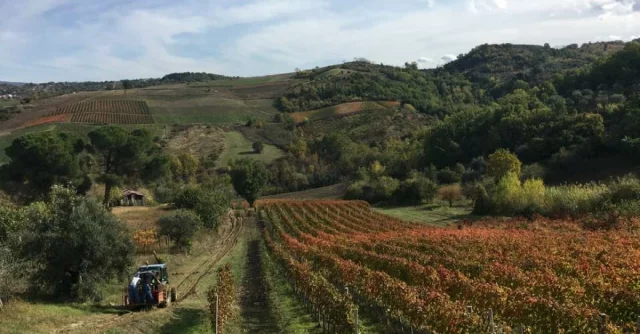
Thick-skinned and stubbornly slow, Aglianico is among the very last grapes harvested in Italy, still ripening on the volcanic slopes of Monte Vulture and the hills of Irpinia into November, long after the rest of the country has finished its vintage.

The last red picked in the south

This robust wine pairs exceptionally with pasta dishes featuring rich meat sauces. Recommended combinations include pasta with Lamb ragu, oxtail, or wild boar, where the wine's depth complements the hearty flavours of the sauce.

For risotto enthusiasts, Aglianico makes an excellent companion to Risotto alla Milanese topped with ossobuco or a hearty mushroom risotto, enhancing the creamy texture with its bold profile.

This wine is a perfect match for barbecued or smoked meats, stewed beef, or a classic steak. Its structure and tannins beautifully cut through the richness of the meat.

Generally, Aglianico does not pair well with fish due to its robust nature. However, if opting for an Aglianico rosato, some fish dishes can be complemented.

When it comes to cheese, Aglianico pairs wonderfully with aged varieties. Enjoy it with a slice of parmigiano, a chunk of cheddar, or a wedge of blue cheese to appreciate the harmony between the bold wine and the sharpness of the cheese.

This versatile wine finds its place alongside various global cuisines. It pairs particularly well with French dishes, American barbecue, and traditional Italian meals, offering a broad spectrum of culinary explorations for British palates.

Made in Basilicata, this classic Aglianico is bold and beloved by many wine drinkers. The wine gets its name from where the grapes are grown, around Monte Vulture.

This is the most esteemed Aglianico wine.The grapes are made in Avellino, in the Campania region. This Aglianico requires the most aging in bottle to soften its intense structure.

This Aglianico is grown and vinified in the Benevento area in Campania. It is usually the most affordable of the Aglianicos, but still delivers a bold structure and finesse.

Aglianico has an impressive lineage. It is an ancient grape indigenous to Southern Italy. This grape has been adored by several peoples for centuries. In fact, it is considered to have one of the most extensive histories in the global grape market. The oldest civilizations in Italy cultivated and exported Aglianico.

The Romans were in love with Aglianico. When the Romans took over, the grape’s production expanded further. This led to Avellino becoming the prized region for Aglianico grapes. Avellino remains the most distinguished Aglianico growing zone today - the Taurasi wines are produced exclusively in the comune of Avellino.

Overtime, Aglianico production expanded beyond its home in Campania and Basilicata. Aglianico is also grown in the neighboring regions of Molise as well as Puglia. In certain areas of Campania, Aglianico makes up at least 85 percent of wines with a bit of Merlot or Cabernet Sauvignon blended in. Aglianico is also exported all around the world. It is even grown in different wine growing regions. Parts of Australia and California now produce Aglianico grapes as well.

Aglianico is a gem of Southern Italy. Its impressive history and complex flavors make it a quality wine you must try out, preferably with a delicious meat dish.

Good to know

Frequently asked

Aglianico is a full-bodied Southern Italian wine. It is incredibly structured, with high tannins and high acidity. It features beautiful red fruits, with spicy and smoky flavors. It is typically grown in the regions of Basilicata and Campania.

Aglianico features some exceptional tasting notes. It is very structured and full-bodied. It features red fruits, like black cherry and plum. It is also incredibly savory, with lovely smoky tones reminiscent of smoked and peppery meats.

Aglianico is a dry wine. It does have high alcohol and a large body, which causes it to lean more on the dry than bone dry side of the dryness spectrum.

Aglianico is produced almost exclusively in Southern Italy, particularly in the regions of Basilicata and Campania. It is also produced in the nearby regions of Molise and Puglia. Some other countries have started to cultivate the grape as well, like Australia and the U.S.

Aglianico tastes best with rich dishes. Red meats pair excellently with Aglianico, especially when stewed or with a full-flavored sauce. Aged and salty cheeses, like parmigiano and cheddar, do wonderfully with this wine too.

The correct pronunciation of "Aglianico" using the International Phonetic Alphabet (IPA) is [aʎˈʎaːniko]. In a more simplified form, it is pronounced as "ahl-YAH-nee-ko".

Explore by style

Wine styles made from Aglianico

Jump to the editorial guide for each style this grape turns up in.

Keep exploring

More red grapes

Sangiovese

Sangiovese (san-jo-vay-zeh) is the undisputed king of red wines in central Italy, virtually present in every area of the country Thanks to its many clones and surprising versatility, Sangiovese can create a wide range of wines: from young and fresh Chiantis to complex and full-bodied Brunellos.

Wines 312
Tannin
Body

Explore Sangiovese

Nebbiolo

Nebbiolo (Nay-bee-OH-lo) is a native Italian variety cultivated in the northern regions, whose name derives from the word “Nebbia” which is Italian for fog.

Wines 254
Tannin
Body

Explore Nebbiolo

Merlot

Merlot is a red grape with a serious Italian footprint: Bolgheri DOC, Bolgheri Rosso, Cortona DOC, Suvereto DOCG, Rubicone IGT and Montello Rosso DOCG form its Italian map.

Wines 126
Tannin
Body

Explore Merlot

Corvina

Corvina is the principal red grape of Verona's wine country, forming the backbone of Valpolicella DOC, Amarone della Valpolicella DOCG, and Recioto della Valpolicella DOCG.

Wines 75
Tannin
Body

Explore Corvina