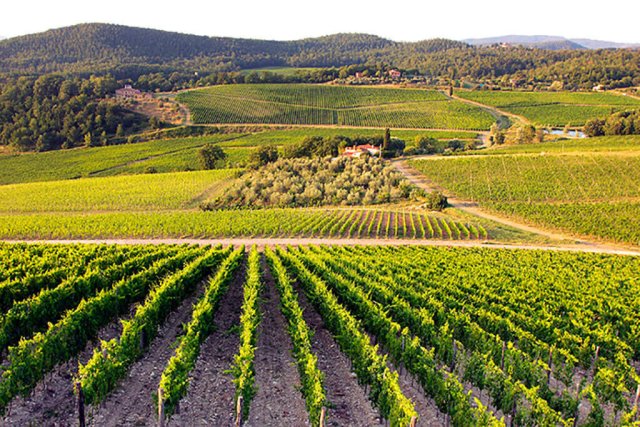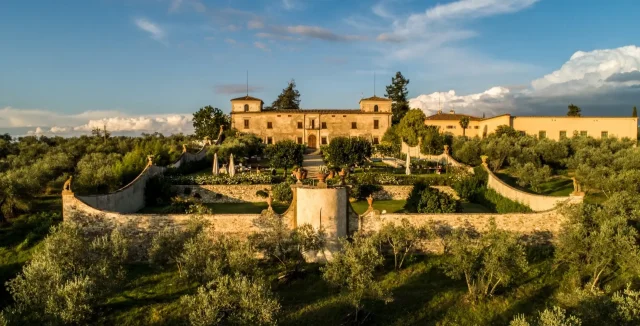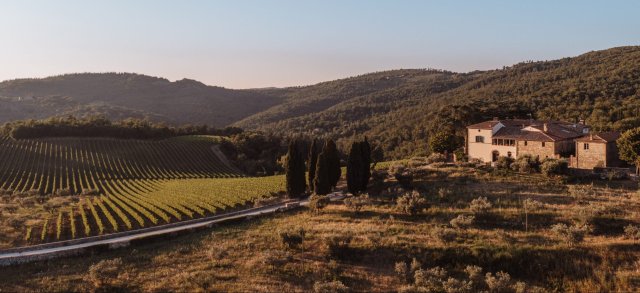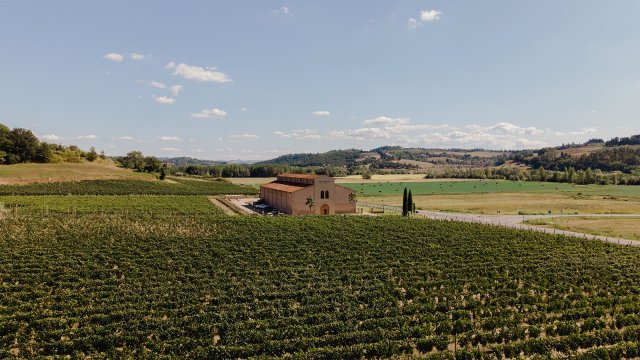








Wine route
Strada Chiantigiana SR 222
Full day, longer with tastings · 5 stops
Open the driveYour cellar, your trips, and the wines you've been tracking are right where you left them.
New here?
Free, always. Education first, we'll never sell you anything you didn't ask to see.
Already have an account?
Enter the email you signed up with and we'll send a link to choose a new password.
Tuscany · DOCG
Tuscany's most famous wine name, drawn across the hills of six provinces from Florence to Siena and Pisa. Chianti DOCG is the broad Sangiovese family. It has eight named sub-zones, tiers from Normale to Riserva and, since June 2026, an official Rosé. Cherry fruit, brisk acidity, wine built for the table.
Decode the label
One denomination, 4 things it can say on the front. Colour first, then the qualifier.
On the label
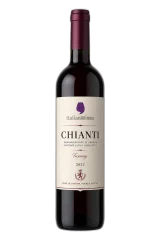
Chianti
the Normale, no extra word
Released from the March after harvest. Bright cherry, brisk acidity: the midweek pasta pour.
In stock from £8.51 See the 47 bottles ↓On the label
Chianti Superiore
lower yields, longer rest
A stricter cut of the same zone: 9.5 tonnes per hectare against the base wine's 11, for a rounder mid-palate.
In stock from £12.90 See the 8 bottles ↓On the label
Chianti Riserva
the cellar tier
Time softens the tannin toward leather and dried cherry. This is the tier that earns steak night.
In stock from £9.90 See the 23 bottles ↓On the label
Chianti Rosé
the 2026 newcomer
New in the June 2026 rulebook: pale, dry, fruit-led, and releasable from the first of December of its own harvest year. UK shelves have yet to catch up.
No bottles in stock right now
The boundary
Everything on this page, the estates, the bottles, the sub-zones, sits inside this line.
Wine route
Full day, longer with tastings · 5 stops
Open the driveWine route
2 days · 7 stops
Open the driveWine route
Half a day to a full day · 4 stops
Open the drive
Estate 1
Firenze
Tastings available
Estate 2
Bagno a Ripoli
Book online
Estate 3
Vagliagli
Tastings available
Estate 4
Pontedera
Tastings available
Estate 5
Bagno a Ripoli
Tastings available
Estate 6
Terricciola
Tastings available
Estate 7
Montalcino
Tastings available
Estate 8
Montalcino
Tastings available
Estate 9
Firenze
Tastings available
Estate 10
Castiglion Fibocchi
Tastings available
Estate 11
Montalcino
Tastings available
Estate 12
Montepulciano
Tastings available
Estate 13
Fiesole
Tastings available
Estate 14
San Gimignano
Tastings available
Estate 15
Montespertoli
Tastings available
Estate 16
Rufina
Tastings available
Estate 17
Montalcino
Tastings available
Estate 18
Terranuova Bracciolini
Tastings available
Estate 19
Barberino Tavarnelle
Tastings available
Estate 20
Montalcino
Tastings available
Estate 21
Barberino Tavarnelle
Tastings available
Estate 22
Montalcino
Tastings available
Estate 23
Montalcino
Tastings available
Estate 24
Castelnuovo dell'Abate
Tastings available
Estate 25
Ulignano
Tastings available
The zone wraps the central Tuscan hills in a broad horseshoe: from the Apennine foothills of Rufina north-east of Florence, down the Colli Fiorentini and Montespertoli, across the Colli Senesi south of Siena, east to Arezzo and west to the low Colline Pisane. The newest patch, Terre di Vinci, sits on the Montalbano's western flank around Leonardo's hometown. At the centre sits a hole: the Chianti Classico heartland between Florence and Siena, its own DOCG with its own rules.
Inside the zone
Click or tap a pin for its estate. The numbered pins match the estate cards below.
Towns worth knowing
Greve, Radda and Gaiole, the postcard Chianti villages, sit in the Classico hole at the middle of the map.
In the glass
One profile at a time, never blended into a single set of bars.
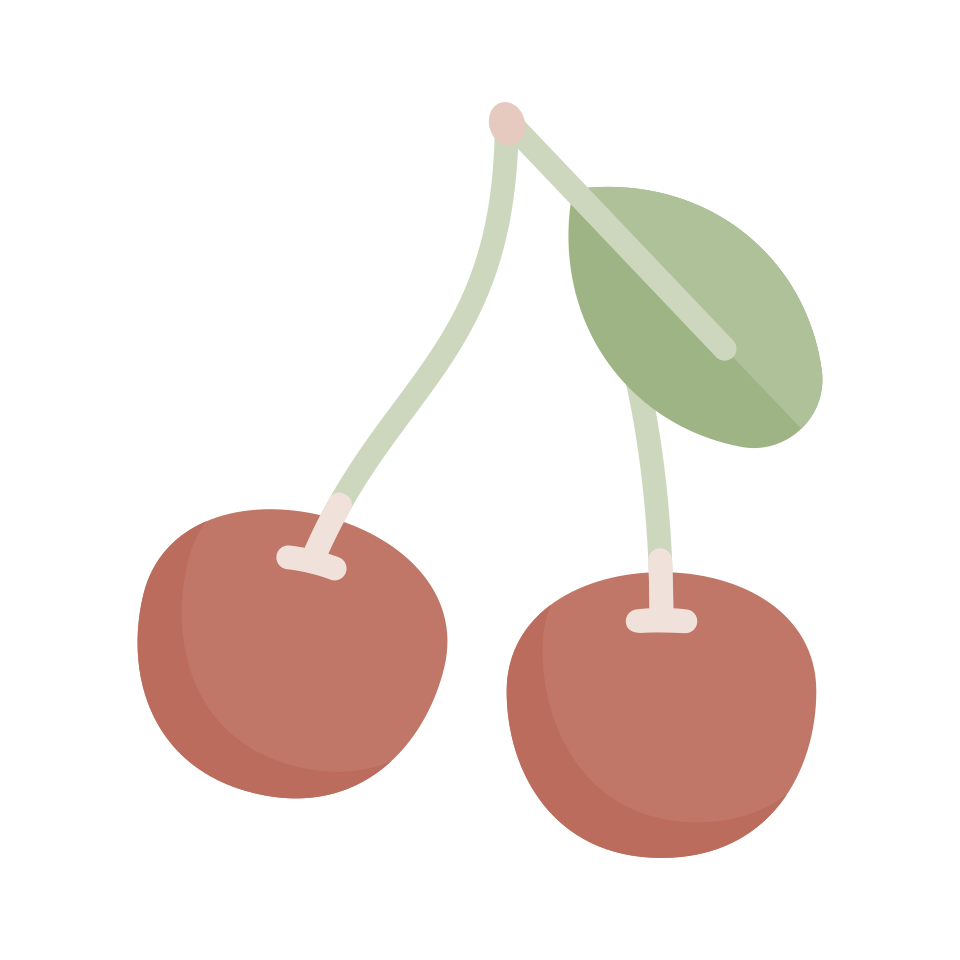
Black cherry

Violet
Forest berries

Liquorice
Blackcurrant
Strawberry
Raspberry

Rose petal
The disciplinare
The same table on every denomination page, one row group per style here, because Chianti writes its rules per colour.
 SangioveseThe lead; floor cut from 70% in June 2026at least 60%Other Tuscan reds (Canaiolo, Colorino, Ciliegiolo)Traditional softeners inside the 40% windowup to 40%Cabernet Sauvignon + Cabernet FrancJointly capped; 10% in Colli Senesiup to 15%
 White grapes (Trebbiano Toscano, Malvasia)Still legal, jointly cappedup to 10%SangioveseSame backbone, pressed paleat least 60%15 named partners, white or red (Canaiolo to Vermentino)A short closed list, against the red's long registerup to 40%
Solid means the rules demand it. Striped means optional, up to that amount. The words on the right say the same rule.
Sangiovese's minimum dropped from 70 to 60 percent in the June 2026 revision, the biggest recipe change in a generation.
A Chianti Rosé now exists and may be poured from the first of December of its own harvest year.
Terre di Vinci is the eighth sub-zone carved around Leonardo's home hills between Vinci and Lamporecchio.
Every lot of Chianti and Superiore needs a certificate from the control body before it can be sold on. New in 2026.
Only the traditional Tuscan fiasco is allowed when Chianti is bottled in one, and never a reused fiasco.
Ageing and alcohol minimums per tier are in the label guide above.
Editor's cellar
By style, today
Live prices, compared across 24 UK retailers.
Cellar doors · inside the zone
25 working estates with their gates open, numbered to match their pins on the map above.
No estates match these filters. Clear a filter to see more.
Experiences in the Chianti zone
Cellar experiences here average around €76. These are the strongest fits for this page.
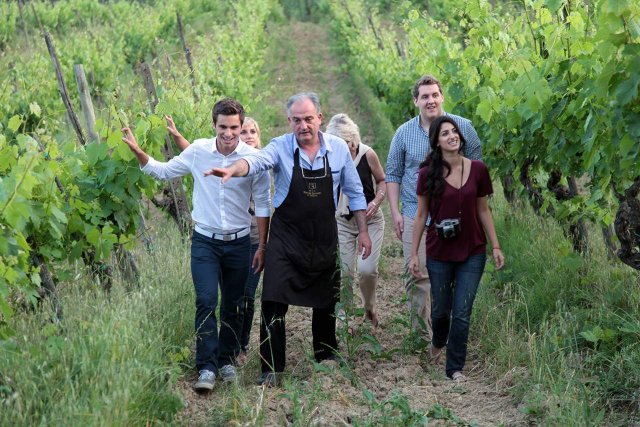
Malenchini Wine Estate
An introduction to Chianti and the soul of the Malenchini company. This tour is aimed at the curious and passionate, anyone who wants to get…
Malenchini Wine Estate
Taste Tuscany with a food and wine journey designed to enhance the combination of food and wine. Our guided tour to discover our late Renais…
Malenchini Wine Estate
A rare experience to discover the secrets of our centuries-old winery, through the places that form the heart of our production. Join us on …
Eight names, one family
Any of these eight names may follow Chianti on a label. Same rulebook, different hills.

Apennine foothills north-east of Florence, the coolest corner of the family: firm, long-lived wines held back until 1 September.
The largest sub-zone, wrapping San Gimignano, Montalcino and Montepulciano country south of Siena, with a tighter cabernet cap and a 13% Riserva floor.
The hills ringing Florence between the city and the Classico line; its wines wait for 1 June, a season longer than the base.
The eastern flank of the zone in Arezzo province: released from 1 March and mostly drunk young.
The low, warm hills towards Pisa in the family’s west: the softest, earliest-drinking Chianti, released from 1 March.
The Montalbano ridge west of Florence, shared with Carmignano’s own small DOCG: released from 1 March.
The 1997 addition around the town of Montespertoli, carved out of the Colli Fiorentini: release from 1 June.
Added by the June 2026 revision: Vinci, Cerreto Guidi, Lamporecchio and Larciano on the Montalbano’s western flank, released from 1 September.
The years
Chart ratings to 2018 follow Italian Wine Info's Chianti table; 2019 to 2022 follow Jancis Robinson's Tuscany assessments, which lean on Chianti Classico but track the same weather. 2023 stays unrated here until a Chianti-scoped source publishes.
Reading the years
Classic vintage, late October harvest, elegant fresh (IWI 5 / JR 4)
The short version: Buy 2016 and 2013 Riserva on sight, drink 2018 to 2020 now, approach 2014 and 2022 with a plan.
Tap a year for its note.
The June 2026 rulebook rewrote the blend rules. Sangiovese now leads at 60 to 100 percent, down from a 70 percent minimum. White grapes such as Trebbiano Toscano and Malvasia are still allowed, up to 10 percent. The two Cabernets are capped at 15 percent between them. Base Chianti may be released from the 1st of March after harvest, with no minimum ageing. Montespertoli and Colli Fiorentini wait until June. Rufina, Terre di Vinci and Superiore wait until September. Riserva needs 24 months, counted from the 1st of January after the vintage. Minimum alcohol runs from 11.5 percent for Normale and the new Rosé to 12.5 percent for Superiore and Riserva. The governo all'uso Toscano stays optional. Dried grapes are added to the young wine to set it fermenting again, and the step still earns its own mention on the label.
On the table
The home country leads; global pairings that genuinely work follow.
In-depth guide
A DOCG wine from Tuscany built on Sangiovese. It is made across eight named areas in six provinces, between Florence, Siena, Arezzo and Pisa. Since June 2026 the family covers both the classic red, from easy Normale to structured Riserva, and a new pale Chianti Rosé. Cherry fruit and lively acidity are the through-line.
Sangiovese, at 60 to 100 percent of the blend. The June 2026 rule change lowered the old 70 percent floor. White grapes such as Trebbiano Toscano and Malvasia may still add up to 10 percent. Cabernet Sauvignon and Cabernet Franc are capped at 15 percent between them, and at 10 percent in Colli Senesi.
They are two separate DOCGs. They share Sangiovese and a parent region, but not a rulebook. Chianti Classico covers the historic heartland between Florence and Siena, and carries the black rooster seal. By law its vineyards cannot claim Chianti DOCG. Chianti is the broader family that surrounds it, generally fresher and earlier-drinking.
Three headline changes took effect in June 2026. The first is a new Chianti Rosé DOCG, which can be released from the first of December of its own harvest year. The second is a new eighth sub-zone, Terre di Vinci, around Leonardo da Vinci's home hills. The third cut the Sangiovese minimum from 70 to 60 percent. Every lot of Chianti and Chianti Superiore now also needs a certificate from the control body before sale.
Tomato-rich pasta and ragù, bistecca alla Fiorentina, wild boar, pizza and aged Pecorino Toscano. The acidity cuts fat, the medium tannin handles roasted meat, and the cherry fruit echoes tomato. Normale suits weeknight pasta. Riserva earns the steak.
Riserva is about time. It needs at least 24 months of ageing, counted from the first of January after the vintage. Superiore is about concentration. Its yields are stricter, at 9.5 tonnes per hectare against the base wine's 11. It cannot be released before the first of September, and it needs the same 12.5 percent minimum alcohol as Riserva.
Serve the reds at 16 to 18 degrees Celsius. The new Rosé is best at 10 to 12. Normale drinks well on opening, while Riserva repays 30 minutes in a decanter.
Explore more Tuscany
Same region only: the denominations Chianti drinkers reach for next.