






Wine route
Strada del Vino Costa degli Etruschi
1-2 days · 4 stops
Open the driveYour cellar, your trips, and the wines you've been tracking are right where you left them.
New here?
Free, always. Education first, we'll never sell you anything you didn't ask to see.
Already have an account?
Enter the email you signed up with and we'll send a link to choose a new password.
Tuscany · DOC
The stretch of Tuscan coast where Cabernet, not Sangiovese, writes the rules. Bolgheri DOC covers the town of Castagneto Carducci. Gravel soils and sea breezes ripen Cabernet Sauvignon, Merlot and Cabernet Franc to unusual depth. This is the DOC that turned the Super Tuscan rebellion into law.
Decode the label
One denomination, 4 things it can say on the front. Colour first, then the qualifier.
On the label
Bolgheri Rosso
the coastal claret
Cabernet and Merlot on Tuscan coast light: dark fruit, cedar and a suppleness the inland Sangiovese zones never give.
In stock from £17 See the 55 bottles ↓On the label
Bolgheri Rosso Superiore
the serious tier
The tier the famous names carry: a year in barrel, an 8-tonne yield cap and vine-by-vine limits.
In stock from £33 See the 29 bottles ↓On the label
Bianco & Vermentino
the coast's whites
Vermentino leads, with Sauvignon and Viognier allowed to 100%: saline, citrus whites off the same gravel.
In stock from £13.90 See the 18 bottles ↓On the label
Bolgheri Rosato
the pink of the same blend
Cabernet and Merlot picked fresh for colour and snap: the estate rosato of the coast.
In stock from £16 See the 4 bottles ↓The boundary
Everything on this page, the estates, the bottles, the sub-zones, sits inside this line.
Wine route
1-2 days · 4 stops
Open the drive
Estate 1
Castagneto Carducci
Tastings available
Estate 2
Castagneto Carducci
Tastings available
Estate 3
Bolgheri
Book online
Estate 4
Castagneto Carducci · Bolgheri road
Tastings available
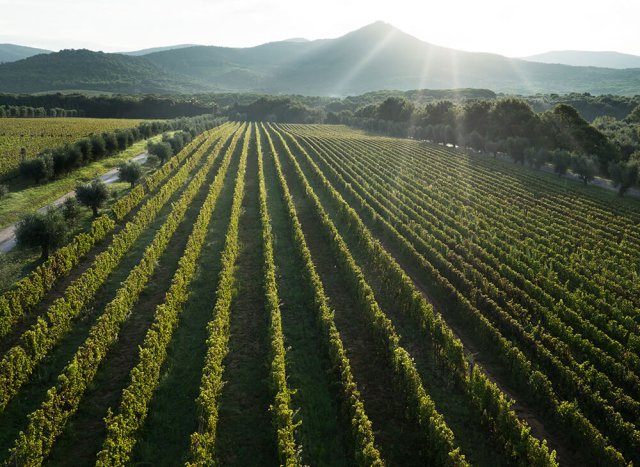
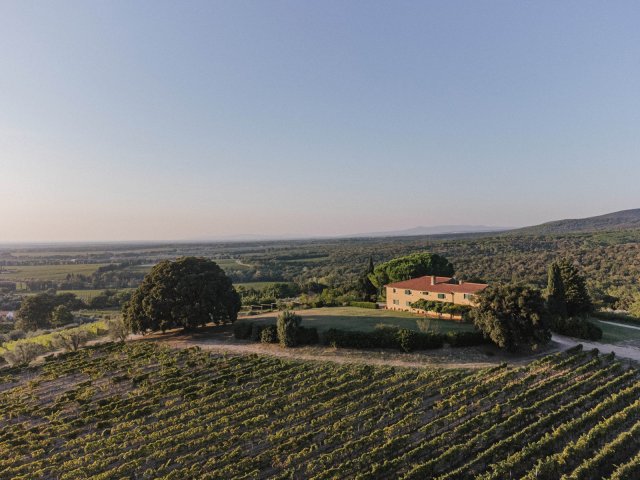
A single commune on the Tuscan coast: Castagneto Carducci, between the Tyrrhenian shore and the wooded hills behind Bolgheri village, with the famous five-kilometre cypress avenue running from the sea gate to the village. Vineyards sit on gravel, sand and clay fans dropped by the hills, close enough to the water that sea air tempers every summer afternoon. It is Tuscany's youngest great zone: the DOC dates from 1983 and the Rosso rules from 1994, built for the Bordeaux grapes the pioneers planted here.
Inside the zone
Click or tap a pin for its estate. The numbered pins match the estate cards below.
Towns worth knowing
The cypress viale from San Guido to Bolgheri village is the zone's spine; Donoratico holds the plain by the sea.
In the glass
One profile at a time, never blended into a single set of bars.
Blackcurrant
Plum

Tobacco

Leather
Citrus fruit

Green Apple
Spicy
The disciplinare
The same table on every denomination page, one row group per style here, because Bolgheri writes its rules per colour.
 Cabernet SauvignonMay stand aloneup to 100%MerlotMay stand aloneup to 100%Cabernet FrancMay stand aloneup to 100%SyrahCapped at halfup to 50%SangioveseThe Tuscan grape, capped at halfup to 50%Other Tuscan redsJointly cappedup to 30%
 VermentinoThe lead white of the coastup to 100%SauvignonMay stand alone; 85% when namedup to 100%ViognierMay stand aloneup to 100%Other Tuscan whitesJointly cappedup to 40%
Solid means the rules demand it. Striped means optional, up to that amount. The words on the right say the same rule.
One commune contains everything growing, vinification, ageing and bottling all stay inside Castagneto Carducci.
Cabernet may be 100%, Sangiovese at most half the reverse of every inland Tuscan rulebook.
Superiore means 2 years, 1 of them in oak counted from 1 January after the harvest.
Yields step down with ambition 12 tonnes for whites, 9 for Rosso, 8 for Superiore, with per-vine caps.
Sassicaia is its own DOC next door the estate that started it all answers to a separate rulebook since 2013.
Ageing and alcohol minimums per tier are in the label guide above.
Editor's cellar
By style, today
Live prices, compared across 20 UK retailers.
Cellar doors · inside the zone
4 working estates with their gates open, numbered to match their pins on the map above.
No estates match these filters. Clear a filter to see more.
Experiences in the Bolgheri zone
Cellar experiences here average around €45. These are the strongest fits for this page.
Tenuta Di Vaira
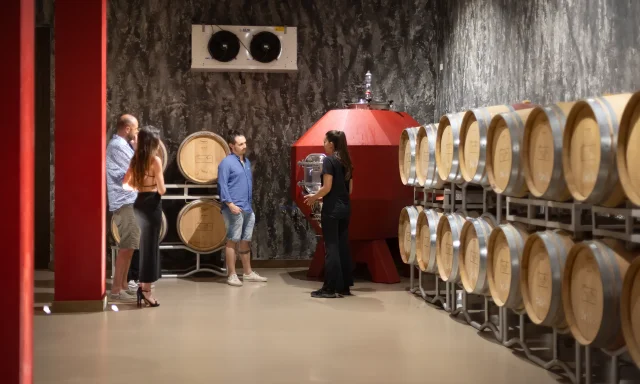
A guided tour of our winery, recounting the history of the Bolgheri DOC, the estate, and the winemaking process from grape to bottle, begins…
Tenuta Di Vaira
A guided tour of our winery, recounting the history of the Bolgheri DOC, the estate, and the winemaking process from grape to bottle, begins…
The years
Chart ratings follow Italy's Finest Wines' Bolgheri vintage chart, cross-checked against Wine Spectator; the Consorzio publishes narrative harvest reports rather than scores, and those inform the year notes.
Reading the years
Deep, extract-rich, vigorous ripe tannins (IFW 5 plus, WS 97)
The short version: Hunt 2015, 2016, 2019 and 2021; drink 2014 and 2017 while they hold.
Tap a year for its note.
Every stage, from making the wine to bottling it, must happen inside Castagneto Carducci. The reds are built on Cabernet Sauvignon, Merlot and Cabernet Franc. Each of the three may make up 100 per cent of the blend. Syrah and Sangiovese are capped at half. A Bolgheri Rosso needs at least 11.5 per cent natural alcohol. The Superiore needs 12 per cent and at least two years of ageing. That count starts on the January after harvest, and one of the two years must pass in oak barrels. The whites lean on Vermentino and Sauvignon. The Rosato cannot leave the cellar before the first of September following the vintage.
On the table
The home country leads; global pairings that genuinely work follow.
In-depth guide
Bolgheri DOC is the coastal Tuscan wine name around Castagneto Carducci, where Bordeaux grapes lead. Cabernet Sauvignon, Merlot and Cabernet Franc can each make up to 100 per cent of a red. Sangiovese is capped at half the blend, which is the reverse of the classic Tuscan recipe. The zone makes reds, a Superiore tier, whites from Vermentino and Sauvignon, and a Rosato.
Sassicaia comes from the same coast, and it put that coast on the map. It answers to a separate rulebook of its own, which asks for at least 80 per cent Cabernet Sauvignon from Tenuta San Guido's vineyards. Everyday bottles labelled Bolgheri Rosso or Bolgheri Superiore fall under the broader Bolgheri DOC rules. That is where estates such as Ornellaia and Guado al Tasso sit.
The reds and the rosato use Cabernet Sauvignon, Merlot and Cabernet Franc, from 0 to 100 per cent each. Syrah and Sangiovese may reach 50 per cent. Other approved Tuscan red grapes may reach 30 per cent. The whites build on Vermentino, up to 70 per cent, with Sauvignon and Trebbiano Toscano. Single-grape Vermentino and Sauvignon bottlings need at least 85 per cent of the named grape.
Superiore is the ageing tier. The wine must reach at least 12 per cent natural alcohol. It must spend at least two years maturing, counted from the first of January after the harvest. At least one of those years passes in oak barrels. The Superiore wines are the most structured and cellar-worthy on the coast, and estates keep their best parcels for them.
Yes. The rules define a Bolgheri Bianco blend, plus single-grape Vermentino and Sauvignon bottlings. Each of those single-grape wines needs at least 85 per cent of the named grape. They are crisp, salty whites, shaped by the same sea air that tempers the reds. They also tend to be priced well below the famous names of the coast.
Explore more Tuscany
Same region only: the denominations Bolgheri drinkers reach for next.