






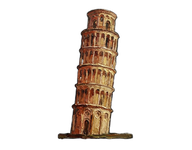
 Tuscany
 6 wines
  Tastings
 Tours
Tours
 Booking required



Wine area
Bolgheri and the Tyrrhenian Coast
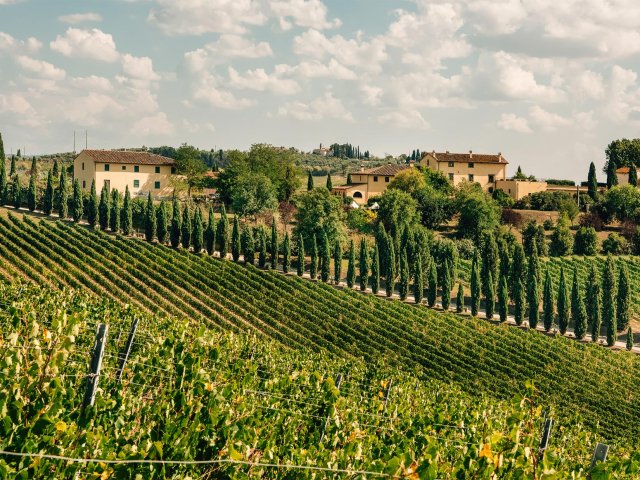
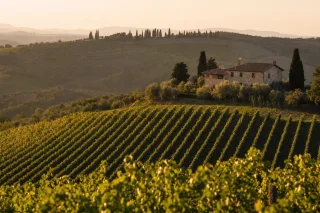
The cypress-lined coast between Castagneto Carducci and Suvereto where Italy first bottled Bordeaux blends.
Your cellar, your trips, and the wines you've been tracking are right where you left them.
New here?
Free, always. Education first, we'll never sell you anything you didn't ask to see.
Already have an account?
Enter the email you signed up with and we'll send a link to choose a new password.
Caccia al Piano 1868 is a Bolgheri estate on the Via Bolgherese at Castagneto Carducci. Limestone and clay soils, and a breeze off the Tyrrhenian Sea, shape its Cabernet, Merlot and Syrah. The Ziliani family, owners of Guido Berlucchi in Franciacorta, bought the property in 2003. They farm four coastal sites around the San Biagio hill. The cellar opens by appointment for booked tastings of the Bolgheri DOC reds, the white, and a sparkling rosé.
Book a visit
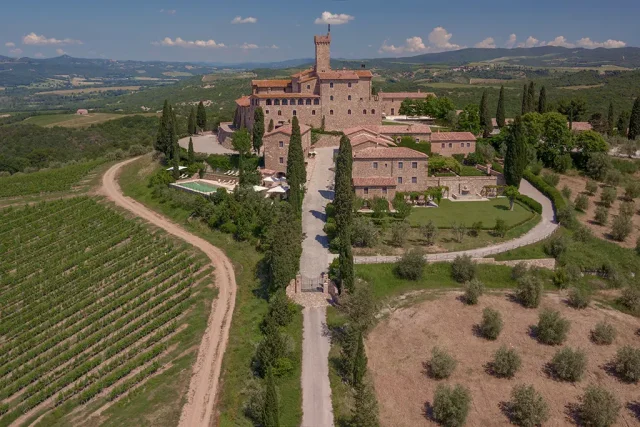
The name records a hunt. The 1868 comes from an old shooting preserve of the Della Gherardesca counts. Their lodge was later rebuilt into the cellar and offices that stand on the Via Bolgherese today. That is the vine-and-olive road running inland from the village of Bolgheri through Castagneto Carducci. The estate's emblem borrows Diana, the Roman goddess of the hunt, a nod to that older life of the land.
The wine estate itself is a modern project. Franco Ziliani, the owner of Guido Berlucchi, helped bring traditional-method sparkling wine to Franciacorta in the early 1960s. He bought Caccia al Piano in 2003, after walking the San Biagio vineyard and taking in its view over the sea. Bolgheri was then still a young wine name, made famous from the 1970s by a handful of far-sighted growers. Ziliani set out to add a serious red to that company. The estate sits in the Berlucchi group but stands as its own Bolgheri house. His children Cristina, Arturo and Paolo now carry the work forward.
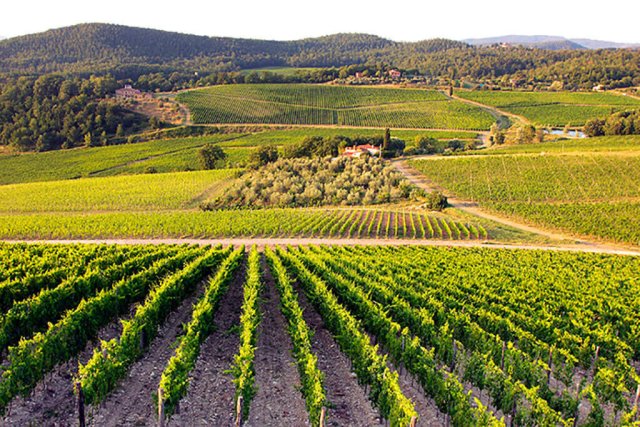
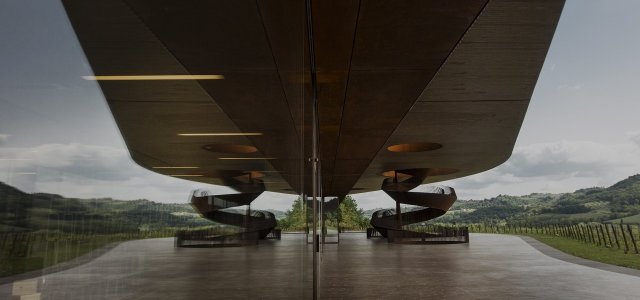
Twenty-seven of the estate's thirty hectares are planted, about 38 football pitches of vines. They divide into four crus: San Biagio, Grottine, Cantina and Le Bozze. The soils are the limestone and clay that Bolgheri growers prize. The climate is warm, softened by the nearby coast. The vines now average between eighteen and twenty-seven years old. Reds come from Cabernet Sauvignon, Merlot, Syrah, Petit Verdot and Cabernet Franc. The whites lean on Vermentino and Sauvignon Blanc. A cellar finished in 2014 handles roughly 140,000 bottles a year. The estate also belongs to the consortium that protects Bolgheri DOC wines.
The range reads like a tour of Bolgheri in miniature. Ruit Hora, a Bolgheri DOC Rosso first made in 2001, blends four of the estate's red grapes. It is the house's everyday statement of quality. The flagship, Caccia al Piano Bolgheri Superiore, draws Cabernet Sauvignon and Cabernet Franc from San Biagio. It has taken scores in the mid-nineties from Decanter, James Suckling and Robert Parker's Wine Advocate. Lungocosta is a small-batch Bolgheri Bianco of Vermentino and Sauvignon Blanc, rested in fine-grained oak. Levia is a Toscana IGT rosato of Merlot and Syrah, named for the colour of a Bolgheri sunset. A Metodo Classico rosé of Syrah and Merlot, the first sparkling wine made in Bolgheri, ties the estate back to its Franciacorta roots.
The cellar receives visitors by appointment. Tastings run from a ninety-minute Classic flight to a longer Gourmand session that sets the wines against Tuscan cooking. There is also a tasting built around several vintages of the Superiore. A wine shop opens on set days across the year. Tours and tastings are booked ahead, and can be run in Spanish and Portuguese on request.
Plate I · TUSCANY
Wine area
The cypress-lined coast between Castagneto Carducci and Suvereto where Italy first bottled Bordeaux blends.

Winery
Castagneto Carducci, LI · Bolgheri and the Tyrrhenian Coast
3 tastings, checked by our editors. From €60.
Tasting & Tour
A ninety-minute introduction to the Bolgheri DOC and the estate terroir, tasting the CaP Metodo Classico rose, the Lungocosta Bolgheri Bianco, the Ruit Hora Bolgheri Rosso and the Caccia al Piano Bolgheri Superiore.
on cacciaalpiano.it
 Tasting
A journey into the roots of the estate that closes with a vertical of four vintages of the Caccia al Piano Bolgheri Superiore, alongside the CaP Metodo Classico rose.
on cacciaalpiano.it
 Food Pairing
A four-hour experience in the heart of Bolgheri DOC that sets the estate's iconic wines against traditional Tuscan cooking, from the CaP rose through Lungocosta and Ruit Hora to the Bolgheri Superiore.
on cacciaalpiano.it
Not seeing the estate you want? Estates without an online listing are reachable directly, and their phone and email are in Plan your visit.
Caccia al Piano 1868's current bottle selection is led by Bolgheri DOC. The clearest grape signal comes from Cabernet Sauvignon and Merlot.
Tell us what you need and we'll help you reach Caccia al Piano 1868 and arrange a visit or tour. We reply within two working days.