About Cantine Leonardo da Vinci
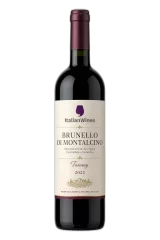
The starting point was practical rather than romantic. In 1961 thirty small growers around Vinci put their money together to build one cellar they could all deliver to. The mezzadria system had organised Tuscan farming for centuries, and its end squeezed them. The first harvest came in 1965, and the early output was bulk wine. Membership climbed towards 200. The vineyard area grew from an initial 70 hectares to several hundred across the Chianti zone. In 1990 the cooperative bought a winery at Montalcino, together with its growers and vineyards. That added Rosso di Montalcino and Brunello di Montalcino to a range built on Sangiovese from the Montalbano hills.
The Leonardo connection is more than a label. He was born at Vinci in 1452, and his family held land and vines around the town. Wine references run through his notebooks. Ludovico il Moro gave him a hectare of vineyard in Milan as payment for the Last Supper. It was the only property named in his will. The winery built its identity on that history, down to a letter of 1515 to his estate manager Zanobi Boni. In it Leonardo complains about four bad carafes and sets out how the vines should be tended.
The range is organised as collections. Villa da Vinci takes its fruit from vineyards around the villa at Vinci. Its labels are drawn from details of the Annunciation, and its names borrow from the historic field names of Leonardo's family. S.to Ippolito blends Sangiovese, Merlot and Syrah. San Zio is Sangiovese with a little Colorino. The Linarius Syrah, the Streda Vermentino and a Vin Santo complete the set. Da Vinci i Capolavori covers the Montalcino wines, including the San Giovanni Battista Brunello. The 1502 Da Vinci in Romagna collection follows the six months Leonardo spent working for Cesare Borgia. Its wines come from Cesena, Cesenatico, Faenza and Imola, and carry his own drawings of those places on the labels.
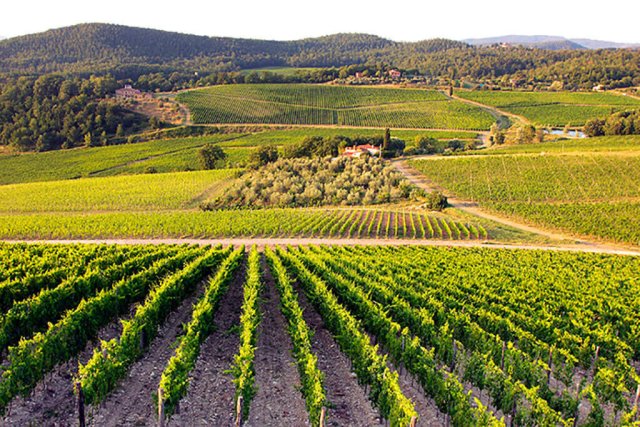
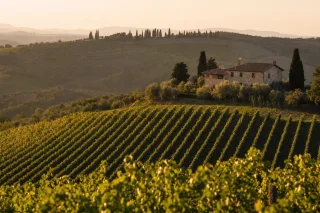
Specialised replanting at Villa da Vinci began in 1995 with three hectares, then continued year by year. The soils carry marine fossils, because these hills were under water four million years ago. Sangiovese is the variety the site is built around. The technical team has consistently framed its research as a modern reading of Leonardo's own notes on winemaking.
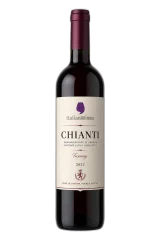
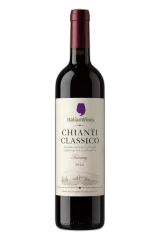
The recent history is harder. The first signs of trouble came in 2023 and 2024, and a negotiated restructuring failed. On 11 February 2026 the Ministry of Enterprise ordered compulsory administrative liquidation, published in the Gazzetta Ufficiale on 26 February. The order cited short-term debts of 13.47 million euro against current assets of 5.55 million. A commissioner, Luigi Zingone, was appointed to wind the cooperative up. In April 2026 Vecchia Cantina di Montepulciano bought a business branch and joined the Caviro membership, keeping 18 of the 22 remaining jobs. Leonardo da Vinci S.p.A., the Caviro-owned company that already held the brand, continues to sell the wines, now made at Montepulciano. The wines themselves span that history. They run from the Chianti and Chianti Riserva to the Villa da Vinci Toscana IGT wines, the Montalcino pair and the Romagna collection.
Editorial · ItalianWines.co.uk





 Tuscany
 Est. 1961
  27 wines
  Walk-ins welcome