




 Est. 1385
 27 wines
 Tastings
 Tours
 Accommodation
 Booking required


Wine area
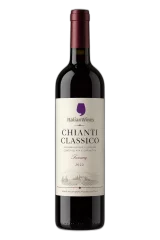
Chianti Classico
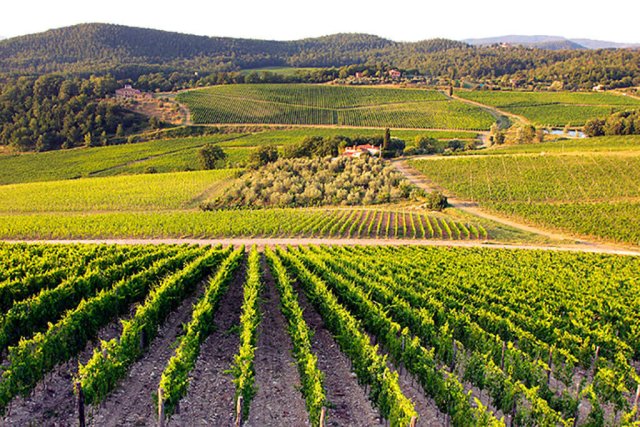
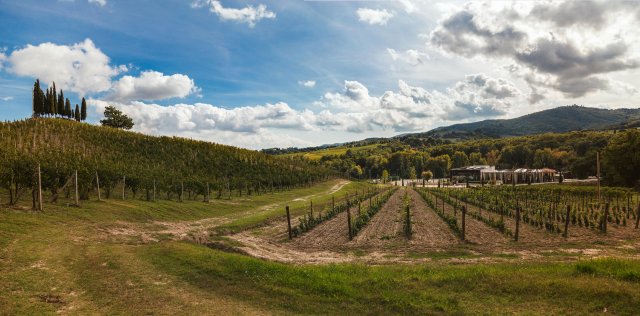
The galestro and alberese hills between Florence and Siena, where Sangiovese became Italy's most quoted red.
Your cellar, your trips, and the wines you've been tracking are right where you left them.
New here?
Free, always. Education first, we'll never sell you anything you didn't ask to see.
Already have an account?
Enter the email you signed up with and we'll send a link to choose a new password.
Marchesi Antinori has made wine since 1385, when Giovanni di Piero Antinori joined the Florentine winemakers' guild. Twenty-six generations of the family have run the business since then. Wikipedia ranks it the tenth oldest family-owned company in the world. The family bought Palazzo Antinori in Florence in 1506 and still owns it. The company itself is run from its Bargino winery, opened in 2012 in the Chianti Classico hills. Its own site lists nine estates under the Antinori name, with more in Tuscany, Piedmont, Puglia and abroad. The best-known wines are Tignanello and Solaia, the two signature wines of the Tignanello estate and early Super Tuscans. Today Piero Antinori's daughters Albiera, Allegra and Alessia look after the family business, with Albiera as president. Nine properties take visitors, from tours at Bargino to the tenth-century cellars under the abbey at Badia a Passignano.
 Tuscany

The story starts in 1385, when Giovanni di Piero Antinori joined the Florentine winemakers' guild. Twenty-six generations of the family have run the business since then. Wikipedia ranks Antinori the tenth oldest family-owned company in the world. In 1506 the family paid 4,000 florins for Palazzo Antinori, built for the Boni family in the 1460s. The palazzo is still family property, and a member of the family lives on its top two floors. It remains the company's registered office. The business itself is run from Bargino, in San Casciano Val di Pesa, halfway between Florence and Siena.
The Bargino winery opened in October 2012. Archea Associati, the firm of architect Marco Casamonti, designed it between 2004 and 2012 to merge with the folds of the hillside. A vineyard covers its roof. Inside, the wine moves by gravity, and the barrel vaults are lined with terracotta. A spiral staircase links the three levels, and the restaurant Rinuccio 1180 sits on the roof.
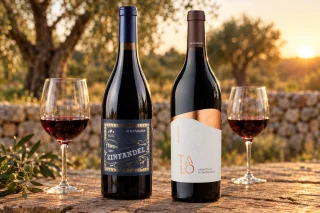
Antinori's own site lists nine estates under the Antinori name, in Tuscany, Umbria and Franciacorta, with more in Tuscany, Piedmont, Puglia, the United States and Chile. Tignanello and Solaia are the two signature wines of the Tignanello estate. Tignanello's first vintage was 1971 and Solaia followed in 1978, which put both among the first Super Tuscans. Both are IGT Toscana. In Chianti Classico the family also makes the Villa Antinori and Marchese Antinori Riservas, Pèppoli, and the Gran Selezione Badia a Passignano, aged in the cellars under the abbey. Guado al Tasso is the Bolgheri estate on the coast of the upper Maremma, and Il Bruciato is its Bolgheri Rosso. Pian delle Vigne, bought in 1995, makes Brunello di Montalcino. In Umbria, Castello della Sala makes the white Cervaro della Sala from Chardonnay and Grechetto, first made in 1985.
The group is one of the wineries in VIVA, the Italian environment ministry's sustainable wine scheme. It farms with Vitibot robots, multispectral drones and weather stations. Fattoria La Parrina, the Tuscan estate it co-owns near Orbetello, is certified organic. Today Piero Antinori's daughters Albiera, Allegra and Alessia look after the family business, with Albiera as president.
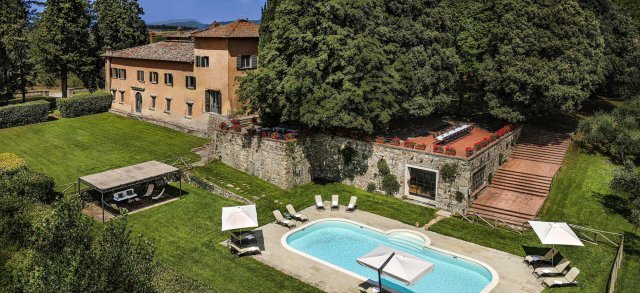
Nine properties take visitors, from Bargino to Prunotto in Piedmont and Bocca di Lupo in Puglia. Bargino is open every day from April to October, and entry is not guaranteed without a booking. The Tinaia tour ends with three wines, the Bottaia with four, and the CRU tour with seven wines and lunch at Rinuccio 1180. At Badia a Passignano you visit the tenth-century cellars under the abbey. Osteria del Tasso sits among the Guado al Tasso vines at Bolgheri. You can stay over too, at the family's Fonte de' Medici country house at Montefiridolfi, in the Chianti Classico hills.
Plate I · TUSCANY
Wine area
The galestro and alberese hills between Florence and Siena, where Sangiovese became Italy's most quoted red.
Winery
Firenze · Chianti Classico
3 tastings, checked by our editors. From €50.
 Tasting
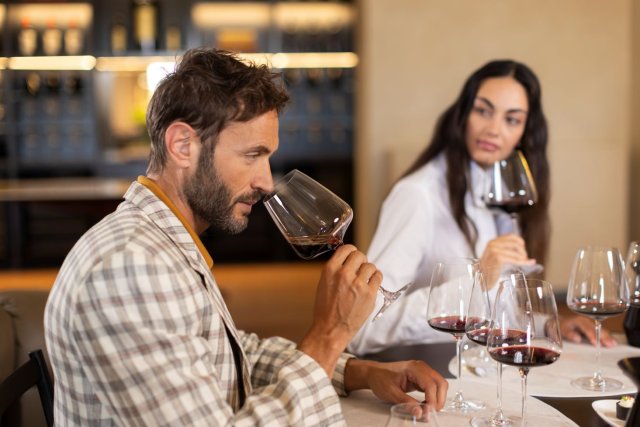
Guided 90-minute tour of the Bargino cellar, the spiral staircase and the rooftop vineyards, finishing with a three-wine tasting (Villa Antinori Chianti Classico Riserva, Cont'Ugo Bolgheri, Bramasole Cortona Syrah) in the glass-walled museum room.
We contact the estate for you
 Tasting
Two-and-a-half-hour in-depth visit through production areas, barrique cellars and large cask aging rooms, with a four-wine tasting (Toscana rosato IGT, Villa Antinori and Marchese Antinori Chianti Classico Riserva, Badia a Passignano Gran Selezione) in the suspended glass tasting room.
We contact the estate for you
 Tasting
Two-and-a-half-hour cellar tour and seven-wine tasting in the suspended bottaia, followed by lunch with wine pairings at the rooftop restaurant Rinuccio 1180. Adults only.
We contact the estate for you
For enquiries, use the phone number and email in Plan your visit.
Some booking links earn italianwines.co.uk a commission. This never affects price or what we recommend.
Marchesi Antinori's current bottle selection is led by Bolgheri DOC. The clearest grape signal comes from Sangiovese and Merlot.
This form reaches the ItalianWines.co.uk team, not the winery. Tell us when you would like to come and how many you are: we contact Marchesi Antinori for you and come back with availability and prices, usually within two working days.