




Wine route
Strada del Vino Nobile
2 days · 7 stops
Open the driveYour cellar, your trips, and the wines you've been tracking are right where you left them.
New here?
Free, always. Education first, we'll never sell you anything you didn't ask to see.
Already have an account?
Enter the email you signed up with and we'll send a link to choose a new password.
Tuscany · DOC
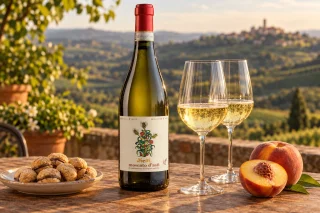
Valdichiana Toscana DOC is the white of the Chiana valley. The zone runs down a wide farm valley between Arezzo and Montepulciano. Its twelve communes are better known for Chianina beef than for vines. The historic wine is the Bianco Vergine, a pale, bone-dry Trebbiano blend. It finishes with a snap of bitter almond. Sangiovese reds and a traditional Vin Santo join it under the DOC.
Decode the label
One word on the front changes the ageing, the strength and the price.
On the label
Bianco Vergine
The valley's historic white, off the skins
Drink young and cold; the bitter-almond close is the point.
In stock from £12.99 See the 1 bottle ↓On the label
Rosso and Sangiovese
The table reds
Everyday Sangiovese with Bordeaux support, made for Chianina country.
No bottles in stock right now
On the label
Vin Santo
Dried-grape tradition, third-year release
Trebbiano and Malvasia off the drying racks; pour it with cantucci, not pudding.
In stock from £16 See the 1 bottle ↓The boundary
Everything on this page, the estates, the bottles, the sub-zones, sits inside this line.
Wine route
2 days · 7 stops
Open the drive
Estate 1
Montepulciano
Tastings available
Estate 2
Montepulciano
Tastings available
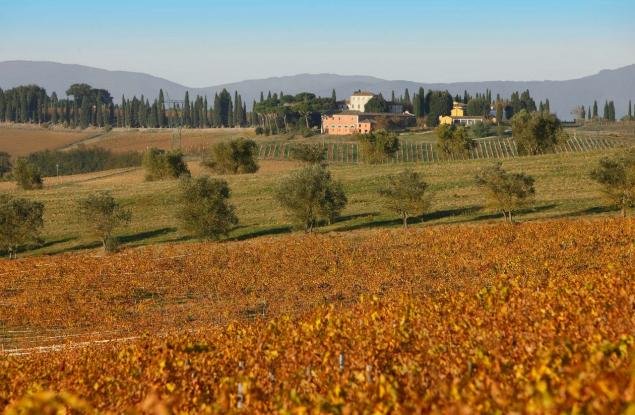
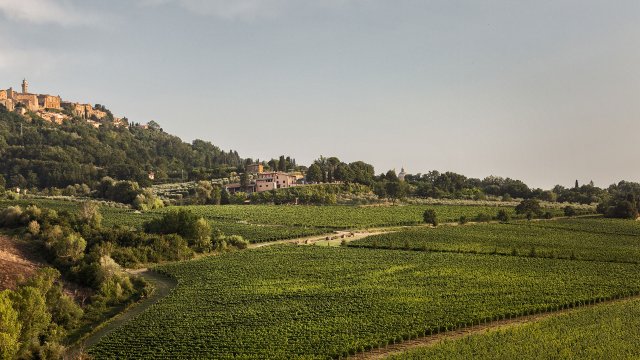
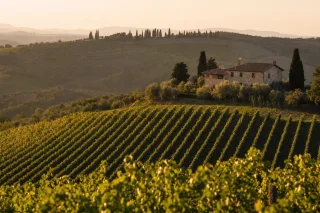
The zone is the floor and low flanks of the Chiana valley, the drained Etruscan marsh running south from Arezzo between the Vino Nobile hills and the Cortona ridge. Twelve communes qualify, eight on the Arezzo side including Cortona and Monte San Savino, four on the Siena side including Montepulciano and Chiusi, so the white zone overlaps the great red one and shares its roads.
Inside the zone
Click or tap a pin for its estate. The numbered pins match the estate cards below.
Towns worth knowing
Cortona and Sinalunga hold the co-op cellars that bottle most of the valley's wine.
In the glass
One profile at a time, never blended into a single set of bars.

Green Apple
Lemon
Almond
Acacia
Cherry
Plum

Violet

Honey
Raisin

Hazelnuts
The disciplinare
The same table on every denomination page, straight from the production rules.
Solid means the rules demand it. Striped means optional, up to that amount. The words on the right say the same rule.
Vergine means no skins the historic white ferments off the skins, pale and sharp by design.
Sugar is capped the Bianco Vergine may carry at most 8 grams per litre; this is a dry wine by law.
Twelve communes, two provinces the zone runs from Arezzo through Cortona to Montepulciano and Chiusi.
Vin Santo waits three years no release before the 1st of November of the third year after harvest.
Ageing and alcohol minimums per tier are in the label guide above.
Editor's cellar
Live prices, compared across 2 UK retailers.
Cellar doors · inside the zone
Two estates inside the zone open their doors today. A small list, honestly kept: only working cellars with confirmed visits appear here.
No estates match these filters. Clear a filter to see more.
Vintage provenance
No denomination-wide vintage chart is published for Valdichiana Toscana: the whites are made to drink young and quality tracks the producer rather than the year.
What to check instead
The producer: quality here is tracked estate by estate rather than year by year.
The Bianco and Bianco Vergine need at least 20 percent Trebbiano Toscano. Chardonnay, Pinot Bianco, Grechetto and Pinot Grigio make up the rest. The vergine name comes from making the wine off the skins. The rules cap the sugar left in the wine at 8 grams. The minimum alcohol is a modest 10 percent. Rosso and rosato lead with at least 50 percent Sangiovese, plus Cabernet and Merlot. A wine sold as Sangiovese needs 85. Yields run to 12 tonnes per hectare for white grapes and 11 for red. The Vin Santo dries Trebbiano and Malvasia Bianca. It cannot be released until the 1st of November of its third year. The riserva waits longer still.
On the table
The home country leads; global pairings that genuinely work follow.
In-depth guide
It means virgin white. The juice ferments without the grape skins, which gives a paler, sharper wine. The rules keep it bone dry, capping the sugar left in the wine at 8 grams per litre. A bitter-almond aftertaste is the traditional marker.
Whites lead with at least 20 percent Trebbiano Toscano, plus Chardonnay, Pinot Bianco, Grechetto and Pinot Grigio. The rosso and rosato need at least 50 percent Sangiovese. The Vin Santo dries Trebbiano with Malvasia Bianca.
It is the broad valley south of Arezzo, running past Cortona to Montepulciano and Chiusi. That covers twelve communes across Arezzo and Siena provinces. It is the home valley of Chianina cattle, which is also the pairing answer.
The Bianco Vergine is built for the valley's table: crostini, white beans with olive oil, young pecorino and fried lake fish. The Sangiovese rosso handles the Chianina beef. Vin Santo takes the cantucci.
Explore more Tuscany
Same region only: the denominations Valdichiana Toscana drinkers reach for next.