



















Chardonnay is a white grape with a clear Italian role.
Wines
628
Acidity
Body
White Grape · Molise
Falanghina is Campania's revived ancient white: a crisp, floral, green-apple grape from the volcanic Campi Flegrei outside Naples and the clay hills of the Sannio, long tied by tradition to Falernian, the most prized wine of ancient Rome.
Falanghina (“fah-lawn -GHEE-nah”) is a white grape variety of Balkan origin. It grows in Southern Italy, above all in Campania, where it is the base grape of many fine wines. The main areas are the Sannio Beneventano, the Campi Flegrei and the province of Caserta.
Your cellar, your trips, and the wines you've been tracking are right where you left them.
New here?
Free, always. Education first, we'll never sell you anything you didn't ask to see.
Already have an account?
Enter the email you signed up with and we'll send a link to choose a new password.
Setting it straight
The vine is genuinely old, but the wine in your glass is a modern rescue: Falanghina was all but abandoned to the distillery before Campanian growers brought it back in living memory.
The anchor fact: Not really. Nobody knows which grapes made Falernian, the wine Horace and Pliny praised, so Falanghina's link to ancient Rome is a cherished tradition rather than a proven fact, and the grape itself was nearly lost before a modern revival.
Taste · Where it sits
Forget scores out of five. Here’s Falanghina described against grapes you already know.
Light to medium and built on freshness rather than weight; the volcanic Campi Flegrei bottlings stay lean and saline, while the clay-grown Sannio style fills out a little rounder and creamier on the lees.
High, orchard-crisp acidity is the grape's spine: it is what makes Falanghina the natural glass for Neapolitan pizza and Bay of Naples shellfish, and what gives the inland Sannio wines the backbone to hold a year or two.
Always dry; what reads as fruit is green apple, pear and citrus lifted by an elderflower and white-blossom perfume, with just a whisper of warm spice in the fuller, lees-aged versions.
Key flavours






The map
Falanghina is light to medium, crisp, fresh acidity, mapped against other white grapes you can buy. The closer a grape sits, the more its weight and freshness resemble Falanghina.
Is this for you?
Reach for it when…
Maybe skip it if…
Serving guide
Serve at
10-12°C
Serve it lightly chilled, 10 to 12C, never ice-cold: too cold and Falanghina's elderflower perfume and green-apple fruit go mute.
Decant
Not needed
No decanter needed; the whole appeal is fresh floral lift and citrus cut, exactly the aromas a decant would scatter.
Glass
Chardonnay Glass
A broader Chardonnay-style bowl flatters it, giving the lees-aged Sannio wines room to show their texture and spreading the white-flower top notes.
Drink within
3-5 days
Once open it keeps its crisp shape for three to five days in the fridge, the high acidity holding the fruit together.
Cellar
1-2 years
Not really a cellar wine, so drink most within a year or two; only the fuller, clay-grown Beneventana bottlings gain a honeyed, spicy depth with a little age.
On the table
Start with the home-table matches that made the grape, then browse the full cuisine library.

The Bay of Naples classic
Peppered Neapolitan mussels in their own briny broth are Falanghina's hometown match: the green-apple acidity cuts the sweetness of the shellfish while the saline, floral edge chimes with the black pepper and the sea.

Naples' own pizza white
In Naples, Falanghina is what locals pour with a Margherita: the crisp acidity slices through the mozzarella and tomato, and the elderflower lift answers the basil, a pairing born on the same streets as the pizza.

North to the Molise coast
Follow the grape up to Molise and its Adriatic fish stew: Falanghina's freshness and citrus lift the tomato-and-seafood brodetto without fighting it, echoing the wine Tenimenti Grieco grows on that very coast.

Campania on a plate
Buffalo mozzarella, sun-ripe tomato and basil from Falanghina's own region: the high acidity refreshes the creamy cheese while the white-flower perfume runs with the basil, summer drinking exactly where the grape grows.
Browse every pairing
Buy it · three to start with
A curated trio across the price range, then every Falanghina on sale in the UK right now.
12 of 32 bottles
 4 retailers
Falanghina del Sannio
4 retailers
£14.50
 4 retailers
Falanghina del Sannio
4 retailers
£16.50
 4 retailers
Costa d'Amalfi
4 retailers
£28.00
 3 retailers
Vesuvio
3 retailers
£14.58
 3 retailers
Costa d'Amalfi
3 retailers
£23.08
 2 retailers
Beneventano
2 retailers
£9.10
 2 retailers
Falanghina del Sannio
2 retailers
£13.50
 2 retailers
Irpinia
2 retailers
£14.00
 2 retailers
Irpinia
2 retailers
£42.00
 1 retailer
Falanghina del Sannio
1 retailer
£10.50
 1 retailer
Beneventano
1 retailer
£11.85
 1 retailer
1 retailer
£11.99
Denominations
The appellations where Falanghina plays a starring role.
Where it grows

Italy's quietest wine region: Tintilia rediscovered on Apennine slopes, Montepulciano ripened by Adriatic light, and Biferno reds anchored above the Termoli Read more

From Vesuvian ash to Avellino's Tufo hills, Campania pours four DOCGs of Italy's deepest wine memory: Aglianico for thunder, Fiano and Greco for stone-cool Read more
The terroir
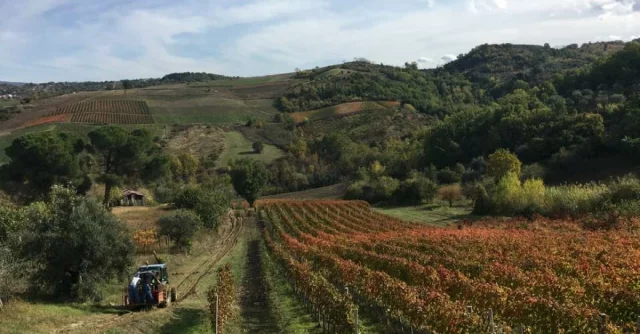
Falanghina is really two grapes sharing one name, and it tastes of wherever it is planted. Genetic study has split it into two biotypes, and its map runs from the volcanic caldera on the coast west of Naples, through the clay hills of the Sannio inland, to the old Falernian ground on the northern Campanian plain, before spilling north into Molise.
Campi Flegrei
The volcanic caldera on the coast just west of Naples
Home of the Flegrea biotype, grown on ungrafted vines in sandy volcanic soil the sea kept phylloxera out of; the leanest, most saline and floral Falanghina, made alongside the red Piedirosso.
Sannio, around Benevento
The inland clay hills of the province of Benevento
The production heartland and the Beneventana biotype: fuller-bodied, higher in acid and more ageworthy, and the zone where Leonardo Mustilli revived the grape at Sant'Agata de' Goti. Bottled as Falanghina del Sannio.
Falerno del Massico
The Massico slopes on the northern Campanian coast
The modern appellation on the ground of ancient Falernian: here Falanghina makes the white Falerno, keeping alive the traditional, unproven link between the grape and Rome's most famous wine.
Producers
Every estate on the site that works with Falanghina.
Editorial
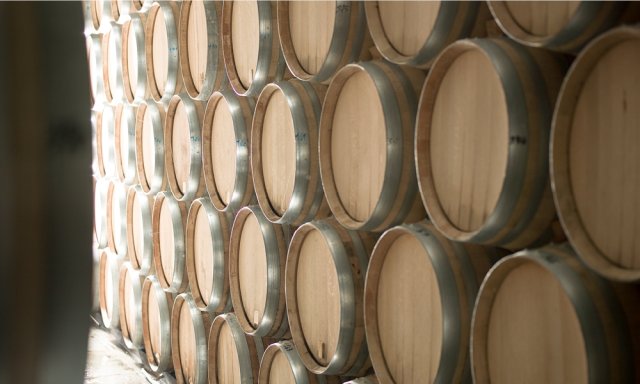
The vast majority of still Falanghina is made as a single-variety wine. It is usually aged in steel and bottled a few months after the harvest. The wines from volcanic zones, such as the Taburno and the Campi Flegrei, show an excellent minerality.
In the black volcanic sand of the Campi Flegrei west of Naples, the sea kept phylloxera out, so Falanghina still grows here on its own ancient ungrafted roots, never spliced onto the American rootstock that now carries almost every other vine in Europe.
The ungrafted vineyards of the Campi FlegreiFalanghina is also used for sparkling wines, made by the Charmat or the Classic method. The sparkling versions are often more delicate, and less complex overall than the still ones.
Most sweet Falanghina is made by leaving the grapes on the vine longer than usual. The wines have an intense, almost golden colour, with soft notes of honey and apricot over a floral background.
According to experts, the vine dates back to the 1st century BC. It seems to have settled in Campania in Roman times. It took at once to the climate and the make-up of the soil.
The wine was highly appreciated by Pliny the Elder and the Roman emperors. It was also drunk at the royal court of Naples, and it was on the papal wine list.
In more recent times, Falanghina wine has won over most consumers. That is above all thanks to the specific denomination laws brought in during the 90’s. They have helped producers to focus on the excellent quality of single-variety wines.
With its Mediterranean character, Falanghina is a white wine to drink young. It suits everyday dining, and it is particularly appreciated for its excellent value for money and its versatility. It goes well with a large number of dishes, above all fish.
Good to know
Falanghina is an Italian still white wine produced from the homonymous grape variety. It is and fresh; dry and delicately flavoured. It offers excellent value for money and it is also made in sparkling and sweet versions.
Falanghina is pleasantly acidic, with a relatively light body and a delicate nose recalling apples and white flowers. In the mouth it is dry, yet round and velvety with elegant flavours of white fruit and a good minerality.
Falanghina is a dry white wine, although a sweet version is also available. The dry versions can be both still or sparkling, the dessert versions are most often late harvested.
Falanghina is produced in Southern Italy, especially in the regions of Campania, Puglia, Molise and Lazio. The most important areas are the sub-zones of the Sannio and Campi Flegrei in the Campania region.
Falanghina is perfect as aperitif, but it works very well also with fish and shellfish, white meat and vegetarian pasta preparations.
Explore by style
Jump to the editorial guide for each style this grape turns up in.
Keep exploring