

Central Italy

Lazio Roman tables, volcanic whites

Lazio is Frascati country with a serious red side. Volcanic whites from the Castelli Romani, Cesanese on the Ciociaria hills, and a Roma DOC reaching for grown-up bottles.

Lazio is the wine region wrapped around Rome, and for a long time its job was to keep the city in carafes of cold Frascati. That tradition still holds: about three quarters of production is white, much of it Malvasia and Trebbiano grown on volcanic soils south of the capital. The Castelli Romani hills, the crater lakes of Albano and Bolsena, and the limestone slopes of Ciociaria all sit inside one regional border.

What has changed is ambition. Frascati Superiore DOCG and Cannellino di Frascati DOCG push the Frascati name beyond cheap house white. Cesanese del Piglio DOCG gives Lazio a serious red of its own, perfumed and peppery, made from a stubborn local grape. Roma DOC, written for the modern restaurant list, brings Bellone, Malvasia Puntinata, and Cesanese back together under the city's name. There are 3 DOCGs, 27 DOCs and 6 IGTs to read across, but the route in is Frascati for whites and Cesanese for reds.

39
Wines in stock
3
Denominations
50
Heritage grapes
£10 +
Starting price
01 · Wine Areas6

Where Lazio wine takes shape

The named places that explain the region's grapes, styles, and labels, plotted across the map.

01

Castelli Romani

The volcanic hills south of Rome where Frascati and most of Lazio's everyday wine is made.

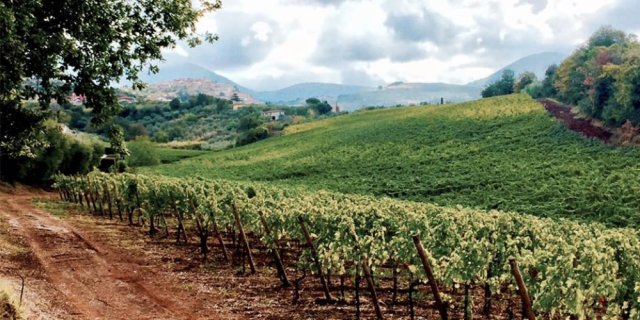
The Castelli Romani are the chain of hill towns sitting on the rim of the Lazio volcano, south-east of Rome around the lakes of Albano and Nemi. Tufaceous and pyroclastic soils, plus the cooling effect of altitude and the lakes, give Lazio its house style: salty, savoury whites with a chalky finish. Frascati DOC, Frascati Superiore DOCG, Cannellino di Frascati DOCG, Marino DOC, Colli Albani DOC, Colli Lanuvini DOC, Montecompatri-Colonna DOC, Velletri DOC, and the umbrella Castelli Romani DOC all sit inside this zone. The dominant grapes are Malvasia di Candia, Malvasia del Lazio (Puntinata) and Trebbiano Toscano, with smaller plantings of Bellone and Bombino.

02

Ciociaria and Piglio

The Cesanese heartland, a string of hill villages in the province of Frosinone where Lazio's most serious red is made.

Ciociaria runs along the Anio and Sacco valleys south-east of Rome, climbing into the Ernici and Aurunci mountains. Limestone, clay and volcanic outcrops sit between 200 and 600 metres, and the diurnal swing is pronounced enough to keep Cesanese aromatic. Cesanese del Piglio DOCG is the flagship, restricted to 90 percent Cesanese d'Affile or Cesanese Comune, and joined by Cesanese di Affile DOC and Cesanese di Olevano Romano DOC. Atina DOC also sits here, a small Bordeaux-leaning red zone. Producers like Damiano Ciolli, Marco Carpineti and Coletti Conti have rebuilt the area's reputation over the past 20 years.

03

Tuscia and Lake Bolsena

Northern Lazio, around the volcanic Lake Bolsena, where Est! Est!! Est!!!, Aleatico di Gradoli and Orvieto's eastern flank are made.

Tuscia covers the province of Viterbo, where the volcanic Vulsini complex created Lake Bolsena and the surrounding tuff hills. The sweet, dark Aleatico di Gradoli DOC clings to the lake's northern shore. Est! Est!! Est!!! di Montefiascone DOC, a fragrant white blend from Trebbiano and Malvasia, occupies the slopes above. Orvieto DOC reaches across from Umbria, with the Lazio side delivering classic Procanico (Trebbiano Toscano) and Grechetto. Sergio Mottura at Civitella d'Agliano is the area's reference point for ageworthy Grechetto.

04

Roma DOC

The 2011 appellation that gives the city of Rome its own grown-up wine name, in red, white and sparkling.

Roma DOC was approved in 2011 and remade in 2018, a deliberate attempt to give Rome a wine list as serious as its restaurant scene. The zone takes in the Castelli Romani, Cerveteri and parts of Tuscia, but the rules favour native Lazio grapes: Malvasia Puntinata and Bellone for the whites, Cesanese, Montepulciano and Sangiovese for the reds. There is a Roma DOC Spumante and a small Riserva tier. Producers like Casale del Giglio, Castel de Paolis and Poggio Le Volpi use the name to push beyond cheap Frascati and toward bottles that work on a starred wine list.

05

South Pontine coast and the islands

The reclaimed Pontine plain and the volcanic island of Ponza, with Cori, Aprilia, Circeo and the Migliaccio family of Biancolella.

The southern strip of Lazio, between Latina and the Campania border, is younger as a wine zone but distinct in character. Cori DOC, on calcareous hills above the plain, makes structured Bellone and Nero Buono reds. Circeo DOC and Aprilia DOC sit on flatter, sandier soils with maritime breeze. Out on Ponza, the volcanic island off the coast, Antiche Cantine Migliaccio works terraced vineyards of Biancolella and Forastera under the Lazio IGT name. Casale del Giglio is the inland anchor, doing serious work with Bellone, Petit Verdot and Cesanese on the Pontine flatlands.

06

Cerveteri and Tarquinia coast

Etruscan country on the northern Tyrrhenian, where coastal whites and lighter Sangiovese reds are made.

The Cerveteri DOC and Tarquinia DOC zones sit on the coastal hills north of Rome, where Etruscan tomb necropoli are still the loudest local landmark. Soils are a mix of tuff, sand and clay; Trebbiano Toscano, Malvasia di Candia and Sangiovese dominate. The wines tend toward easy-drinking whites and pale, food-friendly reds rather than long-haul cellar bottles, but Tenuta di Pietra Porzia and a few coastal producers push for more concentration with Bellone and Cesanese. The area links naturally to seafood from Civitavecchia and the Etruscan tasting menus around Cerveteri.

02 · Regional Guide6

Understanding Lazio

Layered notes on terroir, history, label rules, taste, drinking window and where to start.

03 · Wines To Know6

What to drink from Lazio

A short shortlist that maps the region: benchmark reds, signature whites and the labels worth a step-up.

04 · Heritage Grapes4

The grapes behind the bottle

4 curated guides with editorial content. Pronunciations, traits and the regional footprint of each variety.

Browse all grape guides

05 · Editor's Picks39

Wines from Lazio

A starter selection from the catalogue. Pour them as a regional flight.

View all 39 wines

06 · La Tavola6

The table of Lazio

Mountain, pasture and coast on one plate. Pour the regional wine alongside.

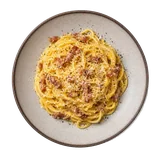
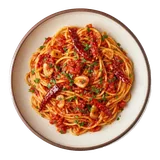
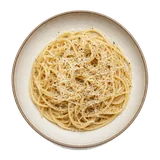
Roman cooking is built for these wines. Cacio e pepe and a fresh Frascati Superiore is the textbook pairing, the wine's salt and citrus cutting straight through pecorino and cracked pepper. Carbonara wants something with a bit more body, so step up to a Roma DOC Bianco built on Bellone and Malvasia Puntinata. For amatriciana, abbacchio scottadito or a slice of porchetta from Ariccia, pour Cesanese del Piglio DOCG: red-fruit perfume, soft tannin, and the iron grip that Roman lamb and cured pork ask for. Save Cannellino di Frascati or Aleatico di Gradoli DOC for ricotta tarts, crostata di visciole, and the maritozzo at the end of the meal.

07 · On The Ground15

Explore Lazio by place

Wine routes, towns and wineries to follow when you go.

Wine routes

Wine towns

Wineries to follow

08 · Common Questions9

Ask the sommelier

Quick answers about Lazio. Numbers, denominations, food and what to start with.

Frascati, the dry white from the volcanic hills south-east of Rome, is by far Lazio's best-known wine. The serious version to drink is Frascati Superiore DOCG, made from at least 70 percent Malvasia di Candia and Malvasia del Lazio. Cesanese del Piglio DOCG is the flagship on the red side.

Lazio has 3 DOCGs (Cannellino di Frascati, Cesanese del Piglio, Frascati Superiore), 27 DOCs and 6 IGTs. The bulk of production sits in the Castelli Romani DOCs around Rome, with smaller pockets in Ciociaria, Tuscia and the Pontine coast.

Both come from the same Castelli Romani zone and the same Malvasia and Trebbiano blend. Frascati Superiore DOCG demands lower yields, a higher minimum alcohol of 12 percent, and six months of bottle ageing. The wines are deeper, saltier, and capable of ageing 3 to 5 years; basic Frascati DOC is the easy, drink-it-young house white.

Yes, especially if you like medium-bodied, perfumed reds. Cesanese del Piglio DOCG is made from at least 90 percent Cesanese d'Affile or Cesanese Comune, with raspberry, rose petal and white pepper aromas and a soft tannin. Damiano Ciolli, Coletti Conti and Marcella Giuliani make the most quoted versions on Italian wine lists.

Roman cooking is the obvious match. Cacio e pepe and carbonara with Frascati Superiore, amatriciana with Cesanese del Piglio, abbacchio scottadito or porchetta from Ariccia with a Roma DOC Rosso. Save Cannellino di Frascati or Aleatico di Gradoli for ricotta tarts and chocolate desserts.

Yes. Frascati is 30 minutes from Roma Termini by train, with cellars like Castel de Paolis, Tenuta Principe Pallavicini and Fontana Candida open by appointment. A longer day reaches Olevano Romano and Piglio for Cesanese tastings. The Tuscia and Lake Bolsena loop with Sergio Mottura and Est! Est!! Est!!! is best done as an overnight from Rome.

We currently list 39 wines from Lazio, starting from £9.83. Browse them all on our wines page.

We currently curate 4 active Lazio grape guides, including Malvasia di Candia, Malvasia Puntinata, Trebbiano Toscano, Viognier. This is an editorial selection, not the complete regional grape list.

Lazio is renowned for dishes including Pasta alla carbonara, Pasta arrabbiata, Pasta Cacio e Pepe, Pinsa Romana.

09 · Keep Exploring

Your next pour

More of Central Italy, with similar terroir and table.

Wine styles made in Lazio

Italian Red wine

Red

Italy's boldest expression, structured, complex, built for food

15 wines 10 grapes From £12.50
Explore red
Italian White wine

White

Crisp and versatile, from alpine freshness to Mediterranean warmth

23 wines 10 grapes 1 denominations From £9.83
Explore white