


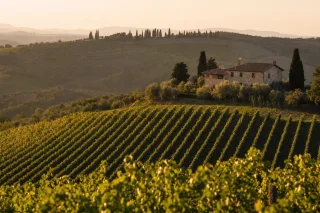

Wine area
Ciociaria and Piglio
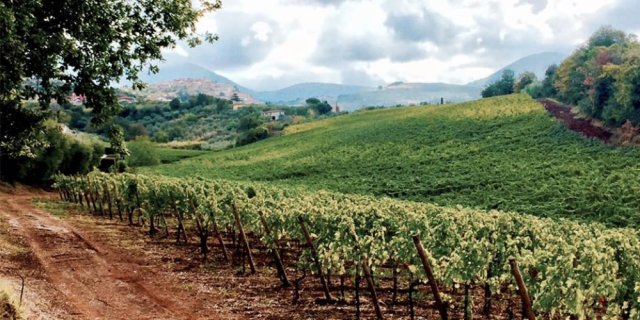
The Cesanese heartland, a string of hill villages in the province of Frosinone where Lazio's most serious red is made.
Your cellar, your trips, and the wines you've been tracking are right where you left them.
New here?
Free, always. Education first, we'll never sell you anything you didn't ask to see.
Already have an account?
Enter the email you signed up with and we'll send a link to choose a new password.
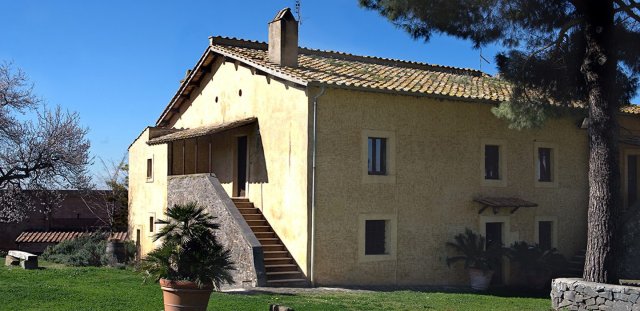
Damiano Ciolli grows Cesanese d'Affile on around ten football pitches of vines at Olevano Romano, a hilltop village 45 kilometres south-east of Rome. The soils are deep red and volcanic. The estate makes fewer than 25,000 bottles a year, all from old family vineyards, including the single plot planted in 1953 that becomes Cirsium. It sits at the centre of the quality revival of the Cesanese di Olevano Romano DOC.
The Ciolli family have farmed vines at Olevano Romano for at least three generations. Damiano's grandfather Guido and father Costantino worked in the post-war Lazio way: tend the vines, sell the juice in bulk to Roman bottlers, repeat. Damiano took the cellar back in 2001, at 23. His conviction was that Cesanese d'Affile could make wines worth bottling under their own name.
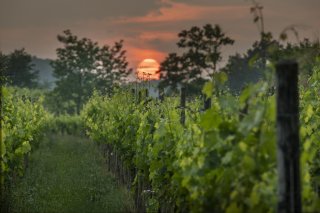
Olevano Romano is a medieval village perched at 600 metres on Monte Celeste, in the wedge of Lazio between the Castelli Romani lakes and the Cesanese hills of Ciociaria. The vineyards lie below the village, between 300 and 450 metres, on terraces of deep red volcanic soil sheltered on three sides by hills. Daily breezes off the Tyrrhenian sea keep the warm summers in check. The swing between warm days and cool nights keeps the grapes fresh.
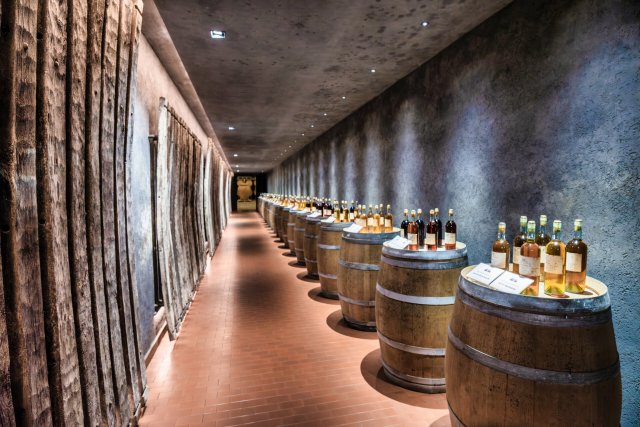
Damiano runs the estate with Letizia Rocchi, his partner, who holds a PhD in vine growing and winemaking. They farm without weedkillers or other chemicals. Green manure and biodynamic preparations keep the volcanic soils alive, and native yeasts run every fermentation. The cellar work is unhurried. Silene spends a year in concrete. Cirsium goes into French oak for eighteen months on the lees, and both wines rest in bottle before release.
The range is short by design. Silene is the main wine, a Cesanese di Olevano Romano Superiore from vineyards planted in 1981 and 2002, around 20,000 bottles a year. Cirsium is the riserva. It comes only from the grandfather's 1953 plot, and only 3,000 to 4,000 bottles are made. Botte Ventidue, the white, is Letizia's newer project: roughly 70 percent Trebbiano Verde and 30 percent Ottonese, two old Lazio whites the Castelli Romani co-operatives had largely dropped.
Cesanese d'Affile is sometimes called the Pinot Noir of central Italy. The label oversells it, but it catches something real: the wines are aromatic and mid-weight, built on lift and detail rather than power. Over the past two decades, the work at Olevano Romano has pulled Lazio's Cesanese DOCs back into the conversation about serious Italian red. Damiano Ciolli sits at the centre of that revival.
Plate I · LAZIO
Wine area
The Cesanese heartland, a string of hill villages in the province of Frosinone where Lazio's most serious red is made.
Winery
Olevano Romano, Roma · Ciociaria and Piglio
The estate lists nothing you can book online, and whether it receives visitors is not confirmed. Its phone number and email are in Practical info. A call is the reliable route here.
Not seeing the estate you want? Estates without an online listing are reachable directly, and their phone and email are in Plan your visit.
Some booking links earn italianwines.co.uk a commission. This never affects price or what we recommend.
Wines for this winery are still being curated. Check back as the UK retailer selection expands.
Tell us what you need and we'll help you reach Damiano Ciolli and arrange a visit or tour. We reply within two working days.