The family bought the Colonna estate in 1670 from the Boncompagni. The sale completed a swap of feudal land in Lazio. That land had passed through the Lodovisi cardinals after Pier Francesco Colonna sold it in 1622 to settle his father's debts. At their peak the Pallavicini and Rospigliosi holdings covered about 3,950 acres. After the First World War most of the farmland was expropriated and split among roughly 700 farmers. What was left became the working core of the wine estate today, about 89 hectares inside the Frascati DOC zone.
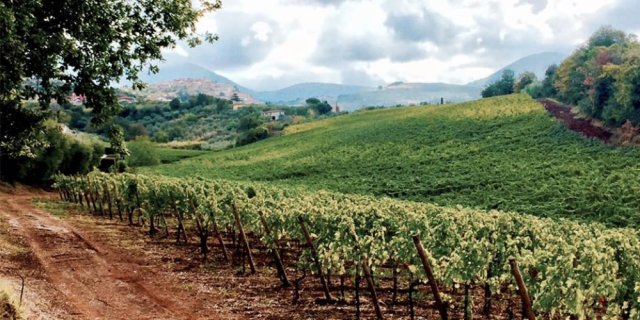
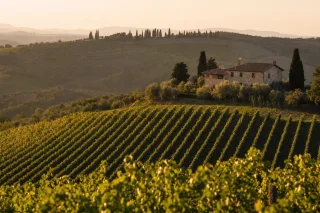
Marmorelle is the main vineyard, roughly 30 km south-east of Rome. It sits between 200 and 230 metres up, on the volcanic ridge that runs from the crater of the Lazio volcano towards Rome. The soils are porous, alkaline, high in potassium and full of lapilli. The Aqua Claudia aqueduct still passes underneath. Next door, the Roman basalt quarries that supplied the city's sanpietrini are still cutting stone. Cabernet Sauvignon, Cabernet Franc, Cesanese, Merlot and Petit Verdot grow on the higher terraces. Malvasia Puntinata, Falanghina, Greco, Bombino and Grechetto grow on the lower, lime-rich slopes.
A second estate at Cerveteri has been in Pallavicini hands since 1683. It stands on Monte Tosto, roughly 150 metres above the Tyrrhenian coast. About 35 acres of Sangiovese, Merlot and Syrah were planted there at high density, on stony limestone soils open to the sea breeze. The point was to widen the red range beyond the Castelli. Those wines are grouped under the Roma DOC umbrella with the Castelli reds.
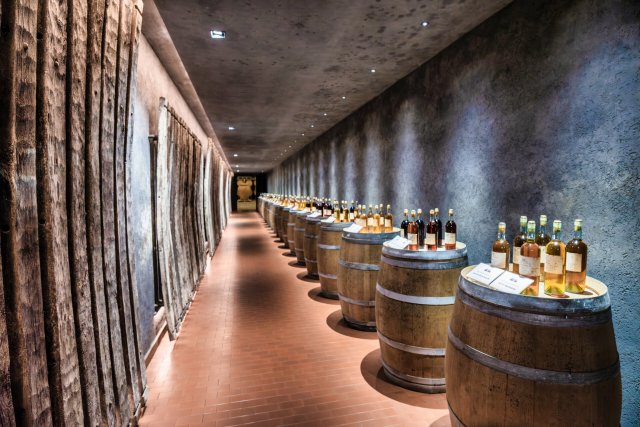
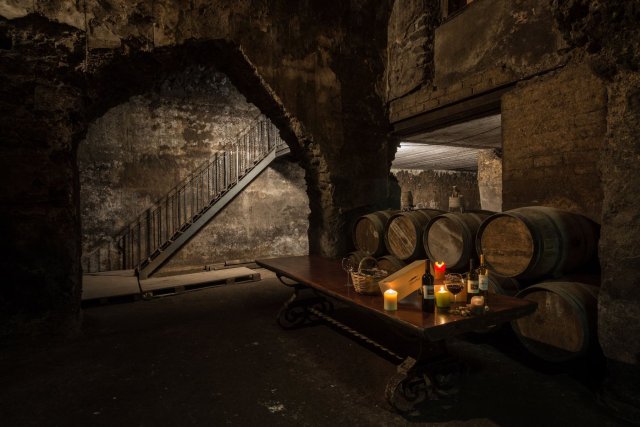
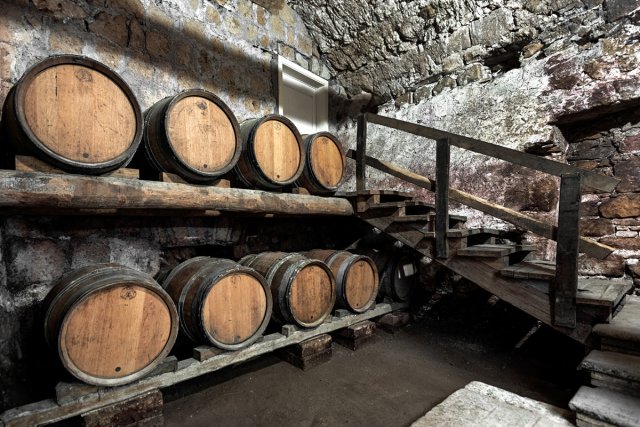
The cellar where the wines are made is at Marmorelle. So are the large French oak casks for the reds and the acacia barriques for the passito. Sangiovese and Cesanese were first planted at Marmorelle in 1970, and Cabernet Sauvignon followed in the early 1990s. Vine density runs from 3,000 to 4,000 vines per hectare for the whites, and from 5,000 to 7,000 for the reds. The more recent plantings are trained with spurred cordon and guyot.
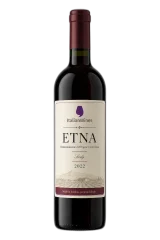
The white range covers Frascati DOC Poggio Verde and the IGT Lazio Aurora. The reds include the Roma DOC Casa Romana Amarasco and the Cesanese-led Rubillo, plus single-grape Syrah and Petit Verdot from Marmorelle's higher terraces. The range also takes in a Brut spumante made from Malvasia Puntinata. The signature bottle is Stillato, a Malvasia Puntinata passito. After roughly 350 years of Pallavicini ownership alone, the family opened the capital to outside partners. The holding is named Terre dei Pallavicini, and Sigieri Diaz Pallavicini is the managing director.
Tastings and private visits run from Marmorelle, by appointment. The Fruttaio room there sits next to the cellar and the olive grove.







 Lazio
Lazio
 2 wines
  Tastings
 Tours
Tours
 Booking required



 Malvasia
 Trebbiano