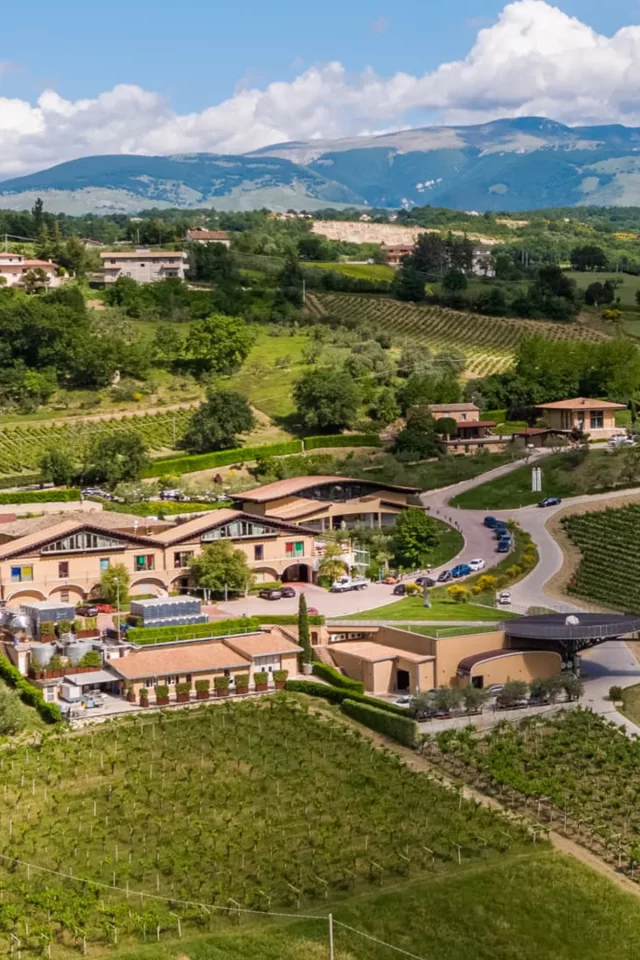





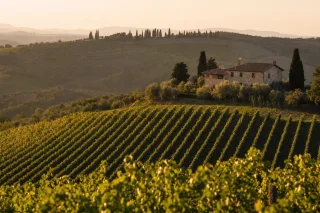



Estate 1
Azienda Agricola Masciarelli
Visit →San Martino sulla Marrucina · The one-commune cru
Tastings available
Your cellar, your trips, and the wines you've been tracking are right where you left them.
New here?
Free, always. Education first, we'll never sell you anything you didn't ask to see.
Already have an account?
Enter the email you signed up with and we'll send a link to choose a new password.
Abruzzo · DOC
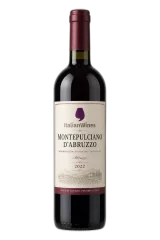
Montepulciano d'Abruzzo DOC is a dark red wine that smells of cherry. It is built on the Montepulciano grape. The rules ask for at least 85% Montepulciano. The vines grow right across Abruzzo, from hills facing the Adriatic to valleys inland. Expect plum, black cherry, spice and rounded tannin. Chianti, which is led by Sangiovese, has a firmer frame.
Decode the label
One word on the front changes the ageing, the strength and the price.
On the label
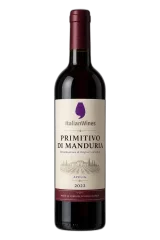
Montepulciano d'Abruzzo
the base wine, out by February
Black cherry, plum and soft tannin at an honest price: the grape is Montepulciano, the place is Abruzzo, no relation to the Tuscan town.
In stock from £5.50 See the 68 bottles ↓On the label
Riserva
the sub-zones' patient tier
The plain wine may not even write the word: Riserva belongs to the nine place mentions and their stricter annexes.
In stock from £11.17 See the 18 bottles ↓On the label
The nine place mentions
Casauria to San Martino
From the Casauria gorge to the single commune of San Martino sulla Marrucina: place names that carry Superiore and Riserva tiers of their own.
In stock from £22.50 See the 2 bottles ↓The boundary
Everything on this page, the estates, the bottles, the sub-zones, sits inside this line.
Estate 1
San Martino sulla Marrucina · The one-commune cru
Tastings available
Estate 2
Bolognano · Casauria edge
Tastings available
Estate 3
Rosciano · Pescara hills
Tastings available
Estate 4
Cugnoli · Pescara hills
Tastings available
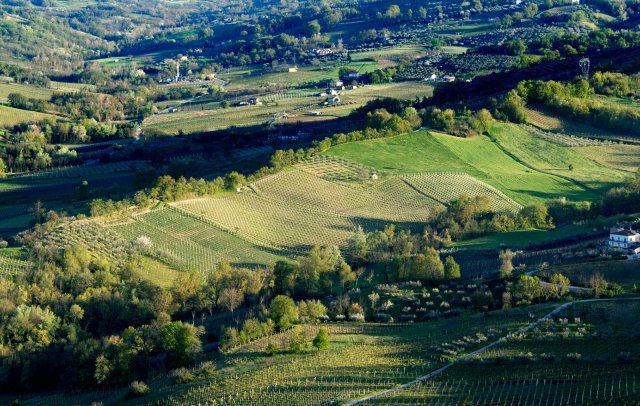
Nearly the whole hill country of Abruzzo, across the provinces of Chieti, Pescara, Teramo and L'Aquila: vineyards run from the Adriatic slope up the river valleys towards the Gran Sasso and Maiella massifs. Inside that sweep, nine place mentions mark the historic corners, from the Casauria gorge of the Pescara river to the high Alto Tirino plain and the single commune of San Martino sulla Marrucina.
Inside the zone
Click or tap a pin for its estate. The numbered pins match the estate cards below.
Towns worth knowing
The Teramo hills answer to their own DOCG, Colline Teramane; everything else on the Abruzzo slope pours from this one.
In the glass

Blackberry

Blueberry

Leather

Violet
The disciplinare
The same table on every denomination page, straight from the production rules.
 MontepulcianoAbruzzo's own grape, no relation to the Tuscan townat least 85%Other non-aromatic redsLocal varieties, jointly cappedup to 15%
Solid means the rules demand it. Striped means optional, up to that amount. The words on the right say the same rule.
The grape is called Montepulciano and shares nothing but the name with Tuscany's Vino Nobile town.
On sale from 1 February the base wine has no ageing mandate at all; the sub-zones supply the patience.
Nine place mentions carry their own annexes Casauria, Teate and the rest add Superiore and Riserva tiers the plain wine cannot use.
15 tonnes per hectare, 70% to wine generous farming caps with a hard pressing limit.
The pink and the Teramo hills left home Cerasuolo d'Abruzzo and Colline Teramane DOCG are separate rulebooks now.
Ageing and alcohol minimums per tier are in the label guide above.
Editor's cellar
By style, today
Live prices, compared across 22 UK retailers.
Cellar doors · inside the zone
4 working estates with their gates open, numbered to match their pins on the map above.
No estates match these filters. Clear a filter to see more.
Nine names inside one big zone
The disciplinare attaches nine place mentions, each with its own annex of stricter rules: riper fruit, lower yields and the right to Superiore and Riserva tiers the plain wine cannot claim.

The Pescara river's gorge country around Tocco da Casauria and the abbey of San Clemente: the first mention to earn its own annex.
The Pescara hills of the ancient Vestini people, around Loreto Aprutino and Penne: olive and vine country with a Riserva tier.
The high Tirino valley near Ofena and Capestrano, in L'Aquila province: mountain-ringed vineyards at the zone's coolest edge.
The Peligna basin around Sulmona, between the Maiella and the Apennine wall: high, dry and late-ripening.
Named for Roman Chieti, the hills between the Maiella and the sea where the province's oldest cellars sit.
The province-wide mention for the Chieti hills, the engine room of Abruzzo's production, with Superiore and Riserva tiers.
L'Aquila's mountain province, the highest and smallest corner of the DOC, farming Montepulciano at the edge of ripeness.
The hills behind Pescara city, a provincial mention with Superiore and Riserva tiers of its own.
A single commune in the Chieti hills with its own annex: the smallest place mention in the whole denomination.
Vintage provenance
No denomination-wide vintage chart is currently published for Montepulciano d'Abruzzo DOC. Current sources define the DOC and discuss selected vintages or producer tastings, but quality is tracked producer by producer rather than through a maintained annata table.
Buy the base wine young and the sub-zone Riservas at three to six years; the grape forgives most vintages.
What to check instead
The mention: where a wine comes from inside the zone changes what is in the glass. See them above.
The producer: quality here is tracked estate by estate rather than year by year.
Today's DOC rules start with the blend. A vineyard must be at least 85% Montepulciano. Up to 15% can be other non-aromatic red grapes suitable for Abruzzo. The production zone covers all four provinces of Abruzzo. Vines sit on hills, generally capped at 600 metres. South-facing sites may go to 700 metres. The yield cap is 15 tonnes per hectare. The wine cannot be released before 1 February after the harvest. Minimum alcohol at consumption is 12.0%. The base DOC does not require oak, though wood ageing is allowed. Named subzones set stricter rules on grapes, alcohol and ageing.
On the table
The home country leads; global pairings that genuinely work follow.
In-depth guide
It comes from the Montepulciano grape. The rules ask for vineyards with at least 85% Montepulciano. Up to 15% can be other non-aromatic red grapes authorised for Abruzzo.
No. Montepulciano d'Abruzzo is an Abruzzo DOC based on the Montepulciano grape. Vino Nobile di Montepulciano is a Tuscan DOCG from the town of Montepulciano, and it is led by Sangiovese.
It usually tastes of black cherry, plum, red berries and spice. Some bottles also show violet, tobacco or liquorice. The best ones balance generous body with rounded tannin, rather than a sharp, austere edge.
Most young bottles do not need a long decant. Give structured, oak-aged or older examples about 30 minutes. That lets the plum fruit, spice and tannin settle in the glass.
Choose Italian dishes with savoury depth. Arrosticini, maccheroni alla chitarra al ragu, salsiccia, aged Pecorino and mushroom-led pasta all suit it. The wine's cherry fruit and rounded tannin handle fat and salt well.
This page covers the red Montepulciano d'Abruzzo DOC. Abruzzo also has Cerasuolo d'Abruzzo DOC. That is a separate cherry-coloured rosé style, made from the same Montepulciano grape.