

















Chardonnay is a white grape with a clear Italian role.
Wines
626
Acidity
Body
White Grape · Tuscany
Not a stray piece of the Rhone that wandered south, but a grape Italy chose: a perfume-maker planted to give apricot and weight to whites that would otherwise stay lean.
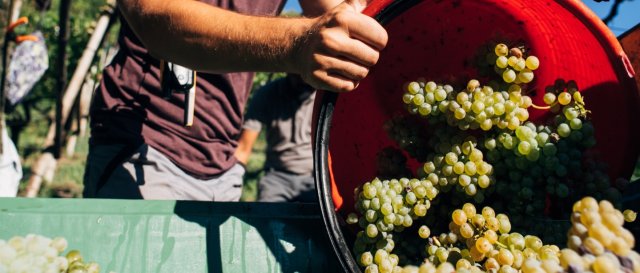
Viognier is the golden-skinned white grape of France's northern Rhone, and Italy grows it on purpose. You find it in Lazio's Castelli Romani, across the Tuscan Maremma and Bolgheri, and around Vittoria in Sicily. Growers plant it for what it carries: apricot, honeysuckle and a soft, low-acid weight. They use it in small, deliberate doses. It lends perfume and texture to blends built on Malvasia, Grillo and Vermentino.
Your cellar, your trips, and the wines you've been tracking are right where you left them.
New here?
Free, always. Education first, we'll never sell you anything you didn't ask to see.
Already have an account?
Enter the email you signed up with and we'll send a link to choose a new password.
Setting it straight
The anchor fact: Italy did not inherit Viognier by accident. It was trialled and chosen at Castel de Paolis near Rome between 1985 and 1992, and planted deliberately for its perfume.
Taste · Where it sits
Forget scores out of five. Here’s Viognier described against grapes you already know.
Fuller and rounder than its Sicilian partner Grillo or a coastal Vermentino, closer to a lightly oaked Chardonnay in weight.
A whisper of phenolic grip from unusually thick golden skins, more textural pull than most Italian whites though far from a red's tannin.
Markedly lower than Grillo, Vermentino or Verdicchio, which is exactly why Italian growers blend it in to soften sharper natives.
Reads riper than it is: apricot flesh and honeysuckle suggest a sweetness the bone-dry Italian versions never actually deliver.
Key flavours


The map
Viognier is full-bodied, gentle acidity, mapped against other white grapes you can buy. The closer a grape sits, the more its weight and freshness resemble Viognier.
Is this for you?
Reach for it when…
Maybe skip it if…
Serving guide
Serve at
10-12°C
Serve cool but not cold; over-chilling mutes the apricot and honeysuckle that are the whole point.
Decant
Not needed
No need to decant; Viognier's aromatics are immediate and fade rather than build with air.
Glass
Chardonnay Glass
A broad Chardonnay-style bowl gives the perfume room, suiting its full body better than a narrow flute.
Drink within
3-5 days
Once open it holds three to five days, though the florals soften after the first day.
Cellar
Up to 3 years
Drink young: most Italian Viognier is at its best within three years, before the aromatics fade.
On the table
Start with the home-table matches that made the grape, then browse the full cuisine library.

Lazio's own
Fatty, fennel-scented roast pork from Viognier's Roman home ground; its apricot weight rolls over the richness where an acidic white would fight it.

Sunday staple
Honeysuckle and a soft body flatter roast chicken and its herbs, giving a fuller pour than a lean Vermentino would.

Gentle spice
Low acidity is the trick with mild spice: Viognier's peach and honey cushion tikka's warmth instead of sharpening it.

Coconut and chilli
Coconut-soft Kerala prawn curry meets its match in Viognier's oily texture and ripe stone fruit, a pairing built on richness not cut.
Buy it · three to start with
A curated trio across the price range, then every Viognier on sale in the UK right now.
Entry · everyday
 2 retailers
Sicilia
2 retailers
£12.59
+ delivery
Why this one: A ripe 30 percent Viognier lifts organic Sicilian Grillo near Vittoria; the clearest, cheapest way to taste what the grape adds.
Special occasion
 6 retailers
Toscana
6 retailers
£46.00
+ delivery
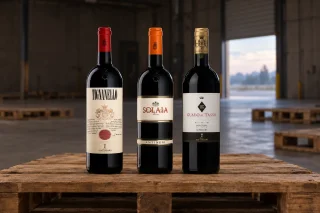
Why this one: Bolgheri prestige: a few percent Viognier perfumes Ornellaia's Sauvignon-led white, showing how little of the grape it takes to change a blend.
12 of 21 bottles
 6 retailers
Sicilia
6 retailers
£11.50
£14.00
+ delivery
6 retailers
Toscana
6 retailers
£46.00
+ delivery
 5 retailers
Orvieto
5 retailers
£18.80
+ delivery
 3 retailers
Toscana
3 retailers
£14.00
£16.00
+ delivery
2 retailers
Sicilia
2 retailers
£12.59
+ delivery
 2 retailers
Toscana
2 retailers
£12.60
+ delivery
 2 retailers
Terre Siciliane
2 retailers
£14.80
£15.74
+ delivery
 2 retailers
Lazio
2 retailers
£17.00
£20.00
+ delivery
 2 retailers
Toscana
2 retailers
£41.00
+ delivery
 2 retailers
Bolgheri
2 retailers
£196.00
+ delivery
 1 retailer
Terre Siciliane
1 retailer
£16.00
+ delivery
 1 retailer
Sicilia
1 retailer
£16.10
+ delivery
Denominations
The appellations where Viognier plays a starring role.
Where it grows
From galestro hills in Chianti Classico to the single Brunello rise of Montalcino and the sea-facing Cabernets of Bolgheri, Tuscany is Italian wine's stage in Read more

Lazio is Frascati country with a serious red side. Volcanic whites from the Castelli Romani, Cesanese on the Ciociaria hills, and a Roma DOC reaching for Read more

Volcanic Nerello on Etna's black terraces, sun-baked Nero d'Avola on the south-east coast, fortified Marsala in Trapani and UNESCO Zibibbo on Pantelleria Read more

Italy's landlocked green heart, where Montefalco Sagrantino brings the deepest tannins on the peninsula and Orvieto's tufa cliffs ripen the country's most Read more
The terroir
Italy grows Viognier for perfume, and where it grows changes how loud that perfume gets.
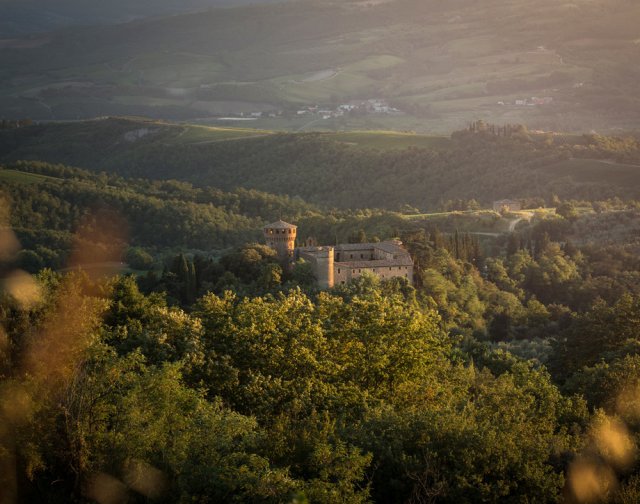
Lazio's Castelli Romani
Grottaferrata and Frascati
The pioneer ground: blended with Malvasia del Lazio for apricot and body, volcanic soils keeping it savoury.
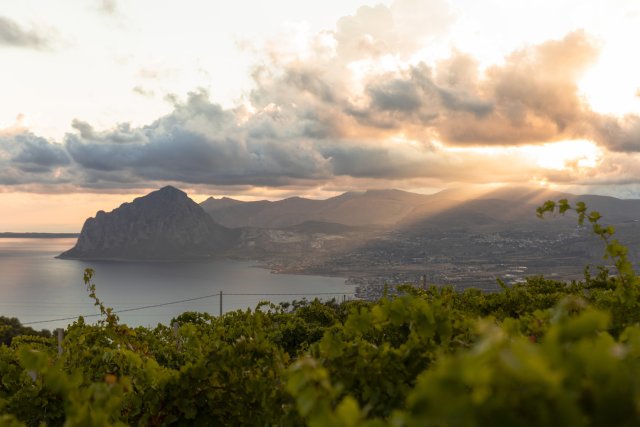
Tuscan Maremma and Bolgheri
Coastal Tuscany
Most of Italy's Viognier; used in small shares to lift Sauvignon and Vermentino blends, fresher and more mineral than the Rhone.
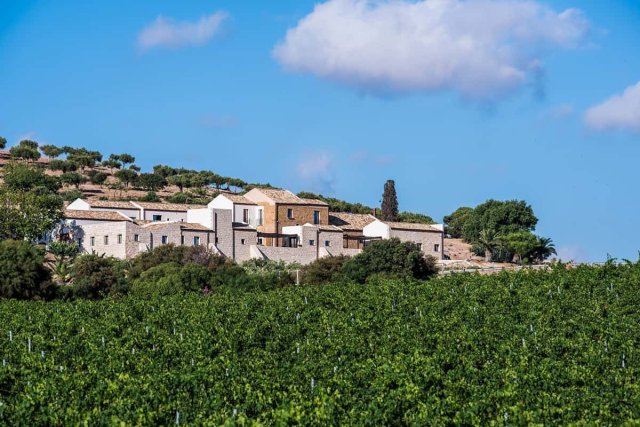
Vittoria, south-east Sicily
Terre Siciliane
Warm-climate perfume: partnered with Grillo on sandy soils, pushing white peach and orange blossom to the front.
Producers
10 estates on the site work with Viognier. Eight at a time, and the line-up changes every week.
Editorial
Viognier belongs to France's northern Rhone. The terraced crus of Condrieu and Chateau-Grillet are its birthplace. By the 1960s it had almost vanished. Barely fifteen hectares were left in Condrieu, about 37 acres. An international revival began in the 1980s. DNA work in 2008 tied it by a parent-offspring link to Mondeuse Blanche. The same work placed it close to the Piedmont grape Freisa. That makes it a near relative of Syrah, the grape it is co-fermented with in Cote-Rotie.
Viognier is rarely the whole story in an Italian white, but a deliberate aromatic voice within it.
On Viognier's Italian roleItaly registered Viognier only in 1999. Its Italian story starts earlier, in the hills of Lazio. From 1985 to 1992 the Santarelli family at Castel de Paolis trialled international varieties above Grottaferrata, in the Frascati zone. They worked with Professor Attilio Scienza, and Viognier was among the successes. Today it anchors their Vigna Adriana. It also takes a smaller share in the entry-level Campo Vecchio Bianco, where it is blended with Malvasia del Lazio to add apricot and body.
Most Italian Viognier now grows in Tuscany, in the Maremma and Bolgheri. There, estates such as Ornellaia fold a few percent into Poggio alle Gazze, to lift a blend led by Sauvignon and Vermentino. In Sicily, Santa Tresa pairs it with Grillo near Vittoria. Lazio's Omina Romana leans on it alongside Chardonnay. The pattern holds across these white wines. Viognier is rarely the whole story. Instead it is a deliberate aromatic voice inside the wine, closer in spirit to the perfumed whites of Friuli than to the neutral fillers it once replaced.
Good to know
No. Viognier comes from the northern Rhone in France. Italy has grown it officially since 1999, mostly in Tuscany, Lazio and Sicily. On Italian labels it usually appears in a blend, or as a single-grape IGT wine, rather than in a historic DOCG.
Expect apricot, white peach, honeysuckle and a note of honey and almond. They ride on a soft, full body with low acidity. Sicilian and Tuscan versions often keep a fresher, stonier edge than the richer Rhone style.
Viognier is prized as an aromatic booster. A small share lends perfume and texture to leaner natives: Grillo in Sicily, Malvasia in Lazio, Vermentino and Sauvignon in Bolgheri. It rarely dominates a blend, but it does change the scent.
Its low acidity and weight suit rich food rather than sharp, acidic plates. Herb-roasted pork such as porchetta works well. So do mildly spiced dishes such as chicken tikka, and coconut-based curries. Avoid very tart or vinegar-led dishes.
Viognier is authorised in Tuscany, Lazio, Sicily and Umbria. It is named in Maremma Toscana, Bianco di Pitigliano and Contessa Entellina, among others. Tuscany's Maremma and Bolgheri hold most of Italy's roughly 1,200 hectares, which is about 2,960 acres.
Viognier is said vee-on-yay, with a silent final r. That reflects its French origin.
Explore by style
Jump to the editorial guide for each style this grape turns up in.
Keep exploring