




















Chardonnay is a white grape with a clear Italian role.
Wines
628
Acidity
Body
White Grape · Veneto
Glera is the aromatic, high-acid white grape that becomes Prosecco: fermented sparkling in a sealed steel tank rather than the bottle, it gives Italy its everyday rush of green apple, pear, and white blossom under a soft, foamy mousse.
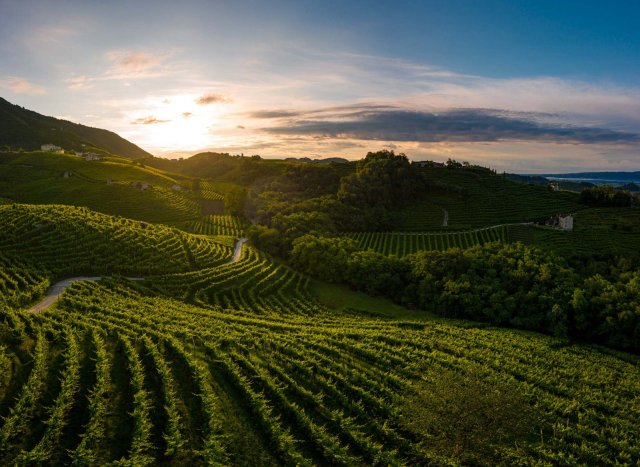
Glera is the white grape behind Prosecco, Italy's most celebrated sparkling wine. It grows mainly across the hills of Treviso in Veneto. It reaches its finest form in the Conegliano Valdobbiadene DOCG and Asolo Prosecco DOCG zones. There, south-facing slopes and big day-to-night temperature swings guard its delicate aromatics.
Your cellar, your trips, and the wines you've been tracking are right where you left them.
New here?
Free, always. Education first, we'll never sell you anything you didn't ask to see.
Already have an account?
Enter the email you signed up with and we'll send a link to choose a new password.
Clearing it up
The white grape variety
The protected denomination
The anchor fact: They were once the same word. Glera is the grape; Prosecco is the protected place and its wine. Italy renamed the variety from Prosecco to Glera in 2009 so that only tank-method sparkling wine from the demarcated Veneto and Friuli zone could legally be called Prosecco.
Taste · Where it sits
Forget scores out of five. Here’s Glera described against grapes you already know.
Featherlight and low in alcohol, carried by its bubbles rather than any weight: lighter than a structured Franciacorta or a vintage Champagne, and built for the aperitivo hour, not the dinner table.
Effectively tannin-free, as a white sparkler should be: the bite you feel is the prickle of carbon dioxide and Glera's high acid, not the skin grip of a red like Sangiovese.
Brisk green-apple acidity is Glera's backbone and the reason even off-dry Extra Dry Prosecco tastes fresh rather than sugary: livelier than a still Pinot Grigio, and the counterweight to all that fruit.
Ripe pear and white peach lifted by a touch of residual sugar: confusingly, Prosecco's most common style, Extra Dry, is off-dry and sweeter than Brut, with Cartizze's Dry sweeter still, and none of it as bone-dry as most Champagne.
Key flavours






The map
Glera is light to medium, crisp, fresh acidity, mapped against other white grapes you can buy. The closer a grape sits, the more its weight and freshness resemble Glera.
Is this for you?
Reach for it when…
Maybe skip it if…
Serving guide
Serve at
6-8°C
Serve it well chilled, around 6 to 8C: the cold tightens the mousse and keeps the fruit crisp, while a warm glass turns Prosecco flabby and foamy.
Decant
Not needed
Glass
Tulip Glass
Reach for a tulip glass, not a narrow flute or a coupe: the tapered bowl gathers Glera's delicate pear and acacia aromatics that a flute throws away.
Drink within
1-2 days
Drink it as young as you can, ideally within a year of the vintage or straight off the shelf for non-vintage: freshness is the entire point.
Cellar
1-2 years
Do not cellar it: unlike vintage Champagne, tank-method Prosecco gains nothing from age and only tires, so buy it fresh and pour it fresh.
On the table
Start with the home-table matches that made the grape, then browse the full cuisine library.

The hometown cicchetto
Whipped Venetian salt cod on grilled polenta is the classic bacaro snack, and Glera's brisk acidity and CO2 cut clean through its rich, salty creaminess exactly as the locals intend.

Straight from the lagoon
Tiny grey lagoon shrimp on soft white polenta is pure Venetian estuary cooking, and Prosecco's lemon-and-pear freshness flatters the sweet shellfish without ever burying it.

Fried, meet fizz
Crisp, salty fried squid is textbook fritto territory: the mousse scrubs away the oil and the high acid resets the palate for the next bite, the same trick Glera pulls on any fritto misto.

Sweet heat's best friend
Sticky, gochujang-glazed fried chicken is where off-dry Extra Dry Prosecco shines: its whisper of residual sugar softens the chilli burn while the bubbles lighten the deep-fried crunch.
Browse every pairing
Buy it · three to start with
A curated trio across the price range, then every Glera on sale in the UK right now.
Entry · everyday
 1 retailer
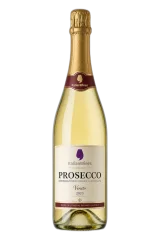
Prosecco
1 retailer
£11.93
Why this one: A straightforward Prosecco DOC Extra Dry from the Veneto flatlands: this is the everyday, tank-method, gently off-dry style that made Prosecco a household name, all pear and green apple.
Special occasion
 2 retailers
Conegliano Valdobbiadene Prosecco
2 retailers
£27.78
Why this one: The top rung is Cartizze, the fabled grand-cru hill inside Valdobbiadene: Ruggeri's version is richer and more perfumed, the rare Prosecco worth slowing down over rather than pouring by the case.
12 of 340 bottles
 4 retailers
Conegliano Valdobbiadene Prosecco
4 retailers
£15.00
 4 retailers
Prosecco
4 retailers
£20.50
 3 retailers
Prosecco
3 retailers
£8.36
 3 retailers
3 retailers
£12.10
 3 retailers
Prosecco
3 retailers
£12.90
 3 retailers
Conegliano Valdobbiadene Prosecco
3 retailers
£13.30
 3 retailers
Conegliano Valdobbiadene Prosecco
3 retailers
£14.00
 3 retailers
Trevenezie
3 retailers
£14.95
 3 retailers
Conegliano Valdobbiadene Prosecco
3 retailers
£15.00
 3 retailers
Conegliano Valdobbiadene Prosecco
3 retailers
£16.48
 3 retailers
Conegliano Valdobbiadene Prosecco
3 retailers
£16.90
 3 retailers
Conegliano Valdobbiadene Prosecco
3 retailers
£19.46
Denominations
The appellations where Glera plays a starring role.
Where it grows

Italy's largest wine region by volume, where Prosecco hills, Valpolicella ridges, and Soave's volcanic plain shape three different Italian classics. Read more

Italy's white-wine heartland, where Friulano, Ribolla Gialla and skin-contact orange wines meet alpine air, Adriatic light and the cooking of San Daniele and Read more
The terroir
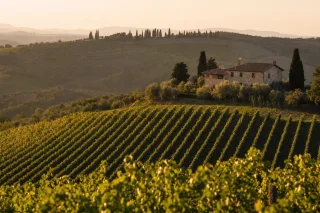
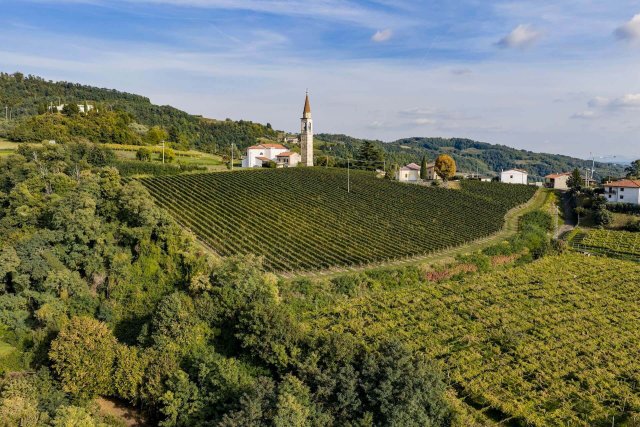
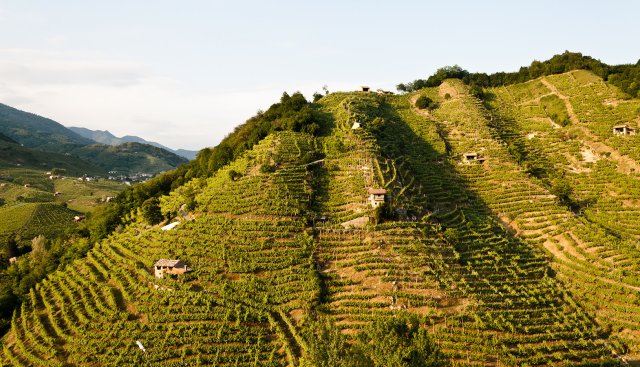
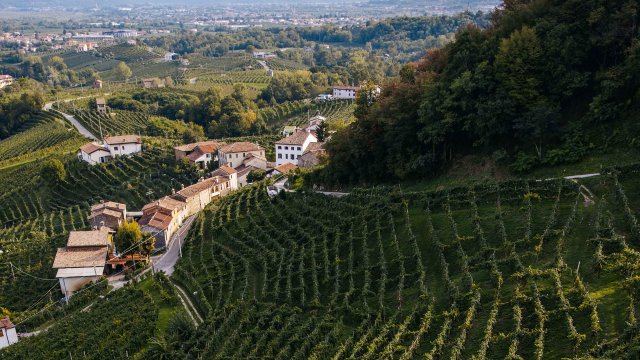
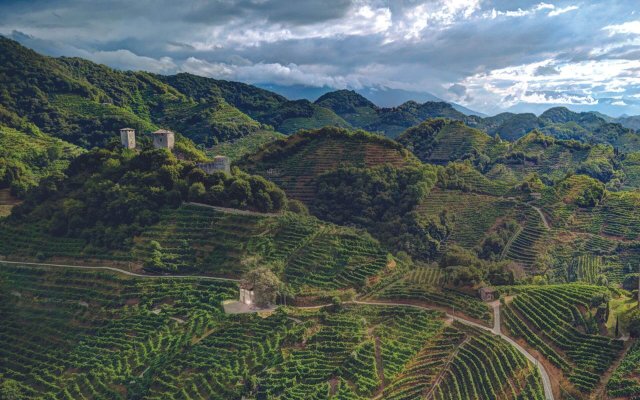
Prosecco is a tale of two landscapes. Most of the wine on supermarket shelves is grown on a flat, fertile plain, while the finest, most mineral Glera clings to a wall of steep hills between Conegliano and Valdobbiadene, farmed by hand and now a UNESCO World Heritage site.
Prosecco DOC
The broad, flat plain spread across nine provinces of Veneto and Friuli Venezia Giulia.
High-volume, machine-harvested Glera made into soft, fruity, mostly Extra Dry fizz by the Charmat tank method.
Conegliano Valdobbiadene Superiore DOCG
A ridge of impossibly steep, hand-farmed hogback hills north of Treviso, the UNESCO-listed heart of quality Prosecco.
Finer, more mineral and structured Glera, including single-slope Rive bottlings named for individual hills.
Superiore di Cartizze
A coveted hill of just over 100 hectares inside Valdobbiadene, shared between roughly 140 growers.
Glera's grand cru: its ripest, most perfumed expression, traditionally made in the slightly sweeter Dry style.
Producers
15 estates on the site work with Glera. Eight at a time, and the line-up changes every week.
Editorial
The grape known today as Glera was called Prosecco for centuries. The name is linked to the village of Prosecco, near Trieste in Friuli Venezia Giulia. Some vine experts trace it further back, to the Roman era. They identify it with the "vinum pucinum" that Pliny the Elder praised as a reviving wine from the northern Adriatic coast. Between the 17th and 19th centuries it became one of the most widely planted white grapes across the Trevigiano. It flourished on the well-drained hillsides between Conegliano and Valdobbiadene.
Prosecco's magic is a tank, not a cellar. Its second fermentation runs inside one giant sealed steel tank, an autoclave, rather than bottle by bottle like Champagne, which is why it is quicker and cheaper to make, and why it stays all fresh pear and green apple instead of turning bready and toasty.
The Charmat tank method, first devised in Italy by Federico MartinottiIn 2009 Italian authorities split the grape name from the place name. The aim was to protect Prosecco as a controlled denomination. The variety was officially renamed Glera, which brought back an old Friulan synonym. "Prosecco" became a place-based wine name only. The change created the broad Prosecco DOC, which spans nine provinces in Veneto and Friuli Venezia Giulia. Alongside it sit the more prestigious Conegliano Valdobbiadene Prosecco DOCG and Asolo Prosecco DOCG.
On flat, high-yielding land, Glera makes fairly neutral wines. On south-facing slopes, with yields held down, it gains real depth. Expect white peach, Bartlett pear and acacia blossom over a stony, almost salty finish. Nearly all Prosecco is made by the Charmat (Martinotti) method. The second fermentation happens in steel tanks under pressure, not in single bottles. That keeps the grape's own fruit character and fresh aromatics far better than traditional bottle fermentation.
Glera is also a parent of two Manzoni crossings bred at the Conegliano research station. They are Manzoni Bianco (Glera x Cabernet Sauvignon) and Manzoni Rosa (Glera x Cabernet Franc). Both are grown in small amounts across north-eastern Italy.
Good to know
Glera is the grape variety, while Prosecco is the wine and the place name. Before 2009 the grape and the wine shared the name Prosecco. Italian authorities renamed the grape Glera to protect Prosecco as a controlled denomination under EU law.
Most Glera grows in the hills of Treviso province in Veneto, above all between Conegliano and Valdobbiadene. It is also grown across Friuli Venezia Giulia. The grape likely began there, near the village of Prosecco outside Trieste.
Wines from Glera are light-bodied, with high acidity. The aromas run to green apple, pear, white peach and acacia blossom. Grown on hillside vineyards with controlled yields, they show greater depth, with a stony, almost salty finish.
The vast majority of Glera goes into Prosecco spumante and frizzante. Still wines from the grape do exist. They are labelled under IGT designations, and tend to be light, crisp whites with orchard fruit character. They are far less common on the market, though.
Prosecco from Glera pairs well with seafood antipasti, frittura mista, prosciutto crudo and light vegetable dishes such as fiori di zucca fritti. The grape's high acidity and bubbles make it work well as an aperitivo, or alongside salty, fried foods.
The Charmat (or Martinotti) method ferments the wine a second time in large steel tanks under pressure, not in single bottles. This keeps Glera's fresh fruit aromatics and floral character better than the traditional bottle fermentation used for Champagne.
Explore by style
Jump to the editorial guide for each style this grape turns up in.
Keep exploring