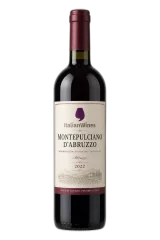
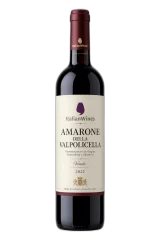
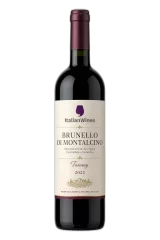
Sangiovese (san-jo-vay-zeh) is the undisputed king of red wines in central Italy, virtually present in every area of the country Thanks to its many clones and surprising versatility, Sangiovese can create a wide range of wines: from young and fresh Chiantis to complex and full-bodied Brunellos.
Red Grape · Tuscany
Cabernet Sauvignon
The French grape Italy made its own: Cabernet Sauvignon powers Sassicaia and the Bolgheri coast, stiffens Tuscan blends, and turns varietal reds from Alto Adige to Sicily into some of Italy's most collected bottles.
Cabernet Sauvignon is the Bordeaux-born red grape that reshaped modern Italian wine. Nearly 14,000 hectares grow across Italy, concentrated in Tuscany, Veneto and Sicily, and it leads Bolgheri DOC and Bolgheri Sassicaia DOC on the Tuscan coast, the wines that made the Super Tuscan revolution famous.
Setting it straight
More than meets the eye
- Rooted since the nineteenth centurylong established across the Veneto, Friuli and Tuscany, well before the Super Tuscan era
- Sassicaia has its own DOCBolgheri Sassicaia DOC, created in 1994, requires at least 80 percent Cabernet Sauvignon
- Nearly 14,000 hectares nationwideabout a quarter of it in Tuscany, with Veneto and Sicily close behind
- Seen as a modern import that arrived with the export boom
- Blamed for making reds taste the same everywhere
- Dismissed as a shortcut borrowed from Bordeaux
The anchor fact: Cabernet Sauvignon is a natural cross of Cabernet Franc and Sauvignon Blanc, confirmed by DNA in 1997. Italy grows nearly 14,000 hectares of it, more than many of its native varieties.
Taste · Where it sits
What it’s actually like in the glass
Forget scores out of five. Here’s Cabernet Sauvignon described against grapes you already know.
Denser than Sangiovese's cherry-framed midweight and close to Aglianico in sheer mass; Bolgheri bottlings carry that weight on ripe cassis rather than alcohol alone.
More muscular than Merlot and rounder-grained than Nebbiolo's rasping grip; thick Cabernet skins give Bolgheri reds a spine that carries twenty years.
Lower-strung than Sangiovese or Nebbiolo; on the warm Tuscan coast it keeps just enough lift, while Alto Adige versions run noticeably brighter.
Cassis and black cherry sit riper than Chianti's red-fruited Sangiovese yet drier and more savoury than Primitivo's jammy southern warmth.
Key flavours
The map
Cabernet Sauvignon is powerfully full, bold, gripping tannin, mapped against other red grapes you can buy. The closer a grape sits, the more its weight and grip resemble Cabernet Sauvignon.
Is this for you?
An honest gut-check
Reach for it when…
A bold red that just works
- You want a structured red that stands up to bistecca alla fiorentina or a rib of beef
- You are cellaring: top Bolgheri Cabernet rewards ten to twenty years of patience
- You prefer blackcurrant-and-cedar depth to high-toned cherry fruit
Maybe skip it if…
You’re after something else tonight
- You are after the pale colour and floral perfume of Nebbiolo
- You drink on release without decanting: young Cabernet tannin is unforgiving
- Dinner is delicate seafood or chilli-led spice
Serving guide
Pour it at its best
Serve at
16-18°C
Below 16 degrees the tannins clench shut; above 18 the alcohol blurs the cassis.
Decant
1 hours
An hour of air unknots young Bolgheri tannin; skip it and the first glass tastes stern.
Glass
Cabernet Sauvignon Glass
A wide Bordeaux-style bowl gives the dark fruit room and softens the tannin's first impression.
Drink within
3-5 days
Once open it firms up rather than fades: day two is often better than day one.
Cellar
5-20 years
Entry varietal bottlings peak inside five years; Bolgheri Superiore only starts talking at ten.
On the table
What to eat with Cabernet Sauvignon
Start with the home-table matches that made the grape, then browse the full cuisine library.
The classic
Fiorentina steak
Char, marbling and rare beef need exactly the tannin and cassis depth a Bolgheri Cabernet brings; the fat melts that grip into velvet.
The showpiece
Beef wellington
Pastry, mushroom duxelles and pink fillet meet the cedar and dark plum of an aged Cabernet blend: richness answering richness without either side winning.
The weekly ritual
Sunday Roast Beef
Roast beef with a varietal Veneto Cabernet is the honest version of this pairing: supple tannin, blackcurrant fruit, no ceremony.
Browse every pairing
Buy it · three to start with
Not sure which bottle? Start here
A curated trio across the price range, then every Cabernet Sauvignon on sale in the UK right now.
Entry · everyday
1 retailer
CABERNET SAUVIGNON MARCA TREVIGIANA IGT
Marca Trevigiana
1 retailer
£11.68
Why this one: A pure varietal from the Treviso hills at pocket-money price: supple, blackcurrant-led and an honest introduction to the grape without oak makeup.
The sweet spot
4 retailers
Le Difese
Toscana
4 retailers
£30.00
Why this one: From the Sassicaia estate: Cabernet Sauvignon with Sangiovese that puts the San Guido cedar-and-cassis signature within everyday reach.
Special occasion
4 retailers
Antinori Guado al Tasso Bolgheri Superiore
Bolgheri
4 retailers
£118.00
Why this one: Antinori's Bolgheri Superiore flagship: coastal-gravel Cabernet built for a decade in the cellar, the full Super Tuscan argument in one bottle.
12 of 107 bottles
7 retailers
Tenuta San Guido Guidalberto
Toscana
7 retailers
£36.91
£49.78
7 retailers
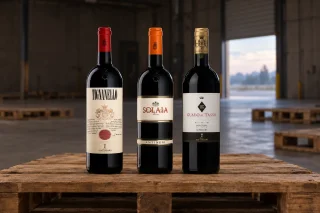
Tignanello Antinori IGT
Toscana
7 retailers
£129.99
6 retailers
Solaia
Toscana
6 retailers
£260.00
6 retailers
Tenuta San Guido Sassicaia
Bolgheri Sassicaia
6 retailers
£229.52
£334.01
5 retailers
Antinori Tignanello
Toscana
5 retailers
£143.66
5 retailers
Masseto
Toscana
5 retailers
£688.40
4 retailers
Ornellaia Le Volte
Toscana
4 retailers
£19.35
£19.46
4 retailers
Le Difese
Toscana
4 retailers
£30.00
4 retailers
Querciabella, Toscana, Camartina
Toscana
4 retailers
£68.87
4 retailers
Saffredi - Fattoria le Pupille
Toscana
4 retailers
£90.40
4 retailers
Antinori Guado al Tasso Bolgheri Superiore
Bolgheri
4 retailers
£118.00
4 retailers
Ornellaia Bolgheri Superiore
Bolgheri
4 retailers
£200.00
£220.69
Denominations
Where it earns a name on the label
The appellations where Cabernet Sauvignon plays a starring role.
Where it grows
The places it calls home
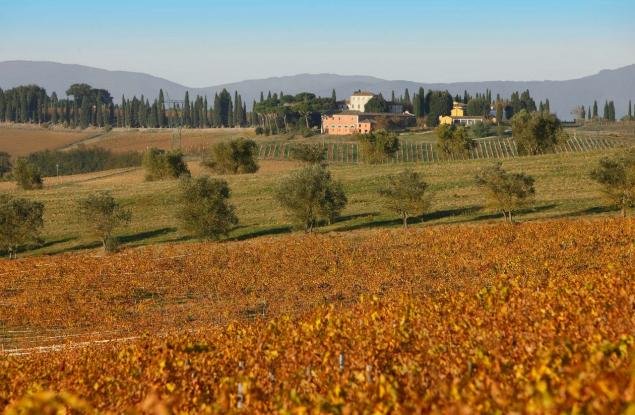
Tuscany
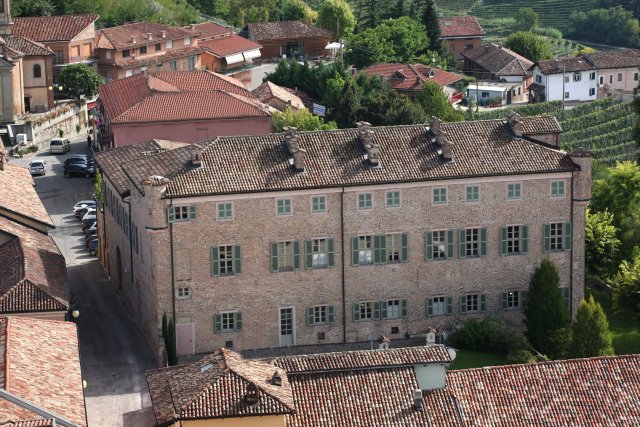
From galestro hills in Chianti Classico to the single Brunello rise of Montalcino and the sea-facing Cabernets of Bolgheri, Tuscany is Italian wine's stage in Read more
Veneto
Italy's largest wine region by volume, where Prosecco hills, Valpolicella ridges, and Soave's volcanic plain shape three different Italian classics. Read more
Sicily
Volcanic Nerello on Etna's black terraces, sun-baked Nero d'Avola on the south-east coast, fortified Marsala in Trapani and UNESCO Zibibbo on Pantelleria Read more
Trentino-South Tyrol
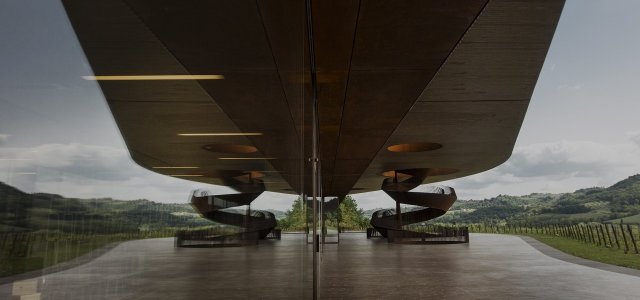
Italy's alpine wine country: Teroldego from the Piana Rotaliana, Trento DOC sparklers raised on dolomitic limestone, and Alto Adige whites perfumed by glacial Read more
Basilicata
Italy's smallest southern producer, where Aglianico ripens late on the volcanic cones of Mount Vulture and Matera's tufa cellars age the country's most Read more
The terroir
Cabernet Sauvignon changes accent with latitude in Italy: maritime and powerful on the Tuscan coast, taut and herbal in the Alpine north, sun-dark in Sicily.
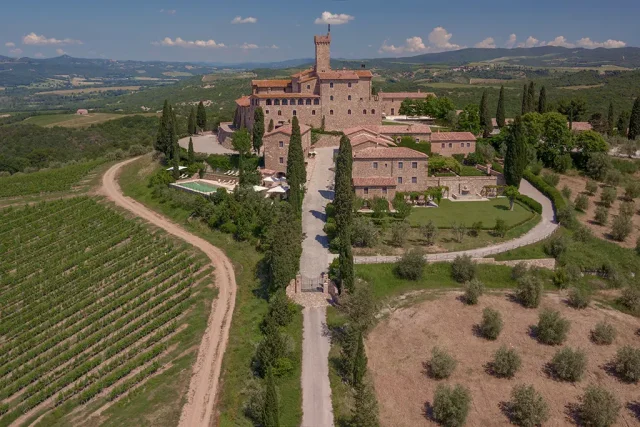
Bolgheri and the Tuscan coast
Gravel and clay fans between the hills and the Tyrrhenian Sea, province of Livorno
Deep cassis, Mediterranean herb and a saline edge: the wines behind Sassicaia and the Super Tuscan movement
Alto Adige
Warm valley-floor sites around Bolzano, at Italy's northern limit
Leaner frame, bright acidity, leafy blackcurrant and bitter chocolate in varietal Alto Adige DOC bottlings
Western Sicily
Hot, dry hills around Menfi and Salaparuta
Sun-ripened blackberry and cocoa with soft tannin, often blended with Nero d'Avola under Sicilia DOC
Editorial
About Cabernet Sauvignon
Cabernet Sauvignon began as a chance seventeenth-century crossing in Bordeaux between Cabernet Franc and Sauvignon Blanc, a parentage confirmed by DNA analysis in 1997 and recorded in the Vitis International Variety Catalogue. Small, thick-skinned berries give the variety its trademark concentration: deep colour, vigorous tannin and blackcurrant fruit edged with green pepper and tobacco.
When Sassicaia's 1968 vintage reached the market, a French grape from a single Tuscan estate rewrote the rules of Italian wine.
Bolgheri Sassicaia DOC, created 1994, remains tied to that one estateItaly has grown it since the nineteenth century, but the modern story starts at Tenuta San Guido, where Mario Incisa della Rocchetta planted Cabernet vines for Sassicaia in the 1940s. When the 1968 vintage reached the market, it launched the Super Tuscan movement; in 1994 Sassicaia earned its own appellation, Bolgheri Sassicaia DOC, still effectively reserved for a single estate, whose disciplinare requires at least 80 percent Cabernet Sauvignon.
Today the variety covers almost 13,900 hectares. Tuscany holds about a quarter, from Bolgheri's coastal gravels to the Maremma; Veneto and Friuli favour supple varietal bottlings; Sicily ripens sun-dark examples; and Alto Adige DOC turns it leaner, brighter and more herbal.
Its role shifts by region: partner to Sangiovese in Tuscan blends, to Merlot in Bordeaux-style uvaggi, or bottled alone under varietal labels from Garda to Sicilia DOC. Set against Nebbiolo, Italy's other great ager, Cabernet trades floral perfume for cassis depth and a broader mid-palate, which is why the two almost never share a blend.
Good to know
Frequently asked
Yes: Italy grows nearly 14,000 hectares of Cabernet Sauvignon, with the largest share in Tuscany, followed by Veneto and Sicily. It is the lead grape of Bolgheri DOC and Bolgheri Sassicaia DOC and appears in varietal bottlings from Alto Adige, Friuli and Sicilia DOC.
A Super Tuscan is a Tuscan red made outside the traditional DOC rules of its era, usually built on Cabernet Sauvignon, Merlot or both, with or without Sangiovese. Sassicaia and Tignanello created the category in the 1970s; most now sit under Bolgheri DOC or Toscana IGT.
Expect blackcurrant, blackberry and dark plum with green pepper, tobacco and cocoa, on a full body with vigorous tannins. Coastal Tuscan versions add Mediterranean herb and a saline edge, while Alto Adige bottlings are leaner, brighter and more leafy.
Rich red meat is the shortest route: bistecca alla fiorentina, beef Wellington or a Sunday roast rib of beef. The grape's firm tannin needs protein and fat to soften against, which is why lean fish and chilli-hot dishes fight it.
Cabernet Franc is one of Cabernet Sauvignon's two parents: it ripens earlier and gives lighter, leafier, more red-fruited wines. Cabernet Sauvignon is thicker-skinned, darker and more tannic. Bolgheri estates often blend both in the same vineyard, and some historic Italian plantings labelled simply Cabernet mix the two.
Top Bolgheri bottlings comfortably age 15 to 30 years. Bolgheri Sassicaia DOC must spend two years maturing before release, at least 18 months of it in barrique, while everyday varietal Cabernet from Veneto or Sicily is best inside 5 to 8 years.
Explore by style
Wine styles made from Cabernet Sauvignon
Jump to the editorial guide for each style this grape turns up in.
Keep exploring